
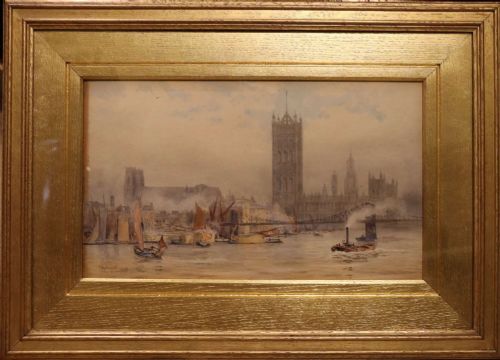

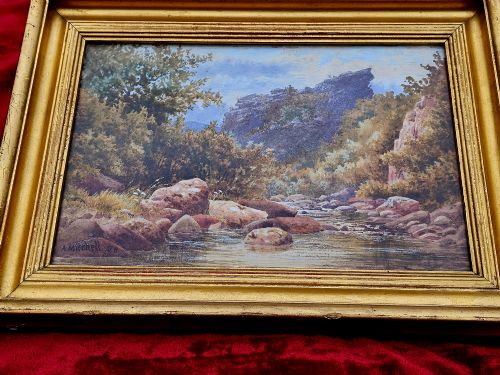
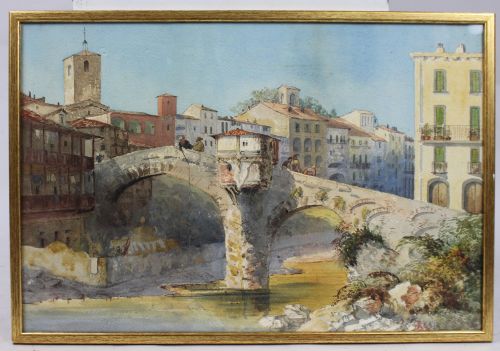
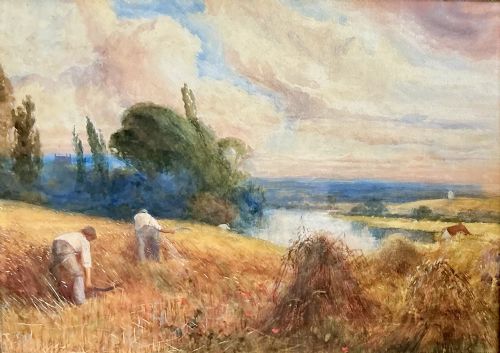


Original Watercolour River Landscape
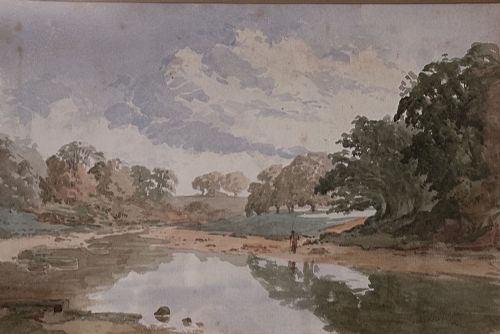
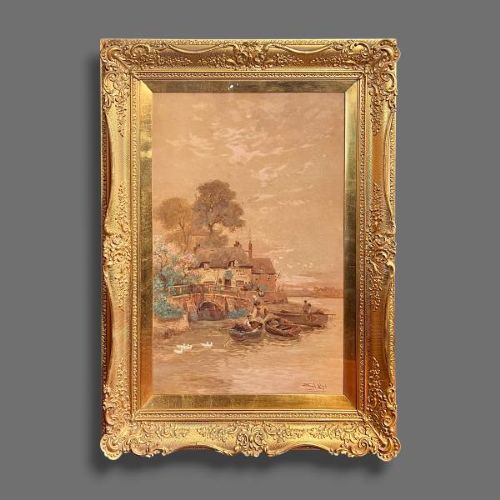
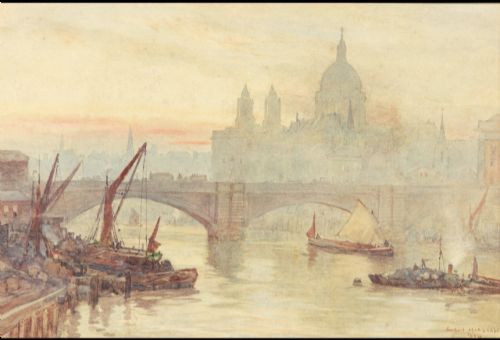
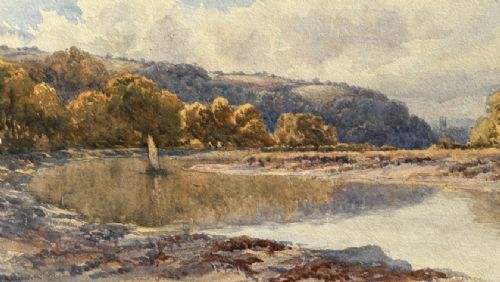
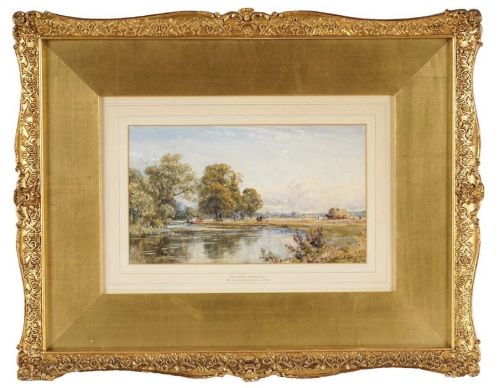
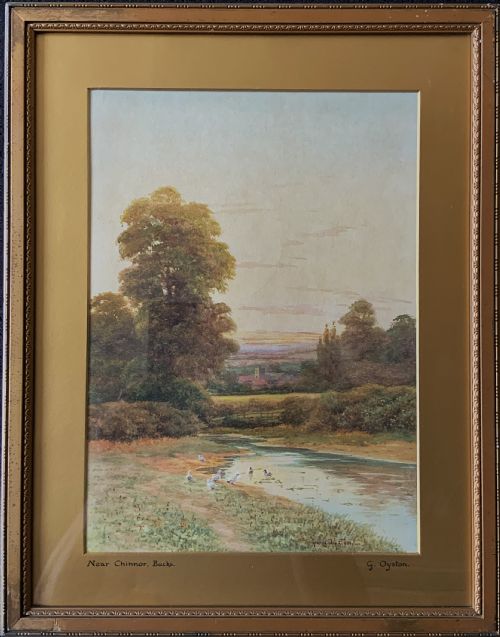
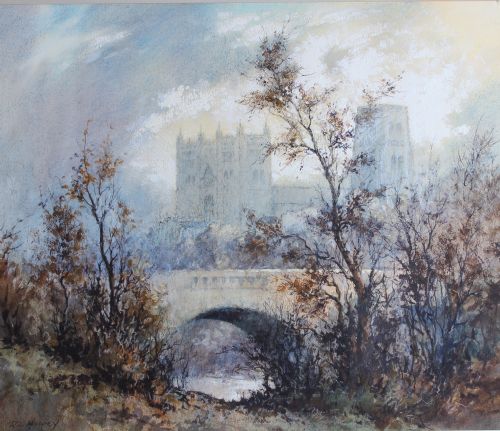
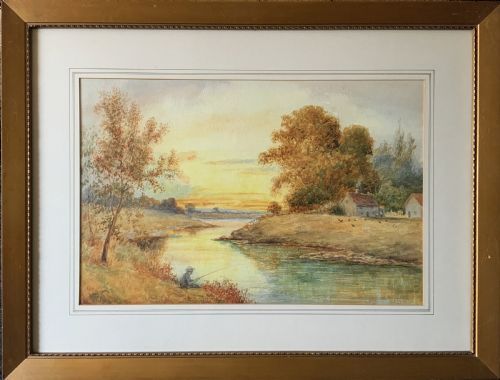
These original watercolour river landscape paintings capture the changing moods of British waterways through delicate washes and accomplished brushwork.
Original Watercolour River Landscape
An original watercolour river landscape depicts rural, urban or coastal scenes along waterways, executed by hand on paper. These works frequently record specific British and Welsh rivers, ranging from the Thames to remote Welsh valleys.
Most examples encountered here date from the nineteenth and early twentieth centuries, reflecting the Victorian and Edwardian fascination with naturalism and topographical art. They span intimate pastoral watercolours to larger exhibition pieces signed by professional artists.
The compositions often incorporate pastoral elements such as cattle watering, figures by the bank, old bridges or passing boats, anchoring the waterway within its broader rural or town setting.
How They Were Made
Artists painted primarily with water-soluble pigments on heavy paper surfaces, often utilising gum arabic to deepen tones and create luminous washes of colour. Watercolour pigment was layered from light transparent shades to heavier opaque highlights, capturing the reflection of light on water.
Framing typically involved glass protection combined with gilt wood or wooden surrounds to preserve the delicate paper from moisture and atmospheric damage over the decades.
The listings feature nineteenth-century and early twentieth-century British river scenes painted on paper using traditional watercolour pigments.
What Varies in Quality
Quality rests upon the artist's handling of light, atmospheric depth and control over fluid pigments, distinguishing masterly composition from stiff amateur illustration. Strong works demonstrate confident brushwork that renders flowing water and shifting weather convincingly.
The condition of the paper and the vibrancy of the original pigments directly influence desirability, as fading or foxing alters the intended visual balance. Additionally, documented attribution to an exhibited Royal Academy artist or a known regional painter elevates a piece above anonymous school works.
H Medlycott·Alfred Young Nutt·William Joseph Boyes·Robert Thorne Waite·George Oyston·Robert Leslie Howey·Frederick Hines·William Frederick Settle·Alfred George Morgan·Cornelius Pearson·Arthur Reginald Smith·Henry John Kinnaird·Thomas Hunn·J Laporte·Colin H Greenwood·John Syer·Robert Winchester Fraser·Alfred Grey·George Arthur Fripp·Harold Lawes·Frederick G Coulridge·Leslie Rackham·Charles Harmony Harrison·John Hobson Nicholson·Percy Lancaster
The Original Watercolour River Landscape Glossary
- Watercolour pigment
- Finely ground colour particles suspended in a water-soluble binder, used to create transparent washes on paper.
- Gilt wood
- Timber framing coated with a thin layer of gold leaf or metallic gilt, commonly used to frame nineteenth-century fine art.
- Wash
- A thin, semi-transparent layer of diluted watercolour paint spread evenly across the paper to represent skies or water.
- Foxing
- Brown or reddish spots caused by chemical reactions in ageing paper, frequently observed in antique works stored in damp conditions.
Original Watercolour River Landscape: Frequently Asked Questions
How do I care for antique watercolours?
Keep watercolours away from direct sunlight to prevent the pigments from fading over time. Ensure they hang in rooms with stable humidity to protect the paper and framing.
Were these paintings made as studies or finished works?
Many nineteenth-century watercolours served as finished exhibition pieces housed behind glass in ornate frames. Others began as field sketches before being completed in the studio.
How do I identify the specific river in a landscape?
Artists often inscribed the title, location or river name directly onto the mount, paper or reverse of the frame. Landmark buildings, bridges and church spires depicted in the composition also help pinpoint the exact stretch of water.
What is the difference between a school work and a signed piece?
Signed works bear the signature or monogram of the named artist, confirming direct attribution. Pieces attributed to an English or Victorian school lack a signature but share stylistic traits with known artists of that period.