

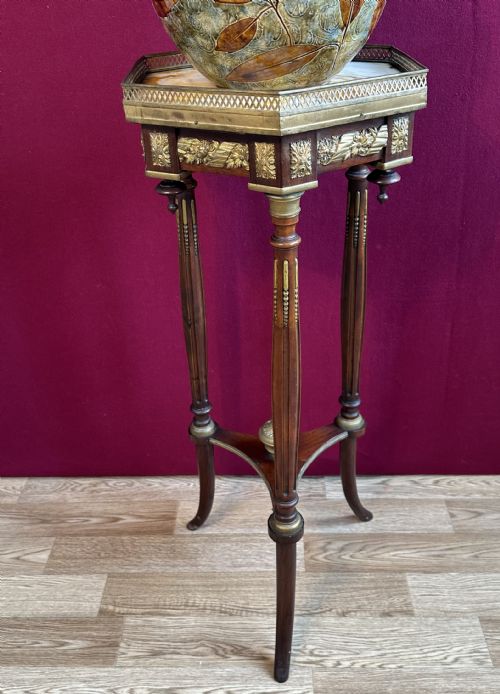
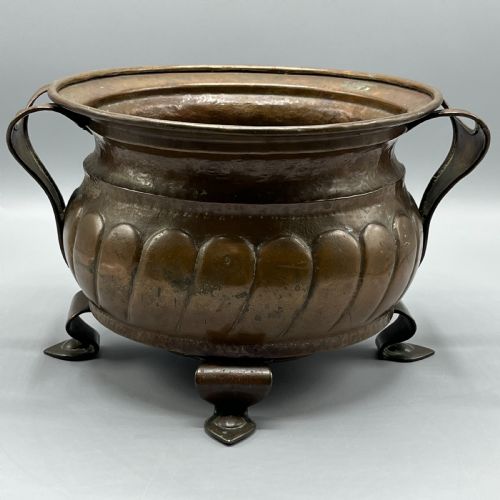


Vintage Indoor Cachepot
These vintage indoor cachepot vessels hold your potted plants, bringing period metalwork and ceramics straight into domestic rooms.
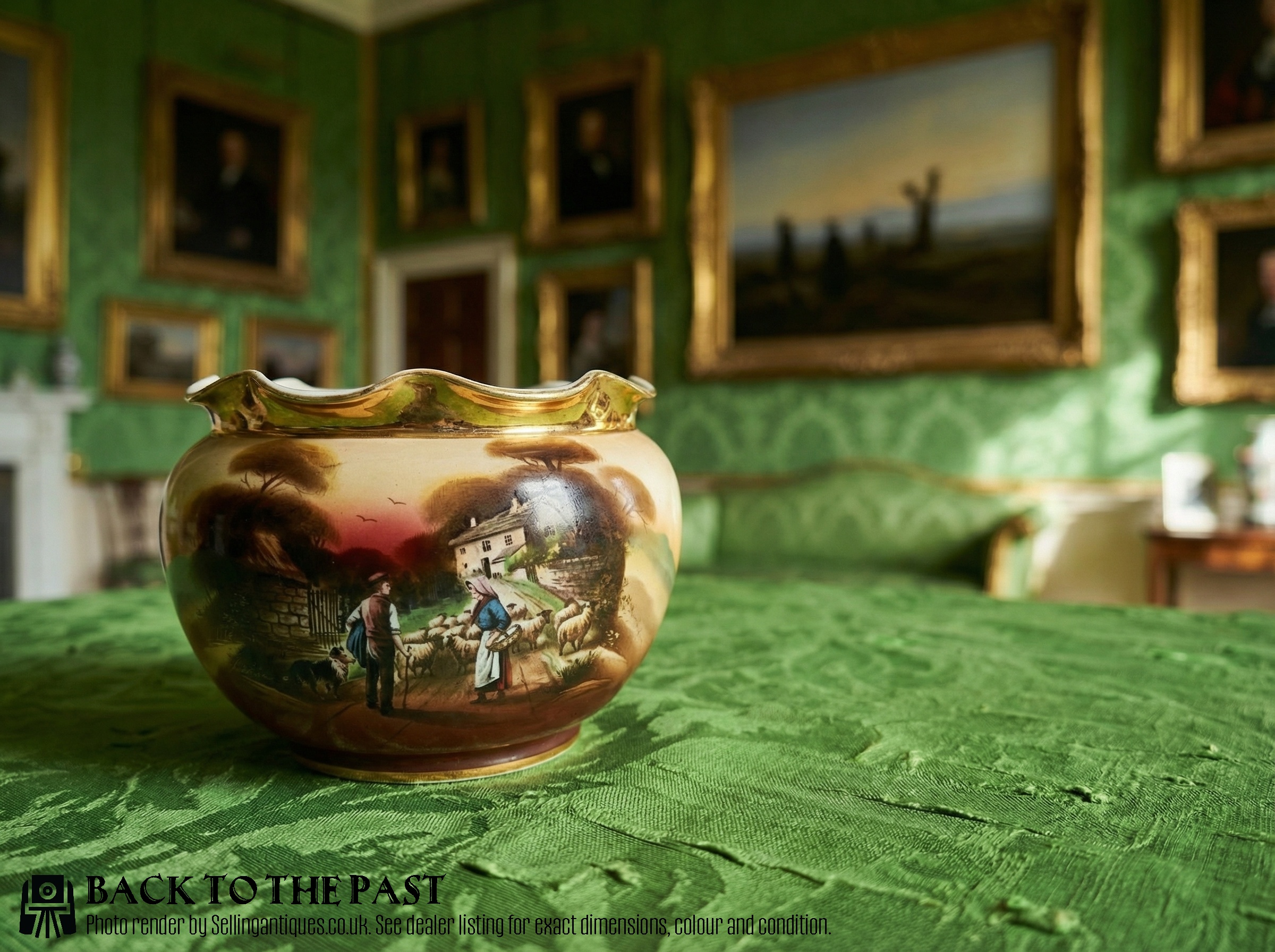
Vintage Indoor Cachepot
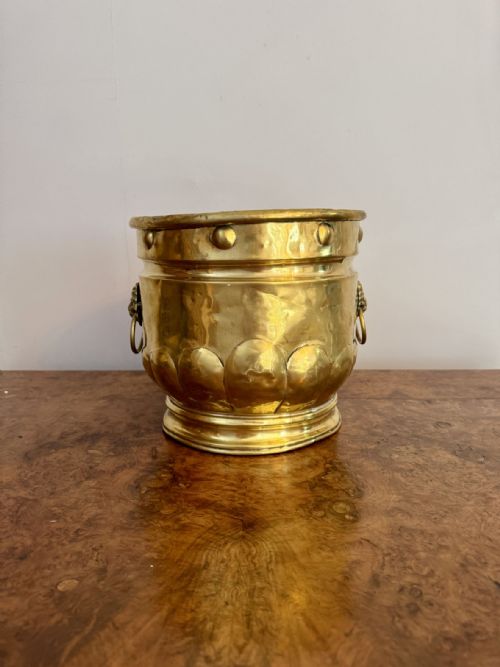
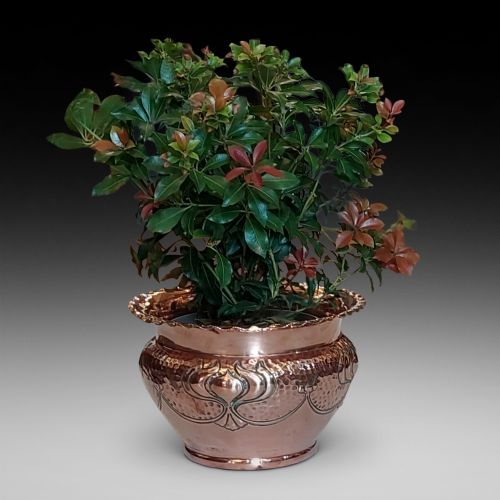
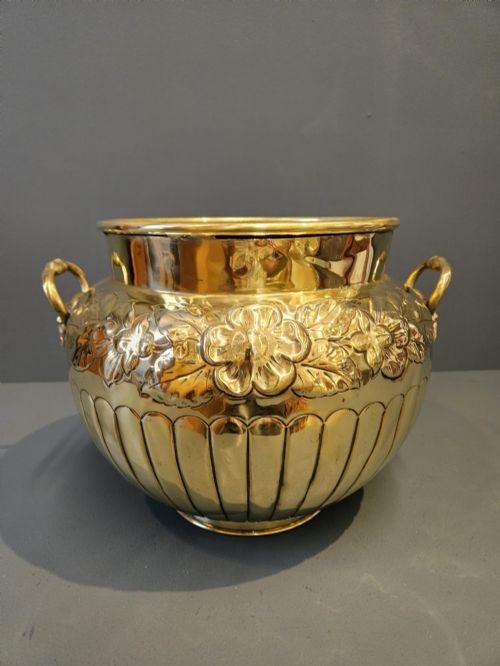
When you search for a vintage indoor cachepot, you encounter vessels designed to conceal ordinary flowerpots inside living spaces. These pieces span from the late nineteenth century through the Edwardian era, taking forms such as jardinieres, plant stands, and cachepots.
The selections on this page draw heavily from Victorian and Edwardian periods, alongside Arts and Crafts and Art Nouveau movements. Common materials include solid brass, copper, glazed stoneware, earthenware, and mahogany.
How they were made
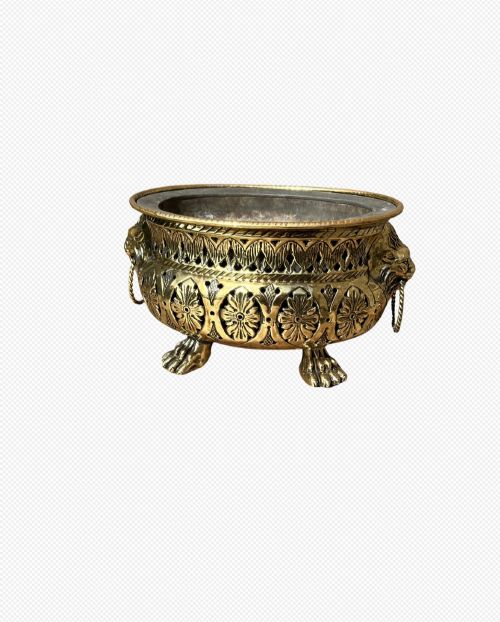
Makers shaped metal vessels using heavy gauge brass and copper, employing techniques like piercing, embossing, and dinanderie work. Handles such as lions masks often appear cast and applied separately to the body.
Ceramic examples rely on salt glazing, earthenware, and stoneware bodies fired in kilns. Potters added decorative glazes and surface details before assembly with stands or matching saucers.
Materials span from heavy brass and solid copper to salt-glazed stoneware and mahogany.
What varies in quality
Quality rests in the weight of the metal and the crispness of the surface ornament. Thicker gauge brass and deep, hand-hammered copper embody superior craftsmanship compared to thin pressings.
In ceramic pieces, the depth of the glaze and the clarity of factory marks determine the standing of the work. Pierced metalwork shows skill through clean, precise cutouts rather than ragged edges.
Doulton Lambeth·Enoch Wood And Sons·Royal Doulton
The Vintage Indoor Cachepot Glossary
- Cachepot
- An ornamental pot used to hold and conceal an ordinary flowerpot. It lacks drainage holes at the base.
- Jardiniere
- A large ornamental pot or stand for plants and flowers. These often sit directly on the floor or on low tables.
- Dinanderie
- A term for various objects made of brass, copper, or bronze. The technique originates from the Belgian town of Dinant.
- Salt glaze
- A vitreous coating of glossy, translucent texture formed by throwing common salt into the kiln during firing. This finish appears on stoneware pieces.
Vintage Indoor Cachepot: Frequently Asked Questions
Do cachepots have drainage holes?
Traditional cachepots do not have holes in the bottom, as their purpose is to catch water dripping from an inner pot.
Place a smaller potted plant inside the vessel so the decorative exterior remains protected from moisture.
How do I clean brass planters?
Wipe metal surfaces with a soft, dry cloth to remove dust and preserve the natural patina gathered over decades.
Avoid harsh chemical polishes that strip away the historical character of Victorian and Edwardian metalwork.
Where should I place a jardiniere?
These vessels suit prominent spots in hallways, living rooms, or upon dedicated plant stands from the same period.
Ensure the surface supports the considerable weight of heavy brass or ceramic bodies.
How do I date these pieces?
Look to stylistic clues such as flowing Art Nouveau lines, Gothic lion masks, or Arts and Crafts hand-hammered textures.
Ceramic examples often carry maker marks or registry stamps underneath the base to narrow down the decade.