


Vintage Hidden Blade Stick
A vintage hidden blade stick is a walking aid concealing a sharp steel blade, combining practical support with discreet personal defence.
Vintage Hidden Blade Stick
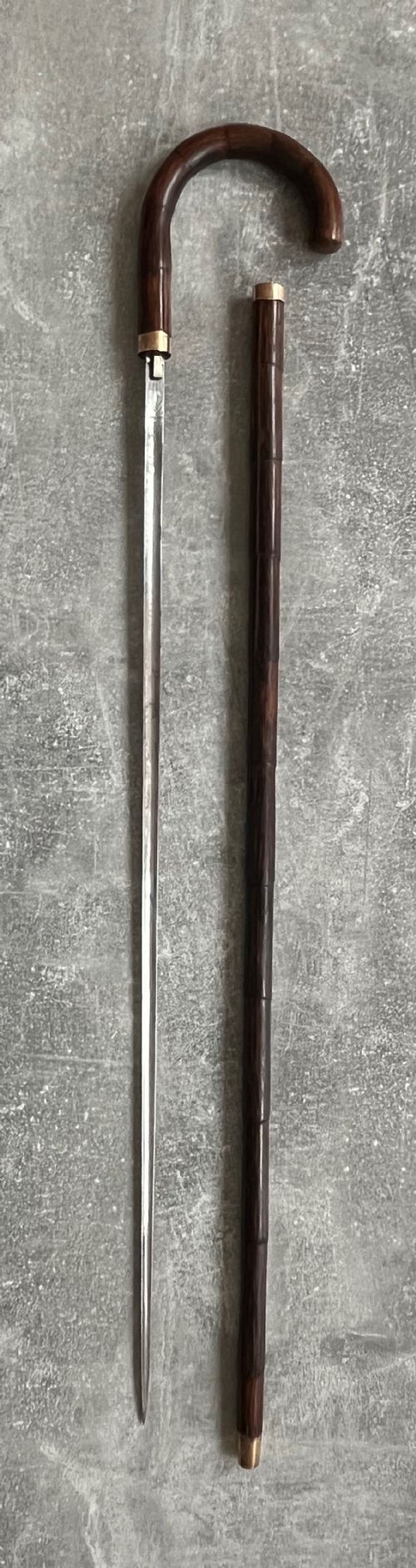
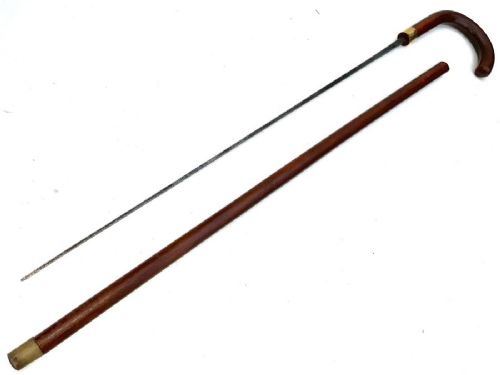
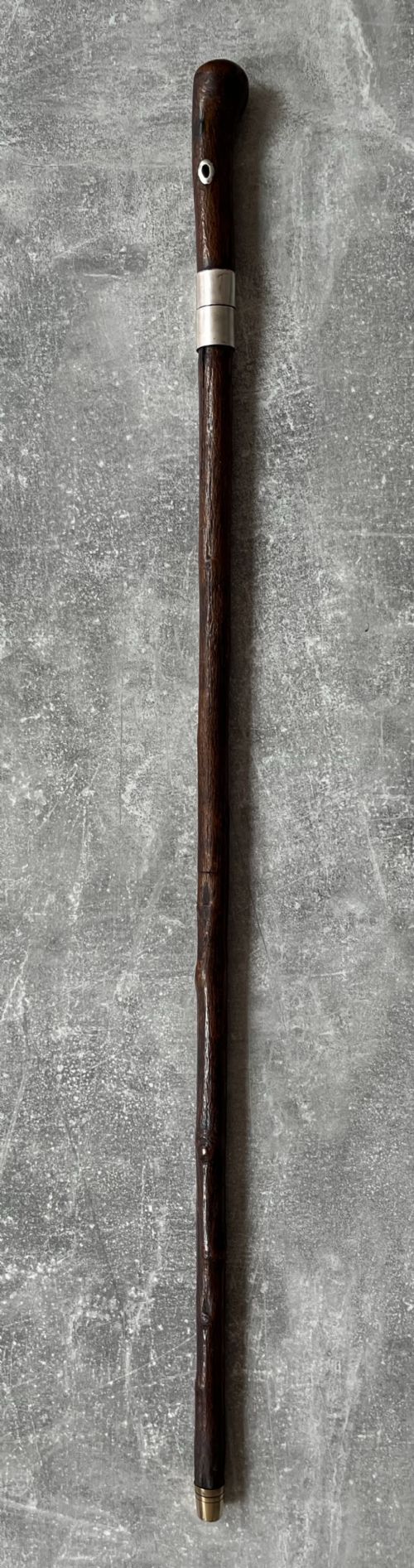
A vintage hidden blade stick provides a subtle steel weapon housed inside a traditional shaft of bamboo, hazel wood, or malacca. These pieces date across the nineteenth and early twentieth centuries, spanning the Victorian and Edwardian eras.
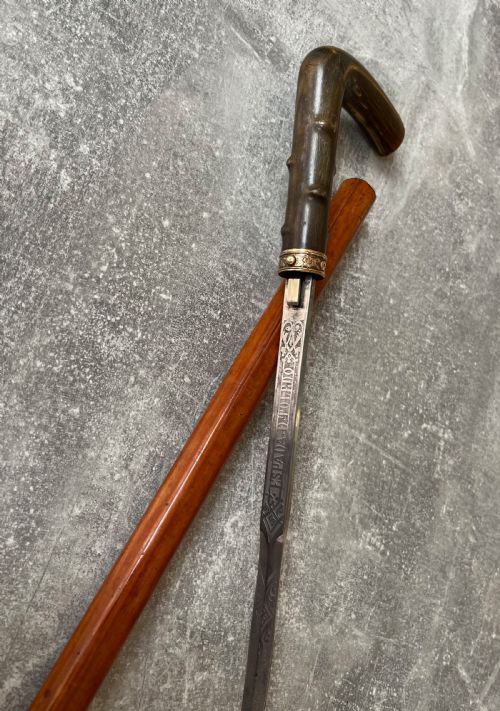
The buyer meets variations ranging from simple military officers' walking sticks to French examples featuring snakeskin covered hafts and antler handles. Many incorporate functional button releases to secure the concealed blade within its wooden or metal housing.
Gentlemen's walking sticks with silver horses head handles and bone pistol grip handles represent common variations found among the options. Each piece balances the outward appearance of an everyday gentleman's cane with an internal defensive capability.
Materials and construction methods
Craftsmen shaped natural materials including bamboo, hardwood, hazel wood, and malacca to form the outer shafts and handles of these sticks. Antler, bone, and silver appear frequently for decorative grips.
The internal blades utilise steel, often forged in Toledo, and feature engraved or etched surfaces. Brass and other metals reinforce the collars and locking mechanisms that secure the blade inside the wooden body.
Listings feature items from the nineteenth century, the Edwardian period, and specific years including 1890, 1900, and 1910.
Assessing quality in hidden blade sticks
Quality rests in the precision of the button release mechanism and how tightly the inner blade seats within the wooden or bamboo shaft. Superior examples maintain a flush fit when closed, showing minimal seam line between handle and shaft.
The artistic merit of the handle, whether carved bone, silver animal heads, or antler, dictates the upper tier of these pieces. Etched Toledo blades demonstrate higher craftsmanship than plain unadorned steel.
The Vintage Hidden Blade Stick Glossary
- Toledo blade
- A steel blade originating from Toledo, Spain, known for its flexibility and resilience. These blades often feature fine etching.
- Malacca
- A sturdy rattan cane material imported from Southeast Asia, prized for its mottled brown finish and strength as a walking stick shaft.
- Swagger stick
- A short military cane carried by officers as a symbol of authority rather than for physical support.
- Pistol grip
- A handle shaped ergonomically like the butt of a pistol, allowing a firm hold during use.
- Faux bamboo
- A decorative treatment applied to wood to imitate the segmented nodes and appearance of natural bamboo.
Vintage Hidden Blade Stick: Frequently Asked Questions
What are vintage hidden blade sticks?
These items are functional walking canes fitted with a concealed steel blade held securely inside the main shaft.
They served as dual-purpose accessories for Victorian and Edwardian gentlemen requiring both physical support and personal protection.
How do you release the blade?
Most examples operate via a small button release mechanism positioned just below the handle of the cane.
Pressing this catch disengages the internal lock, allowing the user to slide the steel blade smoothly from the wooden housing.
What woods are used for shafts?
Makers utilised natural materials including hazel wood, malacca, and bamboo, alongside faux bamboo carved from standard hardwoods.
These timbers offered the necessary straightness and durability to conceal a long steel blade without warping over time.
How do I care for the blade?
Keep the steel blade clean and lightly oiled to prevent corrosion inside the wooden scabbard.
Avoid storing the stick in damp environments, which can swell the wood and trap moisture against the metal.