



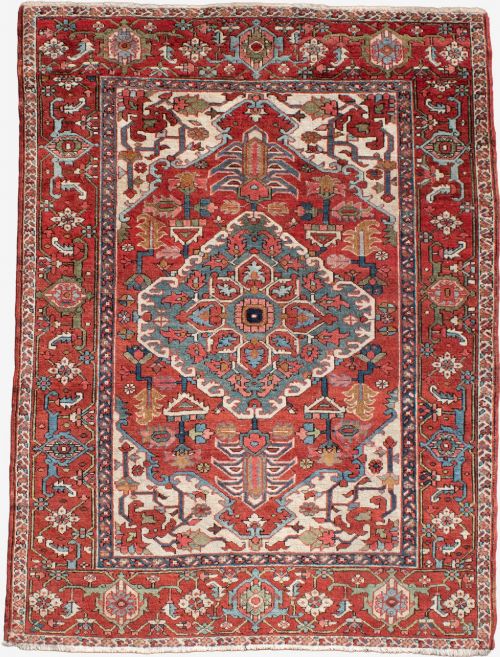
Vintage Heriz Medallion Carpet
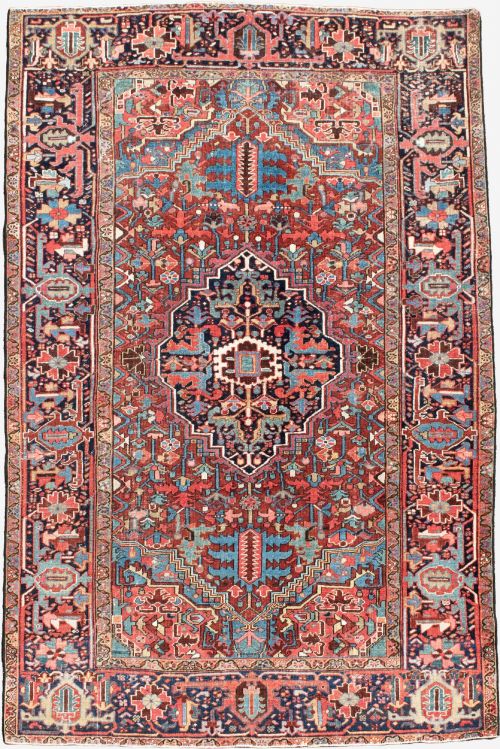
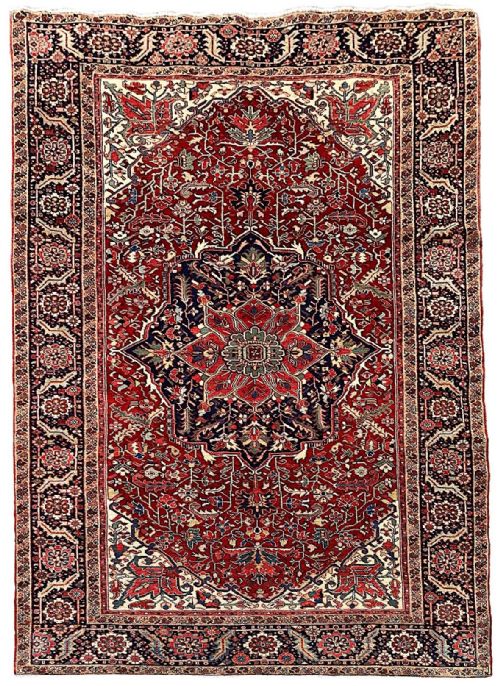
A vintage heriz medallion carpet anchors a room with bold geometric design and robust village knotting from north-west Persia.
Vintage Heriz Medallion Carpet
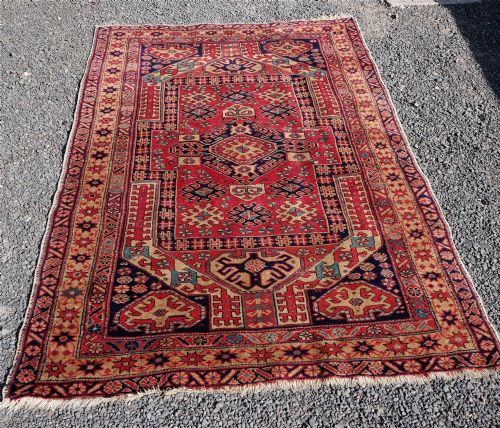
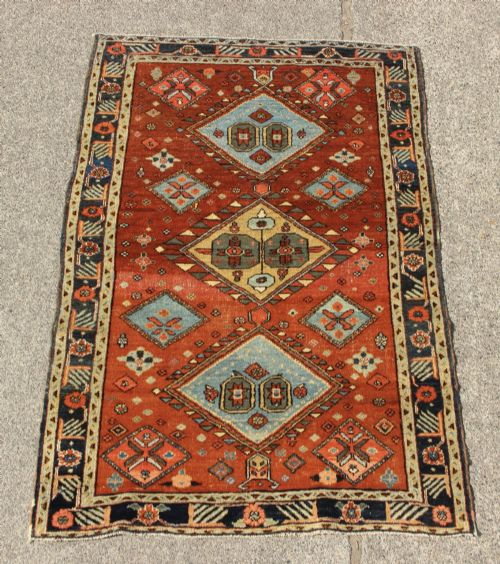
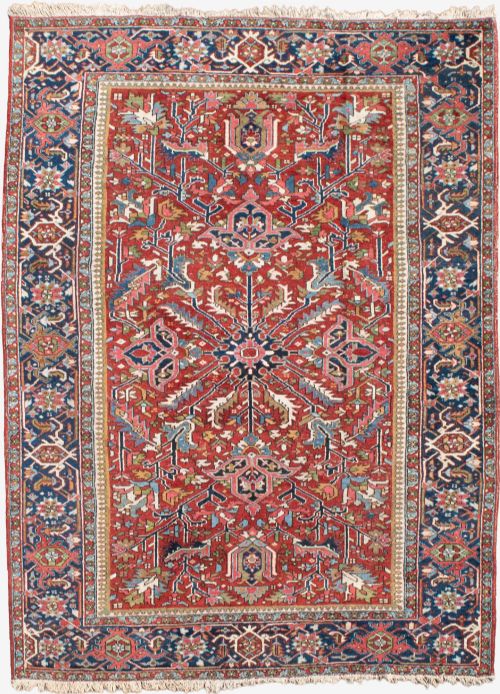
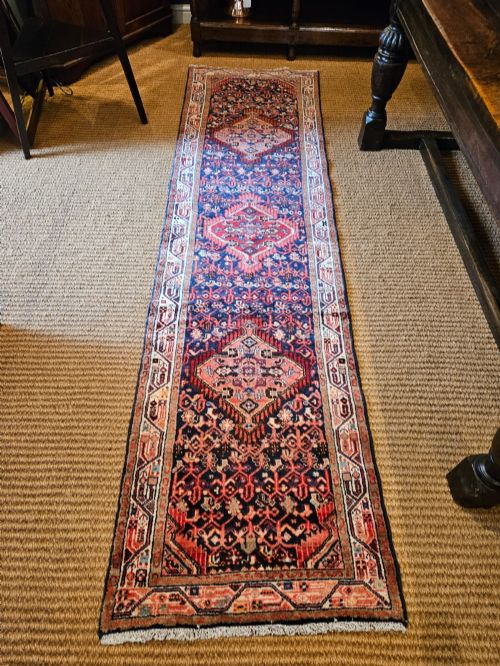
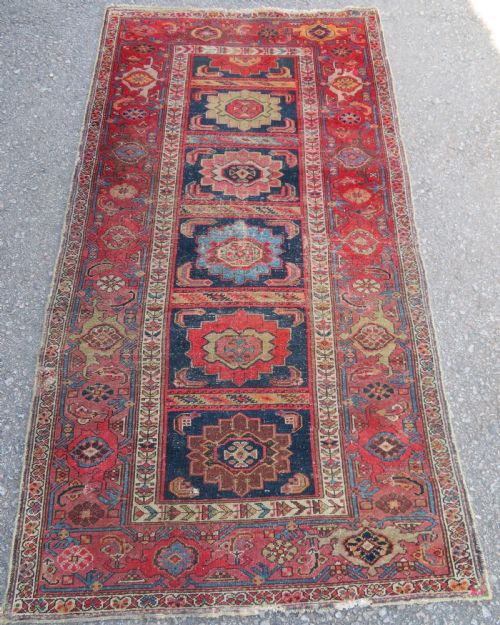
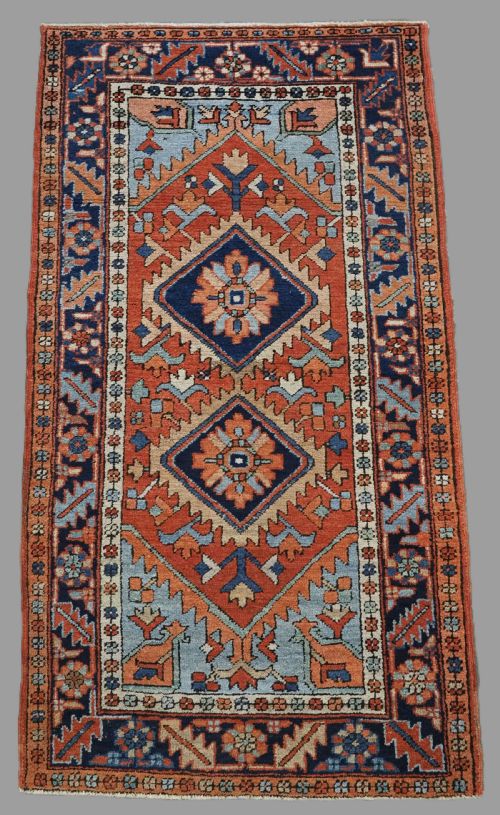
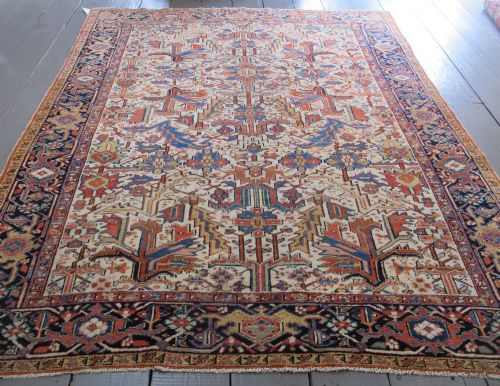
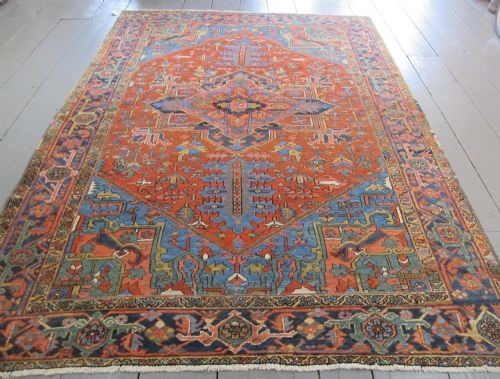
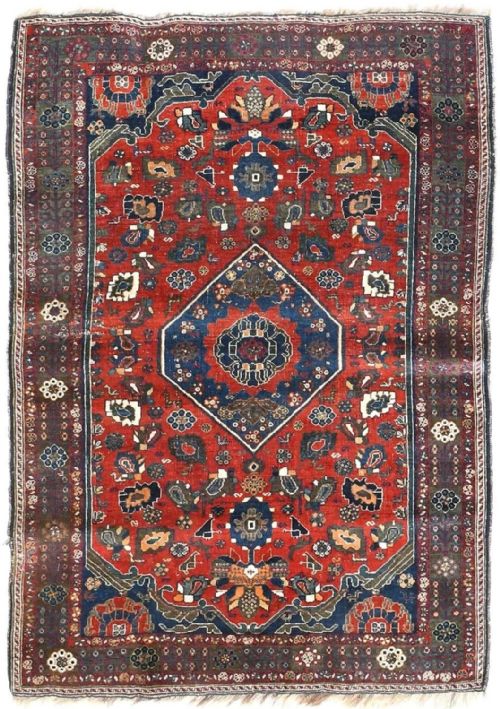
When you search for a vintage heriz medallion carpet, you are looking at substantial floor coverings woven in the villages of north-west Persia. These pieces typically display large central geometric medallions set against contrasting fields, framed by strong angular borders. The examples you encounter on this page span from the late nineteenth century through to the early decades of the twentieth century.
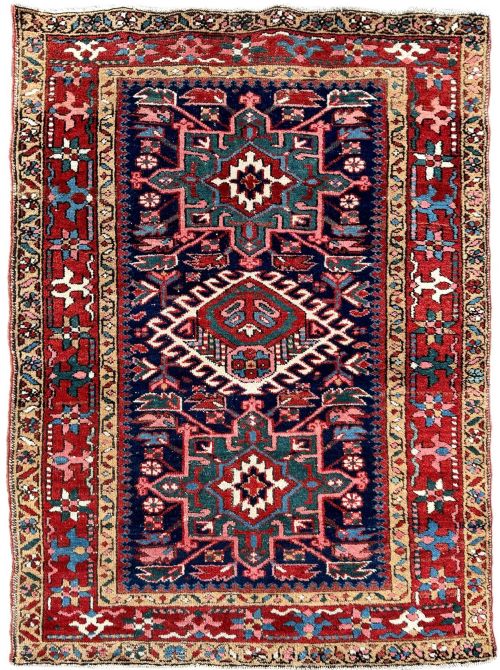
Most entries belong to the broader Heriz and Karaja traditions, alongside related regional village types such as Serapi and Bakshaish. They range from small scatter sizes to large room carpets exceeding four metres in length. Their primary function was domestic floor use, which accounts for the sturdy construction found across the selection.
How they were made
The construction relies on durable wool pile knotted onto sturdy cotton warps, yielding a firm and heavy fabric capable of enduring decades of footfall. Hand-spun wool provides the foundation for the surface texture, taking natural dyes with varied depth and tonal variation. The weave is typically coarser than city workshops produce, contributing to the distinct graphic clarity of the geometric motifs.
Weavers utilised traditional upright looms in domestic settings, translating generational patterns from memory or simple working diagrams. The combination of wool pile and cotton foundations creates a stable structure that retains its shape across large floor formats.
Village weavers frequently slipped small spontaneous animal or human figures into the geometric borders, hidden among the flowers.
What varies in quality
Quality rests primarily in the handling of colour and the precision of the geometric drawing within the medallion and field. Superior pieces display harmonious secondary shades and crisp execution of the angular motifs without crowding the border system. The handling of the wool stock also shifts the tactile experience, ranging from dense, springy piles to flatter, more worn surfaces.
The integrity of the cotton warp and the evenness of the village knotting determine the structural longevity of each carpet. Variations in pile retention and the subtlety of dye saturation separate standard room rugs from exceptional regional examples.
The Vintage Heriz Medallion Carpet Glossary
- Medallion
- The central ornamental motif dominating the field of the carpet. In these pieces, it is typically geometric and multi-tiered.
- Warp
- The vertical threads stretched lengthwise on the loom that carry the tension of the weave. Cotton warp threads are standard in these regional rugs.
- Pile
- The cut surface of the knotted wool yarn that forms the soft upper layer of the carpet. It varies in depth across surviving examples.
- Serapi
- A sub-style associated with older Heriz weaving, often characterised by more open fields and softer coloration. Collectors prize them for their relaxed geometric layouts.
- Karaja
- A neighbouring village tradition producing smaller rugs and runners with distinct geometric box motifs and tribal character. They share material traits with Heriz carpets.
Vintage Heriz Medallion Carpet: Frequently Asked Questions
How do I clean an old wool carpet?
Surface dust is best managed through gentle suction using a vacuum without a rotating brush head. Professional textile cleaning is necessary for deeper washing to protect the wool and cotton foundations.
Water should be applied with care to prevent dye bleed or fibre distortion. Specialist rug conservators provide the safest maintenance for antique village weaves.
Are these carpets suitable for heavy traffic?
The sturdy construction of village wool pile on cotton warps makes them resilient for everyday use. Their original purpose was domestic flooring in busy household spaces.
Using a quality underlay helps absorb impact and reduces friction against the floorboards. This simple measure extends the active life of the weave considerably.
How can I distinguish a Heriz from a Serapi?
Serapi rugs generally originate from the nineteenth century and feature larger, more open geometric layouts with muted palettes. Heriz pieces from later periods often display denser detail and bolder primary tones.
The drawing style in Serapi examples tends towards greater spaciousness within the central medallion and corner spandrels.
What is a cotton warp?
The warp consists of the foundational threads running vertically through the structure of the rug. Cotton provides high tensile strength and dimensional stability compared to wool foundations.
This rigidity helps larger room carpets maintain their rectangular form over decades of use. It also keeps the geometric patterns from skewing.