

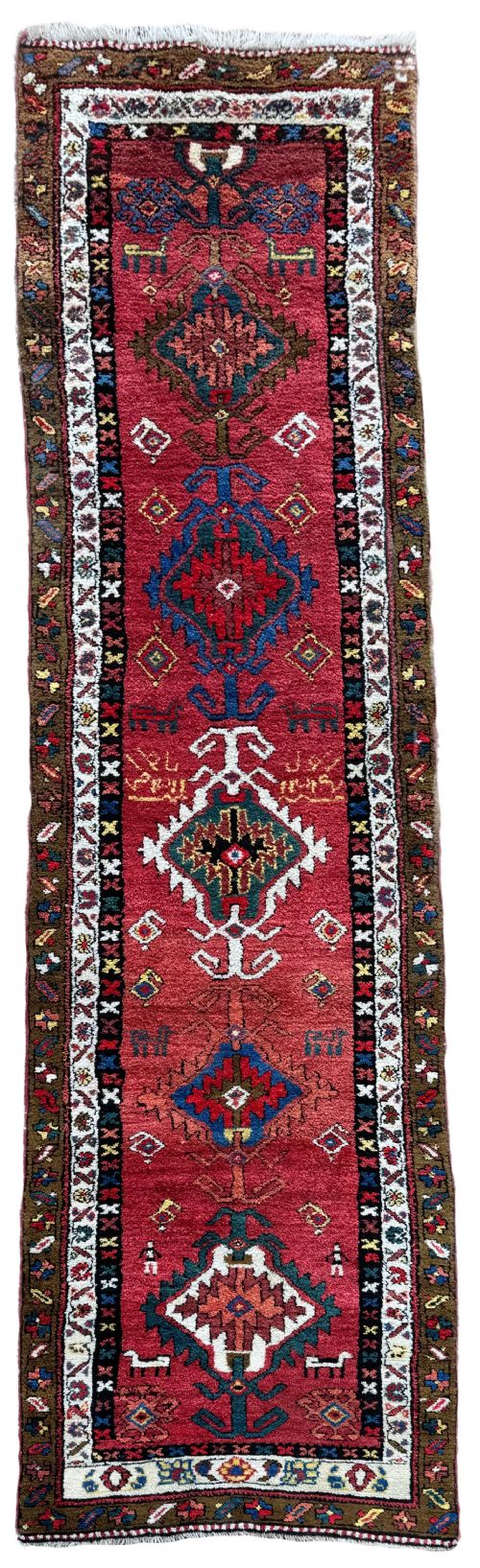
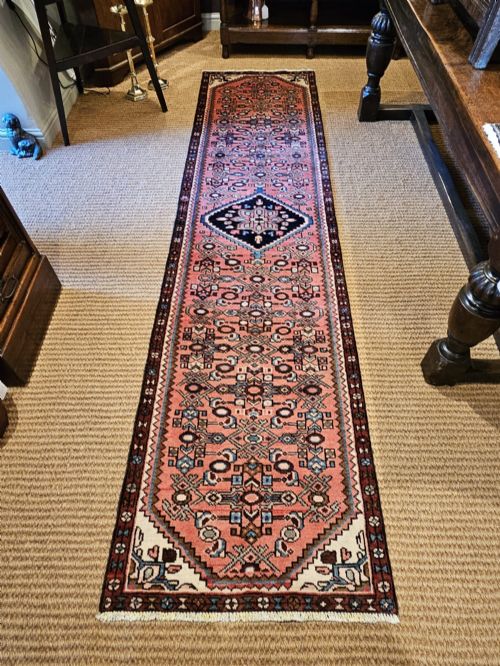
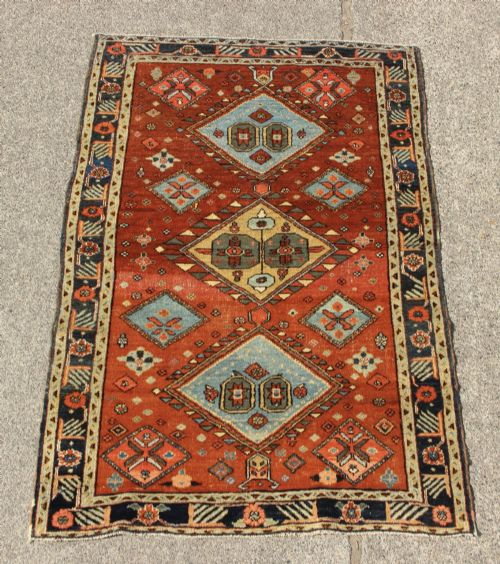
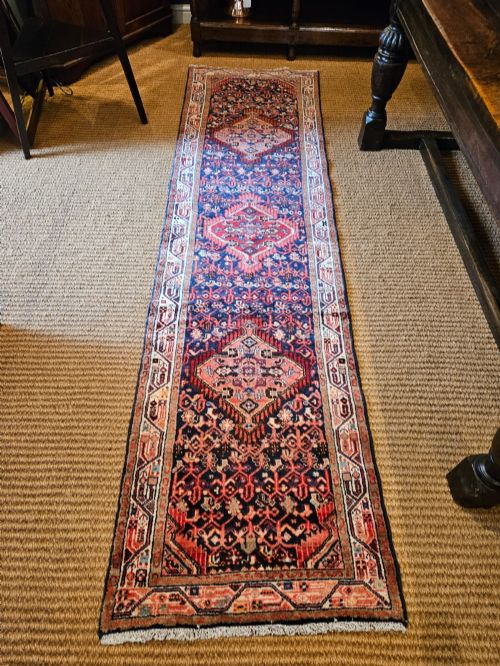
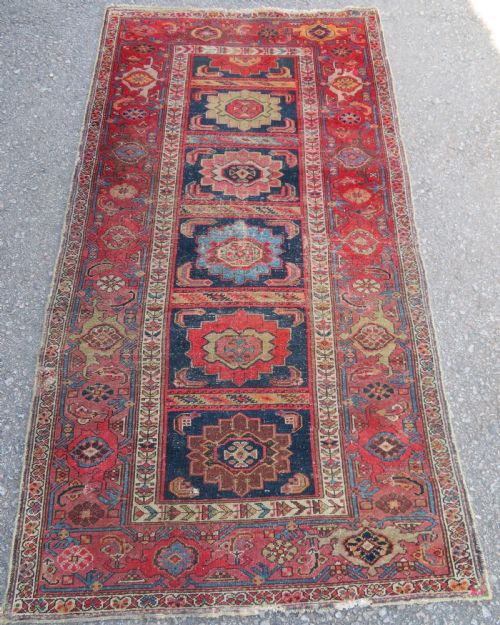
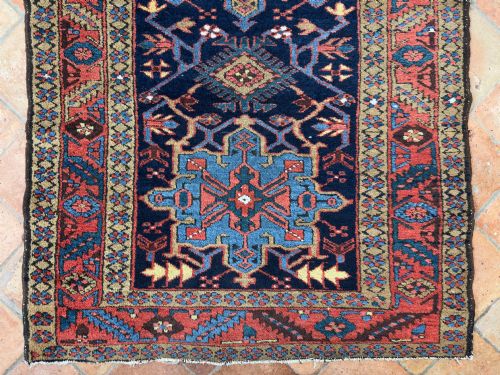
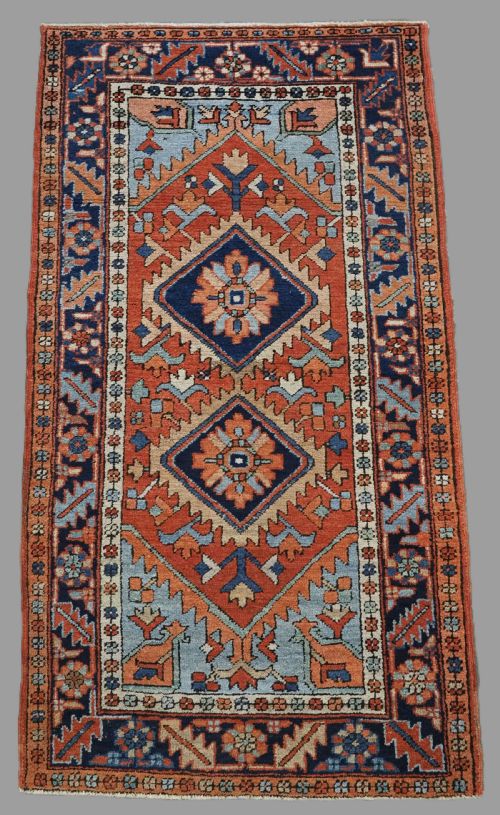


Vintage Heriz Carpet Runner
These vintage heriz carpet runner examples bring robust North West Persian geometric artistry and durable wool construction directly to long hallways and narrow rooms.
Vintage Heriz Carpet Runner
A vintage heriz carpet runner brings substantial North West Persian weaving traditions into long spaces, typically constructed as narrow format flooring suited to corridors. The selection spans the nineteenth century through the nineteen-thirties, incorporating related regional workshops.
Most entries encountered on this page belong to the Heriz tradition, alongside pieces from neighbouring Karaja, Gorevan, Serapi, Bakshiash, and Sarab districts. These pieces deliver bold geometric medallions and strong tribal character built for heavy traffic.
Makers include Waring and Gillow alongside traditional village weavers from the Heriz region. Dimensions range from small formats up to extensive long gallery proportions.
Assessing quality
Quality rests upon the crispness of the geometric drawing and the density of the wool pile. Tighter knotting supports sharper lines within the central medallions and border details.
The harmony and depth of the natural colour palette elevate certain pieces above standard production. Original proportions and well-maintained edge finishes also distinguish superior examples.
Vintage Heriz Carpet Runner Retail Price Guide 2026
Typical asking prices for vintage heriz carpet runner among the pieces listed under this phrase on Sellingantiques today, from the lower quarter to the upper quarter. They describe what is for sale here now, not the wider market.
Several runners display traditional crab designs creeping along the borders, proving that antique weavers enjoyed adding a pinch of coastal fauna to inland mountain wool.
Waring and Gillow
The Vintage Heriz Carpet Runner Glossary
- Heriz
- A region in North West Persia known for producing durable carpets with distinctive geometric medallions and bold corner spandrels. These rugs draw inspiration from both village and tribal designs.
- Serapi
- A sub-category of Heriz carpets often associated with older nineteenth-century production, featuring more spacious designs and softer colour palettes. Collectors prize these for their artistic restraint.
- Karaja
- A style originating from a village near Heriz, typically displaying repeated geometric motifs or small medallions along the field. They share the robust wool construction of the wider district.
- Runner
- A long, narrow carpet format designed specifically for corridors, hallways, and staircases. Their proportions balance linear space with rhythmic repeating patterns.
Vintage Heriz Carpet Runner: Frequently Asked Questions
Where were these runners made?
These pieces originate from North West Persia, specifically the Heriz region and surrounding districts such as Karaja and Sarab. Village weavers produced them using traditional local methods.
The workshop traditions of the area emphasise geometric strength and hard-wearing wool construction suited to practical domestic use.
How do I care for a wool runner?
Regular gentle vacuuming without a rotating brush roll helps maintain the wool pile and removes trapped dust. Professional cleaning by a specialist in antique textiles preserves the natural fibres.
Positioning the runner on a quality underlay prevents sliding and reduces friction against the floorboards during daily foot traffic.
What is the difference between Heriz and Serapi?
Serapi carpets represent an earlier stylistic grouping within the Heriz tradition, generally dating to the nineteenth century. They typically feature more open field compositions and muted colour combinations.
Standard Heriz pieces tend to display bolder, more densely articulated geometric medallions with stronger primary colours.
Are these runners suitable for hallways?
The narrow proportions and robust cotton-and-wool foundations make these formats ideal for corridors and narrow passages. Their dense pile resists wear from continuous movement.
Placing a proper underlay underneath ensures the runner stays flat and protected against hard subfloors.