

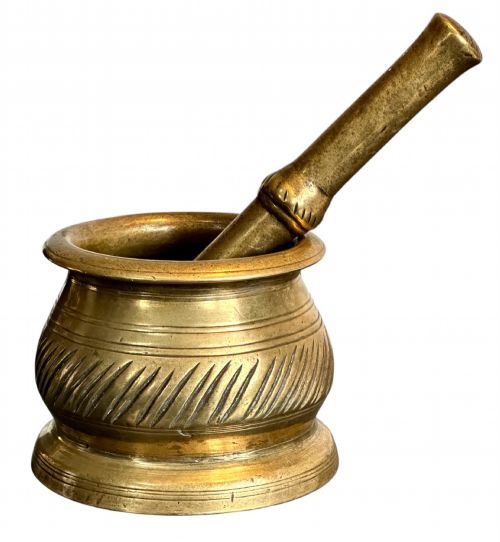

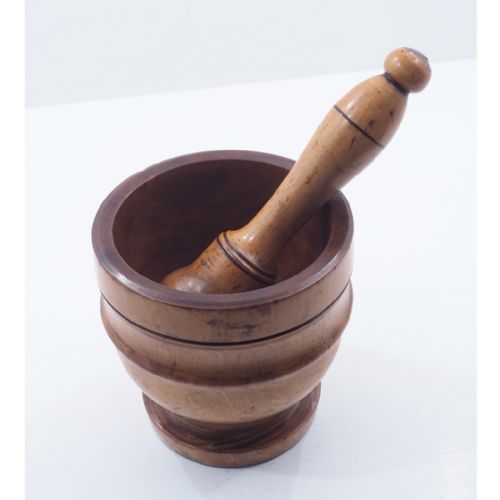


Vintage Herb Grinder
These vintage herb grinder examples, primarily historic mortar and pestle sets in bronze, brass, and turned hardwoods, deliver tangible authenticity and tactile utility to any modern kitchen.
Vintage Herb Grinder
A vintage herb grinder encountered on this page typically takes the traditional form of a mortar and pestle, utilised across centuries for domestic kitchens and apothecary dispensaries alike. These pieces range from robust 17th-century vessels to refined Georgian and Victorian examples, bridging culinary preparation and medicinal history.
The assortment on this page relies heavily on substantial metal bowls paired with matching pestles, alongside turned treen and hardwood specimens. Buyers will frequently encounter heavy cast bronze or brass alongside dense timbers such as lignum vitae, olive wood, and sycamore.
Stylistic origins stretch from rustic country and Renaissance Revival pieces to formal Georgian and Victorian apothecary designs. Each item reflects the domestic or commercial customs of its specific period, offering a direct link to historical food and medicine preparation.
Materials and construction methods
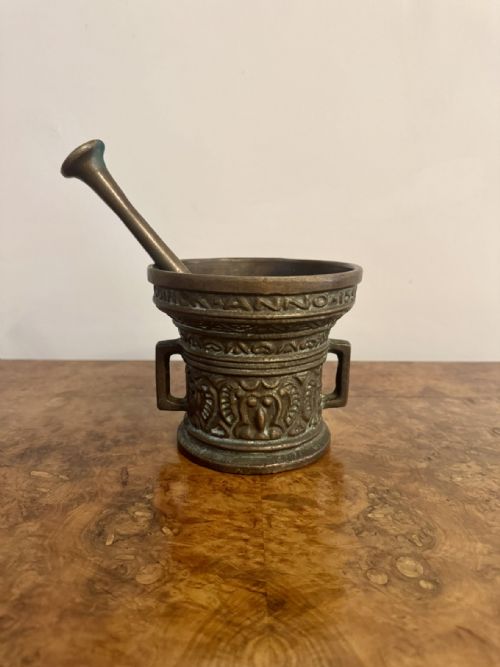
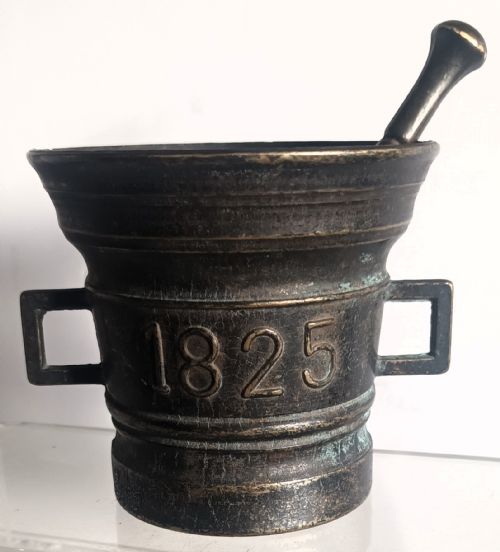
Metal vessels such as bronze and brass were typically produced via casting methods, resulting in thick walls capable of withstanding heavy impact and grinding pressure. Surface finishes often display the subtle texture of original mould work, sometimes embellished with decorative moulding or inscribed dates.
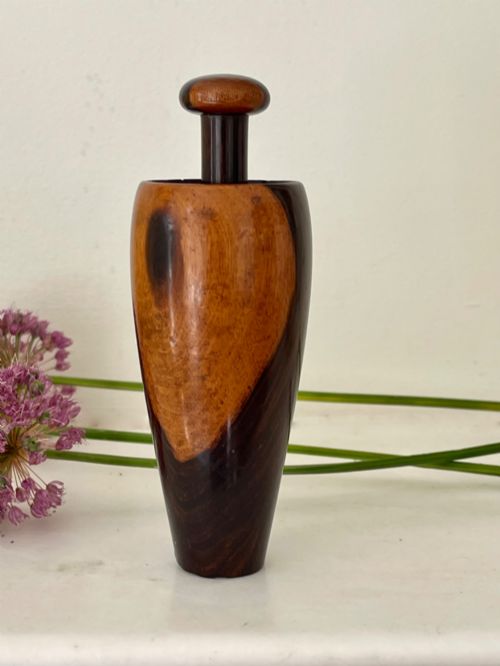
Wooden items, including those fashioned from lignum vitae, walnut, and beech, owe their forms to woodturning techniques on a lathe. Craftsmen shaped dense timbers into stable bowls and matching handheld pestles, exploiting the natural grain and weight of the wood.
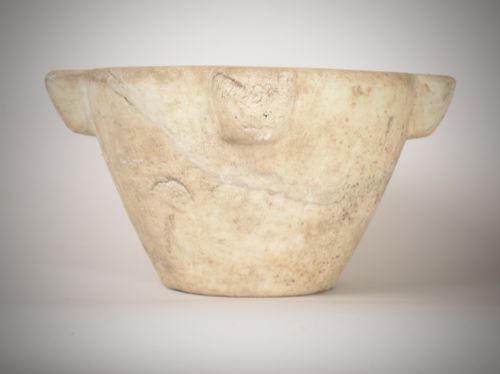
Marble and stone variants offer an alternative dense medium, shaped through chiselling and grinding to create a smooth, non-porous interior basin suited to medicinal and culinary tasks.
Some heavy bronze mortars survive with faint casting drips, reminding us that an apprentice metalworker once misjudged his pour.
Distinctions in quality and execution
Quality rests significantly in the density and integrity of the material, whether it is the heavy weight of a cast bronze mortar or the tight, figured grain of turned lignum vitae. Superior examples display balanced proportions between the bowl and its pestle, indicating a matched set designed for practical efficacy.
The crispness of decorative detail and the precision of the lathe work differentiate standard utilitarian objects from finer examples. Well-defined mouldings, harmonious profiles, and clear surface patination signal superior craftsmanship and careful preservation over centuries.
The Vintage Herb Grinder Glossary
- Mortar
- The heavy bowl in which substances are crushed or ground using a pestle. It provides a stable, concave base designed to withstand downward impact.
- Pestle
- The heavy, club-shaped handheld tool used with a mortar to crush and grind herbs, spices, or medicinal compounds. Its rounded end matches the interior contour of the bowl.
- Treen
- Small handmade wooden domestic objects produced prior to the modern era. This category encompasses turned wooden mortars and carved herb chopper bowls.
- Lignum vitae
- A dense, hard timber derived from trees in the genus Guaiacum, prized historically for its extreme weight and durability in turned objects.
- Apothecary
- Pertaining to the preparation and sale of medicines and drugs, a context which generated many of the sturdy bronze and brass grinders found today.
Vintage Herb Grinder: Frequently Asked Questions
How do I clean an old bronze mortar?
Historic metal surfaces benefit from gentle dusting with a dry cloth and minimal intervention to preserve their natural oxidation and age patination. Harsh chemical polishes strip away historical character and should be avoided.
For wooden or treen mortars, a simple wipe with a slightly damp cloth followed by immediate drying protects the historic timber from moisture damage.
Can I use these grinders for cooking?
Many bronze, brass, and stone vessels remain structurally sound and capable of grinding dry spices and fresh herbs with proper cleaning. You should assess the interior surface for any historical residues before food preparation.
Wooden or antique apothecary specimens are often best reserved for display or dry ingredients due to the porous nature of aged timber.
How do I tell a 17th-century mortar from a Victorian one?
Earlier 17th-century bronze and brass examples often feature simpler, heavier flared rims, rougher casting textures, and occasionally Renaissance Revival decorative motifs. Their forms reflect utilitarian apothecary production.
Victorian and Georgian pieces frequently display more refined turning, standardised sizing, and cleaner surface finishing associated with commercial kitchenware manufacturing of the 19th century.
What is treen?
Treen refers to small, functional wooden items created by hand or on a lathe for domestic utility. In the context of herb grinders, this includes turned lignum vitae or sycamore bowls.
Collectors value these wooden pieces for their tactile warmth, visible grain patterns, and evidence of historical turning techniques.