

Vintage Harbour Landscape Paintings
Vintage harbour landscape paintings capture the salt air and rhythmic life of coastal quays through oils and watercolours spanning the nineteenth and twentieth centuries.
Vintage Harbour Landscape Paintings
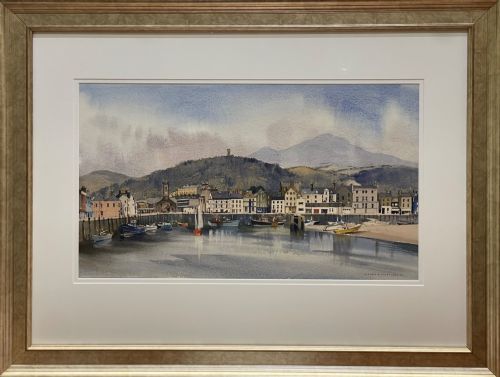
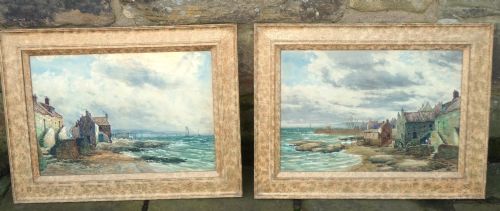
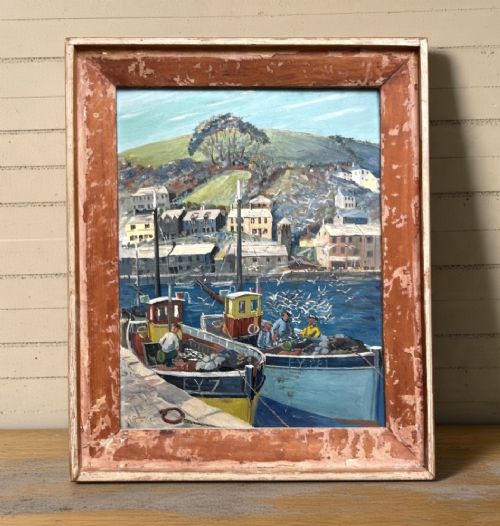
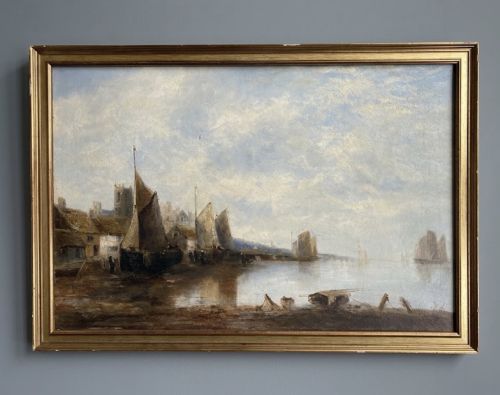
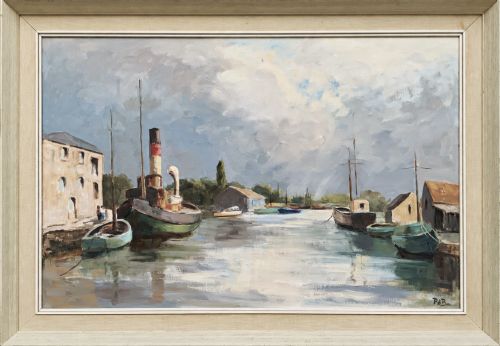
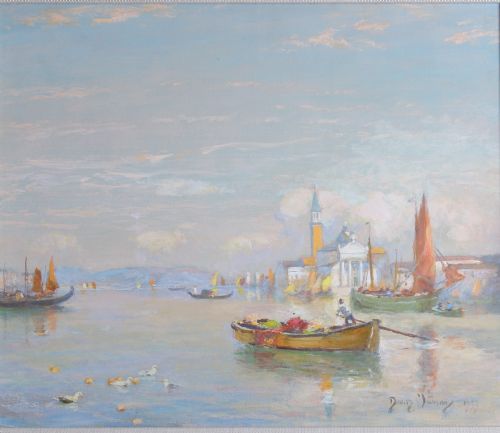
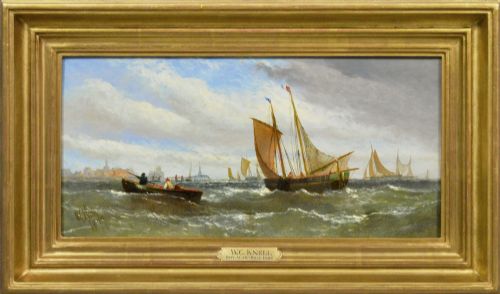
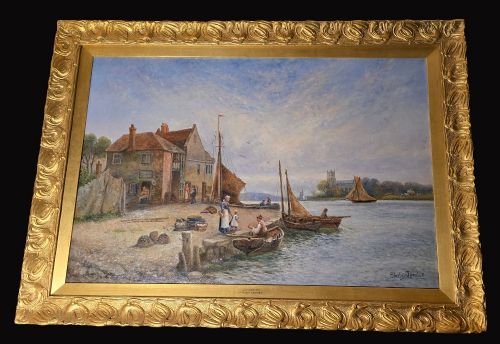
Vintage harbour landscape paintings record maritime life, fishing ports and tidal quays across Britain and continental Europe. Buyers encounter coastal views executed in oil and watercolour, documenting locations from Cornish fishing villages to Mediterranean ports.
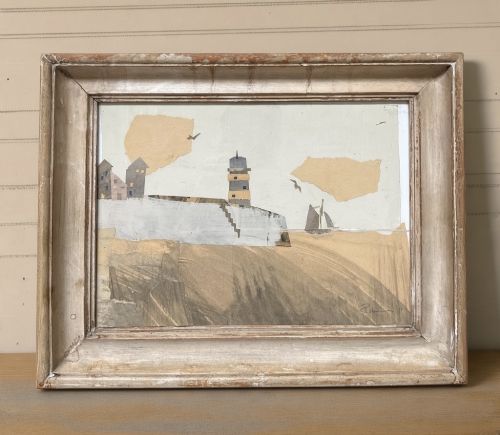
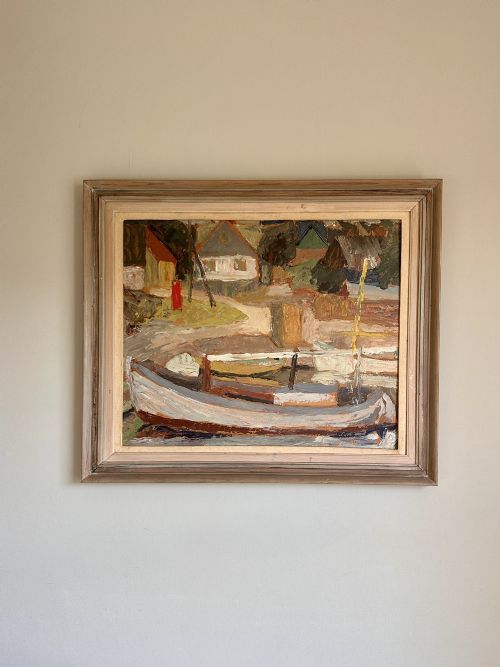
The works span from nineteenth-century depictions through the Edwardian period to mid-century modern interpretations. Canvases and watercolours display stylistic shifts from traditional academic realism to impressionist brushwork and mixed media collage.
Materials and techniques
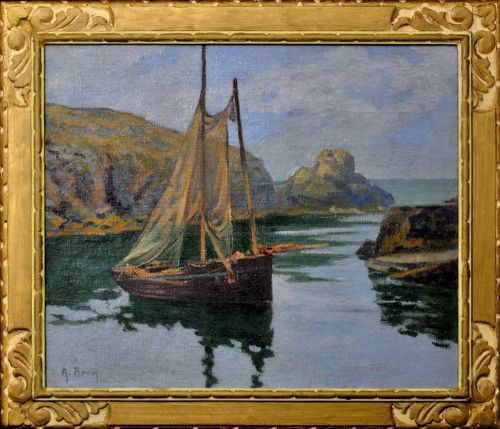
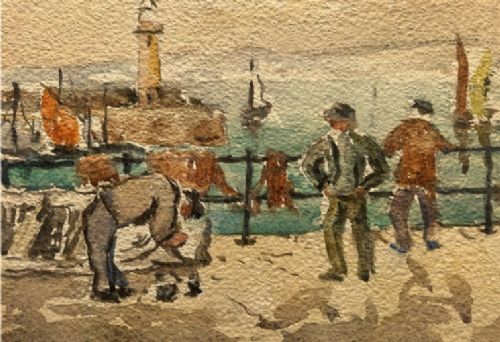
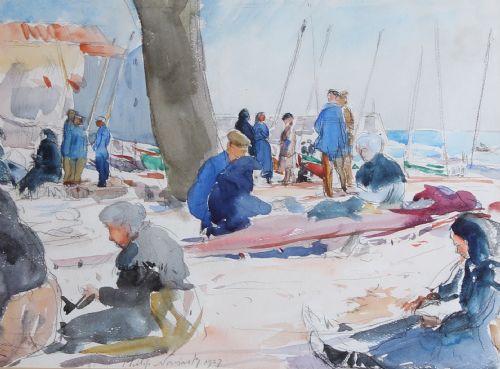
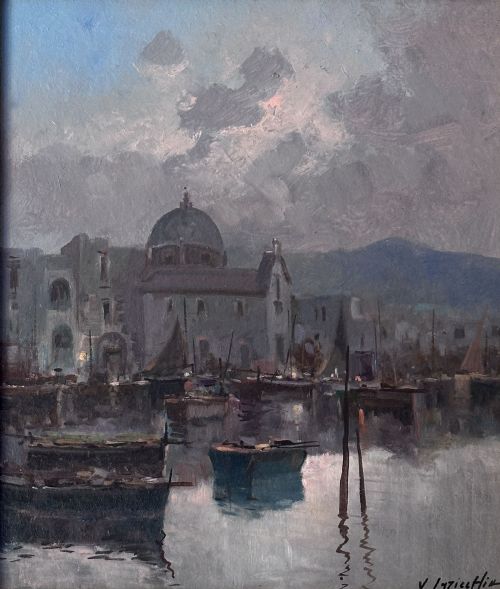
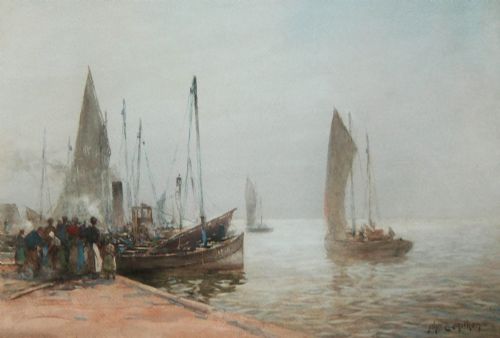
Artists deployed oil paint upon stretched canvas or wooden board, building texture through impasto strokes or applying thin glazes to render water and sky. Watercolours on paper capture lighter, more translucent atmospheric conditions across British and French coastal scenes.
Framing forms an integral part of the physical object, with nineteenth-century and later works frequently housed in gilt wood frames that complement the palette. Glass protects fragile works on paper, while oil paintings remain exposed to air on canvas or panel.
Vintage Harbour Landscape Paintings Retail Price Guide 2026
Typical asking prices for vintage harbour landscape paintings among the pieces listed under this phrase on Sellingantiques today, from the lower quarter to the upper quarter. They describe what is for sale here now, not the wider market.
Materials recorded in the inventory include canvas, paper, wood, glass, oil paint, and gilt wood frames.
Evaluating the range
The distinction between standard works and superior examples lies in the confidence of the handling and the precision of atmospheric observation. Mastery of light on water and the convincing depiction of vernacular architecture elevate a composition above routine topographical recording.
Provenance and artist reputation further differentiate pieces, with signed works by documented regional or international painters commanding greater attention. The preservation of the original surface and the harmony of the framing contribute to the enduring integrity of each piece.
John H Nicholson·CM Williams·Geoffrey Robinson·Bob Quixley·Achille Bron·William Calcott Knell·Stanley Leader·George F Pennington·Peggy de Brett·Philip Naviasky·Sir David Murray RA·Kenneth Cozens·Edward Mills·James E Aitken·John E Aitken·William Banks Fortescue·James Kay RSW·Clive Browne·Peter Brannan·Paul Bret·Cyril Walduck Edwards·Willem Bos·William Matthison·Walter Goodin·Alfred George Morgan
The Vintage Harbour Landscape Paintings Glossary
- Impasto
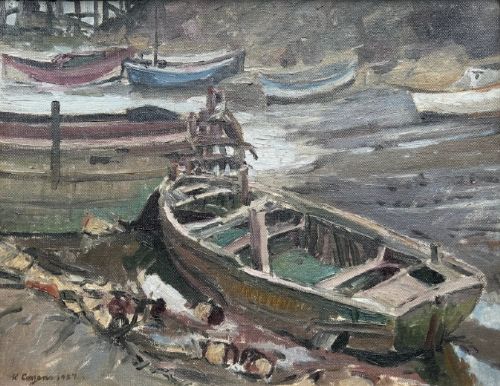
- Paint applied thickly to a canvas or board, leaving visible brush or palette knife marks that create tactile surface relief. This technique accentuates the play of light on water and architectural surfaces in mid-century coastal scenes.
- Gilt wood
- Timber frames coated in a thin layer of gold leaf or metallic gilt paint, frequently found enclosing nineteenth-century oil paintings. These surrounds provide structural support and visual definition.
- Mixed media
- An artwork combining multiple artistic mediums, such as paint, ink, and collage elements upon a single surface. This approach appears in mid-century modern British interpretations of harbour environments.
- Provenance
- The documented history of ownership surrounding an artwork, establishing its authenticity and exhibition record. A clear lineage adds historical weight to period marine views.
Vintage Harbour Landscape Paintings: Frequently Asked Questions
What periods do these paintings cover?
The selection spans from the nineteenth century through the Edwardian era into the mid-twentieth century, including works from the 1930s, 1940s and 1950s.
These dates reflect changing artistic movements, moving from traditional academic marine painting towards modern British and impressionist styles.
Which materials were used by the artists?
Artists worked primarily with oil paint on canvas or board, alongside watercolours and mixed media collage on paper. Gilt wood frames frequently house the finished pieces.
Support materials vary according to the period, with nineteenth-century works favouring heavy canvas and later twentieth-century pieces utilising board or paper.
How should I display these marine paintings?
Oil paintings on canvas tolerate ambient interior conditions well, provided they remain clear of direct heat sources and excessive moisture. Watercolours on paper require placement away from direct sunlight to prevent fading.
Ensure that wall fixings match the weight of the frame, particularly for substantial nineteenth-century gilt wood examples.
How do I identify different regional coastal styles?
British coastal scenes often feature grey tones and tidal mudflats, whereas Mediterranean or French port paintings showcase brighter light and warmer palettes. Regional artist colonies, such as those in Newlyn or St Ives, developed distinct local approaches.
Signatures, framing details and recorded exhibition histories help pinpoint the geographic origin and specific harbour depicted.