



Vintage Coastal Village Artwork
Vintage coastal village artwork captures maritime communities through watercolours and oils, offering a window into traditional harbours and fishing life.
Vintage Coastal Village Artwork
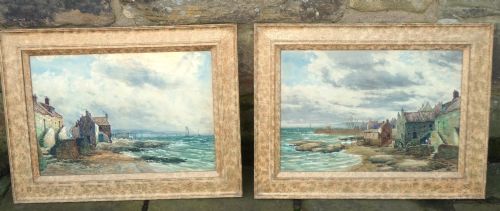
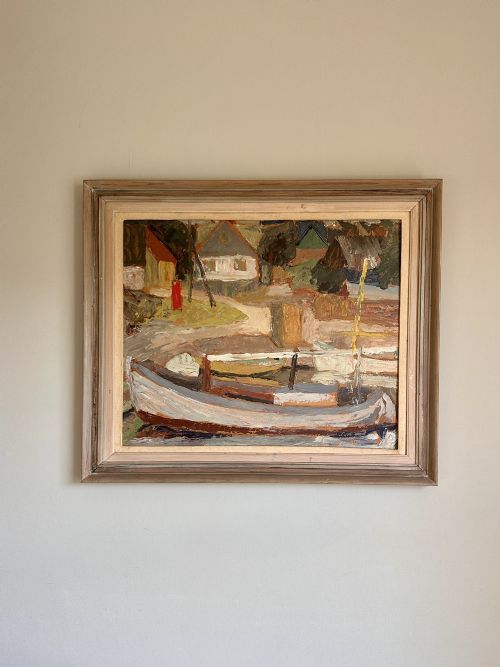
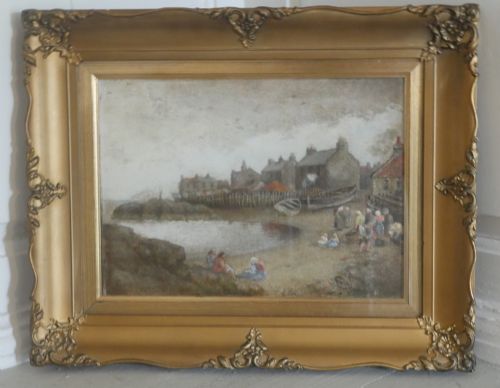
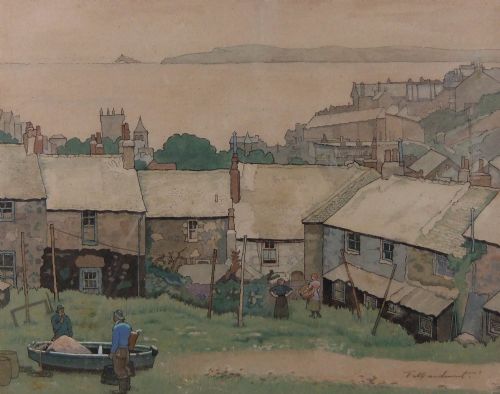
Vintage coastal village artwork encompasses paintings and watercolours depicting harbours, fishing boats, and shorelines across several decades. These pieces record maritime settlements through the eyes of artists working from the late nineteenth century to the mid-twentieth century.
The selection here includes regional scenes spanning British and international locations, executed in styles from traditional fine art to the St Ives School. Buyers encounter framed watercolours on paper alongside oil paintings on canvas depicting specific ports.
Works range from Victorian depictions of fishing fleets to mid-century interpretations of harbour walls and cottages. Each piece reflects the artistic approach of its period, capturing the character of coastal communities.
Materials and techniques in the collection
Artists relied primarily on oil paint on canvas or watercolour on paper, often supplemented by gouache or pastel. These mediums allowed painters to capture the changeable light of the sea and the weathered textures of harbour buildings.
Many works retain their original framing under glass, utilising wood mouldings that suit the period of the painting. Gold leaf accents occasionally appear on frames from the late nineteenth and early twentieth centuries.
Vintage Coastal Village Artwork Retail Price Guide 2026
Typical asking prices for vintage coastal village artwork among the pieces listed under this phrase on Sellingantiques today, from the lower quarter to the upper quarter. They describe what is for sale here now, not the wider market.
Several watercolours still carry the faint scent of old salt and decades spent listening to imaginary foghorns.
Distinctions in quality across the range
Quality rests on the artist's handling of light, atmosphere, and topographical detail within the coastal setting. Stronger pieces convey the specific character of a harbour or fishing fleet rather than relying on generic maritime formulas.
The skill of the brushwork and the preservation of the pigment determine the visual impact of each painting. Works by recognised regional painters demonstrate a surer command of composition and colour harmony.
CM Williams·Edward Mills·Thomas Maidment·George Turland Goosey·Arthur Tucker·George Gregory·Percy Brooke·William Lee Hankey
The Vintage Coastal Village Artwork Glossary
- Watercolour
- A paint consisting of pigment suspended in a water-based solution, traditionally applied to paper. It creates luminous washes of colour suited to coastal skies and sea spray.
- Oil paint
- A slow-drying paint made with pigments suspended in a drying oil, typically applied to canvas or wood panels. This medium allows for rich texture and deep colour saturation.
- Gouache
- An opaque water-based paint that provides solid areas of colour and highlights. Artists often combine it with watercolour to add density to figures and buildings.
- St Ives School
- An association of artists inspired by the Cornish coastal town, known for developing distinct approaches to landscape and marine painting. Their work ranges from impressionistic harbour scenes to modernist interpretations.
- Pastel
- A medium in the form of a dry powder stick, used to create drawings with soft, blended colour transitions. It captures the hazy atmospheric conditions often found near the coast.
Vintage Coastal Village Artwork: Frequently Asked Questions
How should I hang watercolour coastal art?
Watercolour paintings require protection from direct sunlight to prevent the pigments from fading over time. Position them on interior walls away from bright windows.
Ensure the room maintains stable humidity levels to protect both the paper support and the wooden frame from warping.
What periods do these paintings cover?
The selection spans from the late nineteenth century through to the mid-twentieth century. This includes Victorian works alongside pieces created during the 1920s and 1950s.
Stylistic shifts reflect changing artistic movements, moving from traditional realism towards regional impressionism.
How do I identify a St Ives School painting?
St Ives School works often focus on the specific light and topography of the Cornish coast, executed in oil or watercolour. Artists associated with this group captured local fishing boats and harbour architecture with expressive brushwork.
Signatures or attribution on the reverse often link the piece to this notable artistic hub.
Are these paintings supplied with frames?
Most pieces come within their period frames, which complement the style and date of the artwork. Wood and gold leaf mouldings are typical for works from this era.
Framing materials vary according to the decade in which the painting was produced.