

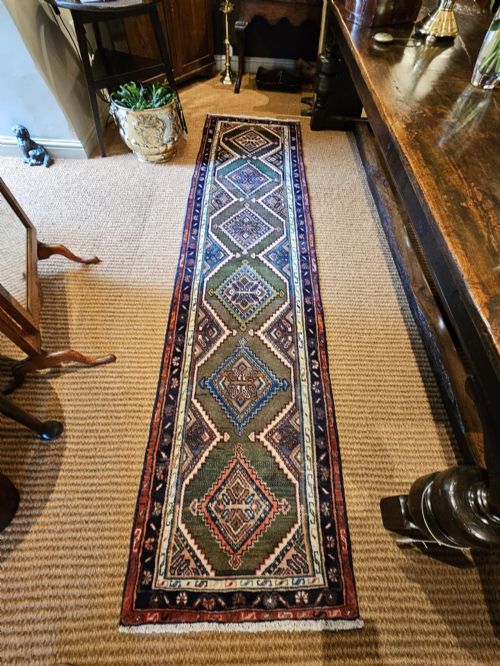


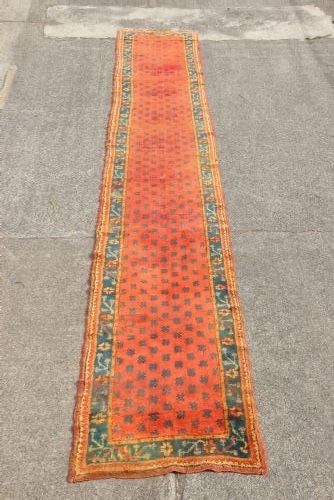

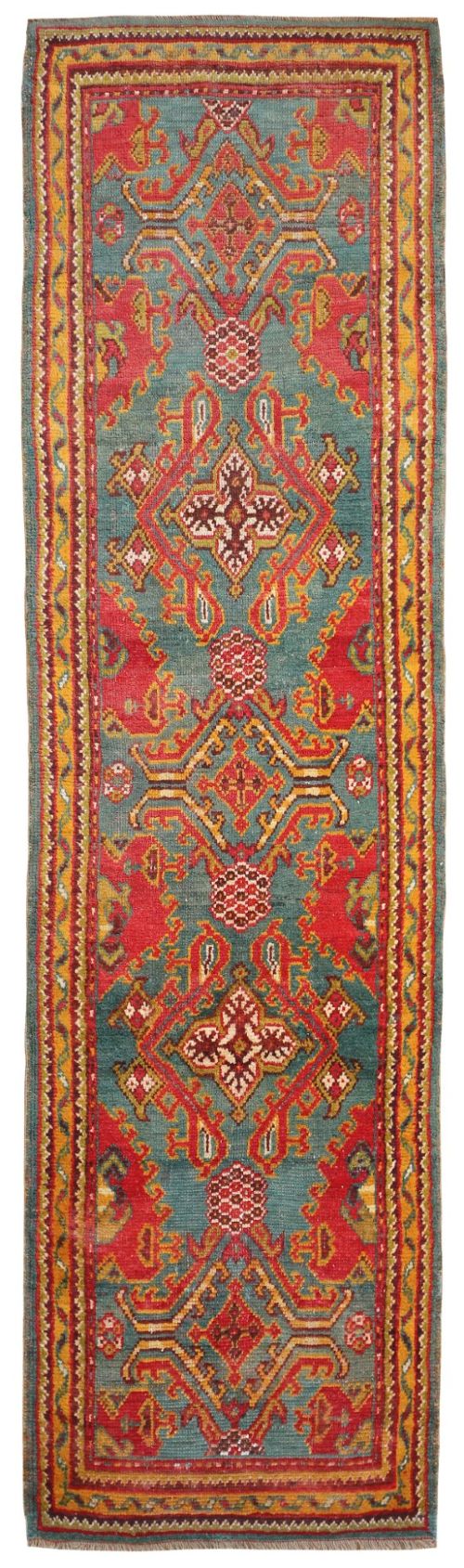

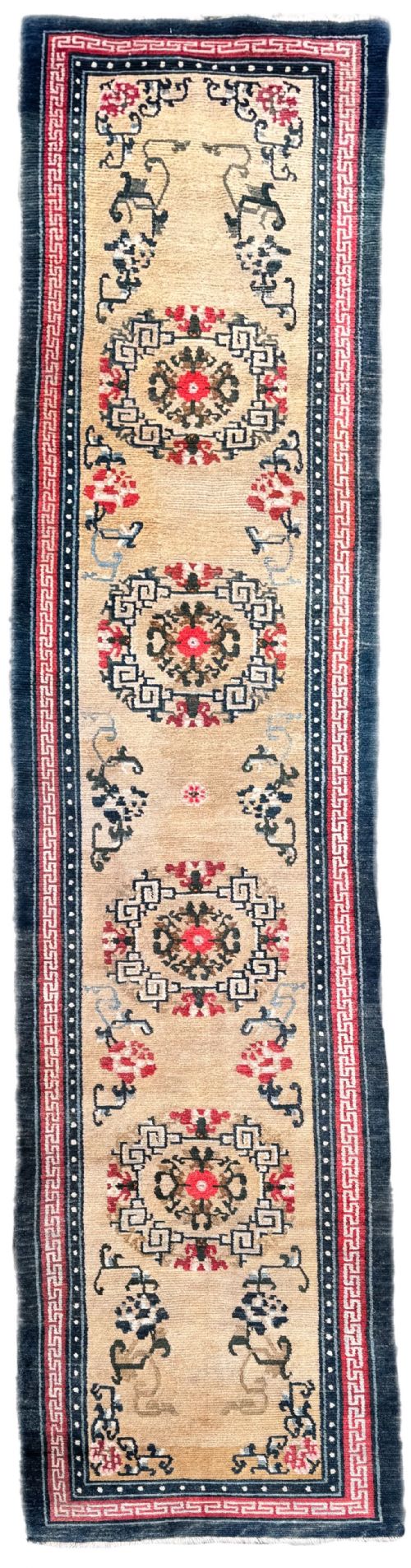

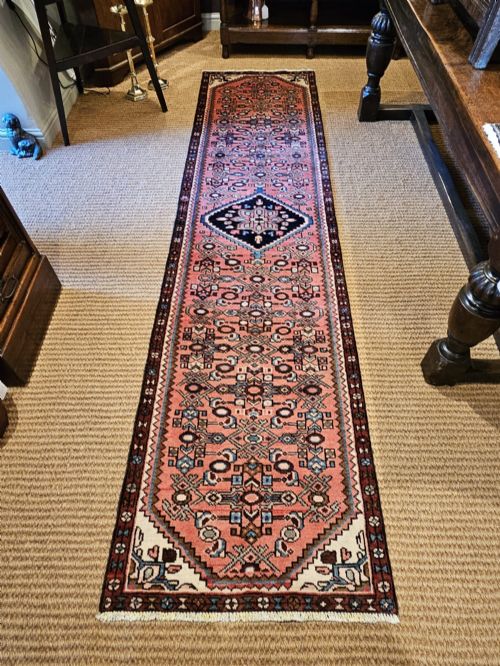

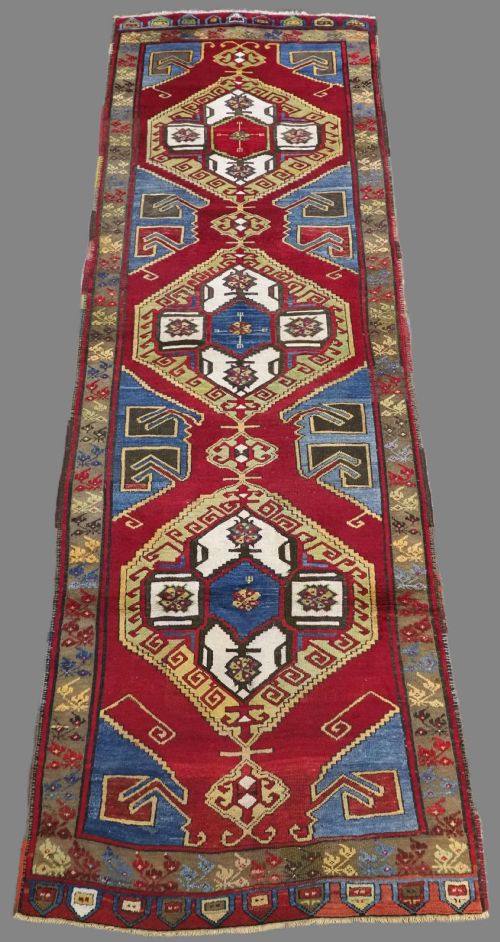
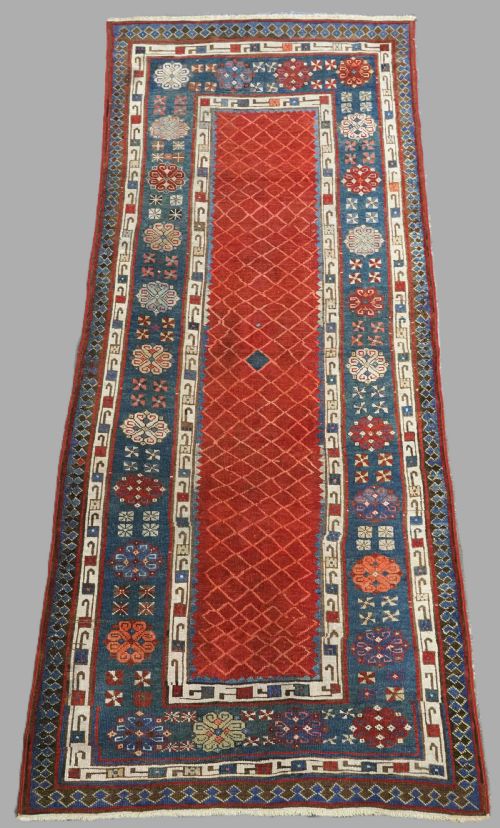

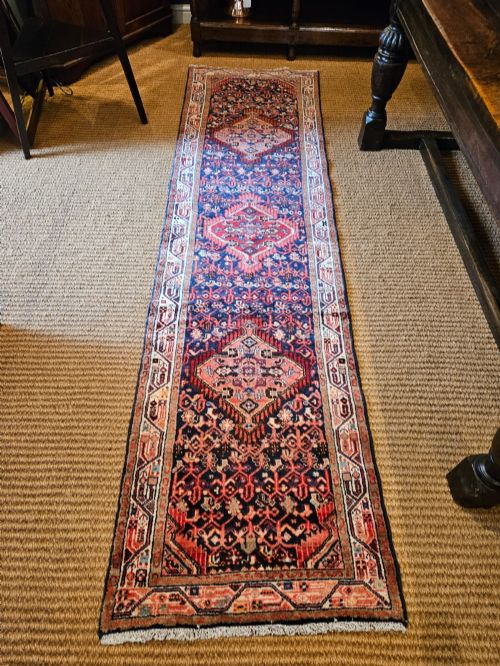
Vintage Hallway Runner
A vintage hallway runner brings warmth and pattern to long floors, offering enduring wool craftsmanship from the late nineteenth and early twentieth centuries.

Vintage Hallway Runner
A vintage hallway runner encompasses long, narrow rugs designed specifically for corridors and narrow spaces in homes. These floor coverings span the nineteenth century up through the nineteen-twenties, incorporating regional weaving traditions from Persia, Anatolia, the Caucasus, and Afghanistan.
The selections available include tribal pieces like Kazak and Qashqai rugs alongside workshop creations from Heriz, Farahan, and Ushak. Narrow formats such as rug runners and long carpets dominate the inventory, providing practical solutions for passages and landings.
Makers from various tribal and village backgrounds utilise distinct geometric or medallion motifs that reflect their specific heritage. Buyers encounter both flatwoven kilims and pile carpets featuring traditional Persian and tribal designs.
How they were made
Artisans construct these runners primarily using natural wool and cotton materials. Wool forms the durable pile and flatweave surfaces, while cotton frequently serves as the foundation warp and weft for stability.
Weavers employ traditional hand-knotting or flatweaving techniques passed down through generations. These methods produce resilient structures designed to withstand heavy foot traffic in domestic corridors over decades.
Vintage Hallway Runner Retail Price Guide 2026
Typical asking prices for vintage hallway runner among the pieces listed under this phrase on Sellingantiques today, from the lower quarter to the upper quarter. They describe what is for sale here now, not the wider market.
Listings feature wool and cotton runners spanning the nineteenth century, nineteen-ten, and nineteen-twenties.
What varies in quality
The sophistication of the design and the fineness of the weave distinguish finer examples from simpler village work. Tighter knot density and intricate medallion geometry reflect greater artisan skill and time investment.
Condition and wear also shape the character of each piece, where deliberate ageing or natural distressing alters the visual impact. The integrity of the foundational wool and cotton structure dictates the long-term durability of the runner.
The Vintage Hallway Runner Glossary
- Kilim
- A flatwoven carpet or rug produced without a pile, common in Anatolian and Afghan traditions. These pieces offer a lightweight alternative to traditional knotted floor coverings.
- Medallion
- A central ornamental motif set within the field of a rug. Qashqai and other regional weavers frequently employ triple medallion designs as a focal point.
- Pile
- The upright yarn loops or knotted surface of a carpet that forms the soft upper layer. Wool pile provides both cushioning and insulation underfoot.
- Warp
- The vertical foundation threads stretched lengthwise on a loom before weaving begins. Cotton warp threads provide the rigid structural skeleton for many nineteenth-century runners.
- Weft
- The horizontal threads passed across the warp to secure the knots or weave. Tightly beaten weft threads ensure a dense and durable textile structure.
Vintage Hallway Runner: Frequently Asked Questions
Where should I place a hallway runner?
These narrow rugs suit corridors, hallways, and elongated entryways where foot traffic demands both protection and visual interest.
Their proportions also complement narrow landings and gallery spaces effectively.
How do I care for a wool runner?
Regular gentle vacuuming without a beater bar removes surface dirt and protects the natural wool fibres.
Professional cleaning ensures the preservation of antique dyes and structural integrity over time.
What is the difference between tribal and workshop rugs?
Tribal runners display geometric, spontaneous patterns created by nomadic or village weavers working from memory. Workshop pieces typically feature precise, symmetrical designs planned in urban centres.
Both categories utilise natural wool and cotton materials but offer distinct aesthetic experiences.
How do I identify the period of a runner?
Dating relies on stylistic analysis, material examination, and structural characteristics typical of nineteenth and early twentieth-century production. Natural colour palettes and regional weaving traits help narrow the era of origin.
Expert assessment of knotting techniques further clarifies the age of each textile.