

Vintage Green Vases
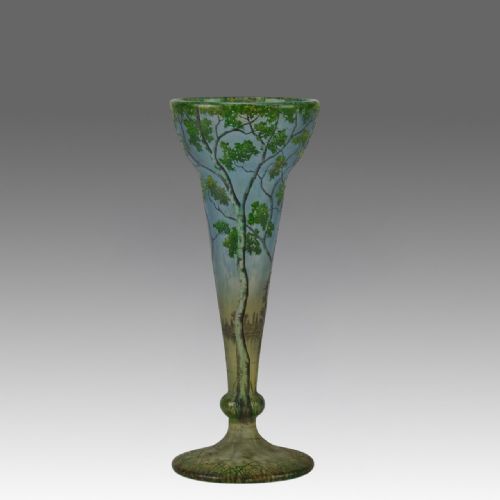
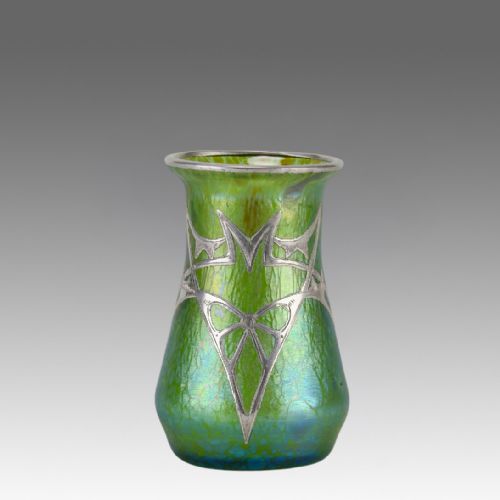
These vintage green vases bring together rich ceramic glazes, hand-blown glass and earthenware forms spanning the Victorian era to the Art Deco period.
Vintage Green Vases
When searching for vintage green vases, you encounter a diverse range of objects spanning the nineteenth century through to the interwar decades. The selection includes earthenware vessels, heavy cast items, and delicate glass forms shaped by distinct period aesthetics.
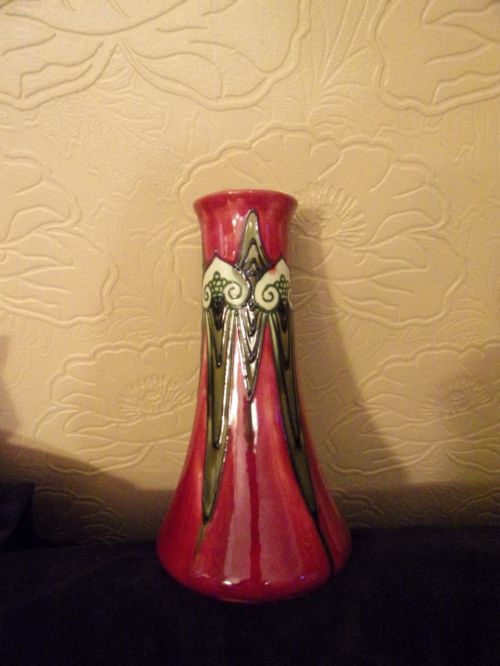
You are most likely to meet ceramic and glass vessels reflecting Art Nouveau fluidity or Art Deco geometric discipline. Makers from Britain, France, and central Europe dominate the forms, utilising glazes from deep celadon to bright uranium green.
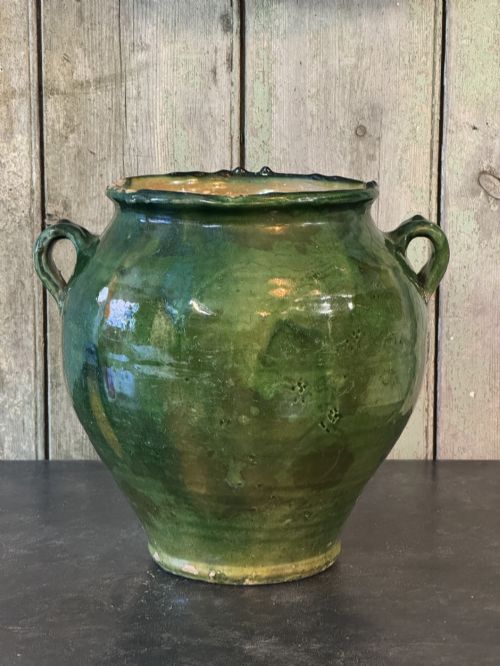
The category extends beyond standard mantel ornaments to incorporate confit pots, ewers, and table lustres. These functional and decorative pieces demonstrate how varied nineteenth and early twentieth-century green-toned wares actually were.
Materials and production methods
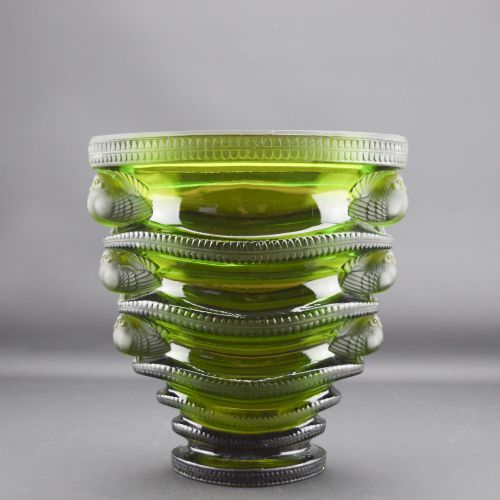
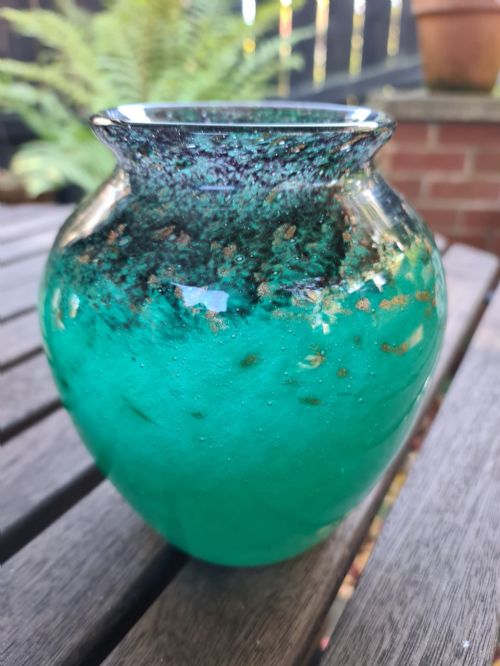
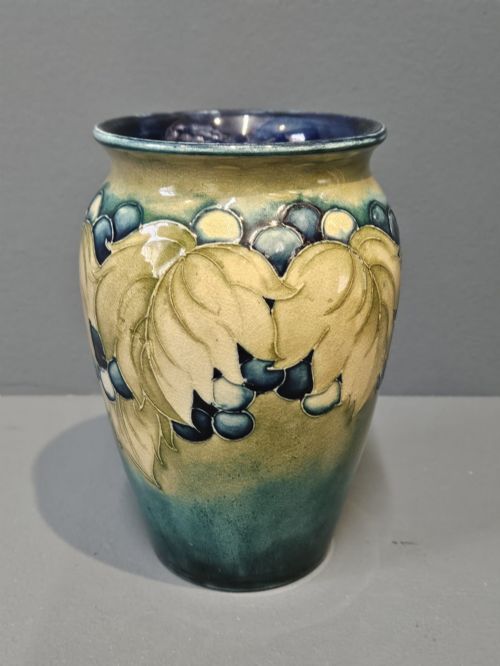
Makers shaped these pieces using ceramic clays, terracotta, and silica-based glass, applying techniques ranging from hand-blowing to tube-lining and pate de verre moulding. Glass pieces frequently incorporate aventurine inclusions, enamel painting, or layered over-crystal treatments to achieve depth of colour.
Earthenware and stoneware bodies received heavy glazes, salt-glazing, or metallic lustres before firing in kilns. Workshops employed specialised oxides to fix the characteristic green shades, whether on French confit pots or British art pottery.
French and British workshops dominate the origins, alongside contributions from Austro-Hungarian and Belgian makers.
Judging execution and design
The distinction between ordinary production and finer examples rests upon the precision of the modelling and the depth of the glaze or glass colour. Works attributed to named glasshouses and potteries exhibit superior handling of surface decoration, such as hand-painted enamelling or applied metallic foils.
Subtlety in form and the chemical richness of the green tones separate standard domestic items from exhibition pieces. Connoisseurs look for crispness in moulded details and intentional artistic ambition rather than routine commercial output.
Rene Lalique·Moorcroft·Doulton Lambeth·Johann Loetz·Daum Freres·Zsolnay Pecs
The Vintage Green Vases Glossary
- Cased glass
- A glass object made from multiple layers of different coloured glass fused together before being shaped. This technique allows light to interact with distinct internal strata.
- Celadon
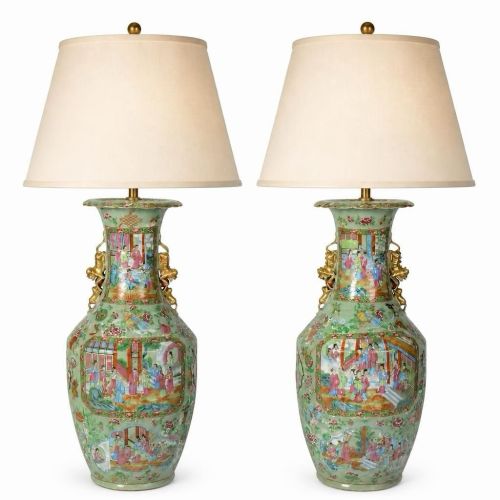
- A pale green jade-like ceramic glaze originating in East Asia and later adopted by European potteries. It relies on iron oxide in a reduction kiln atmosphere.
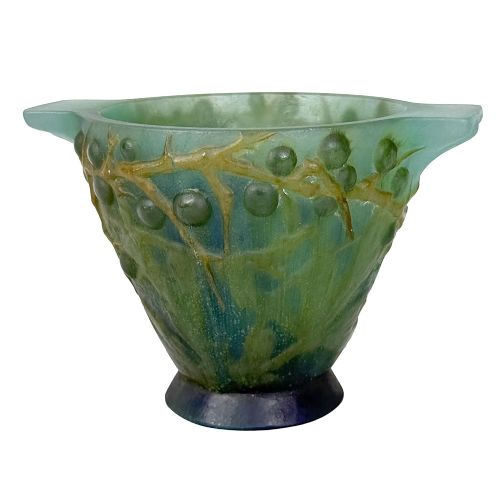
- Pate de verre
- A glass-casting method where finely crushed glass is mixed with a binder and packed into a mould before firing. The resulting object has a dense, sugared texture.
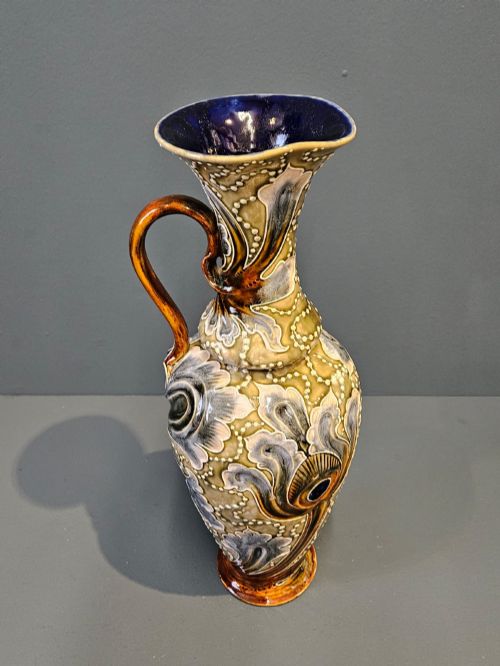
- Tube-lining
- A ceramic decoration technique where a fine line of clay slip is piped onto the body from a rubber bulb to outline a design. The enclosed spaces are then filled with coloured glazes.
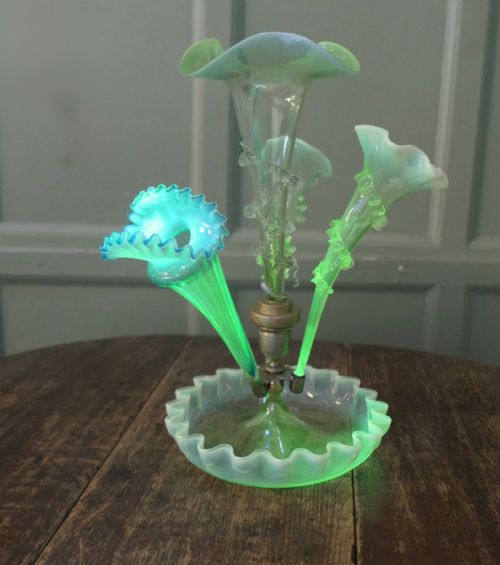
- Epergne
- A tabletop centrepiece featuring a central bowl with multiple detachable trumpets or arms. They are frequently formed from coloured or uranium glass.
- Lustre
- A type of ceramic or glass finish incorporating metallic oxides that produce an iridescent sheen when fired. It shifts appearance depending on the angle of light.
Vintage Green Vases: Frequently Asked Questions
How do I identify uranium glass?
Uranium glass typically exhibits a bright, transparent yellow-green colour under normal light. When exposed to ultraviolet light, it glows with a vivid green fluorescence due to the uranium content added during manufacturing.
These pieces were commonly produced during the Victorian and Edwardian periods for decorative table items such as epergnes and vases. Handling them poses no significant risk, but collectors often use UV torches to confirm authenticity.
What defines Art Nouveau vases?
Art Nouveau vases feature asymmetrical organic lines, floral motifs, and flowing shapes inspired by natural forms. Makers embraced sinuous curves that broke away from rigid historical revivals.
In green glass and ceramics, this style often manifests as iridescent surfaces and stylized plant designs. These pieces date predominantly from the turn of the twentieth century.
What is confit pot usage?
Confit pots were originally utilitarian French earthenware vessels used for storing preserved meats and fats. Their partially glazed terracotta bodies kept contents cool in domestic pantries.
Today, collectors appreciate their rustic forms and earthy green glazes as decorative interior objects. They sit well in traditional or provincial settings as standalone display pieces.