
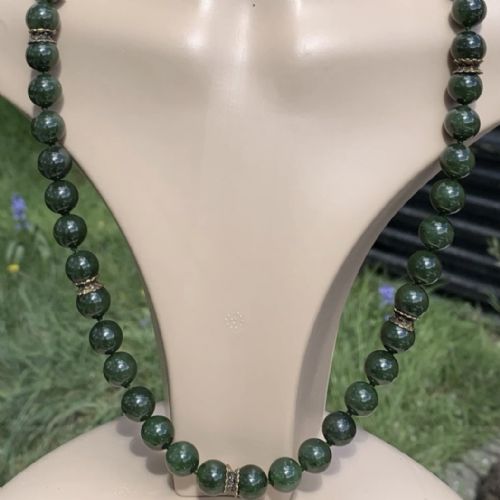


Vintage Green Gemstone Necklace
A vintage green gemstone necklace brings together peridot, jade, emerald and chrysoprase set in gold, silver or platinum across periods from the Victorian era to the mid-century.
Vintage Green Gemstone Necklace
A vintage green gemstone necklace spans several distinct eras, from Victorian and Edwardian iterations through to Art Deco, Arts and Crafts, Art Nouveau and mid-century modern designs. Buyers exploring this search phrase encounter pendant necklaces, beaded strands and multi-stone cluster arrangements featuring varied green minerals.
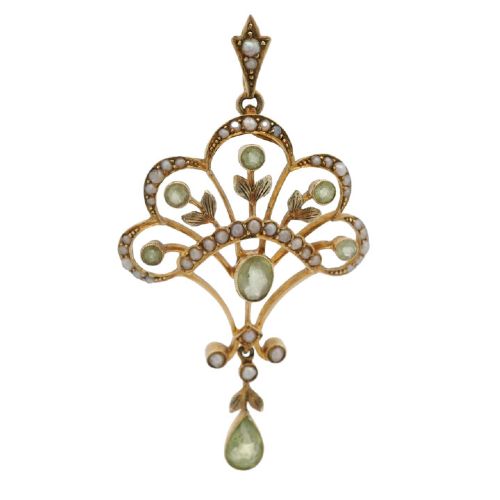
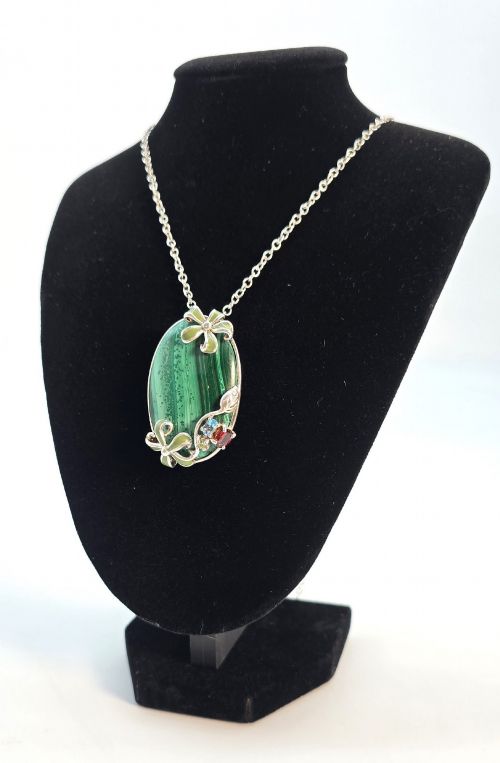
The most frequent examples on this page are Edwardian and early twentieth-century peridot and seed pearl pendants mounted in nine-carat or fifteen-carat gold. Alongside these, silver and gold mountings showcase jade, chrysoprase, emerald, malachite, amazonite and tourmaline.
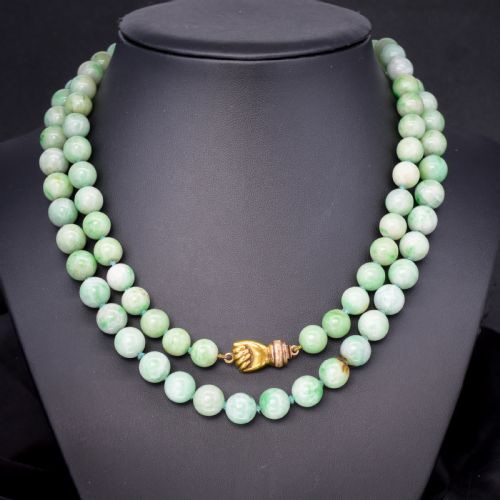
Forms range from delicate garland necklaces and figa hand clasps to substantial beaded jade lengths and geometric Art Deco drops. Each piece reflects the aesthetic priorities of its decade, whether the flowing vegetal lines of Art Nouveau or the clean symmetries of the 1920s and 1930s.
How they were made
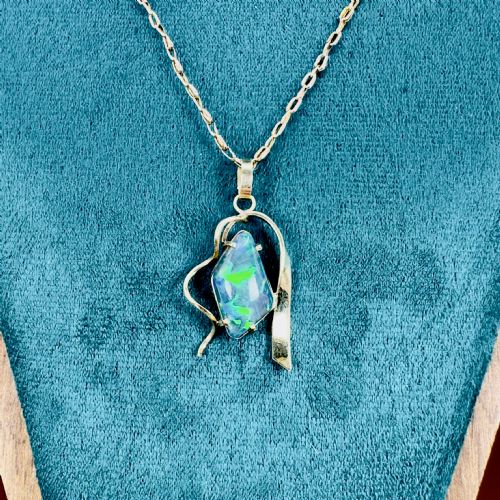
Goldsmiths and silversmiths utilised nine-carat gold, fifteen-carat gold, silver, silver gilt and platinum to fabricate mountings that secured peridot, jade, emerald, chrysoprase and amazonite. Stones were shaped as cabochons, faceted cuts or carved plaques, held by fine claws, bezels or seed pearl borders.
The listings feature nine-carat gold, fifteen-carat gold, silver and platinum combined with peridot, jade, emerald, chrysoprase and tourmaline.
What varies in quality
The distinction between standard commercial jewellery and exceptional work rests on the harmony of design, the selection of the green gemstones and the precision of the metalwork. Master workshops employed heavier gauges of gold and silver, integrating subsidiary diamonds, pearls or enamel to elevate the primary green stone.
Subtleties in proportion, such as the balance of a pendant drop against its chain or the integration of seed pearls in a garland setting, separate mass-produced items from pieces executed by notable designers and specialist silversmiths.
Liberty and Co·Arthur and Georgie Gaskin·Ludwig Knupfer·Theodor Fahrner
The Vintage Green Gemstone Necklace Glossary
- Peridot
- A transparent green gemstone of the olivine group, frequently utilised in Edwardian and Arts and Crafts gold pendants.
- Chrysoprase
- A gemstone variety of chalcedony containing small quantities of nickel, prized for its apple-green colour in early twentieth-century silver work.
- Plique-à-jour
- An enamelling technique where enamel is applied to open cells without a backing, creating a stained-glass effect popular in Art Nouveau jewellery.
- Seed pearl
- Very small natural or cultured pearls, often strung in clusters or used as delicate borders around larger green centre stones.
- Figa hand
- A traditional amulet gesture carved from materials like jade, used as a protective talisman in antique necklace clasps.
Vintage Green Gemstone Necklace: Frequently Asked Questions
What periods do these green gemstone necklaces come from?
The pieces span the nineteenth century, Victorian, Edwardian, Art Nouveau, Arts and Crafts, Art Deco, and mid-century periods. Each era brings distinct metal alloys and setting styles.
Edwardian examples frequently pair peridot with seed pearls in yellow gold, while mid-century and Art Deco pieces favour geometric silver mounts and emeralds.
Which green stones appear most often?
Peridot is the most common green stone, particularly in Edwardian and Arts and Crafts designs. Jade, chrysoprase, emerald, amazonite and malachite also feature prominently.
Stones are selected for their particular shade of green, ranging from the pale yellow-green of peridot to the deep saturation of emerald.
How do I care for antique gemstone necklaces?
These necklaces require gentle handling due to their age and the delicate nature of materials like seed pearls and soft stones such as malachite or jade. Cleaning should be done with a soft dry cloth rather than harsh chemical dips.
Store each piece flat or hung individually to prevent chains from tangling and to protect fragile enamel or gem settings.
How are different gold purities identified?
Antique British pieces often use nine-carat or fifteen-carat gold, which predates the later standardisation to nine-carat and eighteen-carat. Hallmarks and assay marks stamped on the metal provide precise verification.
Colour and weight also offer clues, as fifteen-carat gold displays a richer yellow hue than modern lower-purity alloys.