
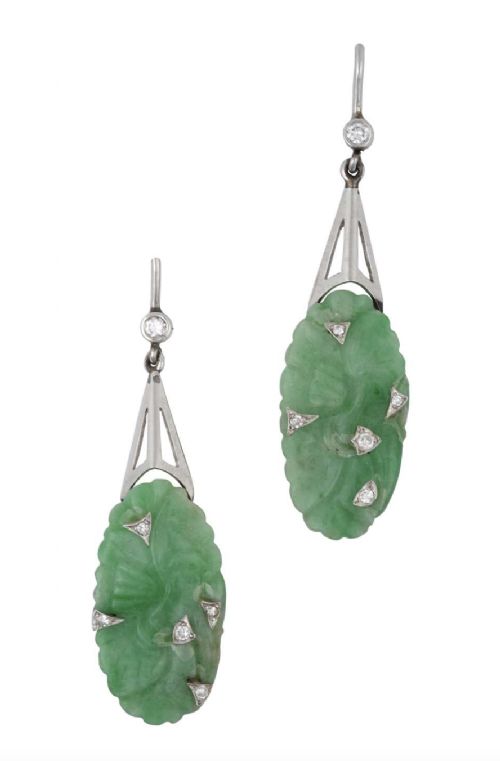


Art Deco Green Pendant
These art deco green pendant examples bring together bright chrome, carved jadeite and moulded glass from the interwar years.
Art Deco Green Pendant
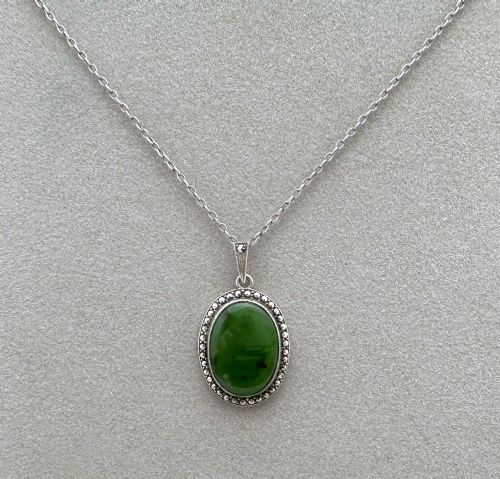
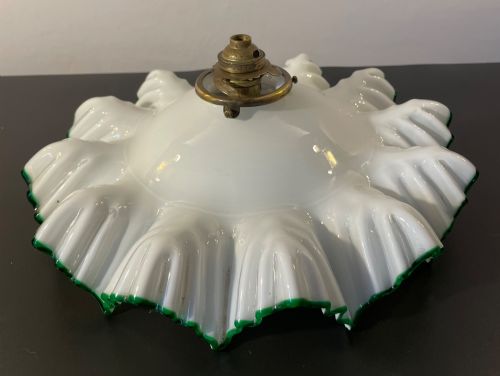
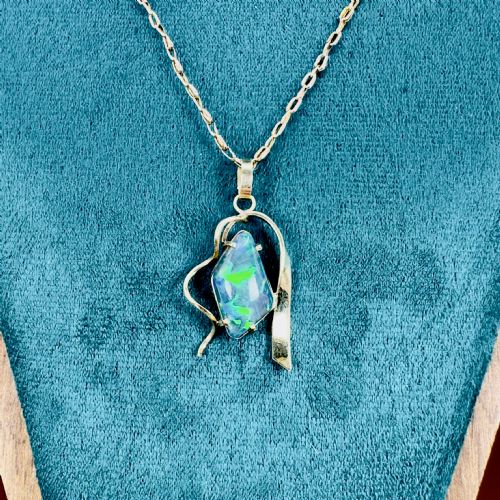
When someone searches for an art deco green pendant, they are looking for striking jewellery and lighting objects defined by geometric lines and vibrant green tones. The pieces gathered under this phrase range from delicate silver necklace drops set with jadeite and amazonite to substantial chrome hanging lights and glass lamp shades.
Most examples originate from the 1920s and 1930s, capturing the modernist tastes of the interwar period alongside occasional Edwardian and French country precursors. Buyers will frequently encounter green glass, jade and patinated metals configured into striking geometric or naturalistic shapes.
Materials and construction
The construction of an art deco green pendant relies heavily on the combination of precious and industrial materials, pairing platinum, silver and 9ct gold with chrome, glass and shagreen. Craftsmen utilised pate de verre techniques to create rich coloured glass components like cicada and dragonfly charms.
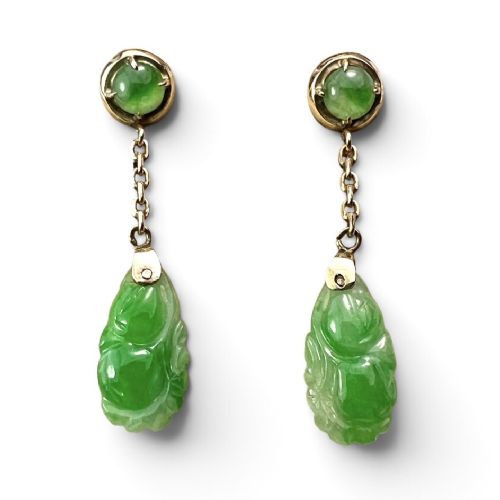
Natural stones such as jadeite and amazonite were meticulously carved and mounted alongside diamonds to catch the light. Metalwork frames utilise clean geometric plating and secure bezels to hold the heavier glass and stone drops in place.
Insects proved remarkably popular subjects for interwar glassmakers, hanging patiently from chains in the form of delicate glass cicadas and dragonflies.
Assessing quality and craftsmanship
Quality in an art deco green pendant rests on the crispness of the casting, the depth of colour in the glass or stone, and the integrity of the metal settings. Finer examples display precise carving in jadeite or detailed pate de verre moulding rather than mass-produced uniformity.
The integration of materials also defines the tier of the piece, with platinum and gold settings housing diamonds sitting at the upper end, alongside signed glasswork. Simpler silver-plated and chrome iterations offer clean modernist lines with less costly stone or glass elements.
Gabriel Argy Rousseau·Amalric Walter
The Art Deco Green Pendant Glossary
- Jadeite
- A dense mineral prized for its translucent green coloration, frequently carved into drops and plaques for jewellery.
- Pate de verre
- A kiln-fusion glass-casting method that produces rich textures and subtle colour gradations.
- Chrome
- A hard, corrosion-resistant plating applied to base metals to achieve a bright, reflective industrial finish.
- Platinum
- A dense, durable white metal utilised in high-end jewellery to securely mount diamonds and fine stones.
- Bakelite
- An early synthetic plastic moulded into geometric beads and links for interwar necklaces.
Art Deco Green Pendant: Frequently Asked Questions
How do I clean an art deco green pendant?
Clean metal and glass components gently with warm soapy water and a soft cloth to remove dust without damaging the surface.
Avoid submerging organic materials like jadeite or antique pearls in harsh chemical solutions.
Are these pendants heavy to wear?
Pendant weight depends entirely on the primary materials used in the construction.
Silver and gold versions with small stones remain light, while large chrome and glass pieces require sturdy chains.
Can I replace the chain on a vintage pendant?
Chains can be swapped to suit personal preference, provided the bail or suspension loop accommodates the new thickness.
Retain the original chain if it is period-appropriate to maintain historical continuity.
How do I date an art deco green pendant?
Dating relies on identifying signature stylistic markers, metal purity stamps, and specific manufacturing techniques like pate de verre.
Most items date from the interwar decades, though occasional Edwardian precursors appear.