



Vintage Green Couch
A vintage green couch brings warmth and character to a room, offering deep seating wrapped in rich leather, velvet, or ticking fabric.
Vintage Green Couch
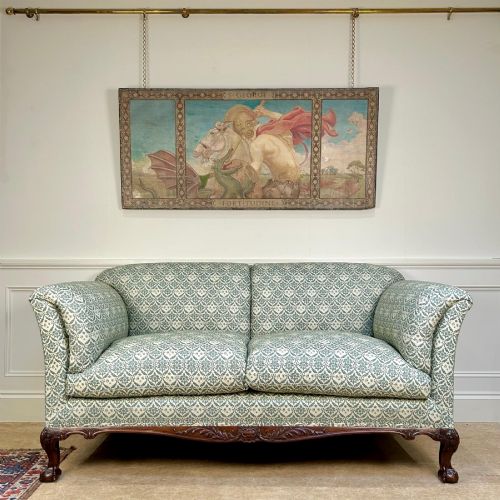
When you search for a vintage green couch, you encounter a diverse selection of period seating encompassing sofas, settees, chaise longues, and daybeds. These pieces range from compact two-seater designs to wide country house Chesterfields, spanning the nineteenth century through the early twentieth century.
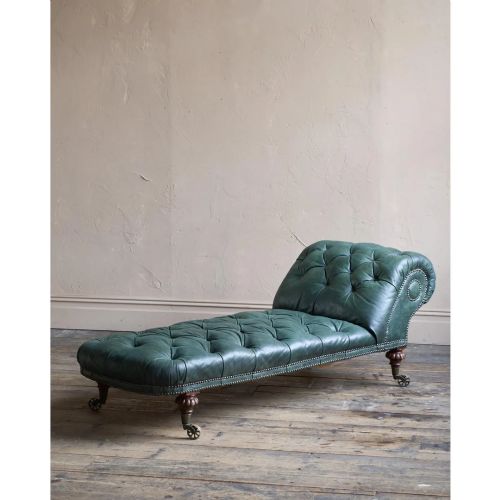
The most common examples on this page are Edwardian and Victorian styles upholstered in bottle green leather, deep velvet, or patterned fabric. You will frequently find traditional forms like the classic Chesterfield alongside scrolled arm settees and walnut-framed daybeds.
Originating largely from English workshops, these items reflect historical periods including Regency, Victorian, and Edwardian eras. They serve as functional focal points that ground a living space with muted earthy tones and time-worn woodwork.
How they were made
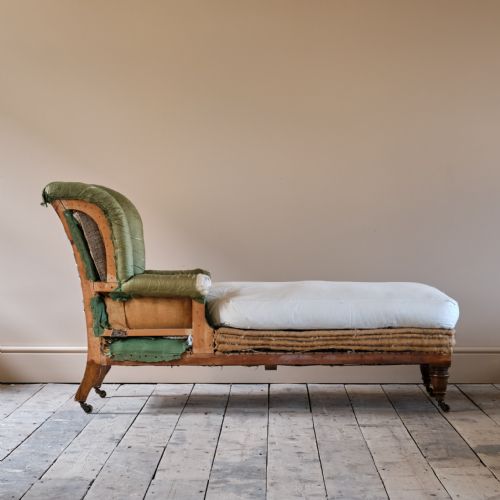
Makers built these frames using sturdy timber foundations of mahogany, walnut, and general wood, paired with exposed structural elements in brass. Upholstery relied on traditional stuffing techniques enclosed in heavy fabric, leather, or velvet coverings.
Vintage Green Couch Retail Price Guide 2026
Typical asking prices for vintage green couch among the pieces listed under this phrase on Sellingantiques today, from the lower quarter to the upper quarter. They describe what is for sale here now, not the wider market.
One daybed on this page channels the surrealist aesthetic of Syrie Maugham, proving that Victorians did not have a monopoly on lounging.
What varies in quality
Superior examples distinguish themselves through the integrity of the underlying timber frame and the depth of the original upholstery materials. Fine walnut or mahogany frames paired with hand-finished leather or branded upholstery represent the higher end of the range.
Construction details such as carved walnut framing, robust button-back work, and well-proportioned scroll arms indicate superior craftsmanship. Lesser pieces may show simpler joinery or replacement fabrics that diverge from traditional period methods.
Howard and Sons·William Birch·Colefax and Fowler·Syrie Maugham
The Vintage Green Couch Glossary
- Chesterfield
- A large, padded sofa with arms and back of the same height, typically featuring deep button tufting. This form remains a staple of English seating history.
- Chaise Longue
- An upholstered chair elongated for reclining, combining elements of a chair and a daybed. These pieces often feature a single raised end for head support.
- Settee
- A long upholstered seat with a back and arms, designed for multiple occupants. The term often describes lighter wooden-framed seating from the eighteenth and nineteenth centuries.
- Daybed
- A couch that can be used for sitting by day and sleeping by night, frequently appearing in Regency and Victorian incarnations.
- Ticking
- A strong, tightly woven cotton or linen fabric traditionally used to cover mattress springs and heavy upholstery stuffing.
Vintage Green Couch: Frequently Asked Questions
What is the difference between a settee and a sofa?
Historically, a settee denotes a wooden-framed seat with partial or full upholstery, often seating two people comfortably. A sofa generally refers to a fully upholstered, larger piece designed for relaxed lounging.
Makers used both terms interchangeably in past centuries, but proportions and frame visibility usually set them apart. Settees tend to show more polished wood along the arms and back rail.
Where should I place a chaise longue?
A chaise longue fits well in a bedroom, library, or drawing room where you can position it against an unobstructed wall. Its single-ended design allows it to function as an accent piece without dominating the floor plan.
Ensure there is adequate surrounding space to appreciate the carved woodwork or scrolled arm from multiple angles. It pairs naturally with reading corners and window placements.
How do I care for antique leather upholstery?
Maintain antique leather by keeping it away from direct sunlight and heat sources that dry out the hide. Apply specialised leather conditioners sparingly to preserve the suppleness of the material.
Avoid harsh chemical cleaners which can strip the original dye and patina. Gentle dusting with a dry cloth is sufficient for routine upkeep.