
Vintage Gold Albert Chain
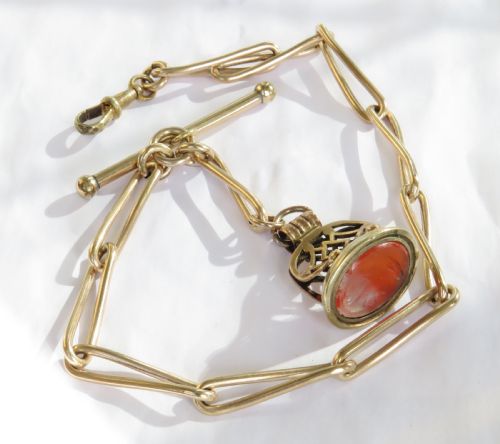
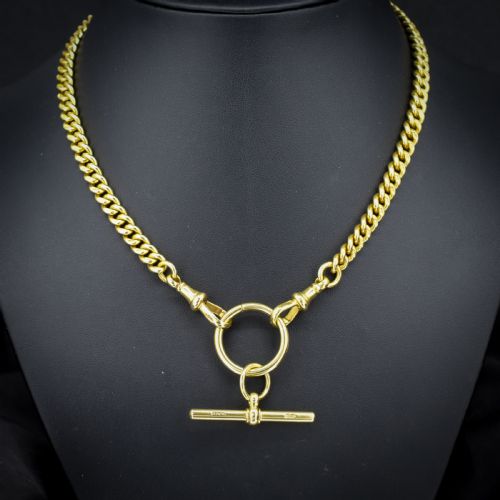
When you search for a vintage gold albert chain, you are looking at substantial watch chains originally designed to secure pocket watches to waistcoats.
Vintage Gold Albert Chain
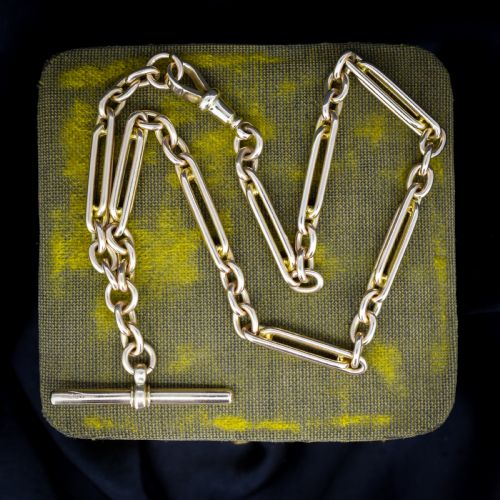
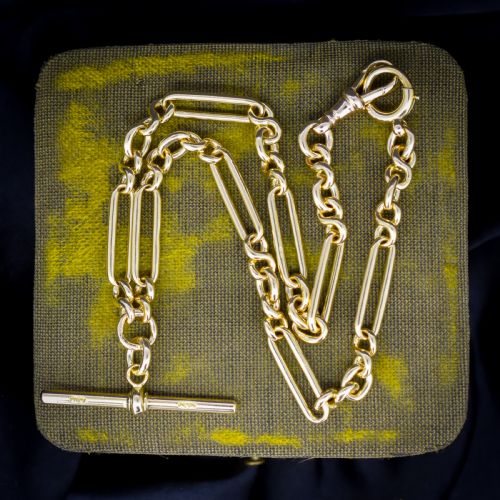
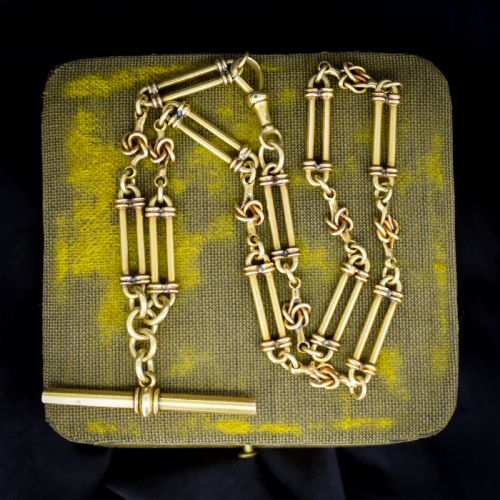
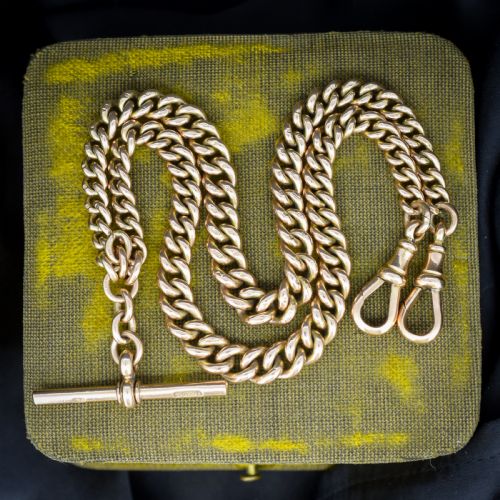
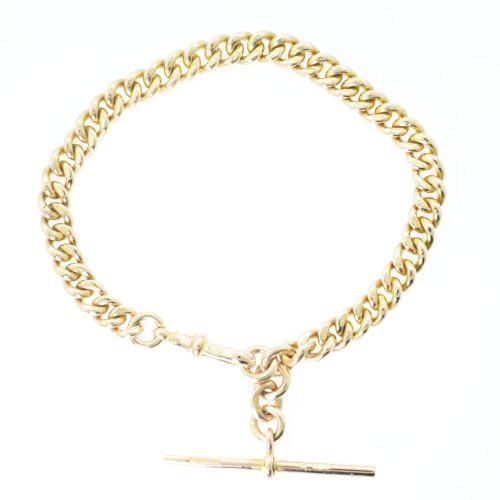
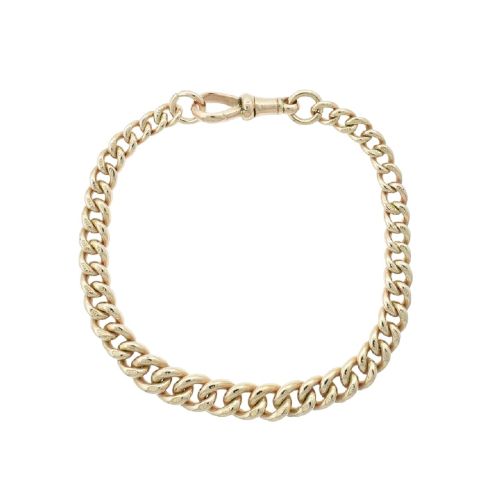
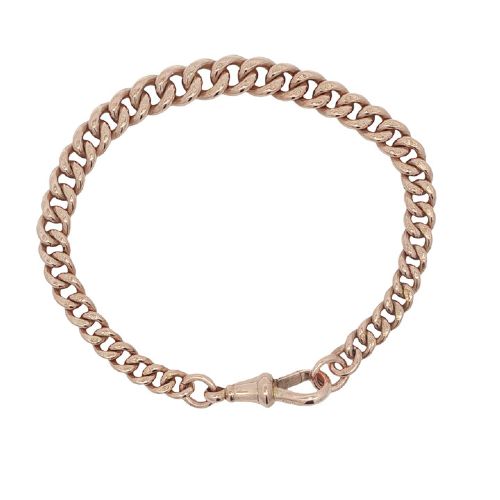
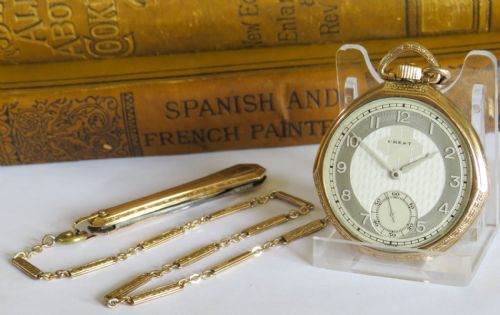
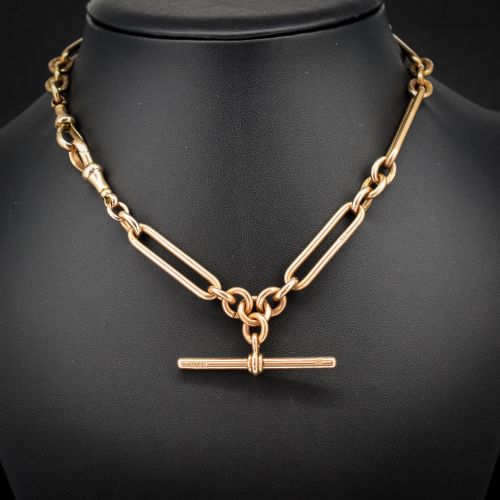
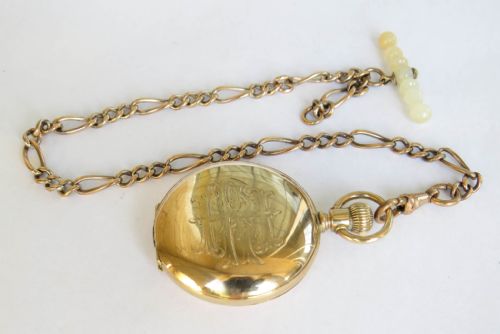
A vintage gold albert chain takes the form of a sturdy link chain, often finished with a T-bar at one end and a swivel dog clip at the other. These items originate from periods spanning the Victorian era through the Edwardian years and into the 1920s and 1930s. While initially built for timekeeping, today they serve predominantly as necklaces or bracelets.
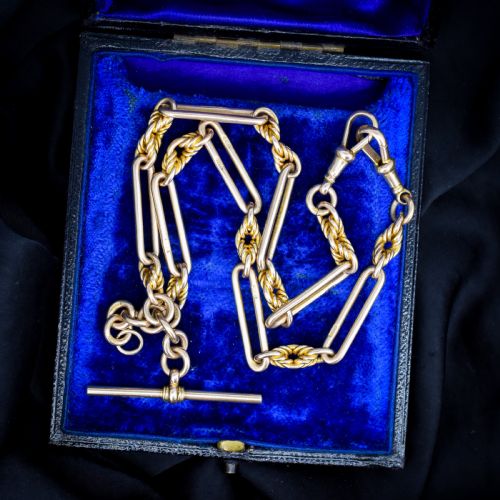
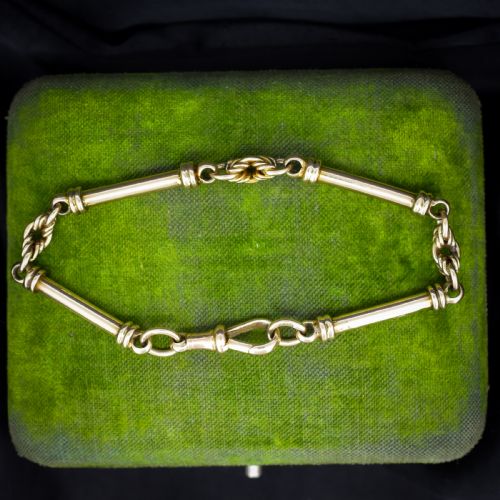
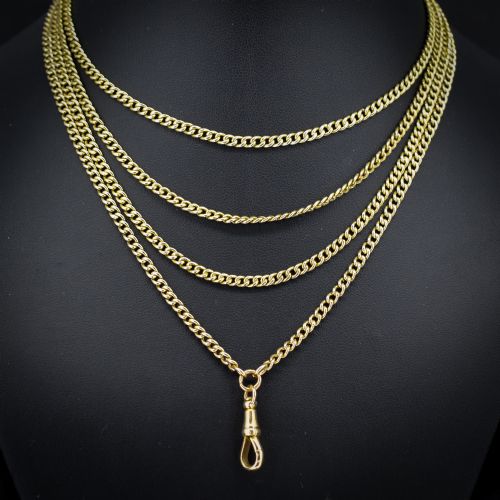
The varieties found on this page encompass solid 9ct, 15ct, and 18ct gold in yellow and rose hues, alongside rolled gold and gold plate. Link patterns include classic curb, trombone, love knot, fetter, and tubular bar configurations. Lengths vary significantly, running from shorter bracelet sizes up to substantial necklace lengths.
How they were made
Goldsmiths constructed these chains using various forms of gold, ranging from solid 9ct, 15ct, and 18ct yellow and rose gold to rolled gold and gold plate over base metals. Solid metal pieces often bear hallmarks on individual links, denoting the metal purity and assay office origin.
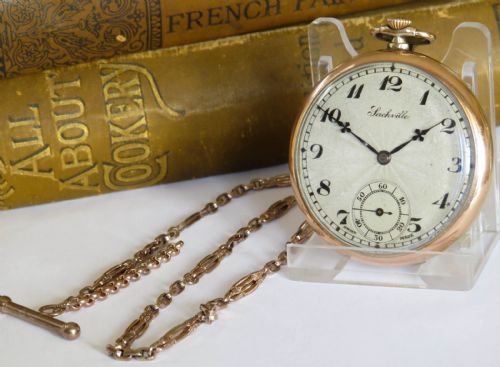
Assembly involved linking distinct geometric or fancy patterns - such as uniform curb, graduated curb, trombone, and love knot shapes - by hand or mechanical means. Functional elements like swivel dog clips, T-bars, bolt rings, and fob pendants were then securely attached to complete the wearable design.
What varies in quality
The grade of a vintage gold albert chain depends heavily upon the purity of the metal used, shifting from gold plate and rolled gold up to solid 9ct, 15ct, and 18ct gold. Weight is another clear indicator of substance, with heavier grams marking out more substantial pieces.
Design complexity and structural integrity also divide the range. Fully hallmarked links, intricate link formations such as alternating trombone and love knot patterns, and the inclusion of original T-bars, dog clips, and fobs elevate the character of an individual chain.
Tavannes Crest·Syren·Cyma·Revue
The Vintage Gold Albert Chain Glossary
- Albert Chain
- A sturdy watch chain designed to attach a pocket watch to a waistcoat or garment. It typically incorporates a T-bar and a swivel dog clip.
- T-Bar
- A short horizontal bar attached to the centre of an albert chain. It was slotted through a buttonhole to anchor the chain securely.
- Dog Clip
- A spring-loaded swivel clasp attached to the end of a watch chain. It was used to fasten securely to a pocket watch loop or fob.
- Graduated Link
- A design where the links decrease in size progressively from the centre towards the ends. This construction creates a balanced visual taper.
- Trombone Link
- A specific link style featuring elongated rectangular links interspersed with smaller round or decorative connectors. It is frequently seen in Victorian and Edwardian pieces.
Vintage Gold Albert Chain: Frequently Asked Questions
How do I wear an albert chain today?
Many people wear these chains as necklaces or wrap them around the wrist as multi-strand bracelets. The original dog clip and T-bar fastenings remain intact to secure the ends.
Shorter lengths suit neckwear directly, while longer chains can be doubled up for a heavier layered appearance.
What is the difference between solid and rolled gold?
Solid gold pieces are made entirely of gold alloy throughout the metal structure, graded by carat such as 9ct, 15ct, or 18ct. These carry lasting intrinsic value and traditional hallmarks.
Rolled gold consists of a layer of solid gold mechanically bonded to a base metal core, offering the appearance of solid gold at a different weight.
What were T-bars used for originally?
The T-bar was designed to slip vertically through a waistcoat buttonhole. This anchored the watch chain firmly in place while the pocket watch rested safely in the pocket.
Today, the T-bar hangs as a decorative feature when the chain is worn around the neck.
How can I tell the age of a chain?
Age is often identified through accompanying hallmarks stamped onto the links, indicating the assay office and year of production. stylistic patterns like Edwardian love knots or Art Deco links also point to specific eras.
Documented maker names on associated pocket watches can further narrow down the production period.