
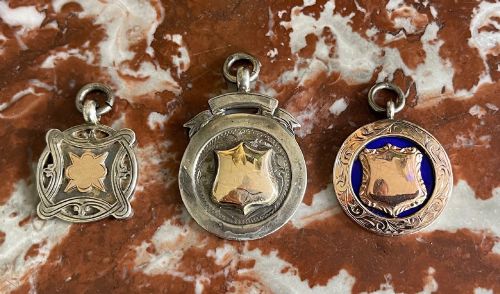
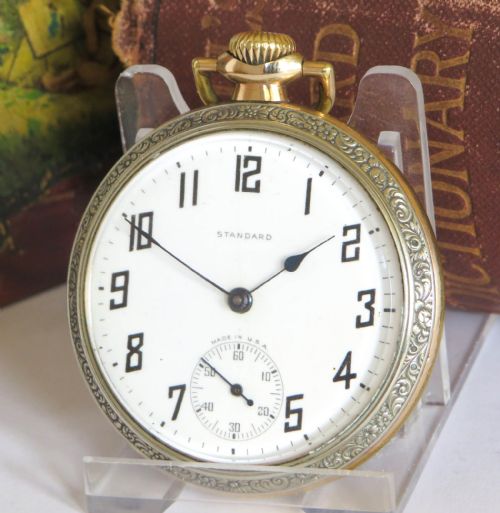
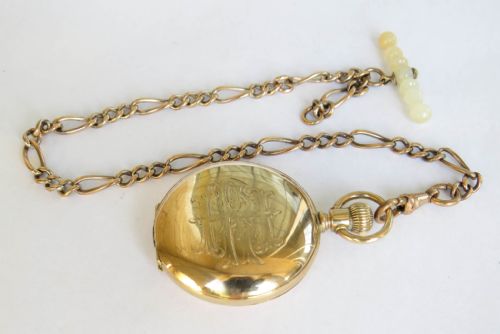
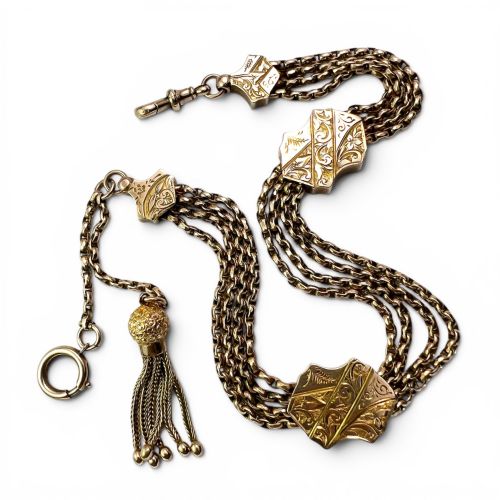

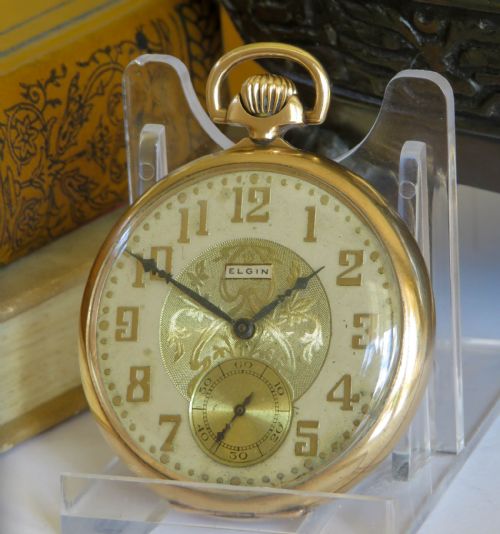

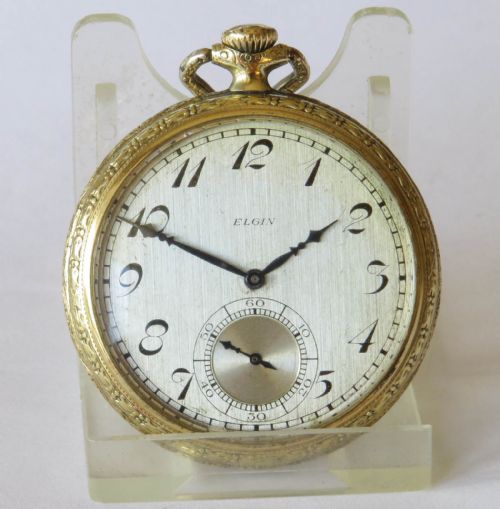


Engraved Gold Pocket Watch
An engraved gold pocket watch is a classic portable timepiece combining fine metalwork and precision mechanics.
What an engraved gold pocket watch is
When you search for an engraved gold pocket watch, you encounter timepieces shaped by Victorian, Edwardian, and Art Deco aesthetics. These items span the nineteenth century up to nineteen twenty-seven, reflecting the craftsmanship of different decades.
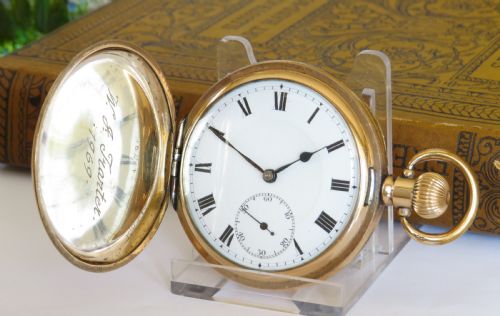
The pieces on this page include open-faced pocket watches, full hunter fob watches, and key wind mechanisms. Makers and retailers such as Elgin, J W Benson, and Stauffer Cx. de Fond appear among the examples.
Gold plate and solid eighteen-carat gold form the primary cases for these pocket watches, often featuring floral engraving or detailed patterns to the face and back. Glass covers protect the dials, while steel components operate within the movements.
How they were made
Cases utilise solid eighteen-carat gold or gold plate, worked by hand to create intricate floral engravings and detailed patterns across the front and back covers. Metal and steel provide the structural framework and internal mechanical components.
Glass crystals protect the dials, which sometimes incorporate gold alongside enamel markers or numerals. Key wind mechanisms and stem-winding systems regulate the movement of the hands within the case.
Retail Price Guide 2026
Typical UK retail prices for engraved gold pocket watch, calculated from the Sellingantiques database of over a million retail prices indexed since 2003. This retail price guide relies exclusively on Sellingantiques data; no external sources or auction records are used, so the figures do not describe the wider market.
Listings feature items spanning the nineteenth century, nineteen ten, and nineteen twenty, constructed from eighteen-carat gold, gold plate, glass, enamel, and steel.
What varies in quality
The distinction between standard and exceptional pieces rests upon the depth and precision of the engraving, particularly where floral motifs cover both face and back. Hand-detailed cases by known makers demonstrate superior artistic execution compared to simpler production items.
Materials dictate the tier of the piece, with solid eighteen-carat gold housings commanding greater regard than gold plate or base metal alternatives. The presence of specialised movements, such as key wind configurations or full hunter designs, further elevates the character of the watch.
Elgin·J W Benson·Stauffer Cx. de Fond
The Engraved Gold Pocket Watch Glossary
- Full hunter
- A pocket watch featuring a spring-loaded metal cover that protects the glass dial from damage. This design requires the user to press a button to open the case and read the time.
- Open-faced
- A watch design lacking a protective metal cover over the glass dial, allowing immediate visibility of the hands. This style predates many hunter variations.
- Fob watch
- A smaller timepiece designed to be attached to a short strap or ribbon, often worn hanging from a waistcoat or lapel. These items frequently feature decorative engraving.
- Key wind
- A mechanical winding system that requires a separate small key inserted into the case to tension the mainspring. This method precedes the standard crown-winding mechanism.
Frequently Asked Questions
How do I wind an antique pocket watch?
Many nineteenth-century examples utilise a key wind mechanism where a separate metal key attaches to a square arbor inside the back cover. Turning this key tensions the mainspring.
Later models incorporate a stem-winding system operated by turning the crown at the top of the pendant.
What is the difference between open faced and full hunter?
An open-faced watch displays the glass dial continuously without any barrier between the face and the outside world. This format allows instant time-checking.
A full hunter incorporates a hinged metal lid that conceals and protects the dial until released by pressing the crown button.
How can I identify the period of a gold pocket watch?
Stylistic indicators such as Victorian floral engraving, Edwardian proportions, or Art Deco geometric influences help date the exterior case. Maker signatures and hallmark stamps inside the housing provide more precise chronological markers.
Movement types, including key wind configurations, also point to specific manufacturing decades.
Were these watches made of solid gold?
Makers utilised both solid eighteen-carat gold and gold plate for these watch housings. Solid gold pieces carry substantial weight and precious metal hallmarks within the inner case.
Gold plated alternatives provide the appearance of precious metal over a base metal core.