
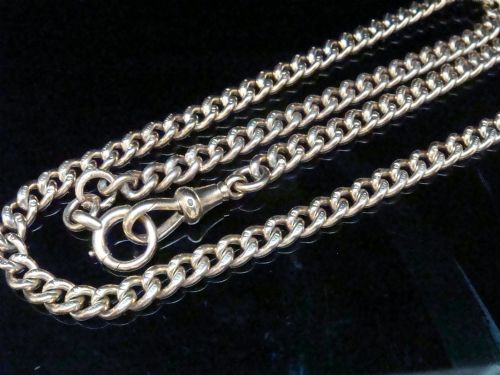
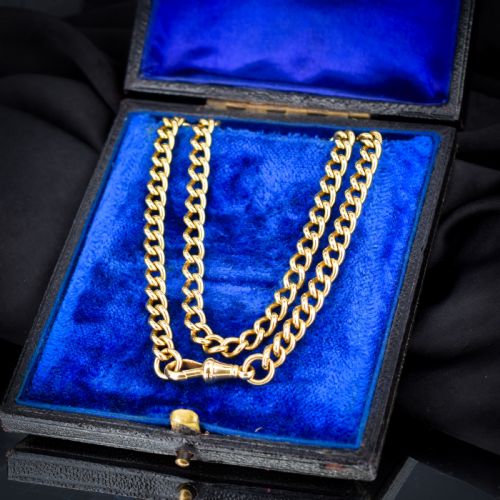
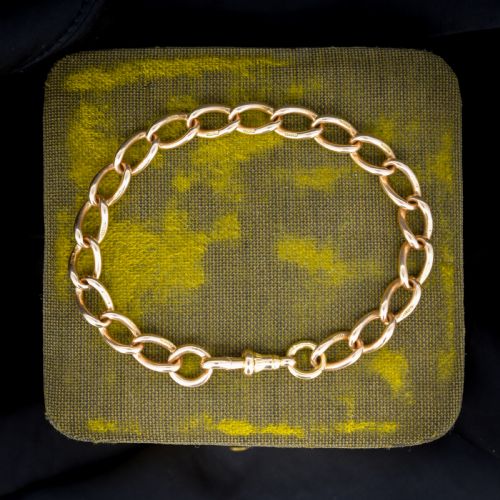

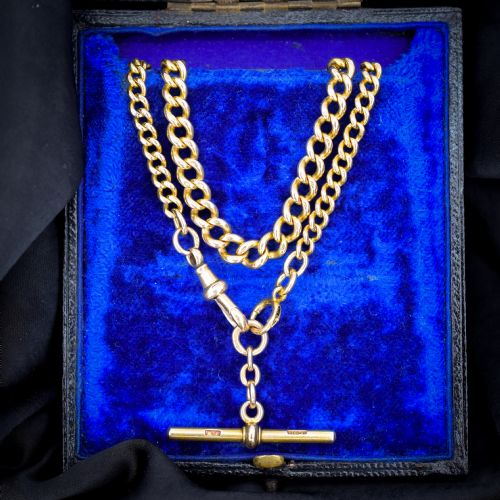


Heavy Gold Curb Chain
A heavy gold curb chain delivers substantial presence and enduring craftsmanship, combining interlocking links with high-carat gold durability for daily wear.
Heavy Gold Curb Chain
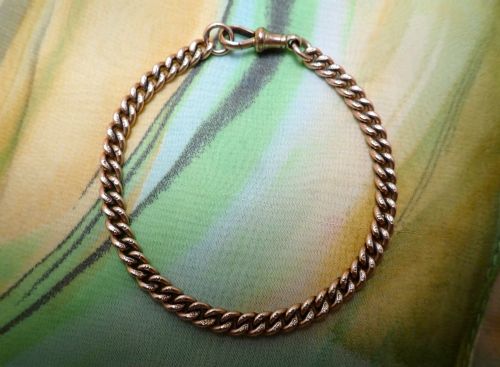
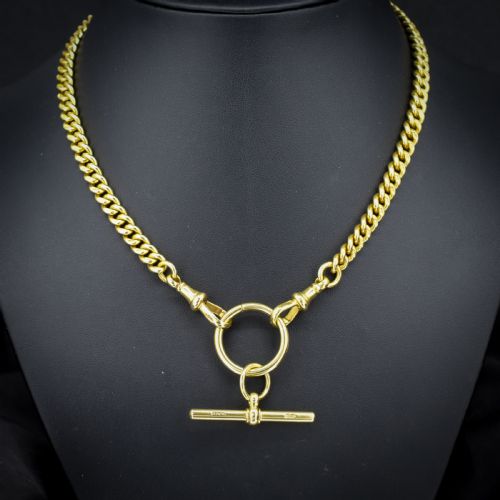
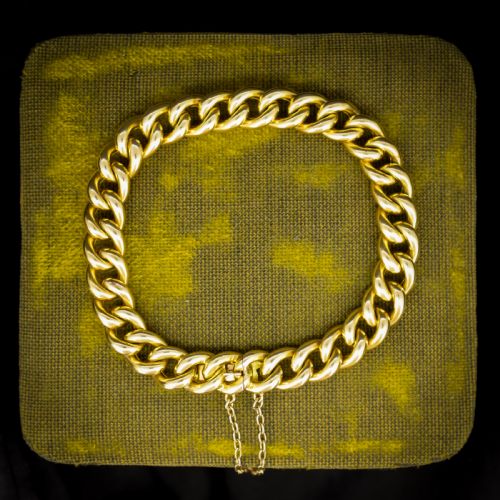
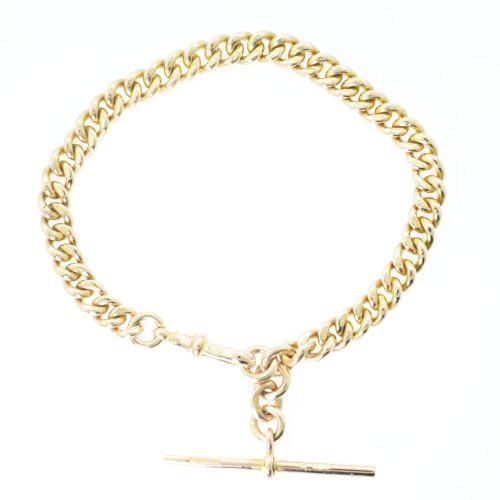
The selection includes Albert chains complete with dog clips and T-bars, alongside concealed clasp bracelets and padlock fastenings. These items originate primarily from the nineteenth century up through the nineteen-fifties, spanning eras defined by solid gold construction.
Most examples found here utilise nine carat, fifteen carat, or eighteen carat gold in both yellow and rose hues. The forms range from short sixteen inch necklaces to longer watch chains suited for versatile styling.
How they were made
Goldsmiths constructed these chains using solid links formed from nine carat rose gold, fifteen carat yellow gold, and eighteen carat yellow gold. Each individual curb link underwent careful shaping and soldering to withstand daily tension from pocket watches or wrists.
Many links bear individual hallmarking, indicating meticulous oversight by assay offices such as Birmingham during the Victorian and Edwardian periods. Secure attachments like dog clips, bolt rings, and heart padlocks were integrated using robust jump rings.
Engraving often adorns specific links or padlock components, executed by hand with sharp gravers to create subtle geometric or floral patterns. This combination of structural wirework and secure fastening reflects traditional bench techniques.
Periods represented span from the nineteenth century and the Edwardian era through to nineteen fifty.
What varies in quality
The standard of a heavy gold curb chain depends heavily on the purity of the gold alloy and the integrity of the individual links. Pieces utilising fifteen carat or eighteen carat gold sit at a different tier of material richness compared to nine carat alternatives.
Construction precision defines the better examples, particularly where every single link bears a legible hallmark or where the gauge of the wire remains uniform throughout. The solidity of the fastenings, from dog clips to bolt rings, determines how securely the chain maintains its original form.
Proportion and length also dictate desirability, with heavier weights exceeding thirty or forty grams offering a distinct tactile solidity. Graduated links that taper gracefully toward the ends represent deliberate design choices by period makers.
The Heavy Gold Curb Chain Glossary
- Curb link
- A type of chain link that has been twisted and flattened so that it lies relatively flat against the skin. This design provides a smooth drape and a dense, heavy appearance.
- Albert chain
- A pocket watch chain named after Prince Albert, typically featuring a central T-bar and dog clips at the ends. They were designed to secure a pocket watch to a waistcoat.
- Dog clip
- A spring-loaded swivel clasp resembling a miniature snap hook, commonly used on watch chains to attach charms or pocket watches. It allows the attached item to rotate freely without twisting the chain.
- T-bar
- A short transverse bar attached to the middle of a pocket watch chain, slipped through a buttonhole to anchor the chain securely. It serves both a functional and decorative purpose.
- Padlock
- A heart-shaped clasp often fitted to Victorian and Edwardian bracelets, functioning as a secure locking mechanism. Many open via a small internal spring mechanism.
Heavy Gold Curb Chain: Frequently Asked Questions
How do I wear an antique watch chain?
Antique watch chains designed as Albert chains can be worn wrapped around the wrist as multi-strand bracelets or draped around the neck as shorter necklaces. The integrated dog clips and T-bars provide natural attachment points for pendants or charms.
Many buyers remove the T-bar or tuck it discreetly behind a pendant when wearing these chains as standard necklaces. Their substantial weight allows them to sit comfortably without twisting.
What is the difference between rose and yellow gold in these pieces?
Rose gold contains a higher proportion of copper alloyed with gold, creating a warm, pinkish hue that was particularly favoured during the Victorian and Edwardian eras. Yellow gold maintains a traditional golden appearance derived from silver and copper alloy mixtures.
Both colour variants appear frequently across nine carat, fifteen carat, and eighteen carat options. Personal preference dictates the choice, as both materials offer equal structural durability.
How can I date my gold curb chain?
Dating relies primarily on hallmarks stamped onto the links, which indicate the assay office, purity, and year of manufacture. Stylistic markers such as the presence of heart padlocks or dog clips also point toward specific decades like the Edwardian period or late nineteenth century.
Heavier graduated pocket watch chains typically originate from the Victorian era, while later twentieth century examples feature distinct clasp mechanisms. Examining the construction of individual curb links helps confirm the era of production.
Are these chains suitable for daily wear?
Solid gold curb chains possess inherent strength due to their interlocking link construction and heavy metal weight. They handle regular wear well, provided the fastenings and spring mechanisms are periodically checked by a jeweller.
Care should be taken with pieces featuring hollow components or delicate engraving, though most heavy antique items are solid. Storing them flat prevents unnecessary kinks in the links.