


Vintage Glass Drinking Goblets
These vintage glass drinking goblets bring weight and clarity to the table, offering a tangible connection to centuries of drinking culture.
Vintage Glass Drinking Goblets
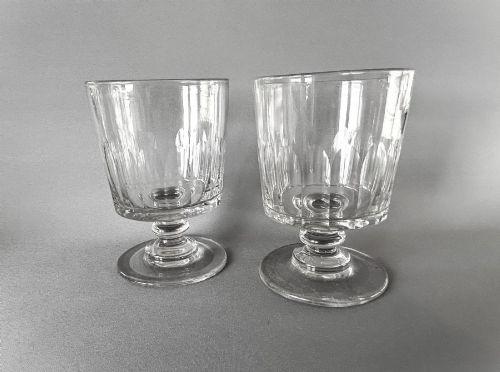
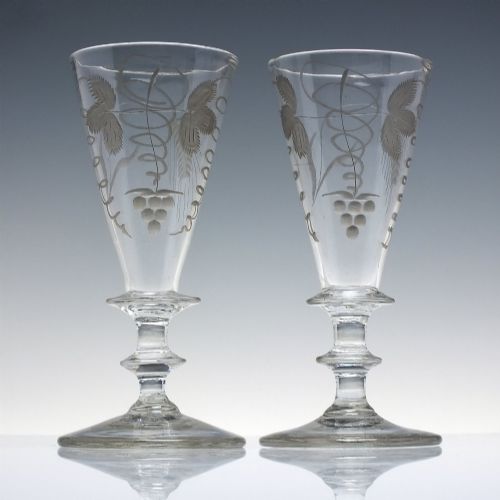
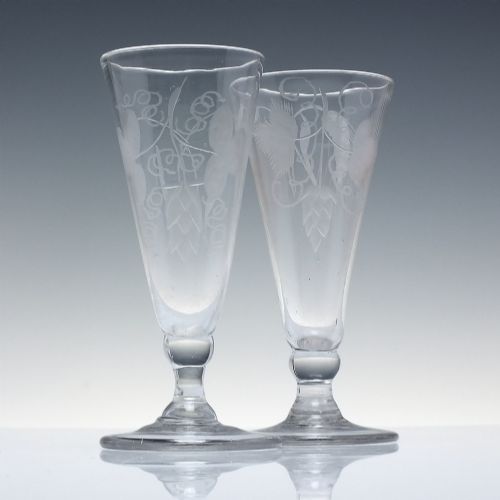
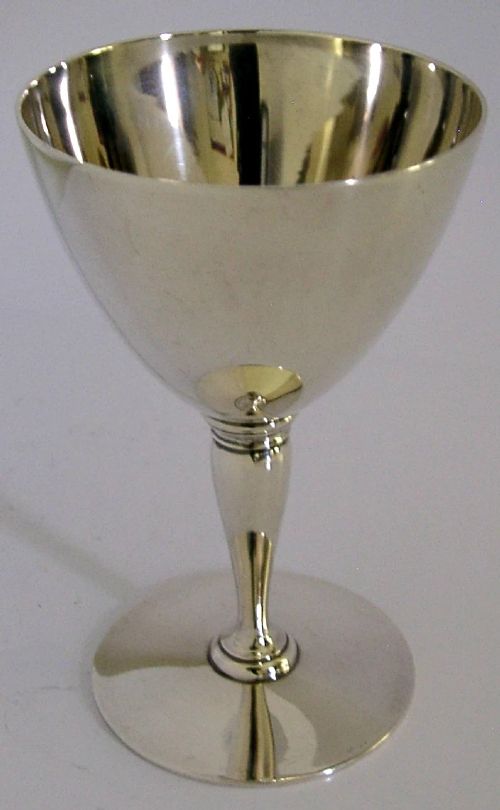
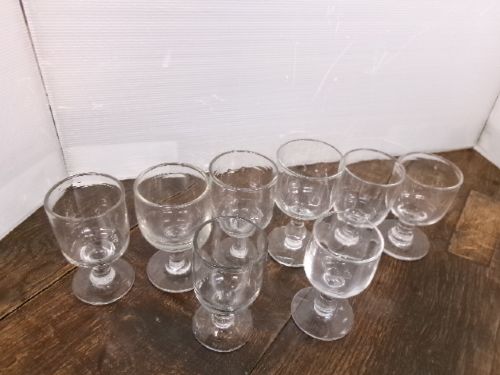
Vintage glass drinking goblets encompass a broad sweep of drinking vessels, ranging from heavy Georgian rummers to delicate Victorian stemware and Edwardian services. When searching this phrase, a buyer encounters diverse forms designed for wine, ale, gin, and cocktails, spanning the eighteenth century through to the early twentieth century.
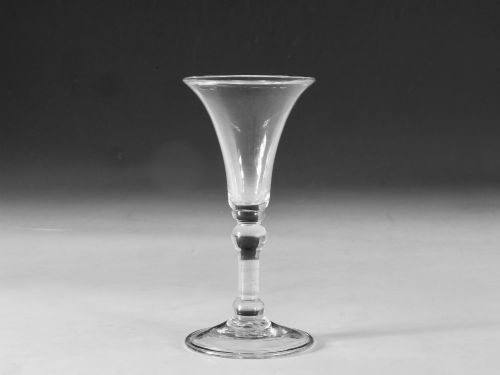
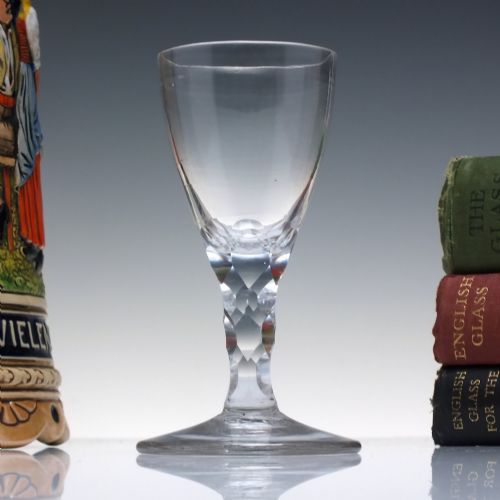
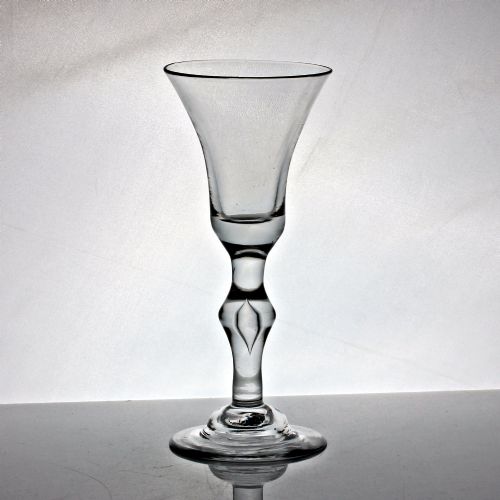
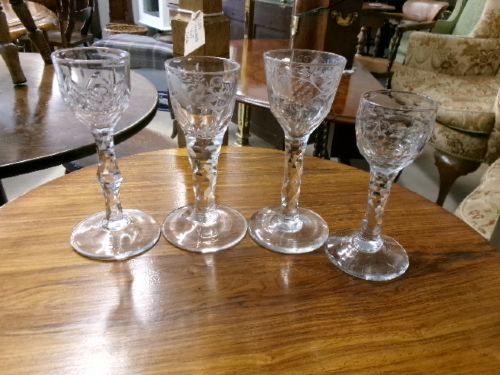
The assortment on this page leans heavily towards Georgian and Victorian examples, featuring baluster stems, faceted bowls, and coloured glass services. Makers and manufacturers from England, Bohemia, and Venice contribute distinct regional styles that define the category.
Materials and Manufacturing Techniques
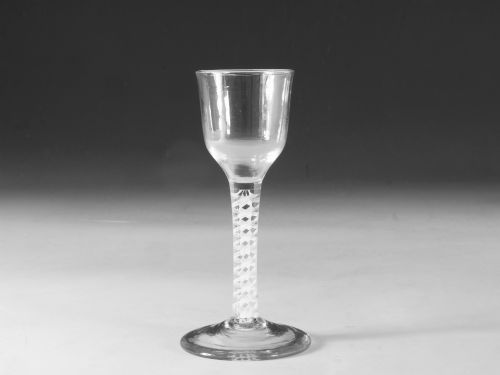
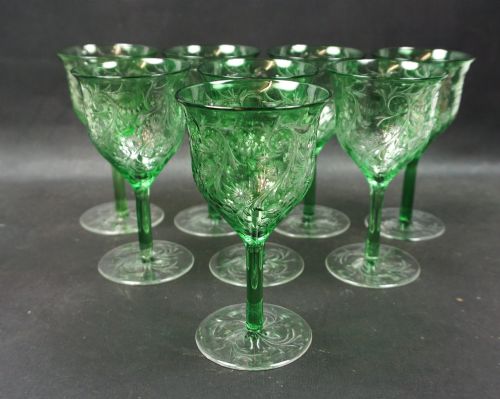
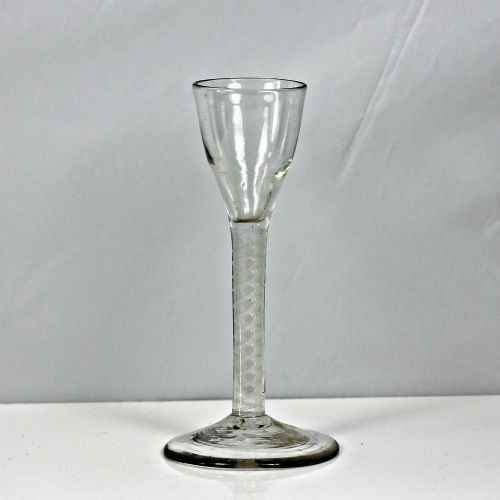
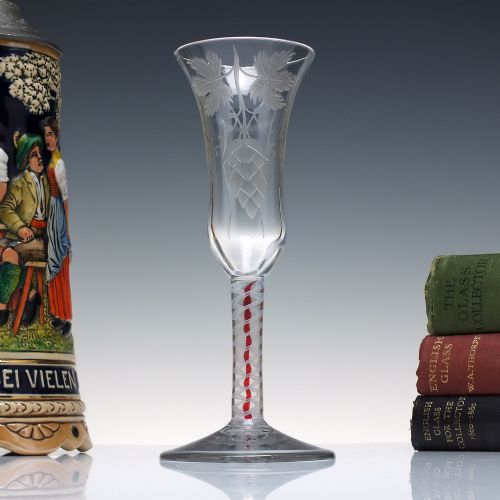
The pieces rely on lead glass, clear crystal, and coloured glass such as cranberry, vaseline, and turquoise, often shaped through hand-blowing and mould-pressing. Artisans utilised techniques like air twists, opaque twists, and facet cutting to decorate the stems and bowls.
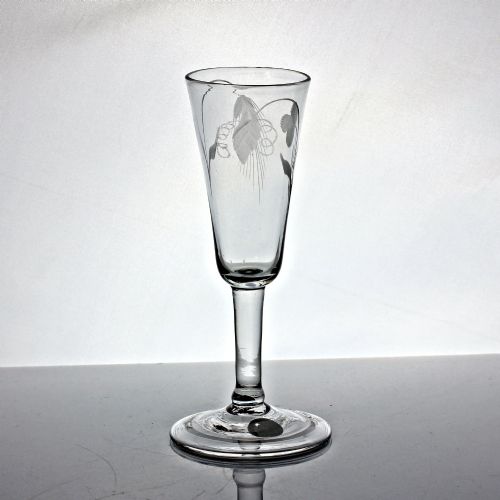
Engraving, etching, and enamel application add surface detail, while cased glass and acid-cut cameo work demonstrate advanced layering and carving methods developed by skilled workshops.
Vintage Glass Drinking Goblets Retail Price Guide 2026
Typical asking prices for vintage glass drinking goblets among the pieces listed under this phrase on Sellingantiques today, from the lower quarter to the upper quarter. They describe what is for sale here now, not the wider market.
Vaseline glass goblets contain trace uranium, causing them to glow a brilliant, eerie green under ultraviolet light.
Distinctions in Quality
Quality rests in the crispness of the cutting, the complexity of the stem formation - such as double series opaque twists - and the purity of the metal. Superior pieces display balanced proportions, clear ringing tones, and precise hand-engraving without blurring.
The distinction between standard production items and top-tier examples lies in the depth of the wheel-engraving, the intricacy of colour casing, and the absence of heavy manufacturing bubbles or surface distortion.
TIFFANY & Co·Webb Corbett·Salviati·Stevens & Williams
The Vintage Glass Drinking Goblets Glossary
- Rummer
- A large, sturdy drinking glass popular in the eighteenth and nineteenth centuries, typically used for ale or wine.
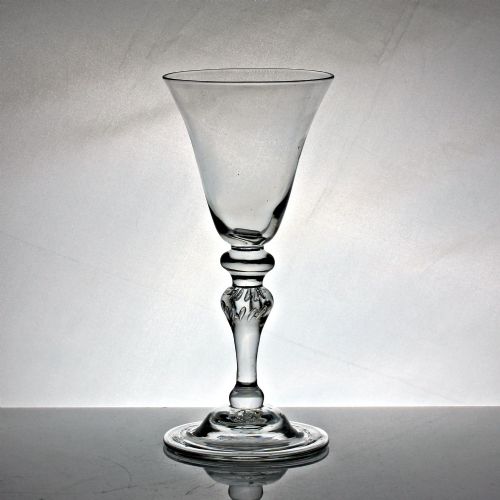
- Air twist
- A stem enclosing spiralling threads of air created during the glass-drawing process.
- Opaque twist
- A stem containing white or coloured enamel rods twisted within clear glass.
- Roemer
- A traditional Germanic drinking vessel, often green, featuring a wide bowl and a studded prunt stem.
- Ogee
- A double-curved architectural profile forming an S-shape, frequently seen on drinking vessel bowls.
Vintage Glass Drinking Goblets: Frequently Asked Questions
How do I clean antique glass goblets?
Wash them gently by hand in warm water using a mild detergent, avoiding sudden temperature changes that can crack the material.
Dry them immediately with a lint-free cloth to maintain clarity and prevent water spots.
Can I use these goblets for everyday dining?
Many vintage and antique drinking vessels remain sturdy enough for regular use, provided they are handled with care and washed by hand.
Thicker Georgian rummers and Victorian stemware tolerate careful modern dining well, while fragile eighteenth-century air twists suit special occasions.
How do I distinguish an air twist from an opaque twist?
Air twists feature delicate, silvery channels of trapped air spiralling inside the clear glass stem.
Opaque twists incorporate solid white or coloured enamel rods drawn into complex patterns within the metal.
What is a rummer used for?
Rummers served as robust everyday drinking glasses in British households, originally intended for ale, beer, or cider.
Their generous bowl capacity and sturdy feet made them practical tavern and dining table vessels through the Georgian and Victorian eras.