

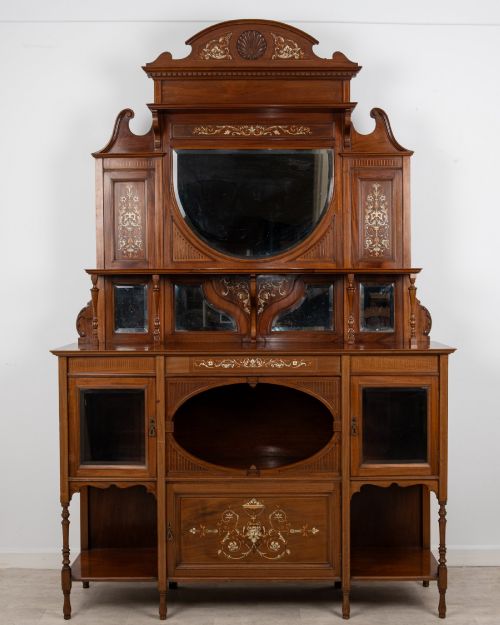
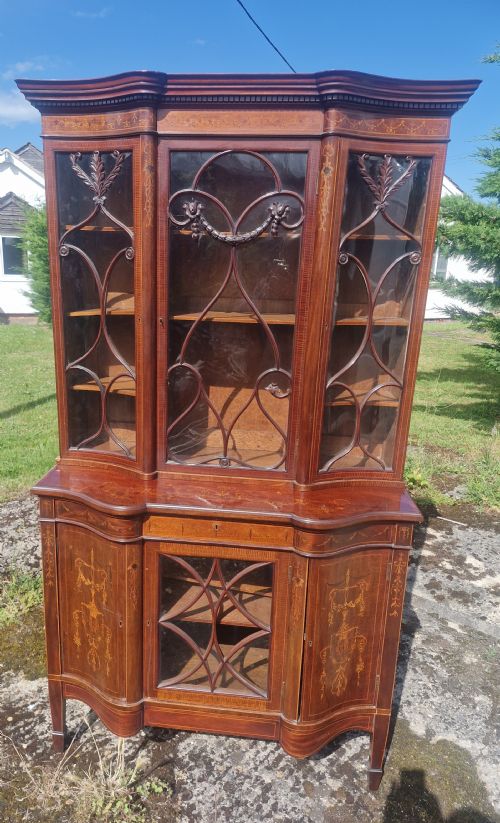
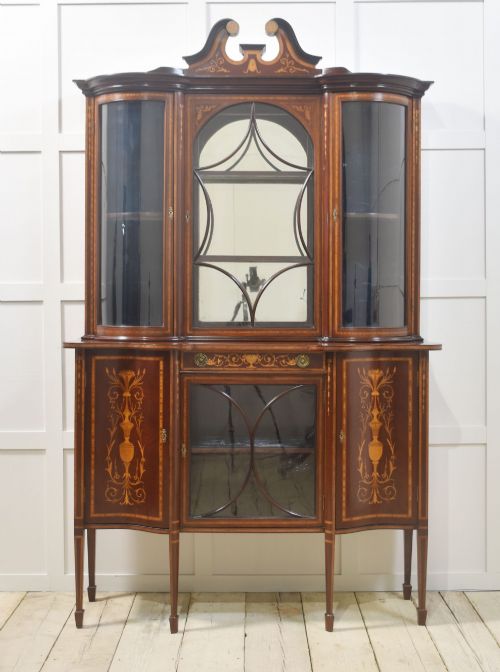


Vintage Glass Display Sideboard
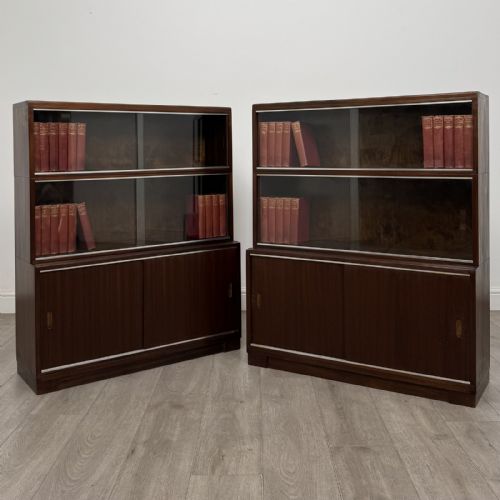
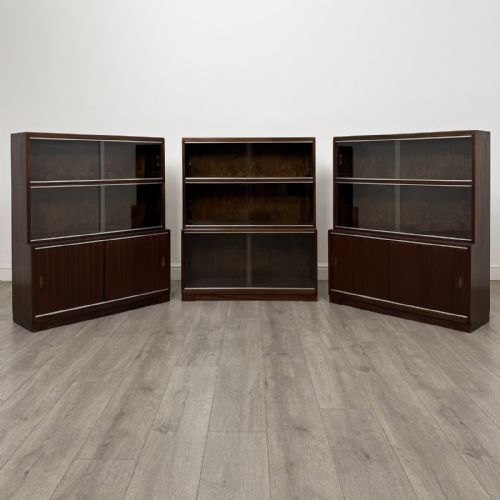
When you search for a vintage glass display sideboard, you find hybrid storage and display pieces combining timber frames with glazed doors.

Vintage Glass Display Sideboard
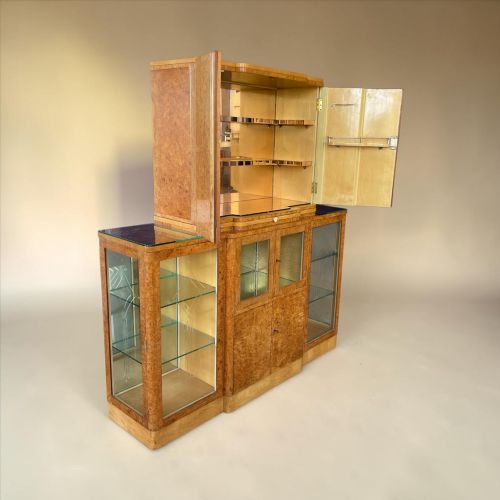
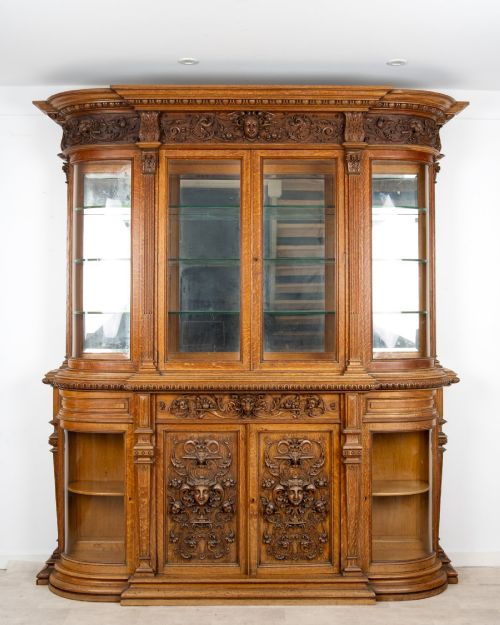
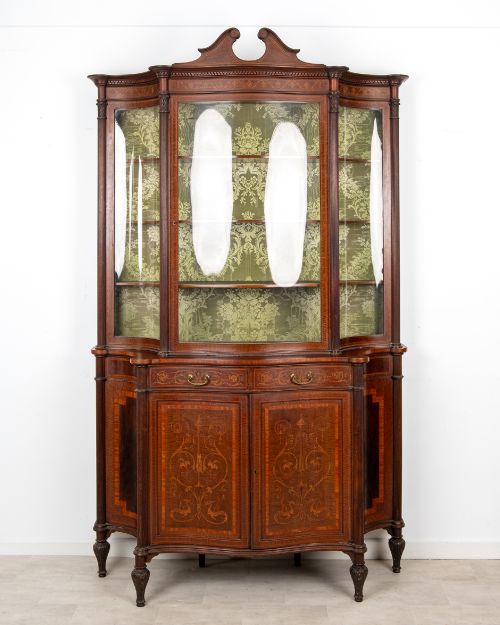
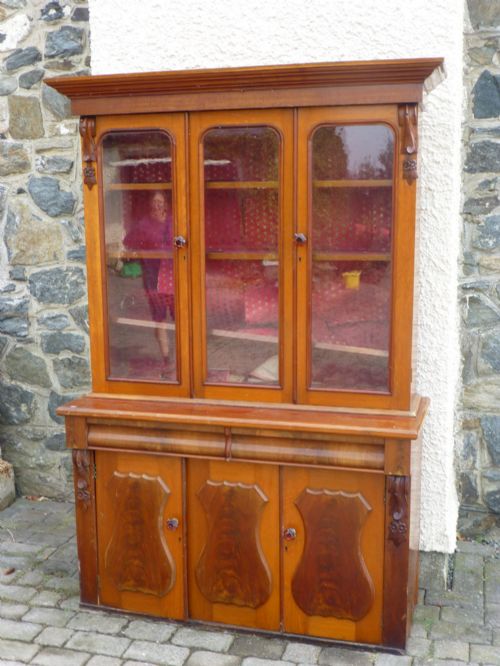
A vintage glass display sideboard combines the low, grounded storage capacity of a traditional sideboard with the upper shelving or glazed enclosure of a display cabinet. When buyers search for this phrase, they encounter hybrid forms spanning the nineteenth and twentieth centuries, including Edwardian inlaid mahogany cabinets, Victorian burr walnut credenzas, and Art Deco walnut drinks furniture.
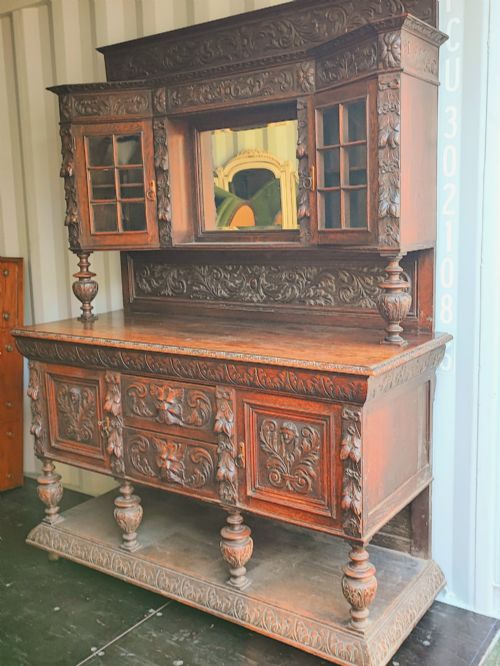
The pieces listed here draw upon diverse stylistic revivals such as Sheraton Revival, Chippendale Revival, and Jacobean Revival alongside Arts and Crafts designs. Formats range from breakfront side cabinets and serpentine credenzas to glazed dressers and fitted cupboards with leaded glass doors.
Originating largely from British workshops alongside continental European makers, these items serve as functional storage units that simultaneously exhibit porcelain, glassware, or books behind transparent panels.
Materials and construction methods
Cabinet makers utilised a robust carcase construction of solid timbers such as oak, mahogany, and walnut, often applying decorative veneers including burr walnut and figured walnut to prominent surfaces. Inlaid details incorporate contrasting woods and satinwood banding to define panels and borders.
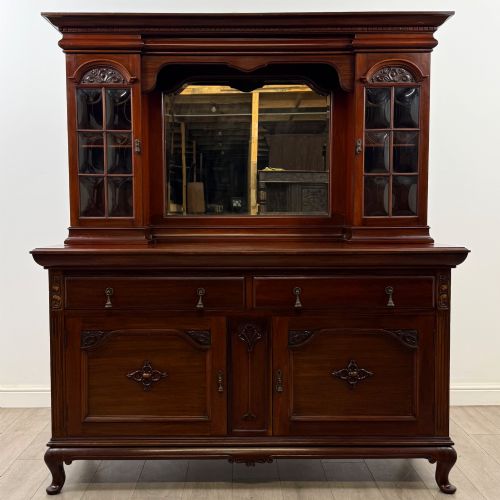
Glass panels are fitted into timber doors or secured with brass framing, while mirrors frequently back credenzas and display sections to reflect light through the interior. Metal hardware such as ormolu mounts, brass handles, and hinges complete the assembly of these substantial items.
Vintage Glass Display Sideboard Retail Price Guide 2026
Typical asking prices for vintage glass display sideboard among the pieces listed under this phrase on Sellingantiques today, from the lower quarter to the upper quarter. They describe what is for sale here now, not the wider market.
The listings span periods from the mid-nineteenth century through to 1930, encompassing Victorian, Edwardian, and Art Deco eras.
What separates standard pieces from finer examples
Quality rests upon the selection of timber figures and the precision of marquetry inlay, where finer examples display seamless grain matching and intricate, tightly fitted botanical or geometric motifs. The handling of secondary woods in drawer linings and the weight of cast brass mounts indicate the underlying standard of workshop production.
Structural integrity reveals itself in the alignment of glazed doors, the smooth operation of drawers within serpentine or breakfront carcases, and the preservation of original mirror glass and ormolu without excessive pitting.
Liberty & Co.·Edwards and Roberts·Arthur Reynolds Of Ludlow
The Vintage Glass Display Sideboard Glossary
- Credenza
- A low cabinet or sideboard, frequently featuring mirrored backs and glazed side compartments, popular in Victorian and later interiors.
- Marquetry
- Decorative veneer work formed by fitting together small pieces of wood, shell, or ivory to create pictorial or geometric patterns on furniture surfaces.
- Ormolu
- Gilt-bronze mounts applied to furniture for decorative effect, commonly seen on nineteenth-century walnut and mahogany pieces.
- Serpentine
- A curved furniture front characterised by a convex centre flanked by concave ends, requiring skilled carpentry to execute.
- Breakfront
- A cabinet design where the central section projects forward from the flanking wings, adding architectural depth to sideboards and display units.
Vintage Glass Display Sideboard: Frequently Asked Questions
What is a vintage glass display sideboard?
A vintage glass display sideboard is a hybrid storage item that merges the enclosed base of a sideboard with glass-fronted display areas for crockery or collectibles. These pieces draw on Victorian, Edwardian, and Art Deco traditions.
They function as both serving surfaces and display cases, utilising materials like mahogany, oak, and figured walnut.
How do I date a glass display sideboard?
Dating relies on identifying stylistic markers, construction methods, and prevailing design movements such as Arts and Crafts or Sheraton Revival. Periods range from nineteenth-century Victorian walnut to 1930s Art Deco pieces.
Hardware, timber selection, and inlay techniques further help narrow down the decade of manufacture.
Where were these sideboards used?
Original contexts included dining rooms, drawing rooms, and large kitchens where sturdy storage and display space were both required. Domestic interiors of the nineteenth and early twentieth centuries relied on them for hosting and organising.
Today, they serve similar functional roles in modern dining spaces and living rooms.
Are the glass doors original?
Checking the glass involves looking for minor imperfections, waviness, and traditional glazing methods appropriate to the stated period. Older panels often display subtle distortions absent in modern float glass.
Fit within the timber rebate and matching putty or beading offer further clues regarding originality.