





Vintage Glass Decorative Bowl
These vintage glass decorative bowls bring colour, weight and period presence to a room, ranging from pressed opalescent designs to heavy cut crystal.
Vintage Glass Decorative Bowl
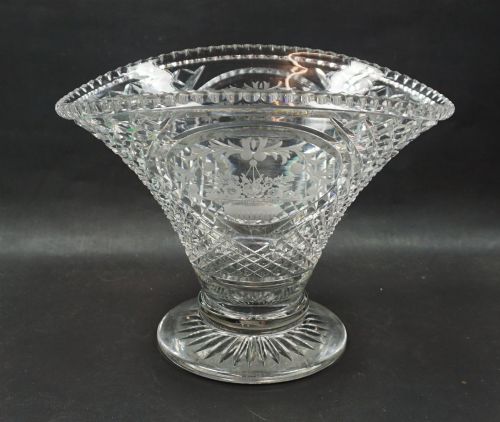
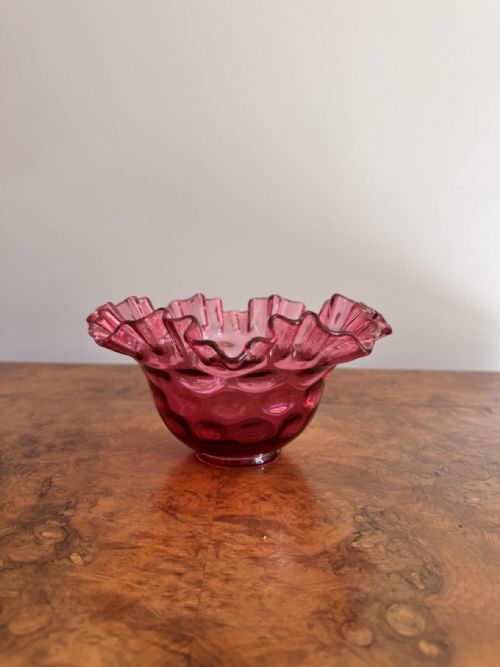
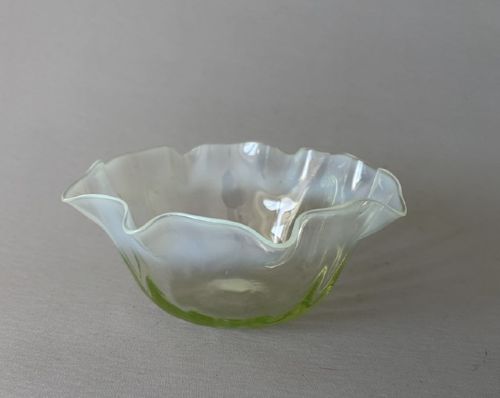
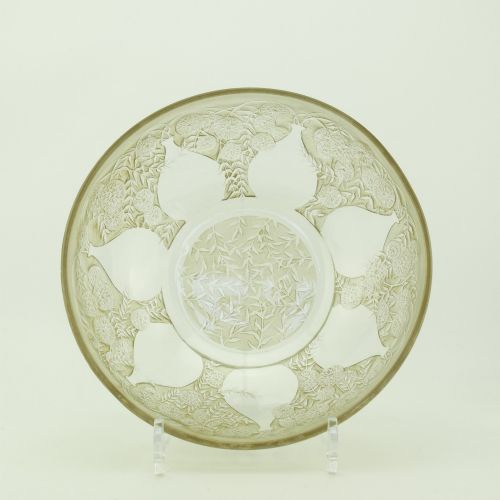
A vintage glass decorative bowl serves as a table centrepiece, fruit dish or display vessel, drawing the eye through colour, form and texture. When searching for a vintage glass decorative bowl, you encounter pieces spanning from the Victorian era through the Art Nouveau and Art Deco periods into the mid-century.
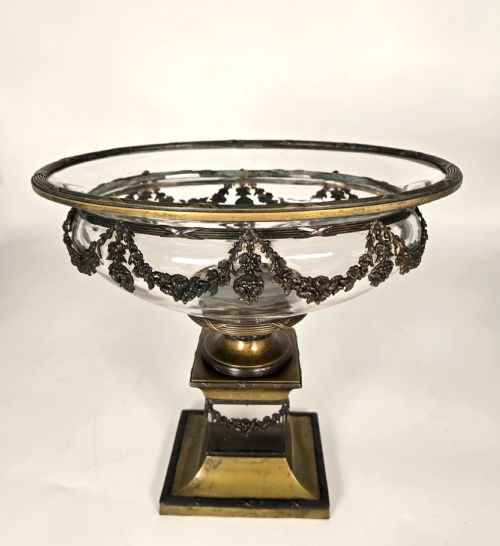
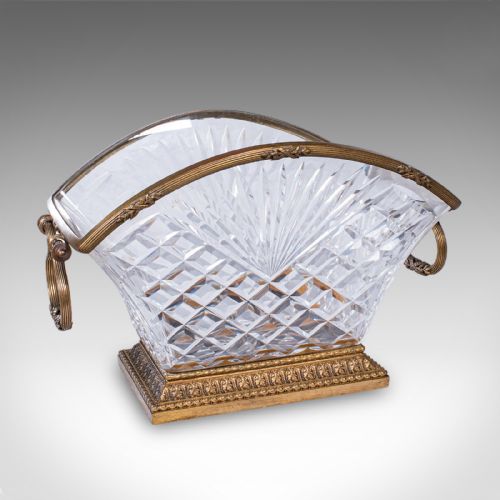
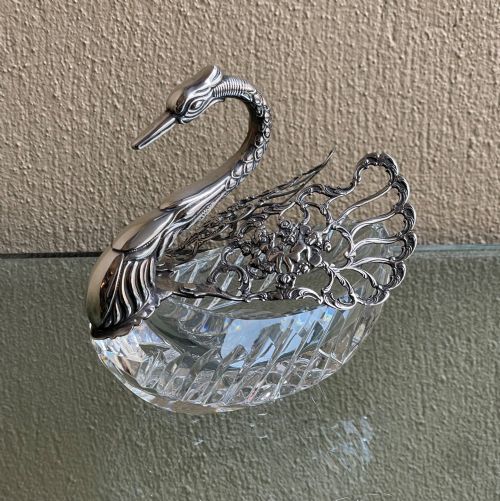
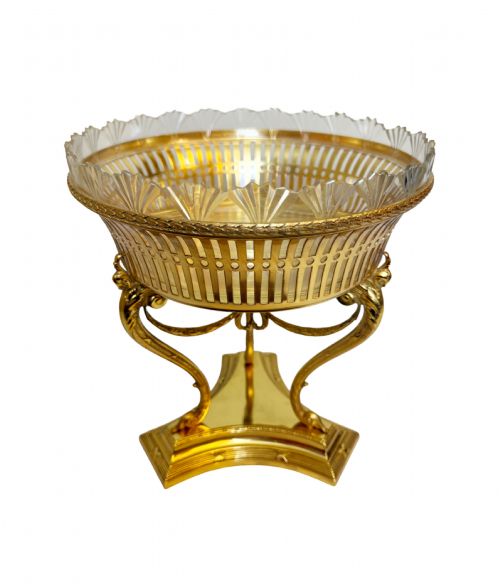
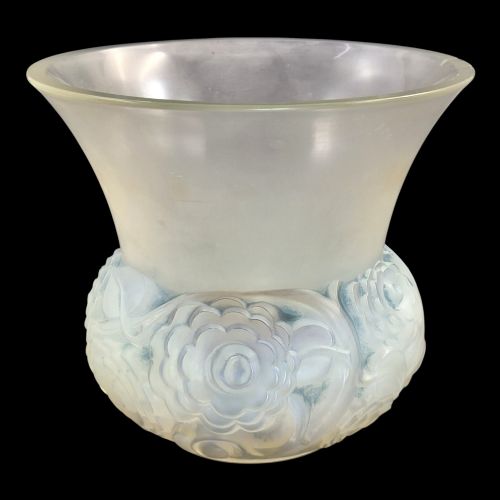
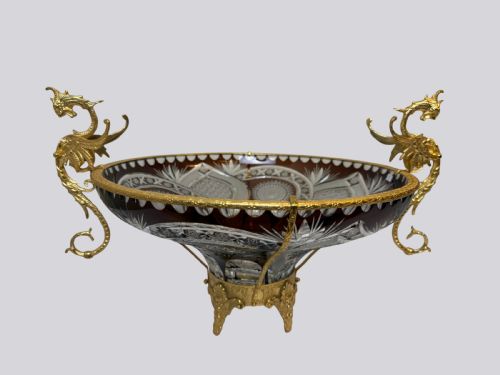
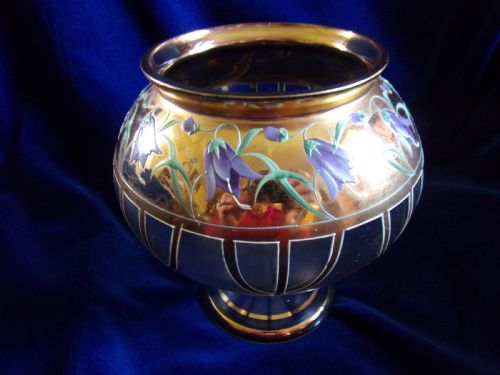
The selection here encompasses items ranging from heavy cut glass vessels with silver plate or bronze mounts to delicate opalescent moulded pieces and brightly coloured art glass. Forms extend from shallow plates and footed bowls to pedestal centrepieces and heavy crystal table service items.
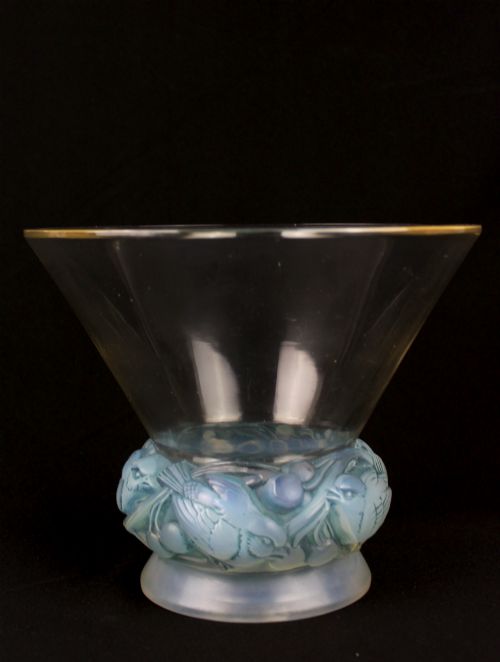
Origins span France, Britain, Belgium, Italy and Bohemia, reflecting distinct regional tastes in glassmaking from the nineteenth and early twentieth centuries. French opalescent works and English cut glass feature prominently alongside Bohemian and Italian studio productions.
How they were made
Makers utilised techniques such as mould-pressing, free-blowing and deep wheel-cutting to shape the glass, often incorporating chemical additives to achieve opalescence or intense colour saturation.
Metal mounts in brass, ormolu, gilt bronze or silver plate were cast and applied to secure or elevate the glass vessels, uniting metalwork with the blown or moulded body.
Vintage Glass Decorative Bowl Retail Price Guide 2026
Typical asking prices for vintage glass decorative bowl among the pieces listed under this phrase on Sellingantiques today, from the lower quarter to the upper quarter. They describe what is for sale here now, not the wider market.
Materials span clear cut glass, coloured crystal, opalescent glass, gilt bronze, silver plate and brass.
What varies in quality
Quality rests in the crispness of the mould impression, the depth and clarity of hand-cutting, and the weight of the metal mounts where bronze or silver plate frames the glass. Pieces with sharp relief in opalescent pressings or precise wheel-engraving demonstrate superior workshop standards.
The integration between the glass body and any metal mount indicates the care taken during production, with tighter joins and heavier bronze framing separating finer centrepieces from standard domestic wares.
Rene Lalique·Venini·Daum France·Val St. Lambert·Loetz·Monart Glass
The Vintage Glass Decorative Bowl Glossary
- Opalescent glass
- Glass containing agents that cause it to appear milky with a bluish or yellowish glow when lit from certain angles. This effect defines many French decorative pieces from the early twentieth century.
- Ormolu
- Finely ground high-carat gold applied to a bronze base using a mercury amalgamation process, seen on French nineteenth-century mounts. The technique creates a rich golden surface that resists tarnish.
- Pâte de verre
- A glass-casting method where finely crushed glass is mixed with a binder, packed into a mould and fired in a kiln. The resulting pieces display a dense, frosted texture and subtle colour gradations.
- Cut glass
- Glass decorated by holding it against rotating wheels to grind geometric or floral patterns into the surface. Deeper cuts create sharper light refraction across the vessel.
- Centrepiece
- A large decorative bowl or stand placed in the middle of a dining table or sideboard. These items frequently incorporate metal pedestal bases or silver-plated frames.
Vintage Glass Decorative Bowl: Frequently Asked Questions
How do I clean a vintage glass bowl safely?
Wash the glass by hand in warm water using a mild, non-abrasive detergent and a soft cloth. Avoid submerging metal mounts or silver-plated fittings to protect the patination.
Dry the piece immediately with a lint-free towel to prevent water spots on the glass surface.
Can I use these bowls for serving food?
Most antique and vintage glass bowls can hold dry foods, fruit or wrapped sweets safely. Items with lead crystal or older metal mounts require care with acidic foods.
Pieces featuring gilt bronze, enamel or delicate interior decoration serve better as display objects than daily tableware.
How do I date an opalescent glass bowl?
Examine the base for workshop signatures, mould numbers or factory marks applied during production. The depth of the opalescence and the crispness of the moulded relief offer further clues.
Stylistic indicators such as Art Deco geometric motifs or Art Nouveau floral curves help narrow the decade of manufacture.
What is the difference between crystal and glass?
Crystal contains lead oxide, which adds weight, brilliance and softness that allows for deeper hand-cutting. Standard glass lacks lead content and feels lighter in the hand.
Vintage pieces often denote crystal through their sharp ring when tapped gently and their higher light dispersion.