
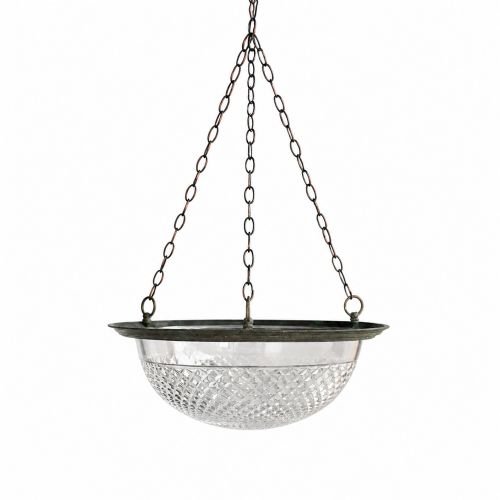


Vintage Glass Bowl Chandelier
These vintage glass bowl chandeliers hang close to the ceiling, casting a warm light through cut or frosted crystal.
Vintage Glass Bowl Chandelier
A vintage glass bowl chandelier combines a hanging bowl of crystal or pressed glass with brass, bronze, or silver-plated mountings to illuminate a room from above. You will most frequently encounter Edwardian and Victorian examples on this page, alongside early twentieth-century pieces.
The forms range from shallow dish lights and plafonniers to more elaborate pendant lights and chandelier components. Many originate from English workshops or feature French neoclassical and Arts and Crafts design influences.
Makers shaped these ceiling fixtures to suit formal parlours and entrance halls, utilising heavy glass to diffuse the brightness of early electric bulbs or gas burners. Their enduring appeal lies in the way the heavy glass bowl gathers and softens the illumination.
How they were made
The primary components rely on heavy cut glass, crystal, or frosted glass formed into deep bowls and dishes. Artisans shaped these glass bodies by hand or in moulds, often adding surface decoration such as gilding or ruby staining.
Metal mounts in brass, bronze, silver plate, and gold leaf secure the glass bowls using suspension chains and decorative bands. These structural frames provide the necessary strength to hold heavy glass safely overhead.
Listings span the nineteenth and early twentieth centuries, encompassing Victorian, Edwardian, and Art Deco periods.
What varies in quality
The depth and clarity of the glass cutting distinguish finer examples from standard production pieces. Crisp, sharp facets catch the light cleanly, whereas softer mouldings lack the same optical brilliance.
The weight and finish of the metal mountings also set pieces apart. Solid bronze and substantial silver plate demonstrate a higher grade of manufacture than lighter, pressed brass alternatives.
The Vintage Glass Bowl Chandelier Glossary
- Plafonnier
- A ceiling light fixture with a bowl shape that sits close to the ceiling rather than hanging on a long drop. These fittings became popular in domestic interiors during the late nineteenth and early twentieth centuries.
- Cut glass
- Glass decorated by grinding facets or patterns into the surface using a rotating wheel. This technique creates sharp edges that refract light intensely.
- Frosted glass
- Glass treated to scatter light and produce a translucent, matte appearance. It softens the glare of internal light sources.
- Ruby glass
- Glass coloured deep red through the addition of gold or copper compounds during the melting process. It appears frequently in nineteenth-century Bohemian lighting designs.
- Silver plate
- A thin layer of silver applied to a base metal to give the appearance and lustre of solid silver. This finish was widely utilised on Edwardian light fittings.
Vintage Glass Bowl Chandelier: Frequently Asked Questions
How do I hang a bowl chandelier?
These fixtures suspend from the ceiling using chains and a matching ceiling rose connected to the structural joists. Professional electrical installation ensures the weight of the glass bowl is supported safely.
Most pieces retain their original brass or bronze hanging loops, which attach directly to standard modern wiring boxes.
What rooms suit these lights?
Plafonniers and dish lights work particularly well in hallways, bedrooms, or reception rooms with standard ceiling heights. Their shallow profile provides useful overhead illumination without hanging too low into the space.
The diffused glow from frosted or cut crystal bowls creates a welcoming atmosphere in domestic interiors.
How do I clean the glass bowl?
Careful removal of the glass bowl from its metal mountings allows for gentle washing in lukewarm water with mild soap. Rinsing thoroughly and drying with a soft cloth prevents water spots on the crystal.
Metal components should be dusted gently without harsh chemical polishes that might damage silver plate or gold leaf.
Are these fixtures wired for modern use?
Many vintage ceiling lights retain older internal wiring that requires updating to meet current safety standards before installation. A qualified electrician can easily rewire the fitting while preserving the exterior metal and glass components.
Standard bulb holders inside the bowl accommodate modern LED lamps.