


Antique Glass Ceiling Fixture
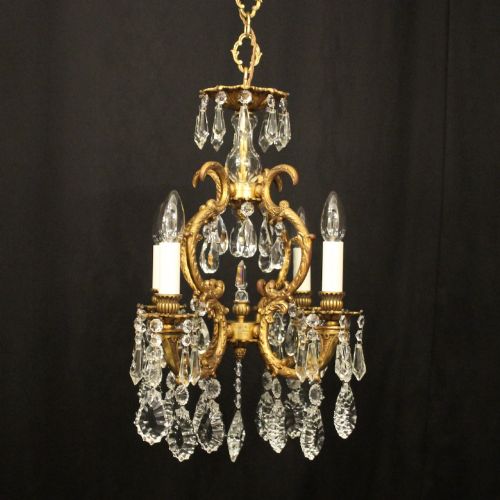
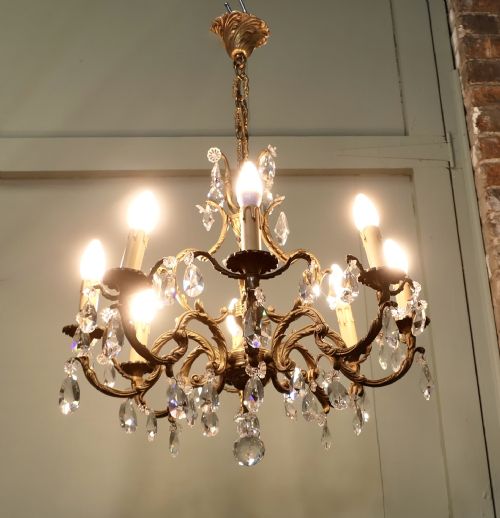
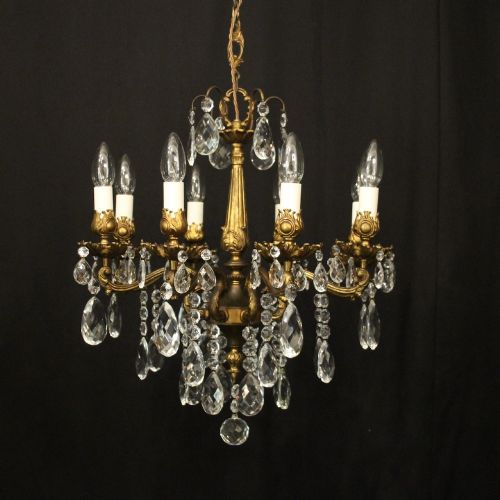
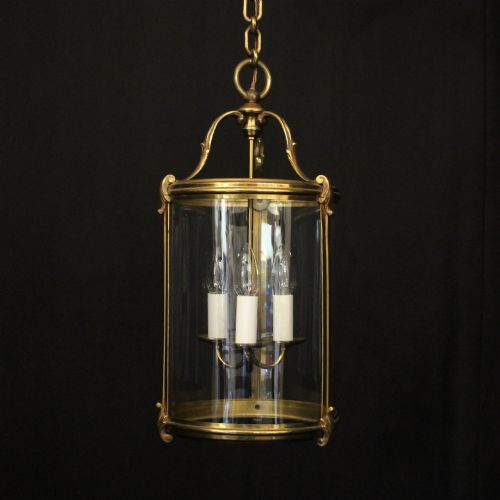
An antique glass ceiling fixture casts a warm, refracted light across a room, bringing together period brass and crystal in a single suspended form.
Antique Glass Ceiling Fixture
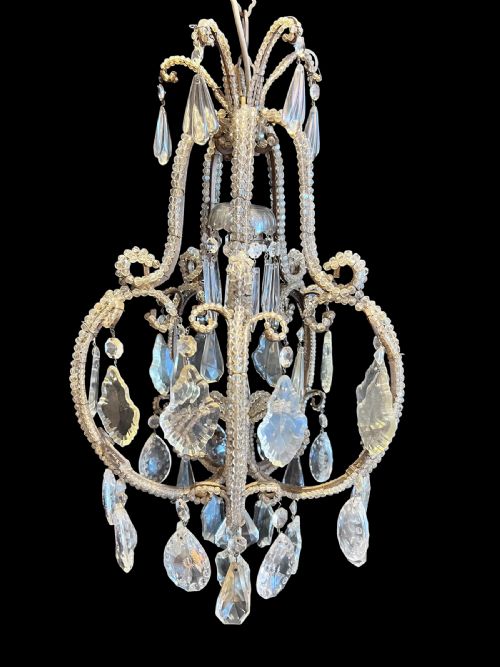
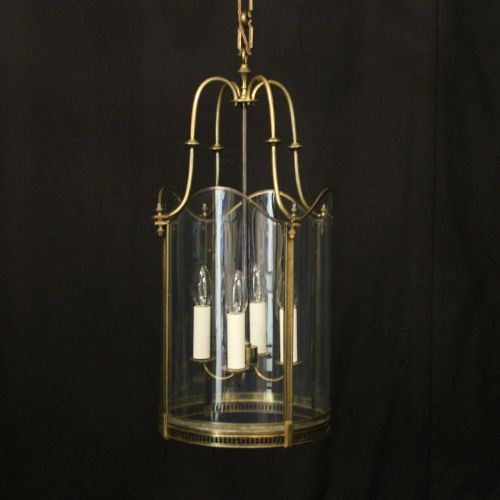
An antique glass ceiling fixture covers a broad range of hanging illumination, from elaborate multibranded chandeliers to compact hallway lanterns and plafonniers. When searching for an antique glass ceiling fixture, buyers encounter varied configurations shaped by Victorian, Edwardian, and Art Deco design movements.
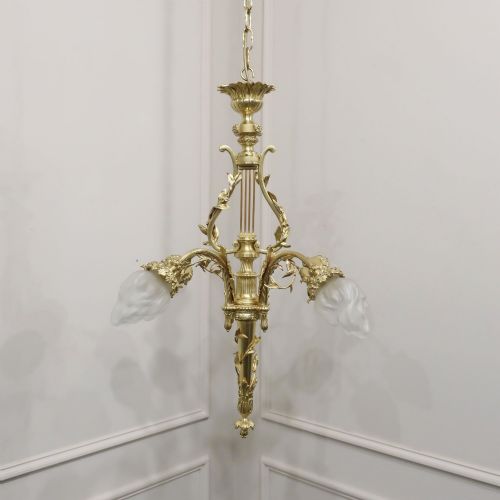
The selections span distinct national tastes, featuring French gilt bronze and crystal arrangements alongside English cut glass bowls and American slip shade pendants. These pieces hang closely to ceilings or drop via chains, serving as primary illumination in principal rooms and vestibules.
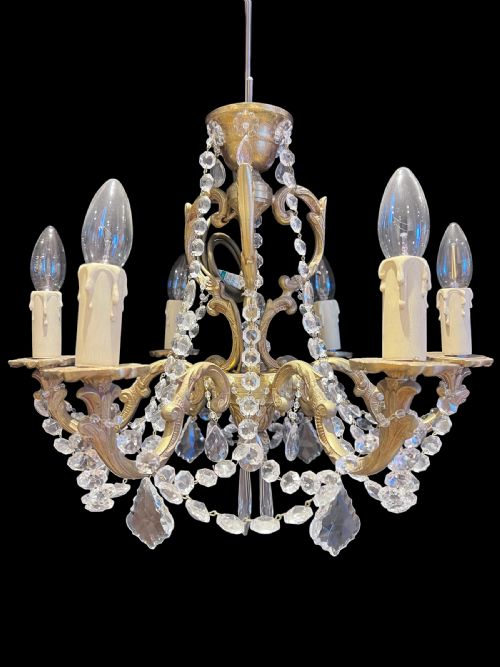
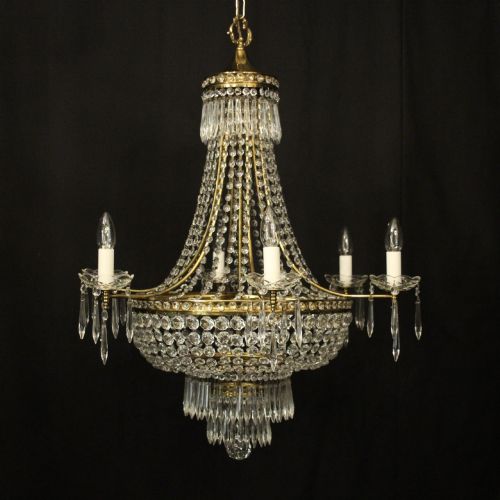
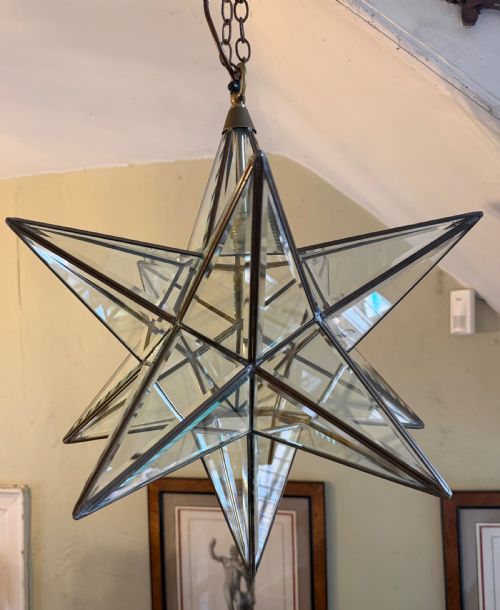
The material evidence on this page highlights structural metal frames paired with glass drops, beads, and moulded shades. Formats range from large tent and waterfall chandeliers to simple single light hanging globes.
Distinctions in quality and execution
Quality in these fixtures is defined by the precision of the metal casting and the clarity of the glass elements. Finer pieces display crisp, chased ornamentation on gilt bronze mounts rather than soft, repetitive casts.
The weight, depth of cut, and high lead content in crystal drops determine how brilliantly a fixture refracts light. Superior examples retain matching sets of hand-cut prisms and original matching shade components rather than mismatched replacements.
Structural integrity also separates standard production from superior craftsmanship, visible in the rigidity of the frame construction and the secure seating of individual arms and glass panels.
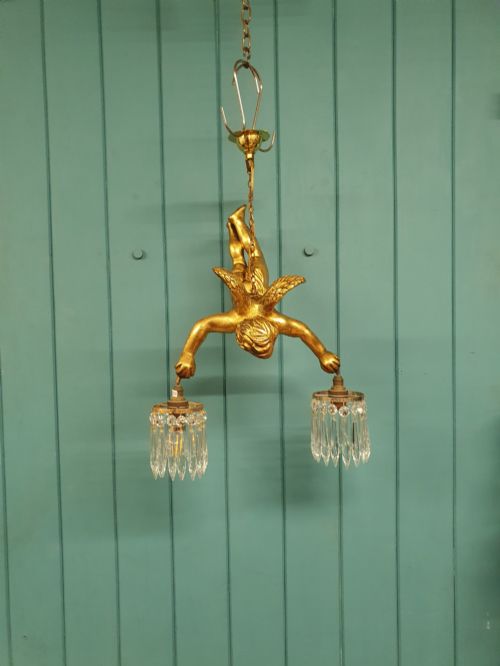
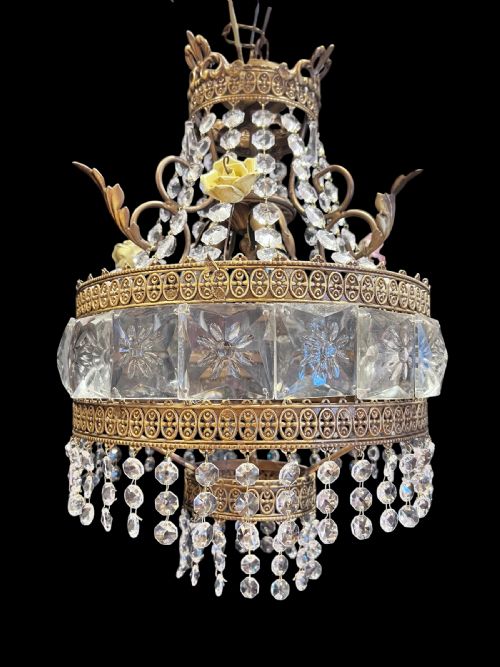
Flying cherubs occasionally join the lighting arrangements, sharing ceiling space with cut glass crystal spikes and porcelain flowers.
Émile-Jacques Ruhlmann
The Antique Glass Ceiling Fixture Glossary
- Plafonnier
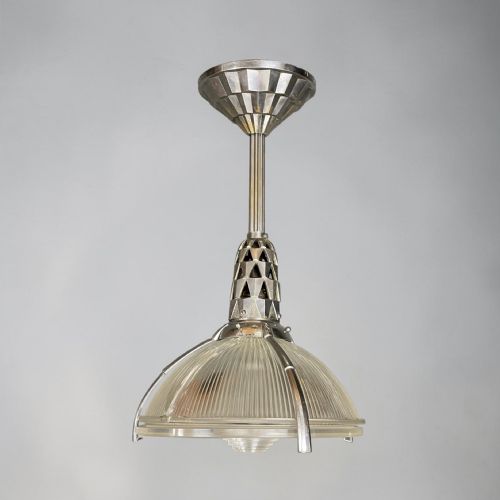
- A ceiling-mounted glass bowl or dome light that sits flush or very close to the ceiling surface. These fixtures direct light downwards and often feature moulded or frosted glass.
- Tent and waterfall
- A chandelier style characterised by strings of crystal beads forming an upper conical tent that flows outward into a wider tier of cascading drops. This design creates a dense curtain of sparkling crystal.
- Slip shade
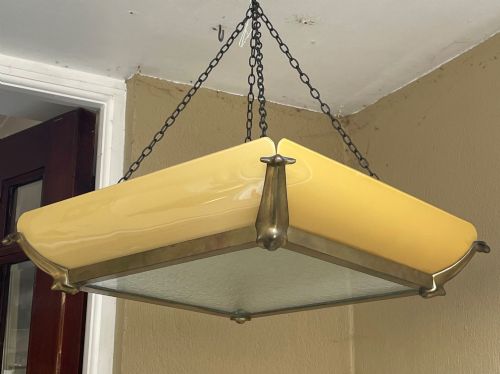
- A type of shade used in Art Deco ceiling lights, where individual moulded glass panels slip into a matching metal frame. They diffuse light evenly across the room.
- Lustre
- A cut glass pendant or drop hung from the arms or crown of a chandelier to enhance light reflection. Lustres move gently with air currents in a room.
- Gasolier
- A multi-arm hanging light fixture originally designed and wired for gas lighting before later conversion to electricity. They frequently incorporate heavy brass tubing and period burner keys.
Antique Glass Ceiling Fixture: Frequently Asked Questions
How do I hang a heavy antique chandelier safely?
Heavy fixtures require direct attachment to ceiling joists using a steel hook or mounting bracket rated for the combined weight of the metal frame and glass elements. Professional electricians should install load-bearing junction boxes to support the suspension safely.
Lowering the fixture to an appropriate height depends on the ceiling clearance and the room's function, ensuring it clears head height in open spaces while remaining centred above dining tables or hallway floors.
Can these old fixtures use modern light bulbs?
Many surviving fixtures retain older lamp holders or have been rewired at various points in their history to accept standard modern bulb sizes. Consultation with a qualified specialist ensures the internal wiring and sockets meet current safety standards.
Selecting lower-wattage LED bulbs helps protect delicate nineteenth-century glass and historic lacquer finishes from excessive heat buildup during prolonged use.
How do I clean an antique glass ceiling fixture?
Routine maintenance involves dusting delicate crystal drops and glass surfaces gently with a soft microfibre cloth or feather duster while the fixture hangs in place. For deeper cleaning, individual crystal lustres can be unhooked and washed in warm, soapy water before being dried thoroughly.
Harsh chemical cleaners must be avoided to prevent stripping original gilt finishes on brass frames and fragile patinations on antique metalwork.
How do I tell an Art Deco fixture from an Edwardian one?
Art Deco pieces from the 1930s typically feature geometric lines, stylised motifs, and moulded slip shades or frosted globes. These designs emphasise streamlined industrial forms and modern symmetry.
Edwardian fixtures from the early 1900s rely more heavily on traditional cut glass crystal spikes, delicate brass filigree, and lighter neoclassical or revival styles that reflect nineteenth-century elegance.