




Tent and Bag Chandelier
A tent and bag chandelier brings cascading crystal and grand illumination to a room, combining classic French styling with remarkable presence.
What a tent and bag chandelier is
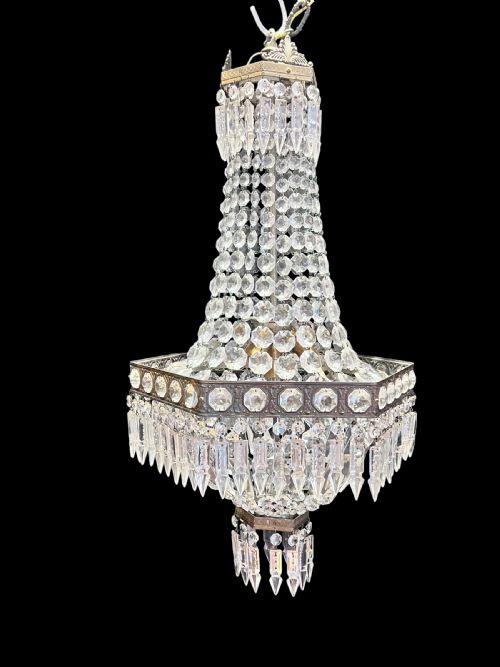
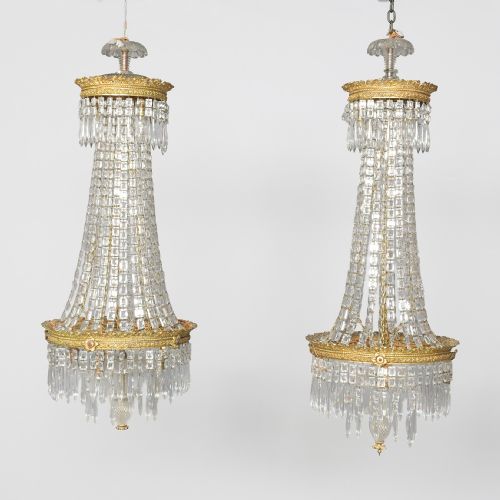
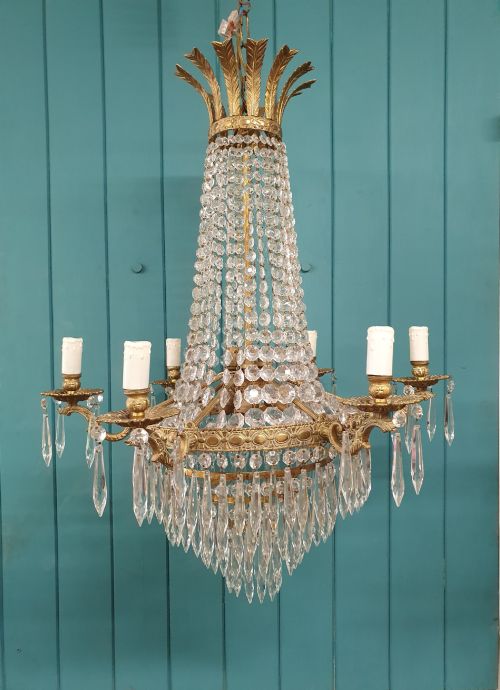
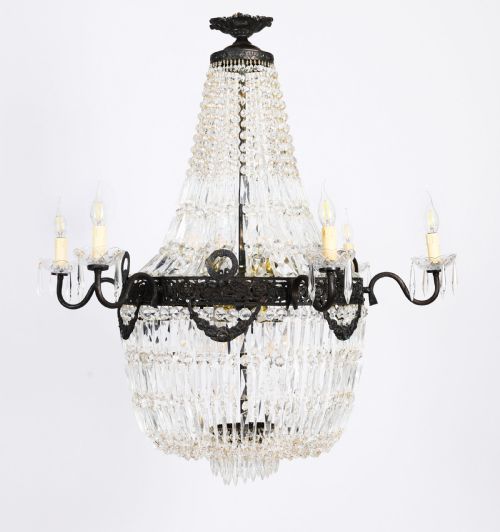
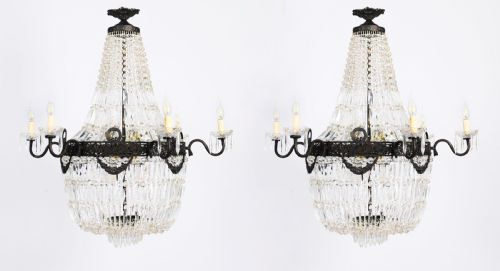
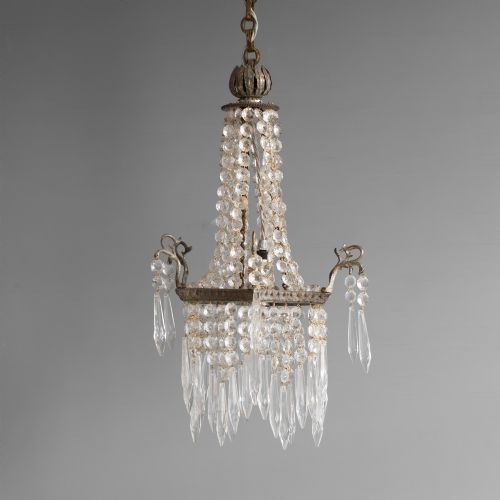
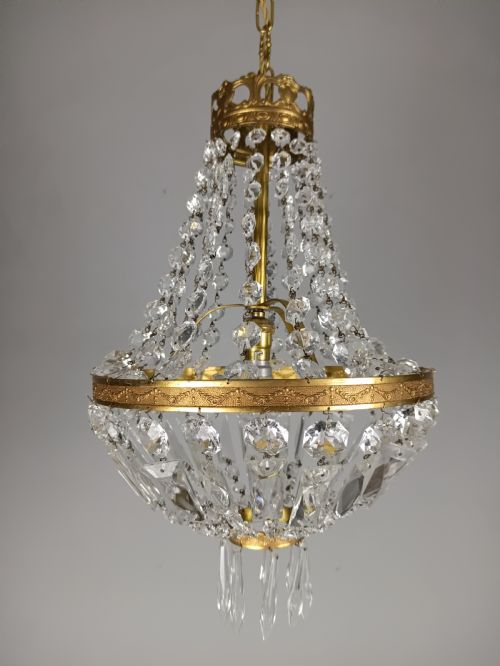
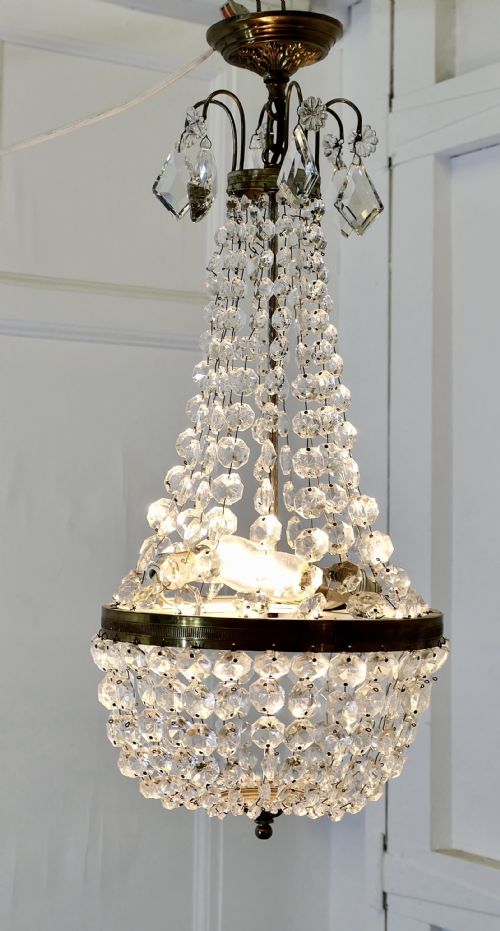
A tent and bag chandelier is a dramatic lighting fixture defined by an upper canopy of strings falling outwards in a tent shape, joined to a gathered lower bag of drops. These decorative pieces emerge in forms spanning French Empire, French Regency, Louis Revival, Edwardian, and French Neoclassical styles. Examples appear from the 19th century, the Edwardian era, 1920, and 1930.
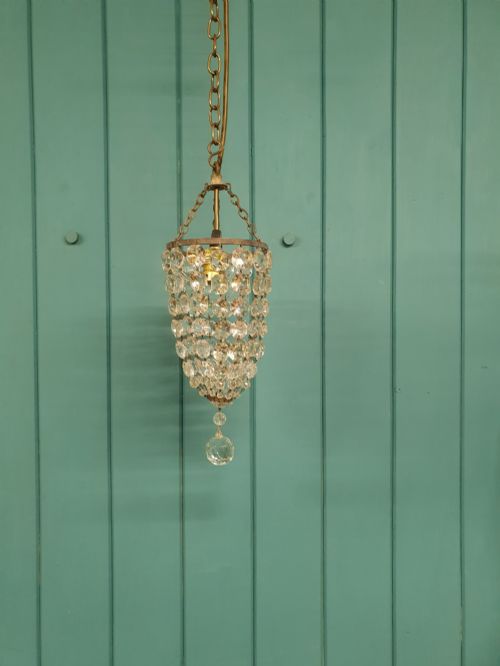
Buyers encounter fixtures ranging from small 5-inch and 10-inch examples to grand ballroom chandeliers holding up to 14 or 16 lights. The most common variations on this page combine cut crystal or glass drops with brass, bronze, gilded bronze, or general metal mounts. Pendant lights and chandeliers dominate the recorded object types.
How they were made
The construction of these pieces relies on metal armatures formed from brass, bronze, gilded bronze, or other metals to support the weight of the glass elements. Individual crystal, cut crystal, and glass drops are wired or pinned together to form the upper swag sections and the lower bag.
Makers integrated structural metal mounts to anchor multiple light branches, particularly in larger 12-light, 14-light, and 16-light configurations. Gilded finishes and careful polishing of the bronze and brass components provided a rich contrast to the refractive glass.
Retail Price Guide 2026
Typical UK retail prices for tent and bag chandelier, calculated from the Sellingantiques database of over a million retail prices indexed since 2003. This retail price guide relies exclusively on Sellingantiques data; no external sources or auction records are used, so the figures do not describe the wider market.
Materials recorded across these lighting fixtures include cut crystal, standard glass, brass, bronze, and gilded bronze mounts.
What varies in quality
Quality rests in the material purity and depth of the glass work, moving from standard moulded glass down to finely faceted cut crystal. The intricacy of the metalwork also separates standard production from superior pieces, with cast bronze and gilded bronze mounts showing sharper definition than basic metal alternatives.
Scale and ambition define the upper tier of the range, evidenced by large ballroom chandeliers with numerous lights and complex multi-tiered draping. The precision of the assembly, from the alignment of the tent swags to the fullness of the lower crystal bag, determines the visual impact of the fixture.
The Tent and Bag Chandelier Glossary
- Tent
- The upper triangular section of strung crystals that sweeps outward from a central crown to the perimeter ring.
- Bag
- The gathered lower cluster of hanging crystal drops suspended beneath the main body of the chandelier.
- Gilded Bronze
- Bronze coated with a thin layer of gold, providing a durable and lustrous metallic finish found on premium mounts.
- French Empire
- A neoclassical design style characterised by formal symmetry, classical motifs, and opulent use of gilt metals and crystal.
Frequently Asked Questions
How do I hang a heavy chandelier safely?
Support must be anchored directly into ceiling joists using a heavy-duty steel hook and electrical box rated for the fixture's weight.
Professional installation is strongly advised for larger multi-light examples, especially grand ballroom pieces with substantial bronze and crystal mass.
What rooms suit a tent and bag chandelier?
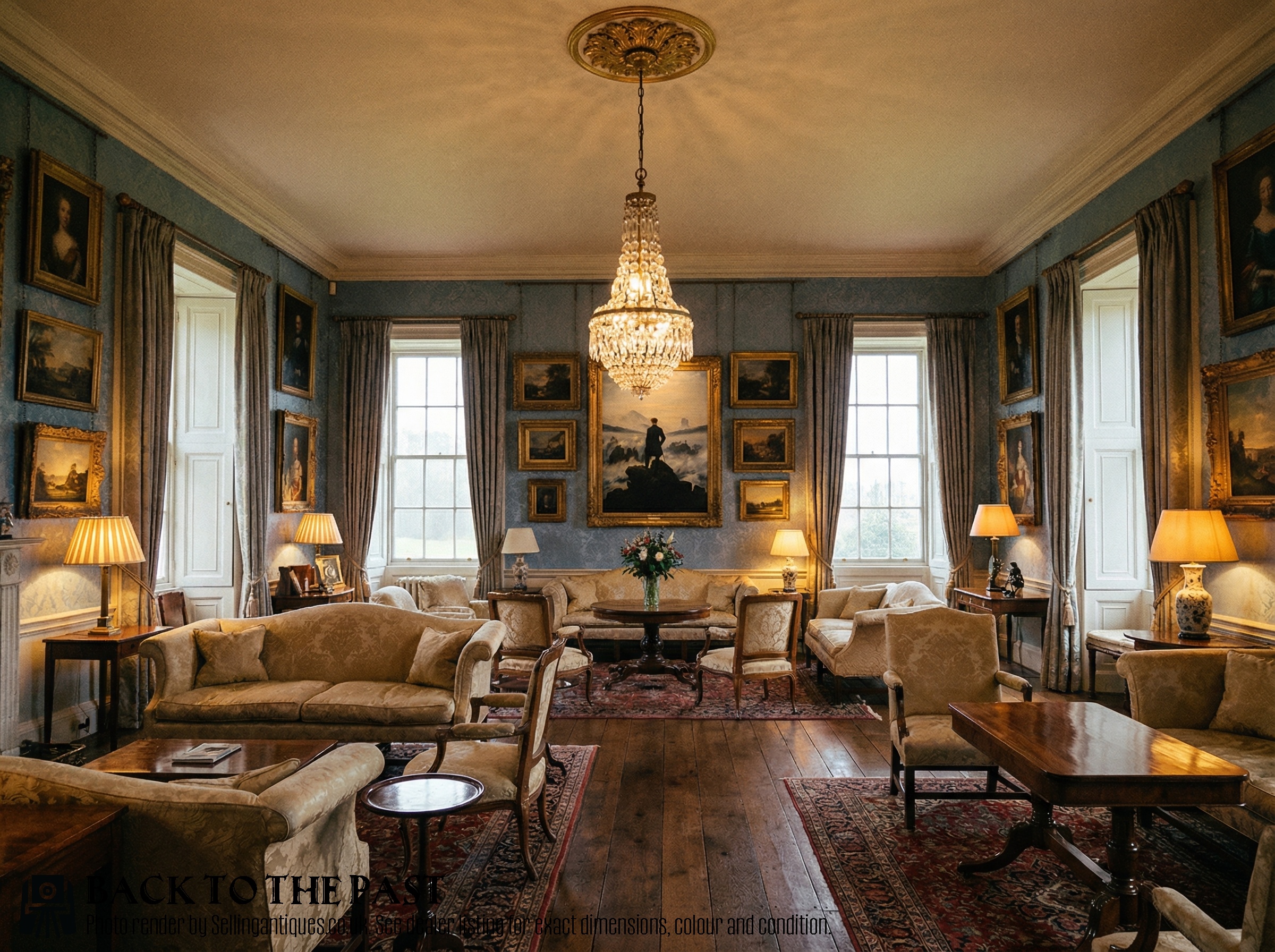
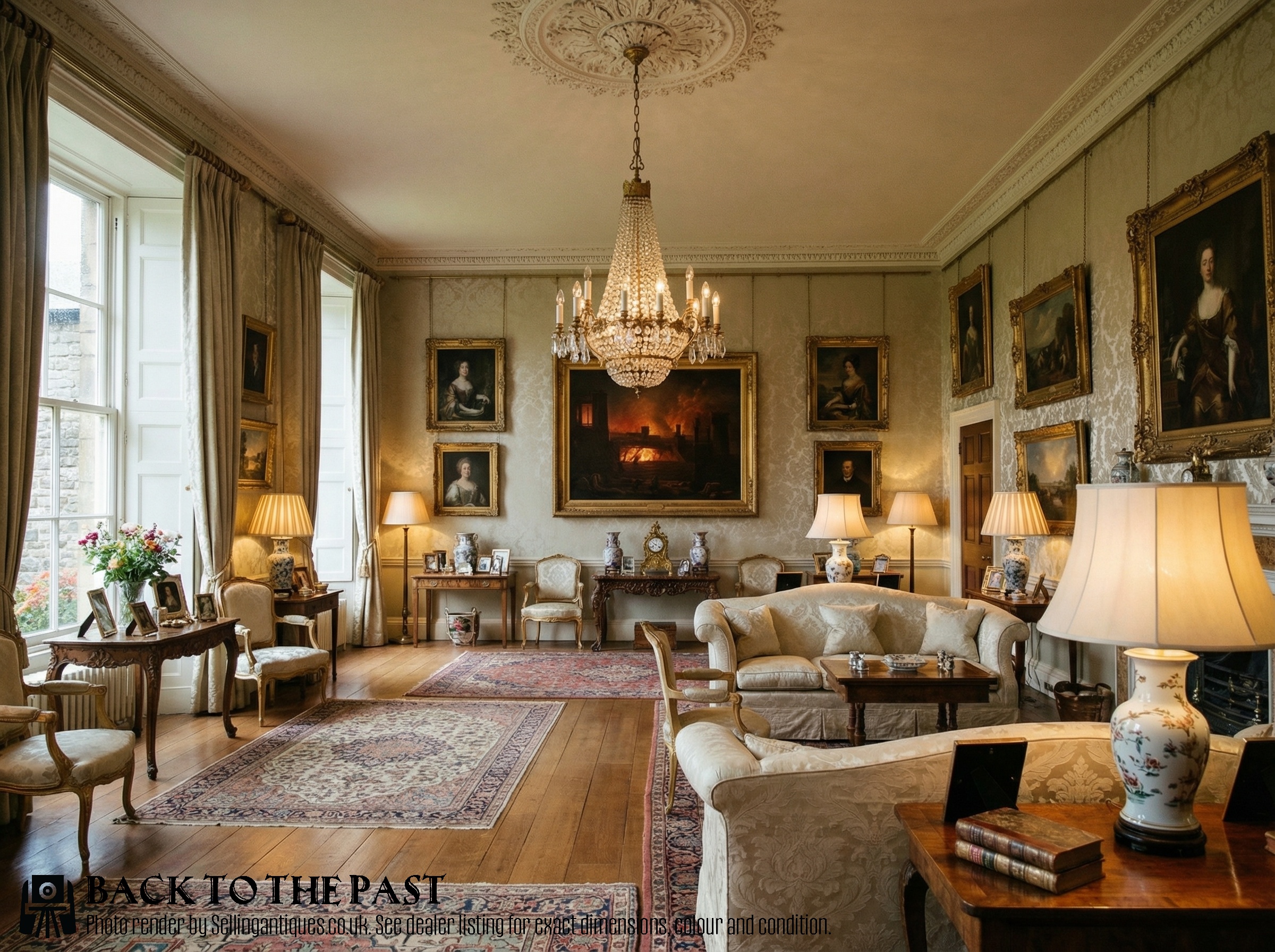
These fixtures suit formal dining rooms, high-ceilinged hallways, and drawing rooms where their vertical drop and reflective crystal can be fully appreciated.
Smaller examples function effectively in intimate spaces, while fourteen or sixteen-light versions require significant room proportions to balance their scale.
How do I clean the crystal drops?
Maintenance involves wiping individual glass and crystal elements with a mild solution of warm water and vinegar while supporting each drop by hand.
Leaving the drops attached prevents misalignment of the intricate wirework connecting the tent and bag sections during the cleaning process.
How do I date an antique chandelier?
Dating relies on examining the metal casting techniques, wiring methods, drop shapes, and overall stylistic markers such as Edwardian restraint or French Empire grandeur.
Archival records and listed pieces indicate production across the nineteenth and early twentieth centuries, including specific examples from 1920 and 1930.