

Vintage Crystal Chandelier
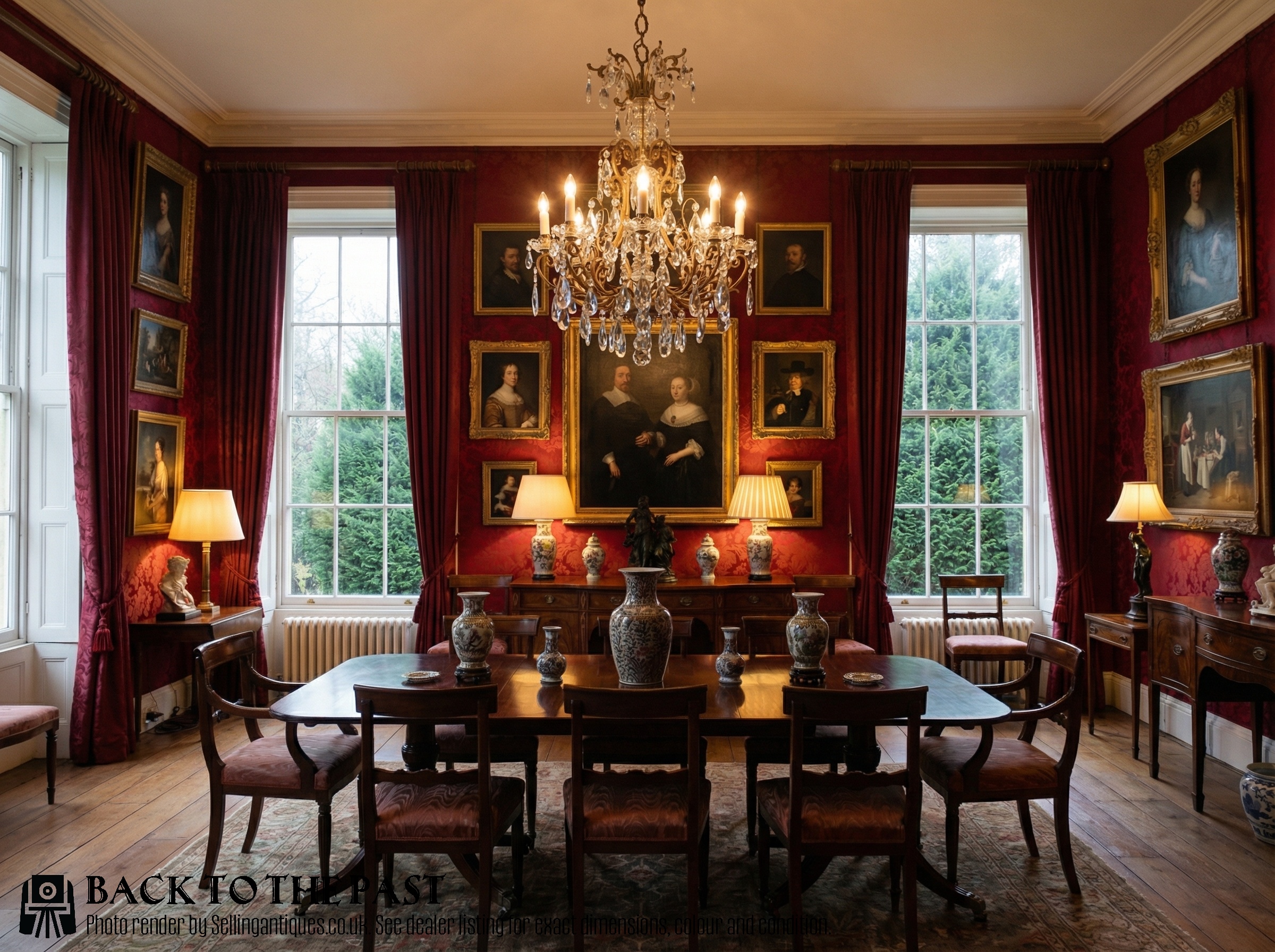
A vintage crystal chandelier brings dramatic refraction and weight to a room, drawing the eye upwards through cut glass drops and gilt frames.
Vintage Crystal Chandelier
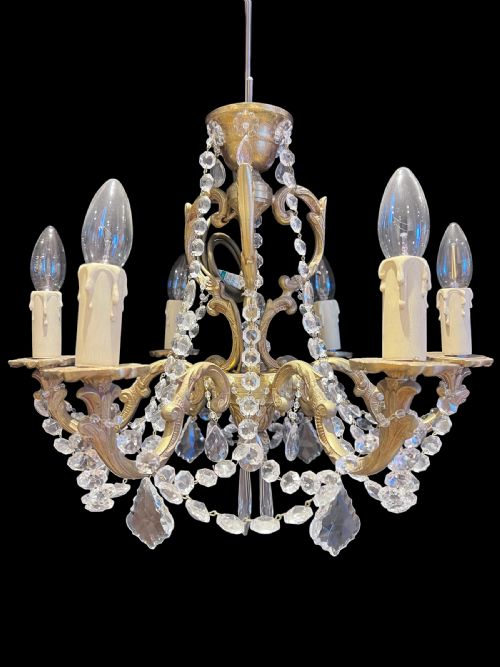
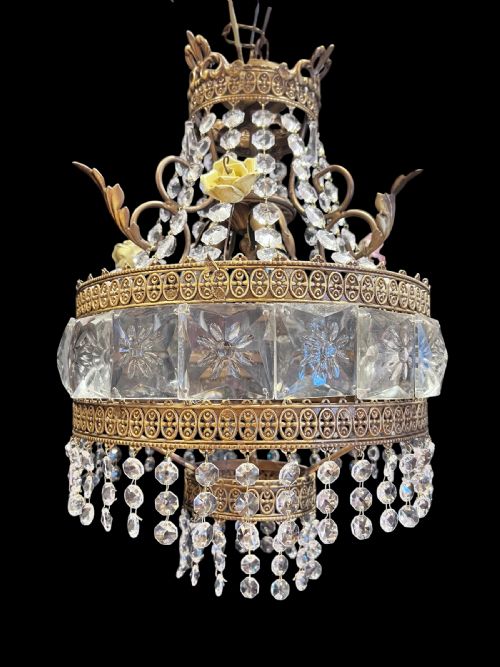
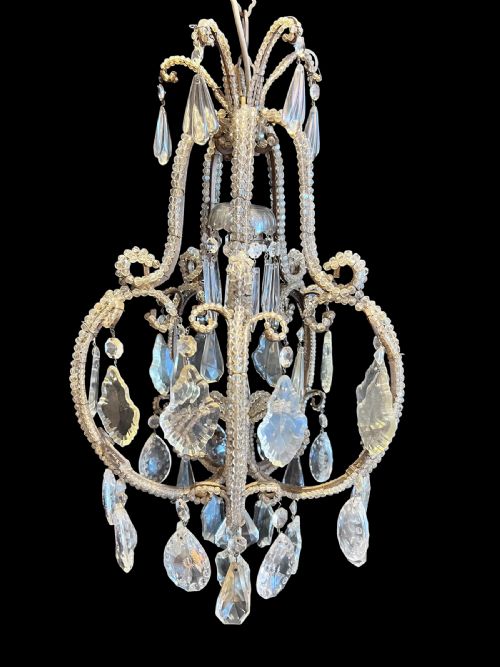
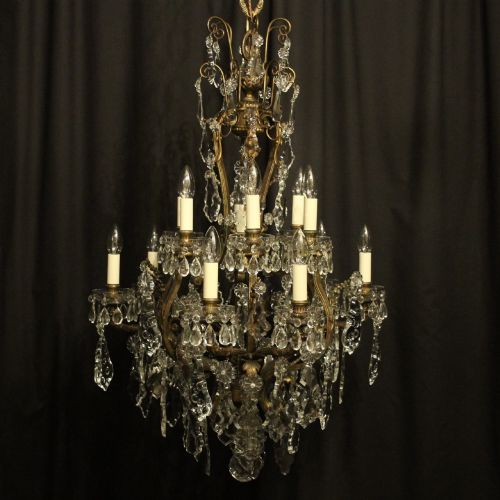
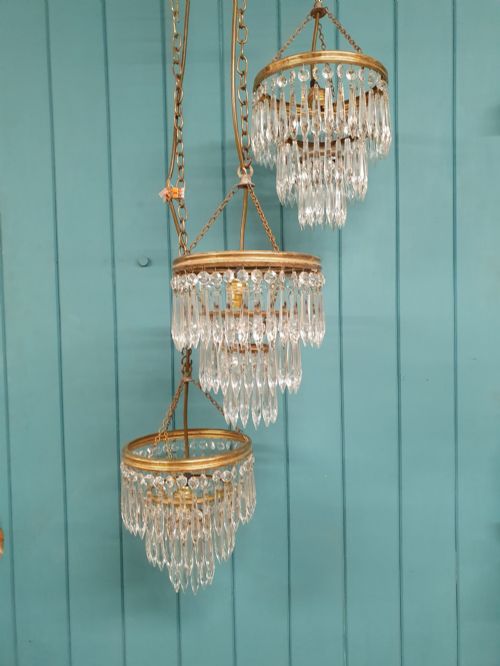
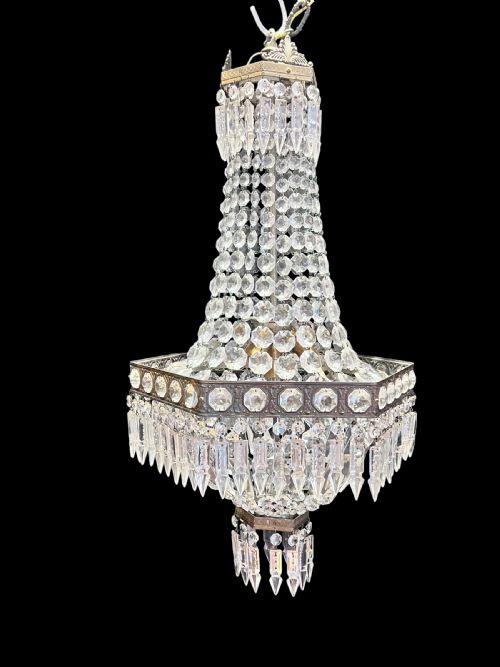
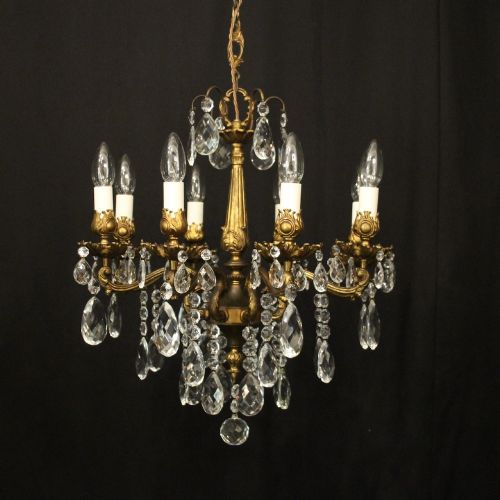
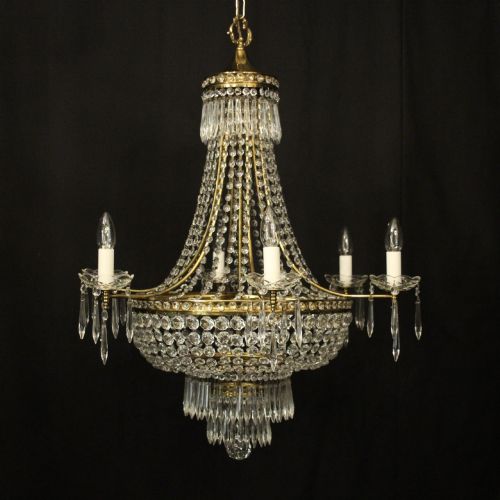
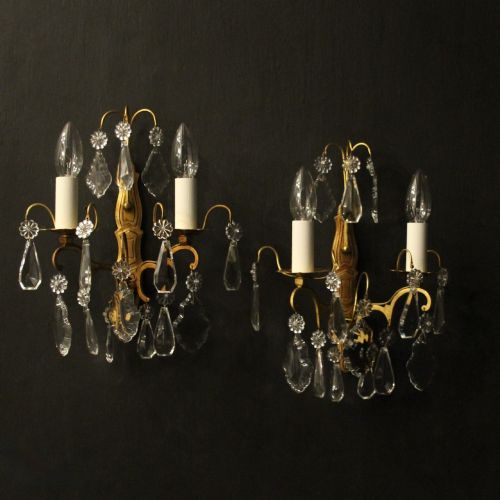
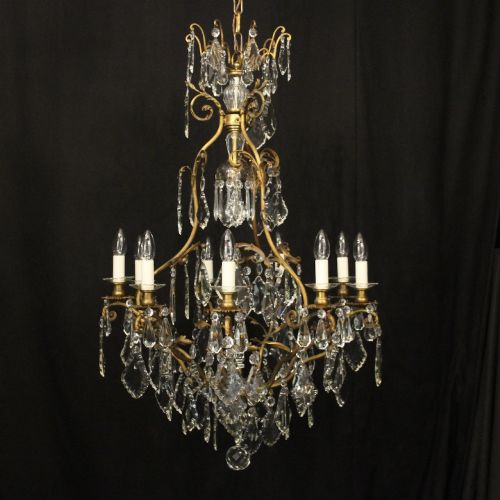
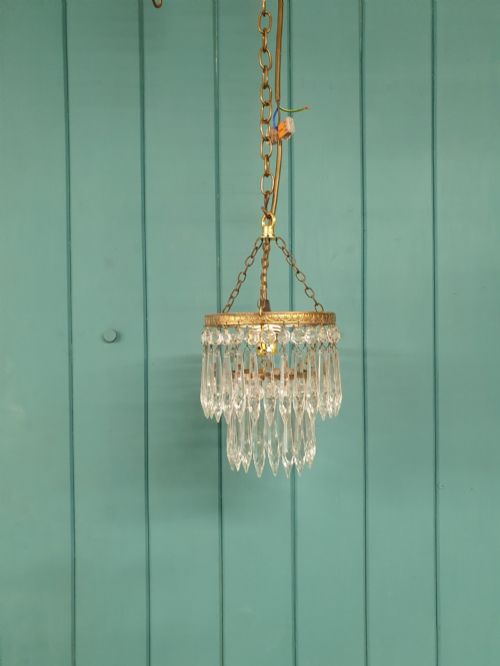
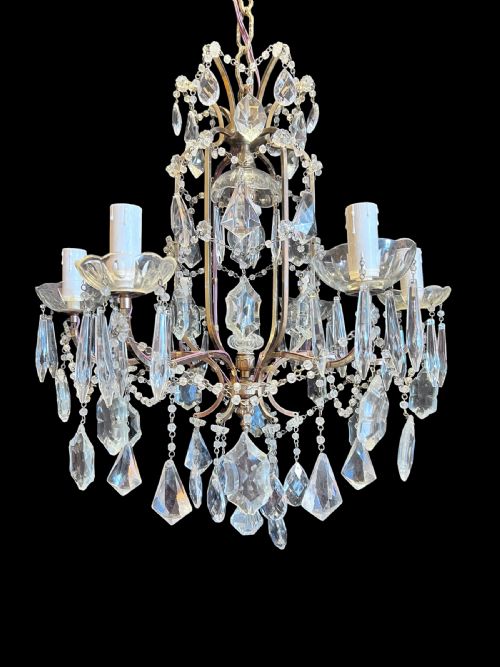
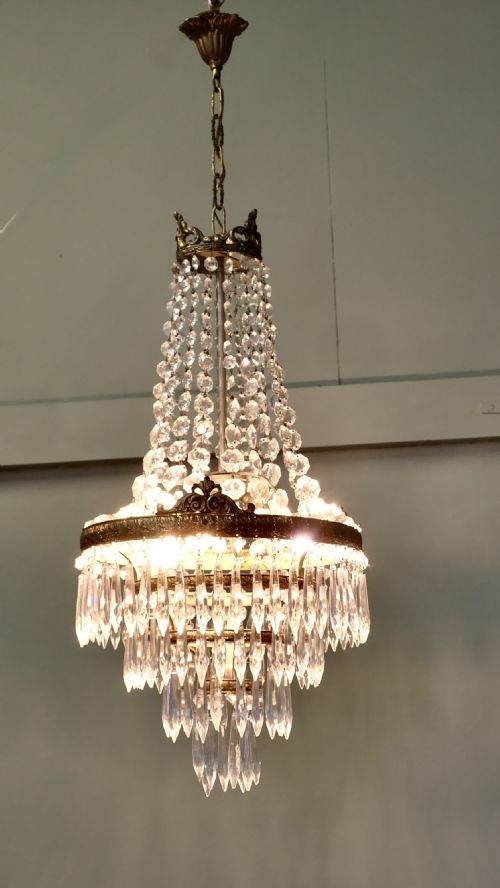
When searching for a vintage crystal chandelier, a buyer encounters pieces originating primarily from the nineteenth and early twentieth centuries, spanning Edwardian and various revival styles. The selection includes multi-arm ceiling lights, basket forms, plafonniers, tent and waterfall configurations, and smaller spike or dome types alongside matching wall sconces.
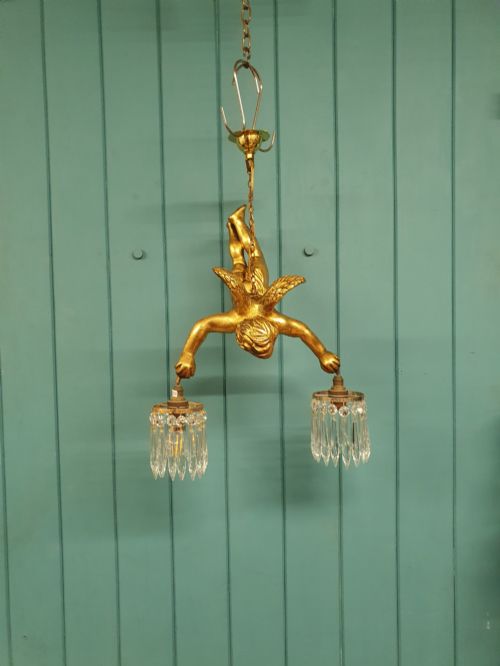
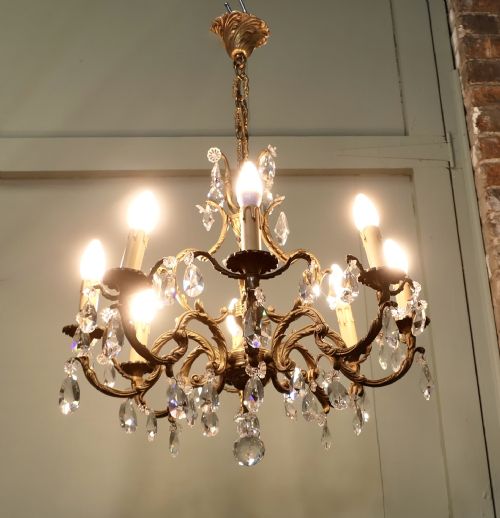
French and Italian workshops dominate the origin of these fixtures, often incorporating ornate cast metal frames decorated with cherubs, porcelain flowers, or leaf motifs. Many examples adhere to specific regional designs such as French Empire, Louis Revival, or Italian Florentine aesthetics.
The most common formats on offer range from modest single-light fixtures to large ballroom chandeliers carrying fourteen or more lights. These lighting objects combine structural metal armatures with hanging glass prisms, lustres, and beads to distribute illumination.
Materials and Construction
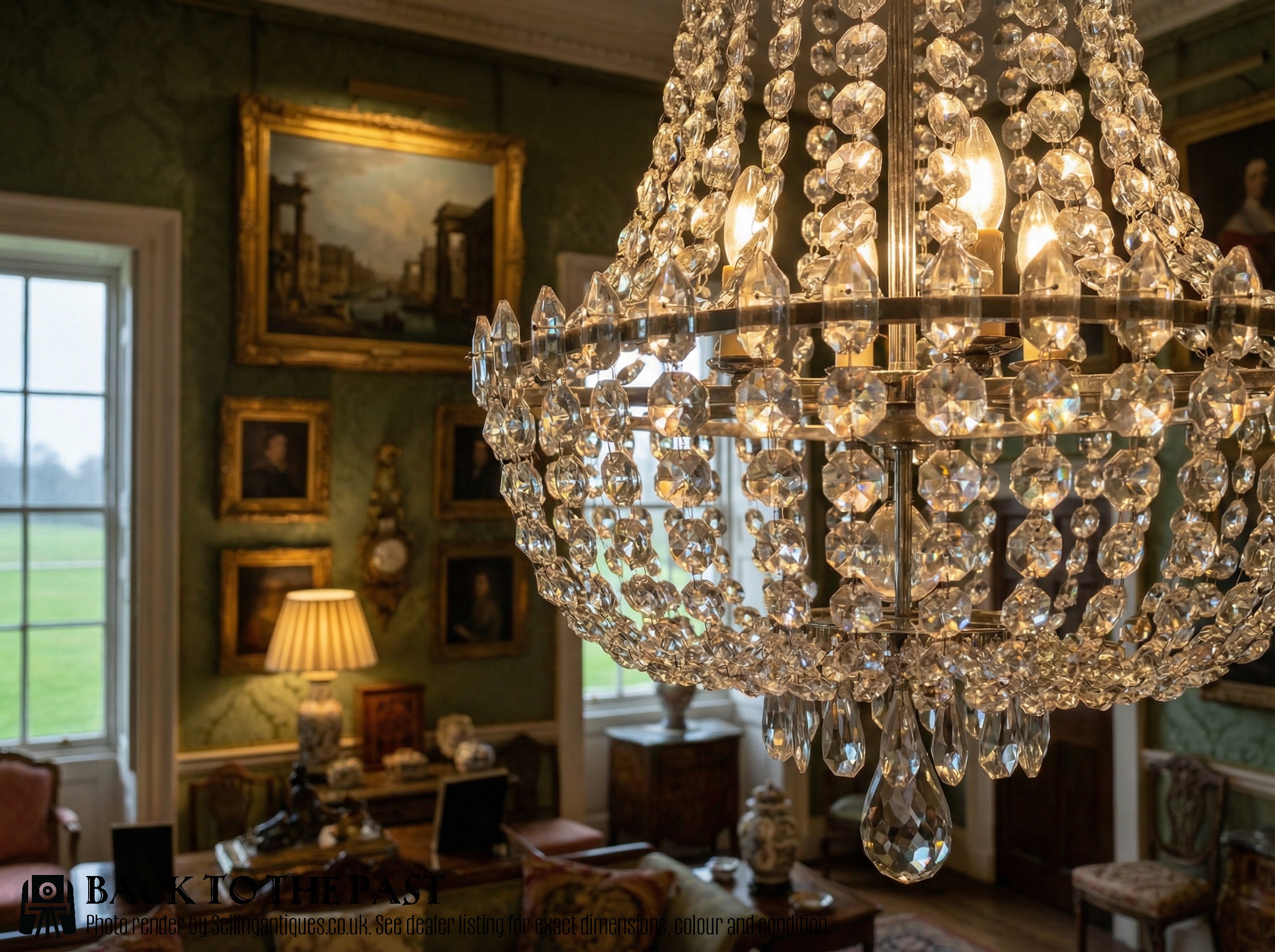
The structural framework of these chandeliers relies on cast metals including brass, bronze, spelter, and iron, frequently finished with gold or silver gilding. These metals provide the necessary rigid armature to support multiple candle arms and heavy glass assemblies.
Pendants, beads, and lustres are formed from cut glass or crystal, secured to the metal frame by wire pins or loops. Additional decorative elements occasionally include porcelain petals or coloured crystals integrated into the arms and central stems.
Vintage Crystal Chandelier Retail Price Guide 2026
Typical asking prices for vintage crystal chandelier among the pieces listed under this phrase on Sellingantiques today, from the lower quarter to the upper quarter. They describe what is for sale here now, not the wider market.
Materials recorded in current listings include brass, bronze, spelter, gilt metal, cut glass, crystal, and porcelain flowers.
Distinctions in Standard
Quality separates fixtures by the precision of the glass cutting and the clarity of the crystal drops, which determines how sharply light refracts across the room. Superior metalwork shows crisp casting detail in figural elements like cherubs and floral mounts rather than soft, indistinct relief.
The integrity of the construction depends on whether the arms, central cage, and suspension components remain firmly aligned without loose joints or replacement components that disrupt the historical cohesion of the piece.
The Vintage Crystal Chandelier Glossary
- Tent and waterfall
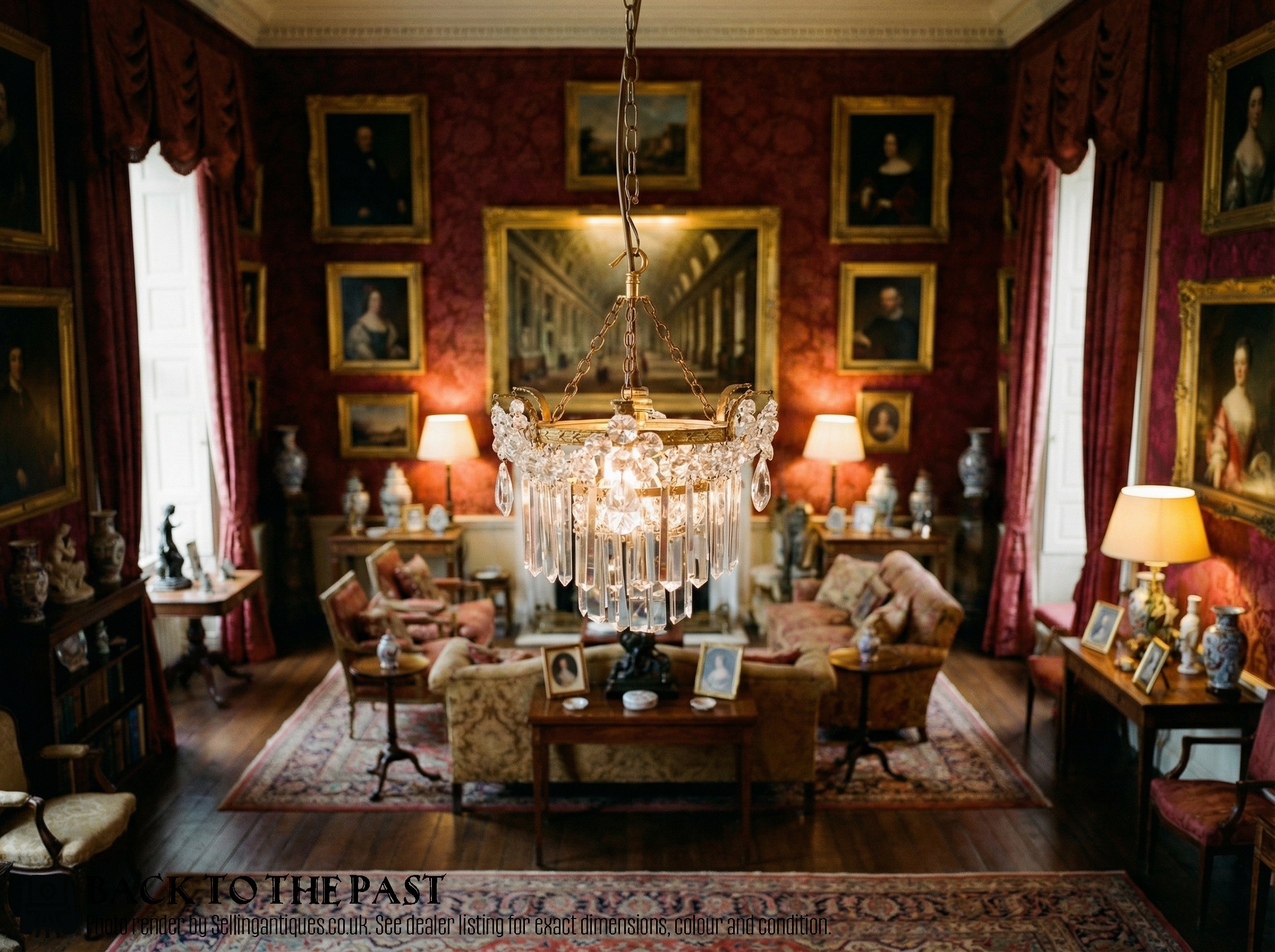
- A lighting configuration where an upper conical tent of strung beads feeds down into a wider cascading fringe of crystal prisms. This arrangement maximises the reflective surface area of the fixture.
- Plafonnier
- A ceiling light designed to sit flush or close to the ceiling surface rather than hanging on a long chain or rod. These often feature dome or shallow bowl shapes.
- Lustre
- A cut glass pendant or drop hung from the arms or crown of a chandelier to catch and scatter light. Lustres vary in shape from simple spears to complex faceted polygons.
- Spelter
- A zinc alloy used as a cost-effective substitute for bronze in casting figural components and decorative mounts. It is frequently gilded to simulate heavier metals.
- Coffin prisms
- Long, narrow, flat-backed crystal drops with a pointed termination, resembling the profile of a coffin. They appear frequently on Edwardian fixtures.
Vintage Crystal Chandelier: Frequently Asked Questions
How do I clean a crystal chandelier safely?
Maintenance requires wiping individual drops in situ using a specialist glass cleaner and a soft cloth to avoid disturbing the wire fixings. Removing the crystals entirely for washing in warm soapy water is necessary only for heavy accumulated grime.
Care must be taken to support each pendant from behind while cleaning to prevent strain on the surrounding metal frame and pins.
Can these chandeliers take modern electrical bulbs?
Wiring generally accommodates standard small screw or bayonet cap lamp holders suited to low-wattage LED candle bulbs. Rewiring older fixtures ensures compliance with current safety standards while retaining the original sockets where possible.
Professional electrical inspection is recommended before installation to verify the internal earthing and load-bearing capacity of the ceiling fixings.
What ceiling height do I need for these lights?
Hanging a multi-arm fixture requires sufficient vertical clearance so that the lowest point clears household traffic by a standard margin. Tent and waterfall designs or large ballroom pieces demand high ceilings to let the proportions breathe.
Smaller dome lights, plafonniers, and single-light fixtures suit lower rooms where a flush or semi-flush profile is practical.
How do I distinguish French Empire from Louis Revival styles?
French Empire pieces follow the neoclassical proportions and military motifs popular during the early nineteenth century, featuring strict symmetry and tent configurations. Louis Revival items draw upon earlier eighteenth-century Rococo excess, displaying asymmetrical scrollwork and exuberant leaf decoration.
Examining the casting style and metal composition helps clarify the specific design period of the armature.