
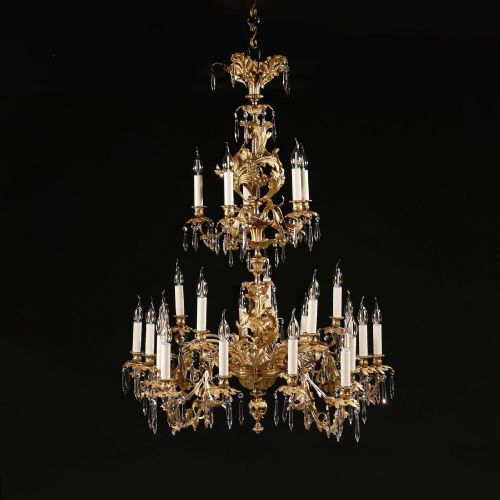
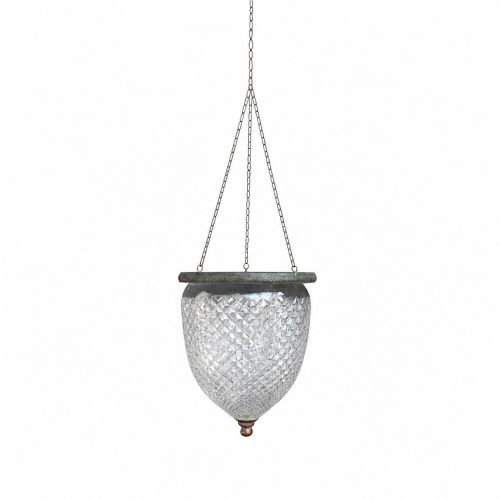
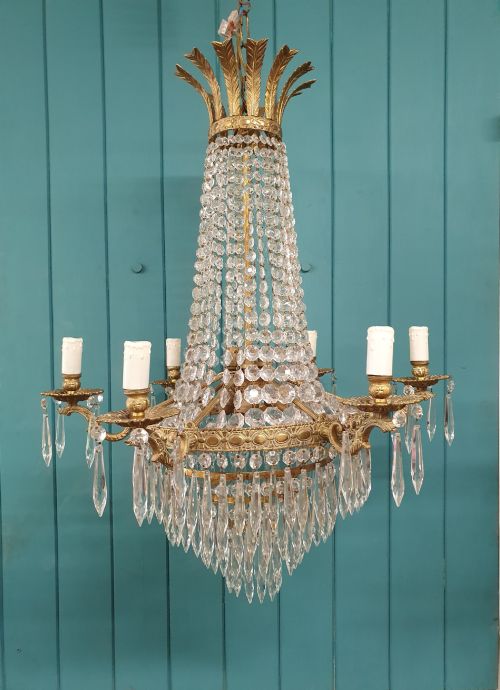
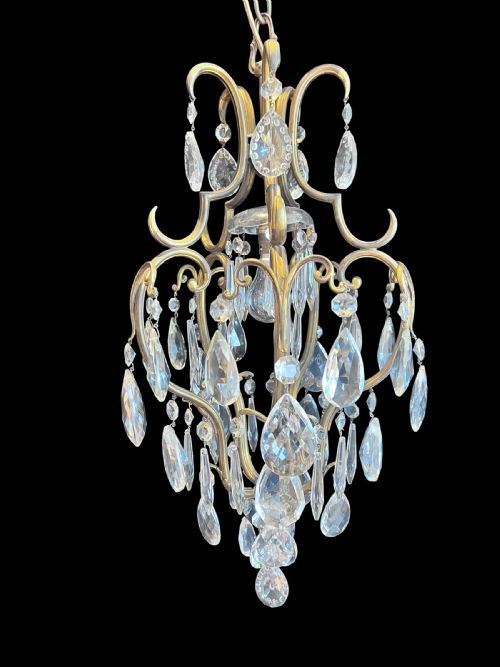
Cut Crystal Chandelier
A cut crystal chandelier brings brilliant illumination and period elegance to a room through cascading glass prisms and metal frames.

Cut Crystal Chandelier
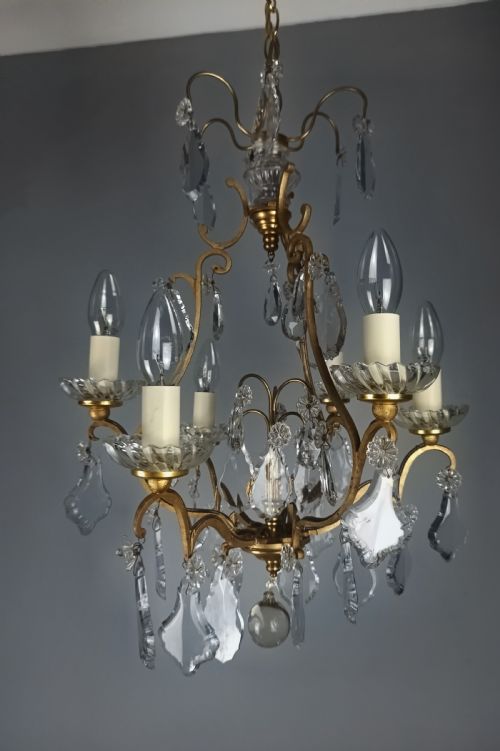
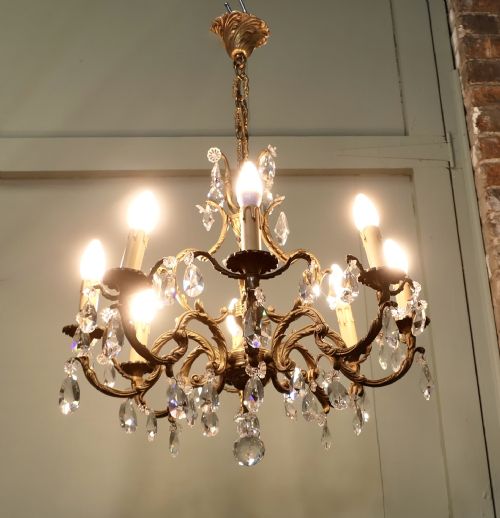
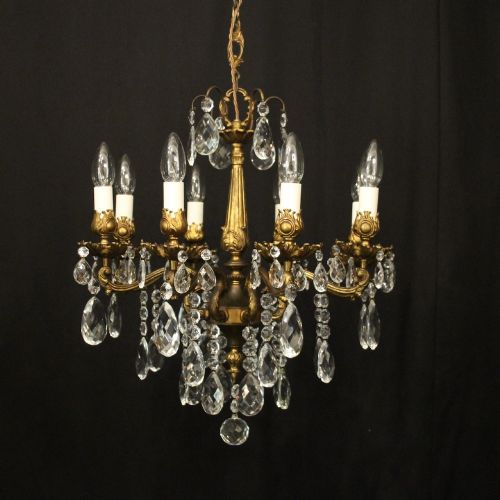
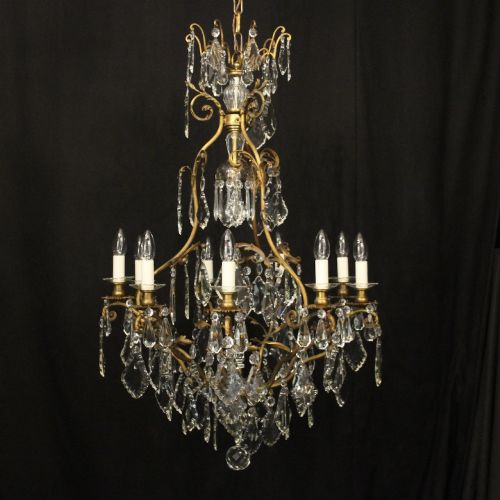
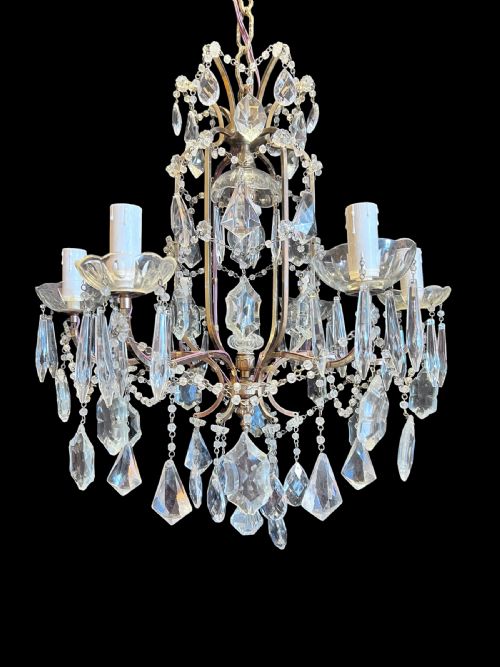
A cut crystal chandelier combines metal frames with faceted glass elements designed to suspend from ceilings and scatter light across a room. These fixtures appear in various formats, from compact Edwardian dome types to large French Empire or Louis Revival ballroom arrangements with twenty or more arms.
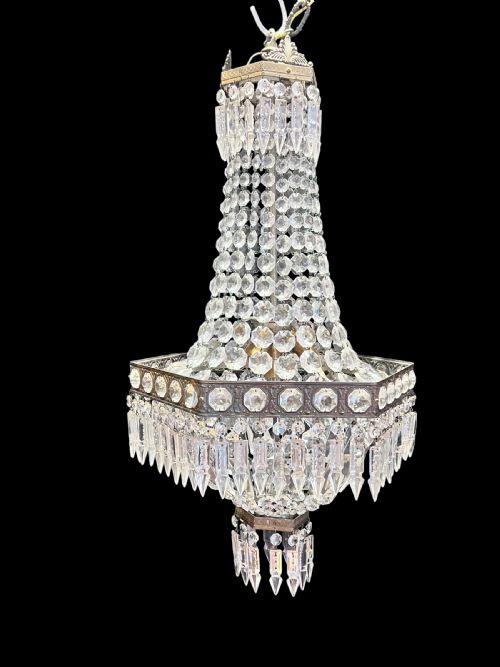
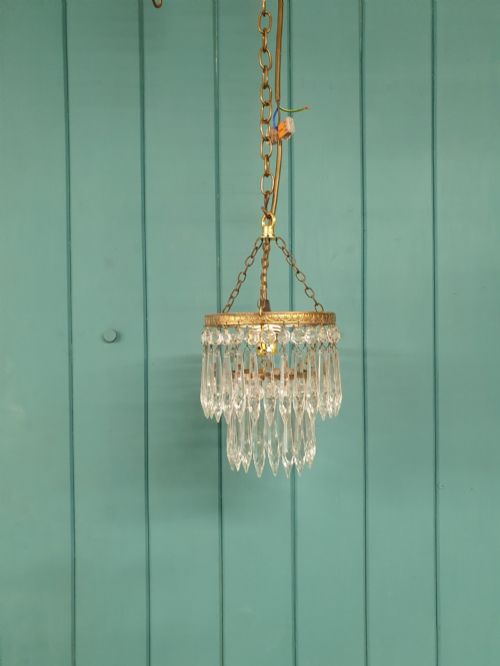
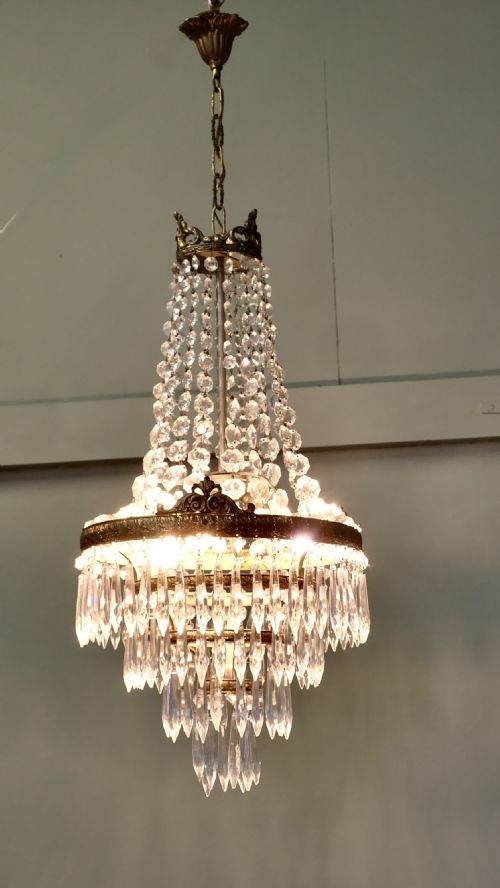
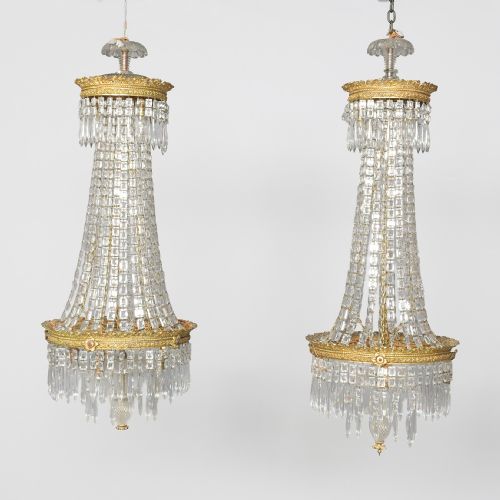
Buyers encounter multiple silhouette styles on this page, including tent and bag configurations, basket forms, tapered bag designs, and multi-tier structures. Dating typically spans from the Victorian era and 1900 through Edwardian productions up to pieces from the 1920s and 1930s.
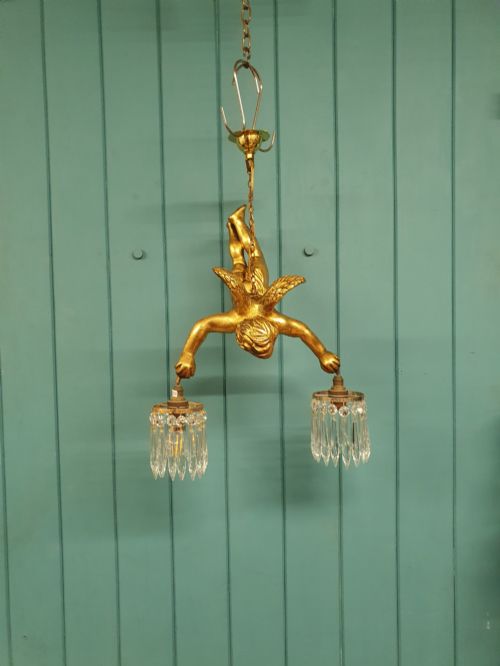
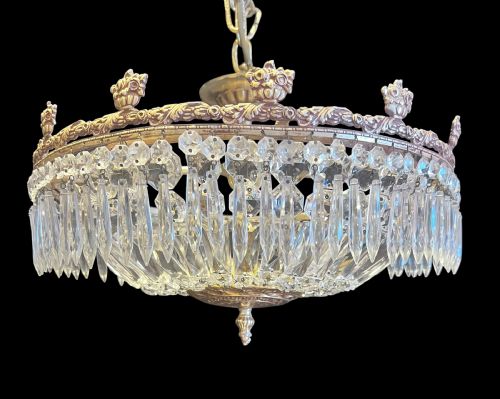
Origins heavily reflect French and Italian workshops alongside English examples, frequently utilising brass, bronze, or gilded metal frameworks. Smaller ceiling fixtures such as plafonniers and single-light pendants also fall within this category.
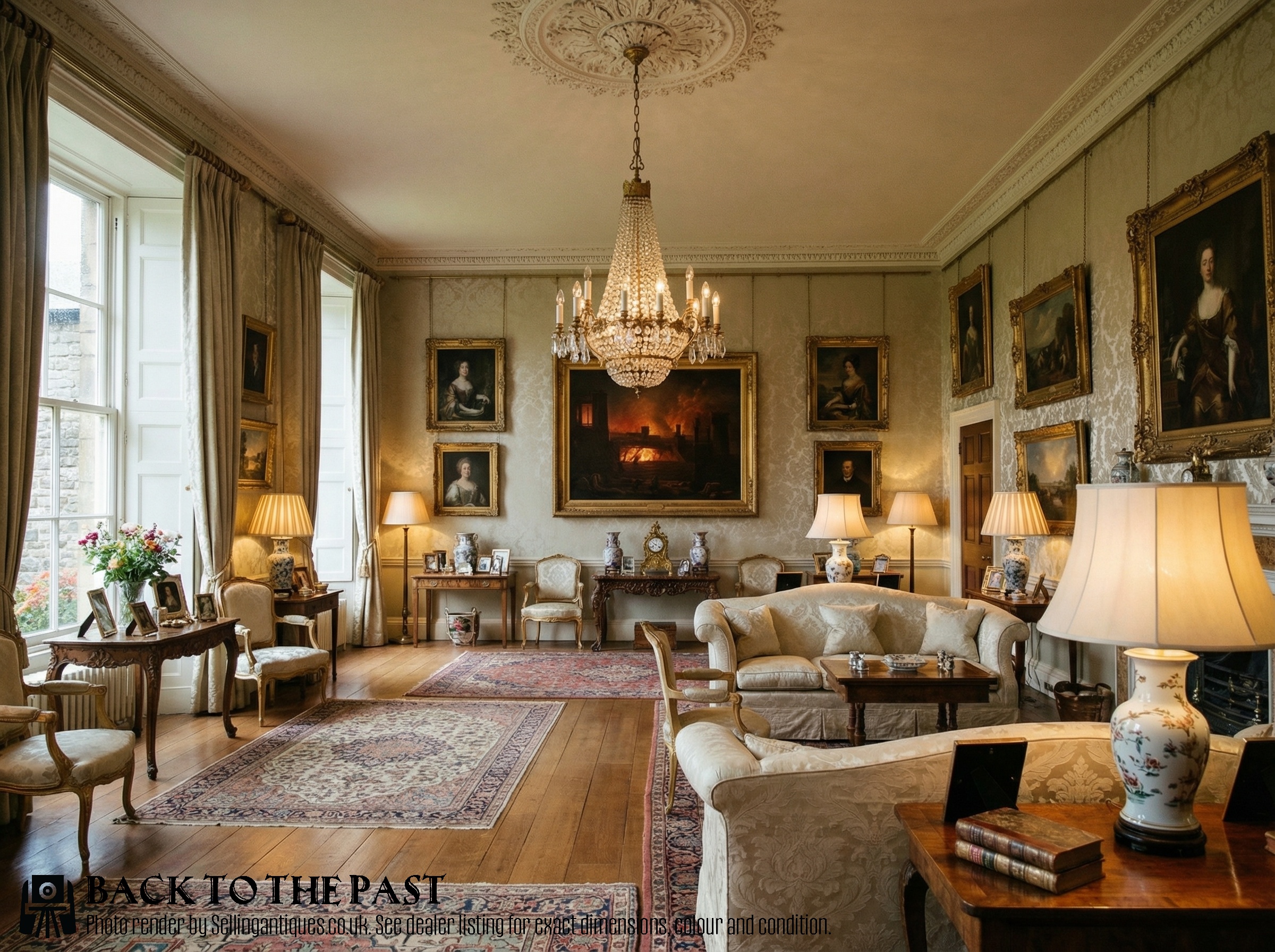
Materials and construction methods
Frameworks rely on cast or spun brass, bronze, spelter, and gilt metals, often finished with silver or gold gilding to reflect light upwards. These structural arms support glass components secured with wire or pins.
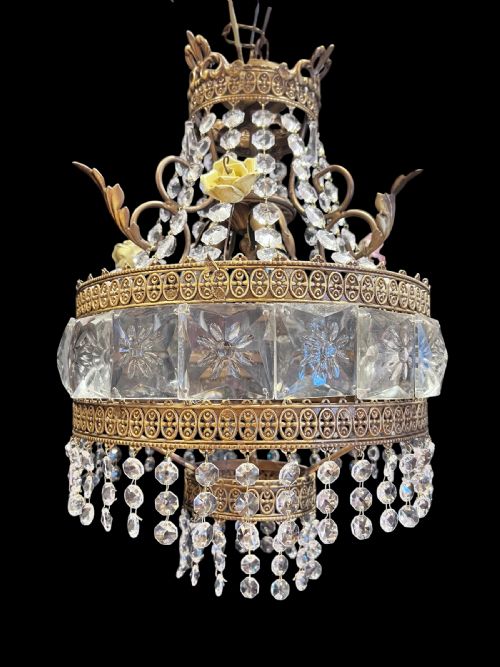
Prisms, drops, beads, and plates are fashioned from cut glass and lead crystal, shaped with facets to refract illumination. Additional decorative elements include porcelain flowers, brass lion masks, and gilt bronze ornamentation.
Cut Crystal Chandelier Retail Price Guide 2026
Typical asking prices for cut crystal chandelier among the pieces listed under this phrase on Sellingantiques today, from the lower quarter to the upper quarter. They describe what is for sale here now, not the wider market.
Listings feature brass, bronze, and gilt metal frames paired with cut crystal elements across Victorian, Edwardian, and 1920s periods.
Distinguishing quality across examples
The density and clarity of the glass determine how sharply a piece refracts light, separating standard moulded glass drops from deeply faceted lead crystal prisms. Heavier cast metal frames and intricate hand-finished brass work indicate higher manufacturing standards.
Scale and ambition dictate complexity, moving from modest single-light fixtures and small spike chandeliers to multi-tiered ballroom centerpieces hung with extensive beadwork and lustres. The intricacy of the metal ornamentation, such as chased gilt bronze or detailed basketry, elevates the piece.
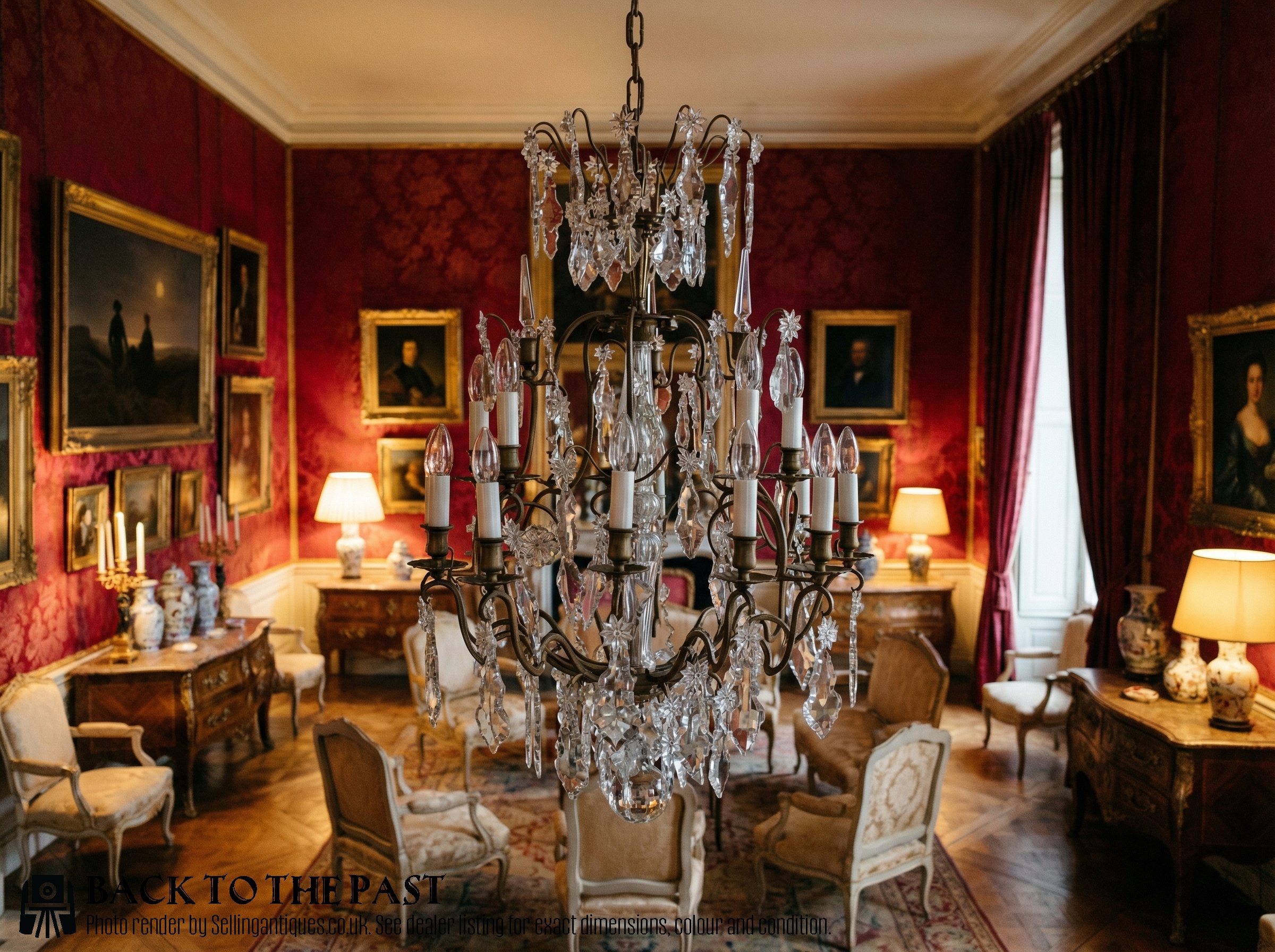
The Cut Crystal Chandelier Glossary
- Lustre
- A pendant drop of cut glass or crystal suspended from a chandelier to enhance light refraction. These elements hang in series around the frame.
- Plafonnier
- A ceiling-mounted light fitting that sits relatively flat against the ceiling surface. These fixtures often feature glass bowls or mounted crystal drops.
- Tent and bag
- A lighting configuration featuring an upper conical section of strings of beads resembling a tent, above a lower gathered mass of crystals known as the bag.
- Spike chandelier
- A compact lighting form featuring a central vertical spike surrounded by radiating arms and glass drops. These often measure under a foot in diameter.
- Gilt bronze
- Metal cast in bronze and treated with a gold coating, frequently utilised in French Empire and Louis Revival fixtures.
Cut Crystal Chandelier: Frequently Asked Questions
How do I hang a heavy antique chandelier?
Installation requires securing the fixture directly into ceiling joists or structural noggin pieces using rated fixings that support the combined weight of the metal frame and glass drops.
Wiring should be assessed by a qualified electrician to ensure the internal bulb holders and circuits meet contemporary safety standards.
What rooms suit a tent and bag chandelier?
These dramatic fixtures suit principal reception rooms, dining spaces, or entrance hallways with adequate ceiling height to accommodate their hanging depth.
Smaller compact variants and flush-mounted plafonniers work effectively in bedrooms or hallways with restricted vertical clearance.
How do I clean a crystal chandelier safely?
Maintenance involves removing dust with a soft brush and wiping individual glass drops with a mild cleaning solution while the fixture remains unpowered.
Keeping the suspension wires secure during cleaning prevents accidental detachment of delicate crystal beads and lustres.
How can I tell an Edwardian chandelier from a 1920s piece?
Edwardian examples frequently favour restrained brass frames with beaded glass details, small dome tops, or tapered bag profiles dating around 1900 to 1910.
Pieces from the 1920s often display grander Louis Revival proportions, multi-tier formats, and more elaborate tent configurations.