


Vintage Glass Biscuit Jar
A vintage glass biscuit jar brings period charm to the table, combining heavy cut glass with gleaming silver plate.
Vintage Glass Biscuit Jar
A vintage glass biscuit jar serves as a decorative lidded container for storing biscuits on the dining table or sideboard. These vessels combine robust glass bodies with metal mounts, swing handles, and fitted lids.
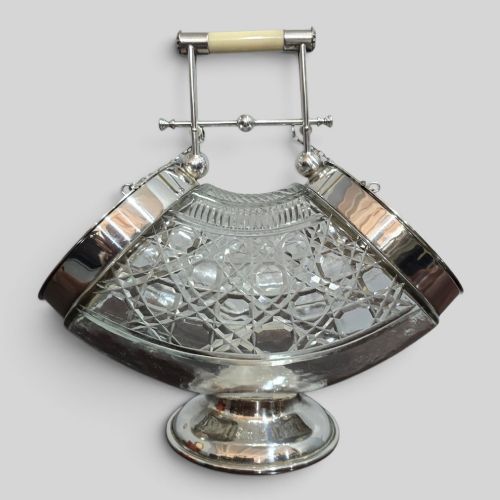
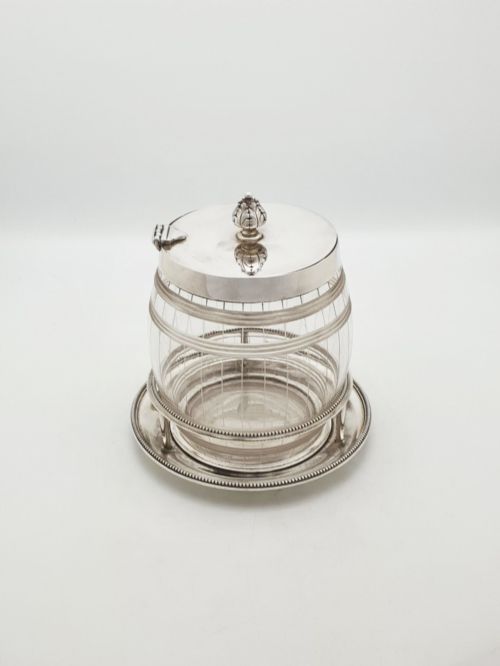
The pieces appearing on this page span from the late Victorian and Edwardian eras into the early twentieth century, including George V and Art Deco examples. Formats include traditional cylindrical barrels, faceted containers, and jars set upon dedicated metal stands.
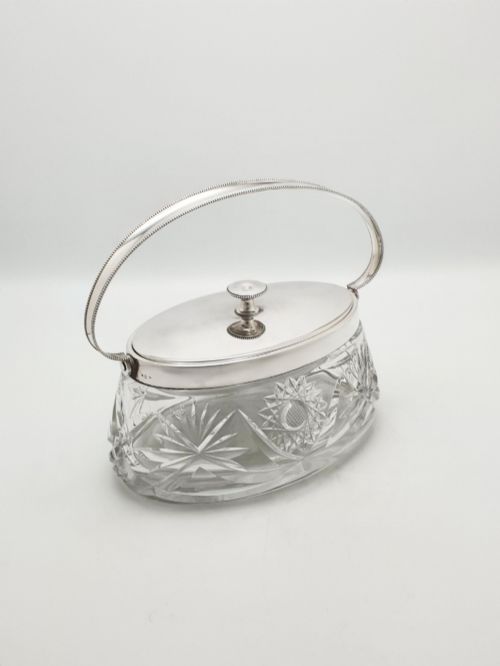
Most examples rely on a marriage of clear or cranberry glass paired with silver plated or sterling silver mounts. Makers often applied hobnail cutting, twist shaping, or enamel decoration to distinguish the glass bodies.
Materials and construction
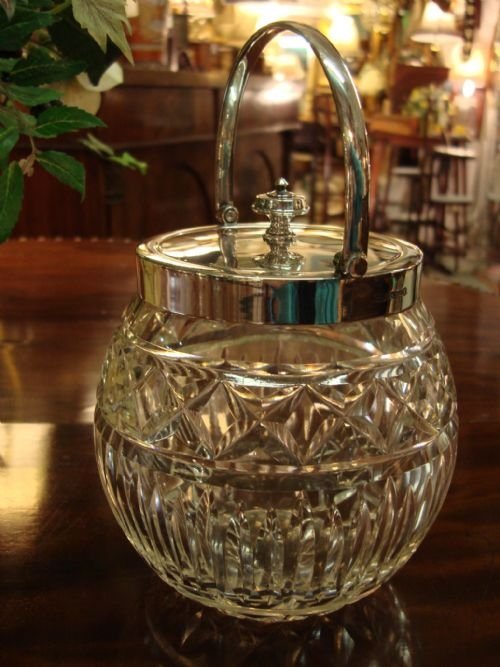
Glass bodies were formed by blowing or pressing, frequently finished with deep hand-cutting or faceting to catch the light. Coloured glass varieties, such as cranberry, required specialised mineral additions during the melting process.
Metal mounts, lids, and swing handles utilised silver plating over a base metal or solid sterling silver, often secured to the glass rim with collars. Makers embellished these metal components with chased details, heraldic finials, or automated mechanical hinges.
Listings feature items from the 1860s through to the 1930s, encompassing Victorian, Edwardian, and Art Deco design periods.
Distinguishing quality across the range
Quality rests upon the depth and crispness of the glass cutting, alongside the weight and clarity of the material itself. Heavy, deep hobnail cuts or precise faceting indicate a higher standard of craftsmanship than shallow surface patterns.
The execution of the metal mounts also defines the tier of the piece, seen in substantial silver plating, crisp chasing, and robust structural hardware. Maker attributions, such as work by Elkington, WMF, or James Dixon and Sons, point to superior manufacturing standards.
Elkington·WMF·James Dixon and Sons
The Vintage Glass Biscuit Jar Glossary
- Hobnail cut
- A raised, faceted glass pattern resembling the hobnails on stout boots. This technique creates a heavily textured surface that refracts light strongly.
- Cranberry glass
- A rich red-pink transparent glass produced by adding gold chloride to the molten batch. It appears frequently in Victorian and Edwardian tableware.
- Silver plate
- A layer of silver fused to a base metal substrate, commonly used for the handles, rims, and covers of these containers. It offered the appearance of solid silver at a lower cost.
- Finial
- The decorative knob or ornament attached to the top of the lid. Examples in this category include heraldic figures and cast metal shapes.
- Jugendstil
- The continental European counterpart to Art News and Arts and Crafts styles, marked by organic flowing lines. Pieces from this aesthetic emphasise natural forms.
Vintage Glass Biscuit Jar: Frequently Asked Questions
What were glass biscuit jars used for?
These containers held dry biscuits and baked goods on the Victorian or Edwardian dining table. The fitted lid kept the contents fresh during afternoon tea.
Servants would bring the jar into the parlour or drawing room, where guests could help themselves. Today, they serve a similar decorative and storage function in the home.
How do I date a biscuit barrel?
Dating relies on stylistic clues, glass cutting depth, and metal hallmarks where present. Victorian examples often feature ornate hand-cutting and heavy silver plating.
Later pieces from the Edwardian period or the 1920s tend towards cleaner geometric facets or simpler silver mounts. Examining the construction of the swing handle and lid hinge also aids in determining the era.
Are the handles original to the jars?
Most swing handles are original components designed to fit the specific collar and rim mount of the glass body. They allow the container to be carried securely from the sideboard to the table.
Replacement handles occasionally occur, identifiable by mismatched metal wear or incorrect sizing at the pivot points. Examining the patina consistency between the handle and the rim helps confirm originality.
How do I clean a vintage glass jar?
Gentle washing in warm soapy water with a soft cloth preserves both the glass and the silver plate. Abrasive cleaners should be avoided to prevent scratching the glass or wearing through the thin silver layer.
Silver components benefit from occasional treatment with a specialist non-abrasive polish applied sparingly. Thorough drying prevents moisture retention around the metal collars and hinges.