

Vintage Gilt Mantel Clock
A vintage gilt mantel clock brings a disciplined gleam and measured strike to a room.
Vintage Gilt Mantel Clock
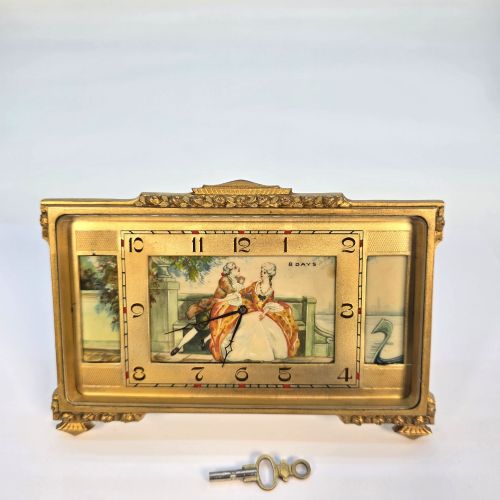
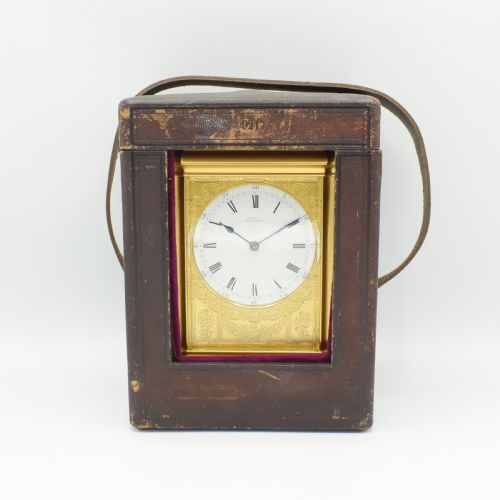
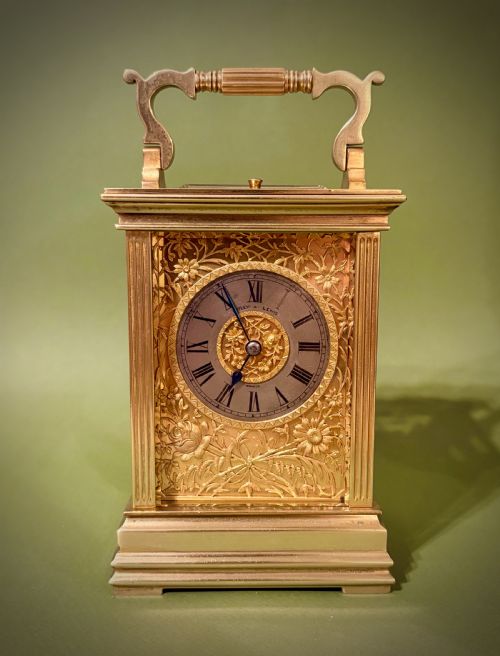
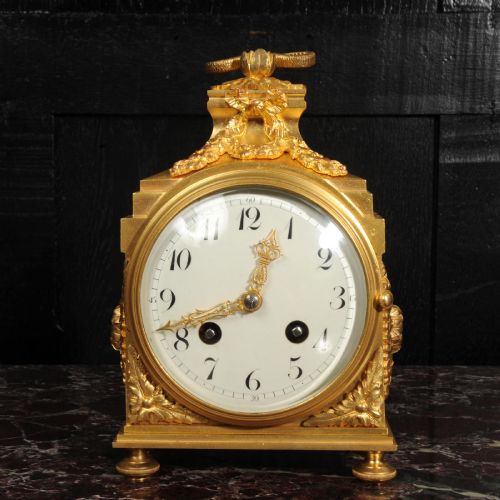
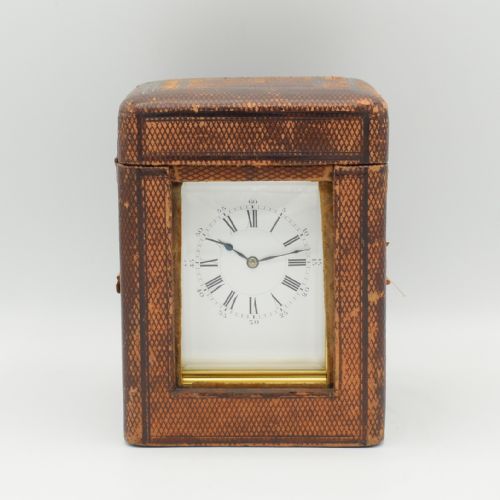
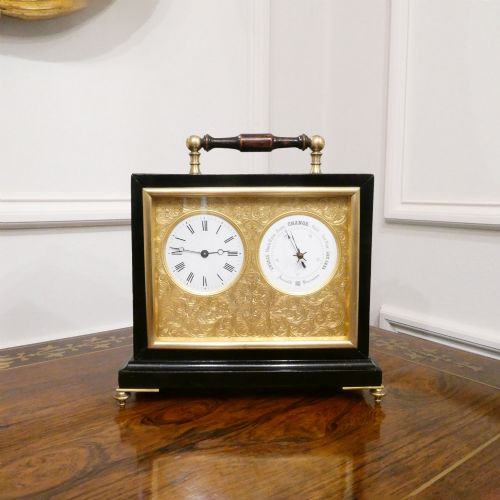
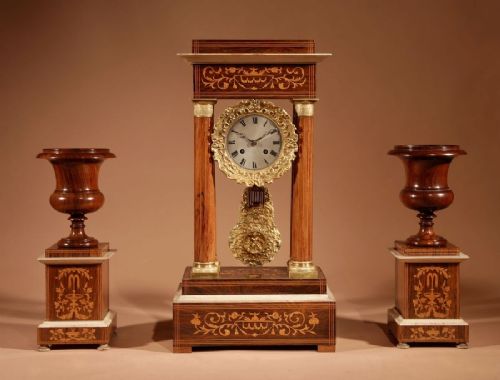
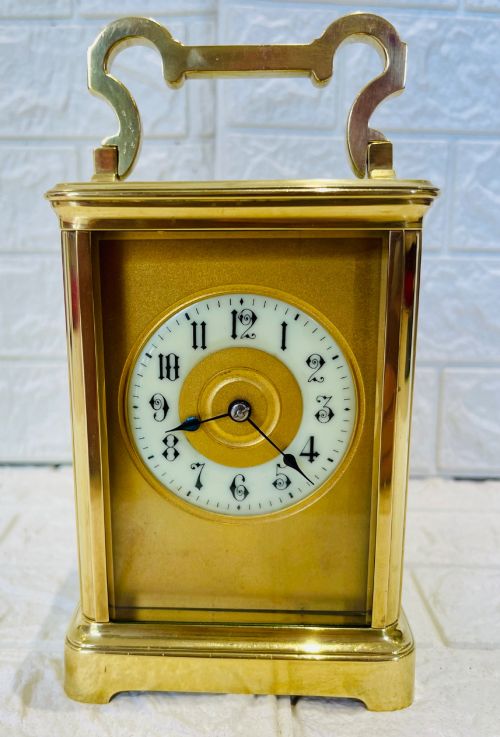
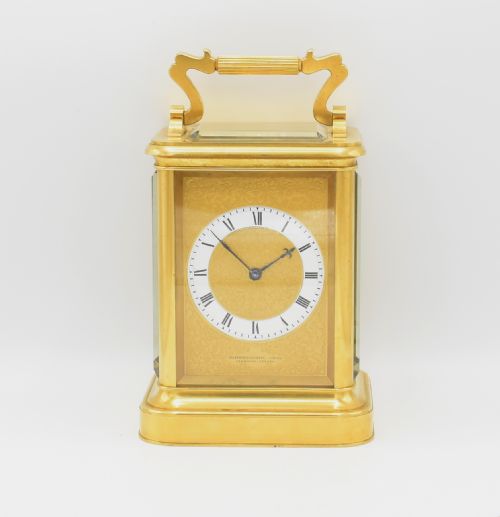
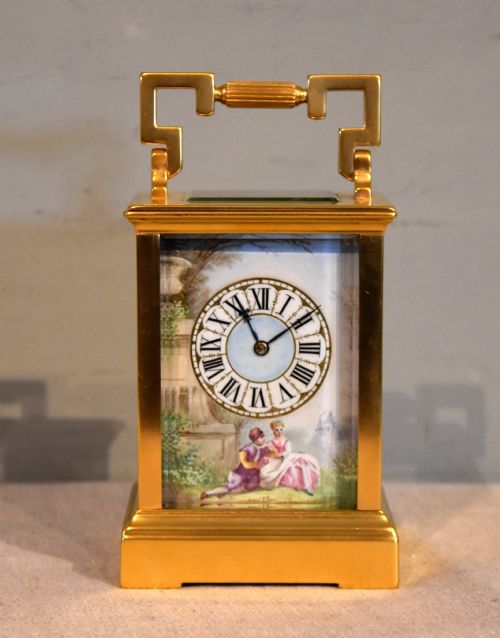
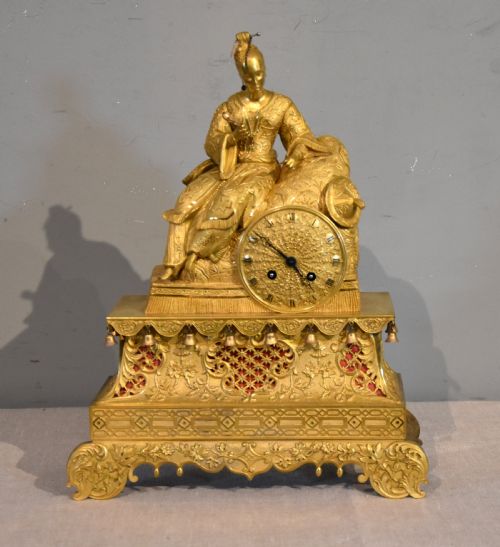
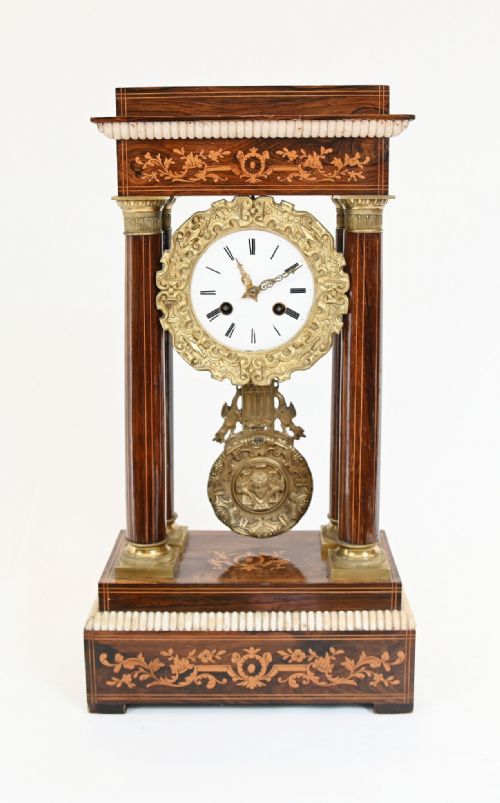
When you search for a vintage gilt mantel clock, you are looking at timepieces designed to sit on a fireplace ledge, shelf, or table. The examples available here span the nineteenth and twentieth centuries, taking the form of robust carriage clocks, architectural portico models, and ornate domestic clock sets.
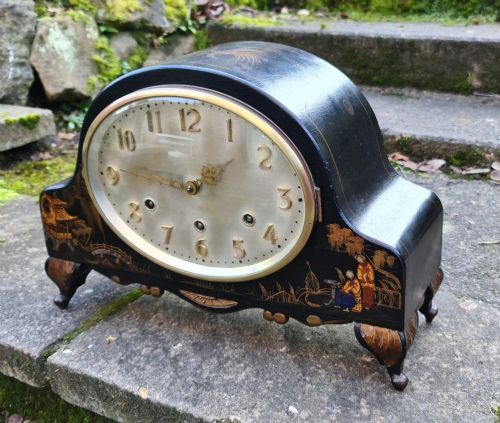
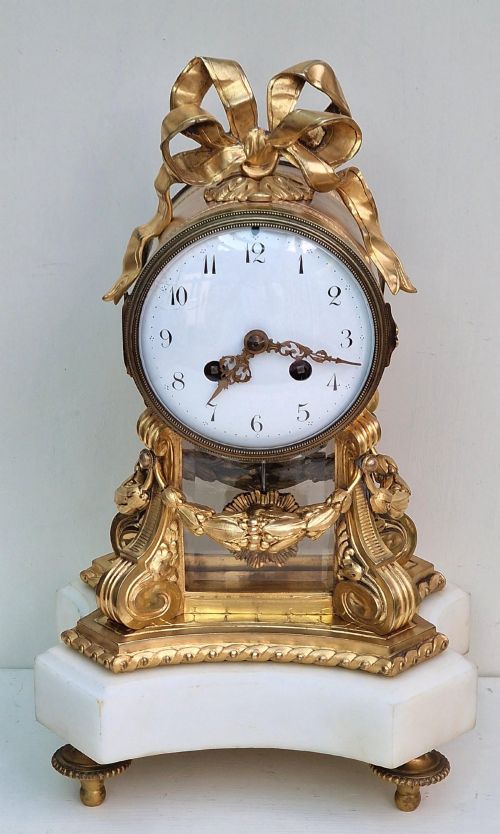
French workshops dominate the selection, producing heavily gilded bronze, ormolu, and brass pieces alongside British carriage clocks and lacquer designs. You will encounter architectural marble cases, glazed four-glass housings, and detailed figural subjects ranging from classic revival styles to Art Deco greyhounds.
Many of these timepieces incorporate striking mechanisms, repeaters, or enamel dials that mark the hours with traditional bell and gong strikes. They range from compact travel timepieces in leather cases to large, imposing garnitures accompanied by matching side ornaments.
Materials and construction
Maker workshops built these timepieces using heavy brass, bronze, and ormolu frames gilded to create a durable, reflective surface. Enamel dials and painted panels provide contrasting clarity for the numerals, often protected behind bevelled glass panes.
Structural cases frequently incorporate white or red marble, tortoiseshell, and wood with lacquer finishes. Complex mechanical movements within use intricate brass gear trains, escapements, and steel springs to drive eight-day strikes, quarter chimes, and calendar complications.
Materials recorded across the selection include gilt bronze, champleve enamel, red marble, tortoiseshell, and lacquered wood.
Factors of quality
The distinction between standard production and superior work lies in the depth of the casting, the crispness of the chased or engraved detail on the gilt metal, and the integration of the movement. Higher quality pieces feature heavy solid bronze or ormolu mounts rather than thin brass plating, with fully engraved plates and signed maker movements.
Preservation of the original gilding and the clarity of painted enamel dials or porcelain plaques heavily influence the standing of an item. Complete sets that retain matching garnitures, travel cases, and working keys represent the more accomplished survivals from these periods.
Henri Jacot·Delépine Barrois·Goldsmiths Alliance Ltd·Louis Goret
The Vintage Gilt Mantel Clock Glossary
- Ormolu
- A finely ground high-carat gold amalgam applied to a bronze base using mercury gilding techniques, creating a rich golden lustre.
- Garniture
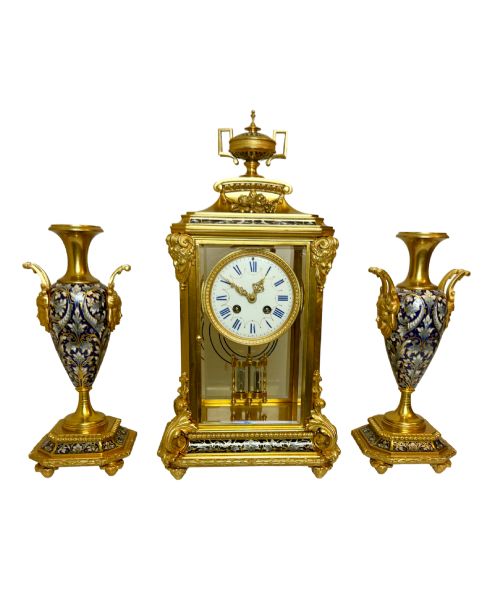
- A set comprising a central clock flanked by matching decorative objects such as vases or candelabra designed to sit together.
- Carriage clock
- A portable spring-driven timepiece originally designed for travel, featuring a rectangular glazed brass case and a folding handle.
- Champlevé
- An enamelwork technique where troughs are dug into the metal surface and filled with vitreous enamel before firing and polishing.
- Platform escapement
- A self-contained assembly holding the balance wheel and escapement, allowing a clock to keep accurate time outside of a stationary wall case.
Vintage Gilt Mantel Clock: Frequently Asked Questions
How do repeating carriage clocks work?
A repeating mechanism allows the clock to strike the last hour and quarter-hour on demand when a plunger or cord on the case is pressed. This was useful for checking the time in the dark before electric lighting.
These movements require careful handling by specialists during servicing to ensure the complicated rack and snail components align correctly.
What is a portico clock?
A portico clock is an architectural timepiece shaped like a classical building, typically supported by four columns surrounding a central suspended pendulum. They gained popularity during the late eighteenth and nineteenth centuries.
Their symmetrical design makes them striking focal points on wide mantelpieces or console tables.
Can these clocks run daily?
Most of these timepieces utilise eight-day spring or weight-driven movements that require winding once a week using a matching key. Regular professional maintenance keeps the brass gear trains and escapements functioning reliably.
Placing them on a level surface prevents the pendulum or balance wheel from binding.
How do I identify French versus British pieces?
French pieces often feature cast bronze, ormolu, marble cases, and exposed escapements, while British carriage clocks frequently exhibit sturdier brass framing with robust fusee or platform movements signed by domestic retailers.
Maker signatures on the movement backplate or dial usually confirm the origin and workshop.