



French Clock Glass Dome
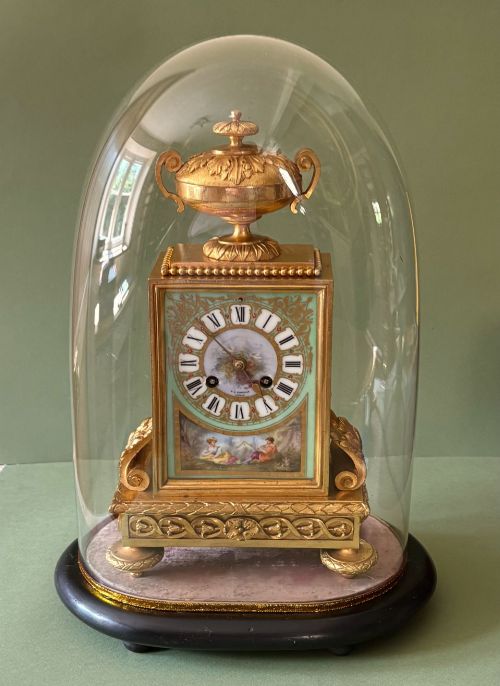
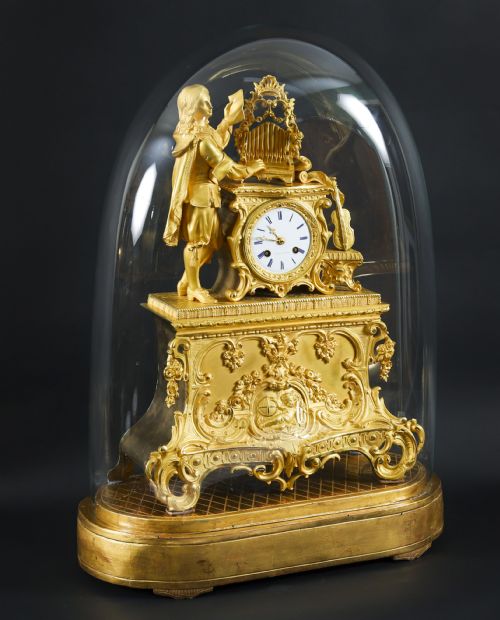
A French clock glass dome protects delicate nineteenth-century movements and ormolu mounts while framing the mantel clock beneath it.
French Clock Glass Dome
A French clock glass dome provides a clear protective cover for mantel clocks, skeleton clocks, and portico clocks originating from nineteenth-century France. These protective housings preserve intricate brass and gilt bronze mechanisms from dust and ambient moisture in domestic interiors.
Most examples encountered on this page date from the Victorian era and the mid-nineteenth century, encompassing styles such as Napoleon III, French Empire, and French Rococo Revival. Buyers frequently find these domes paired directly with porcelain-mounted mantel pieces or striking clocks.
The assortment includes complete garniture sets housed beneath their original hand-blown covers alongside standalone protective glass covers. These objects combine practical horological preservation with the decorative ambition of nineteenth-century European salon design.
Materials and construction
The covers themselves consist of hand-blown glass, shaped while molten to create the characteristic curved profile required to clear tall mantel clock movements and decorative finials. Glassmakers achieved clarity and volume through traditional blowing techniques before finishing the edges for safe seating.
Bases are constructed from ebonised wood, rosewood with marquetry, or gilt ormolu, providing a stable platform to support the heavy weight of both the glass dome and the clock within. Many bases incorporate raised feet or recessed grooves designed to secure the glass securely in place.
Listings feature Victorian and nineteenth-century periods alongside materials like glass, ormolu, brass, porcelain, wood, and ebonised wood.
Quality and craftsmanship
Quality reveals itself in the purity and thickness of the blown glass, where superior examples display minimal distortion, few internal bubbles, and uniform wall weight across the entire dome. Thicker glass provides better structural integrity and weight, ensuring stability upon the wooden or ormolu base.
The finish of the supporting base and the precision of the wooden turning or metal casting separate standard productions from high-end pieces. Finer specimens feature crisp ormolu mounts, detailed marquetry, or well-finished ebonised timber that complements the quality of the French clock enclosed inside.
Maurice & Marcel Moulin Favre-Bulle·Leroy Paris·Farcot
The French Clock Glass Dome Glossary
- Ormolu
- Gilt bronze created by applying a finely ground high-carat gold-mercury amalgam to a bronze casting. This decorative technique gives nineteenth-century clock mounts their characteristic bright golden surface.
- Portico clock
- A monumental architectural clock style featuring four columns supporting an upper entablature that houses the dial and movement. These are frequently tall enough to require substantial glass domes.
- Garniture
- A matching set of ornamental objects comprising a central clock flanked by matching side vases or candelabra. Such sets often required large oval glass domes to cover the entire arrangement together.
- Ebonised wood
- Timber treated with a dark stain or finish to imitate expensive ebony. This dark contrasting base material highlights the bright gilt bronze and porcelain components of the clock.
French Clock Glass Dome: Frequently Asked Questions
What is a French clock glass dome?
A French clock glass dome is a blown glass cover designed to protect nineteenth-century mantel and skeleton clocks from dust and atmospheric grime.
These covers sit on matching wooden or ormolu bases, keeping delicate gilding and exposed mechanisms clean while displaying the clock clearly.
How do I clean a glass dome?
Cleaning requires removing the glass carefully from its base and using standard glass cleaner with a soft lint-free cloth. Care must be taken due to the fragile and heavy nature of nineteenth-century blown glass.
The wooden or ormolu base should be dusted gently with a dry brush to preserve any historical finishes without moisture damage.
Are these domes original to the clocks?
Many nineteenth-century clocks retain their original hand-blown glass domes and matching wooden bases, though replacements are also common due to the fragility of old glass.
Hand-blown glass often displays minor bubbles and slight thickness variations, which help distinguish older production periods from modern replacements.
Where should I display a dome?
These pieces suit stable mantelpieces, sideboards, or dedicated display tables away from direct foot traffic and vibrations that could displace the heavy glass cover.
Placement should avoid direct sunlight to protect sensitive clock dials, enamel panels, and delicate internal oils from excessive heat.