


Vintage Gilt Floor Lamp
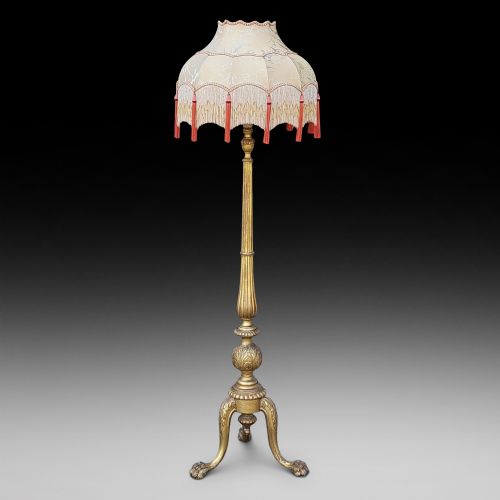
These vintage gilt floor lamps bring height and warm metallic light to a room, ranging from simple tripod bases to carved Venetian figures.
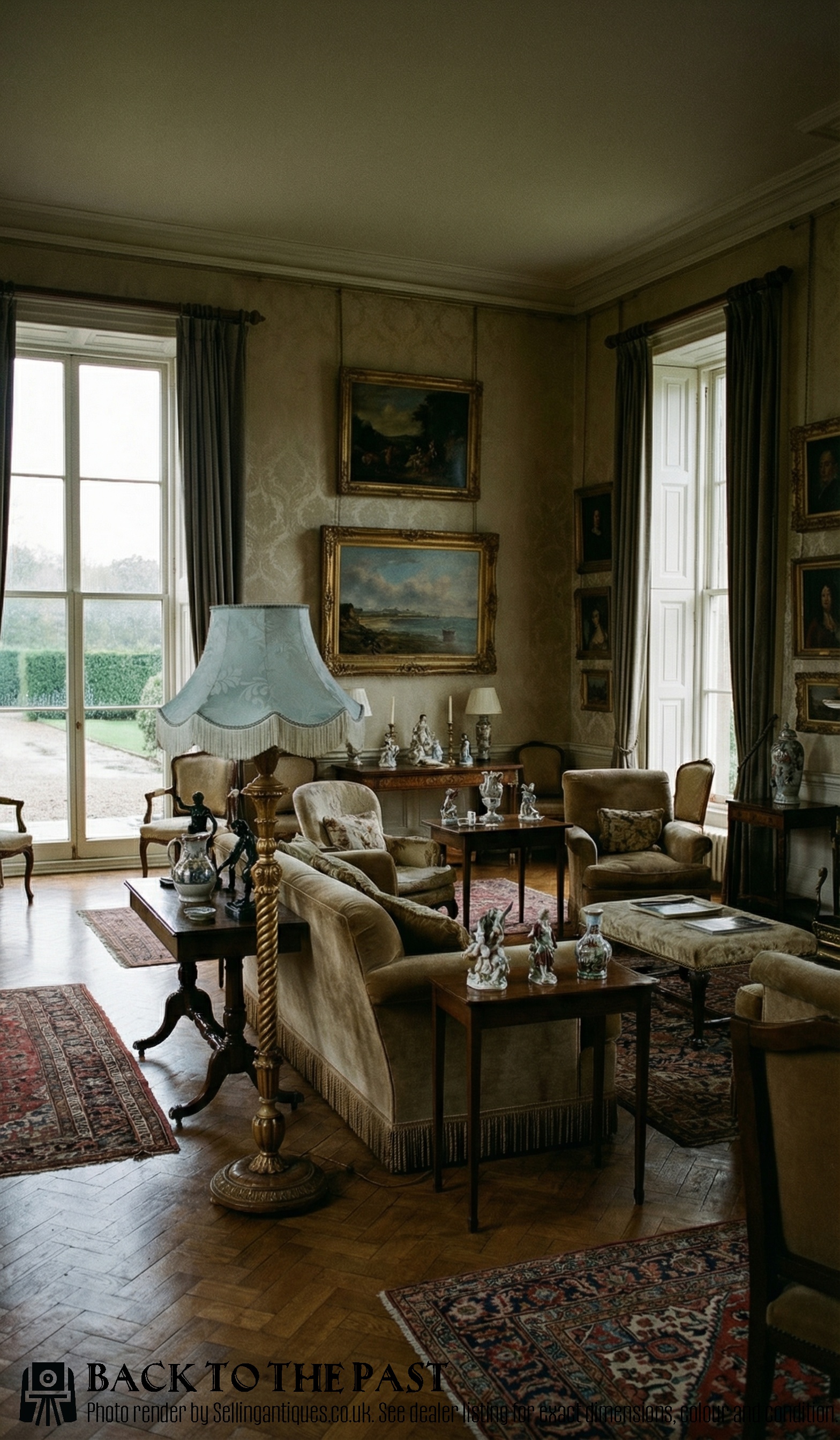
Vintage Gilt Floor Lamp
A vintage gilt floor lamp provides tall ambient lighting through designs rooted in the nineteenth and early twentieth centuries. You will frequently encounter examples from the nineteen-thirties alongside pieces from the Edwardian era and Victorian period.
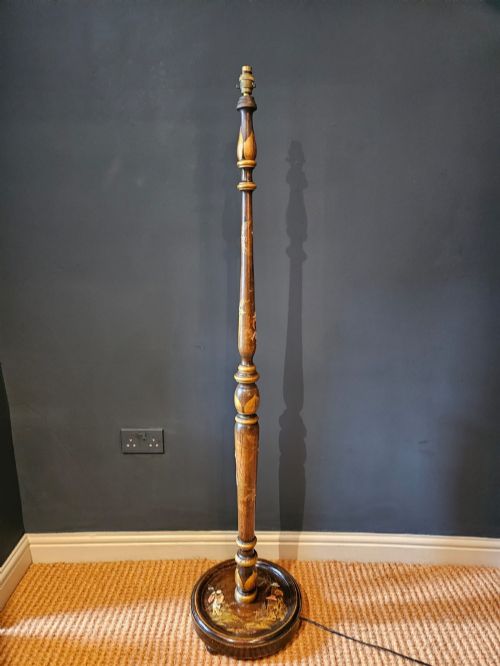
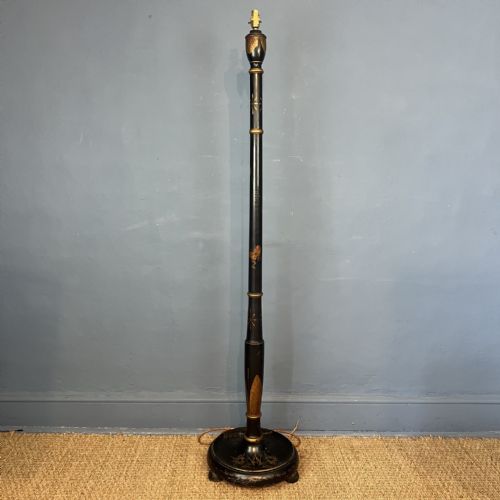
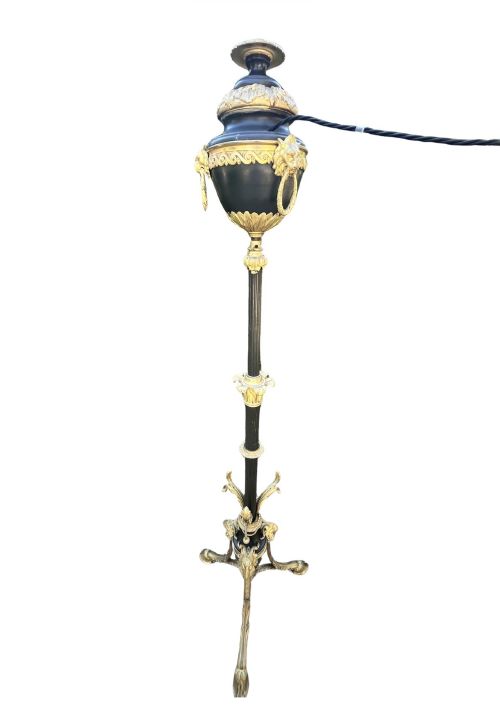
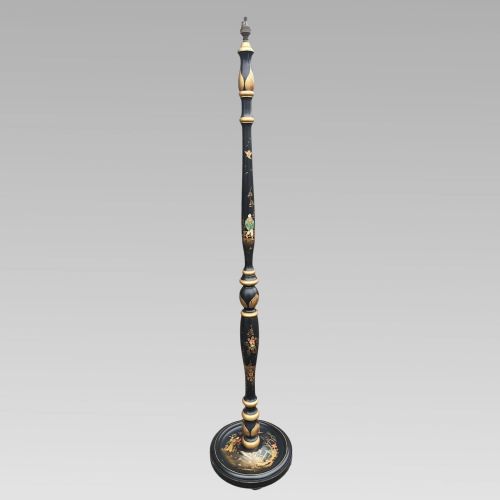
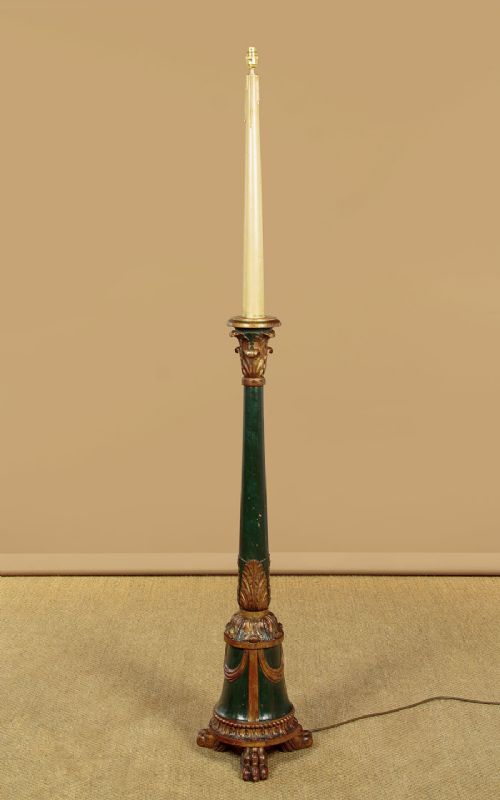
The selection here encompasses several distinct decorative traditions, including Neoclassical revival pieces, Italian Florentine work, and Chinoiserie lacquered standards. Makers and workshops drew inspiration from French Chateau styles, Venetian Baroque curves, and Adam mannerisms.
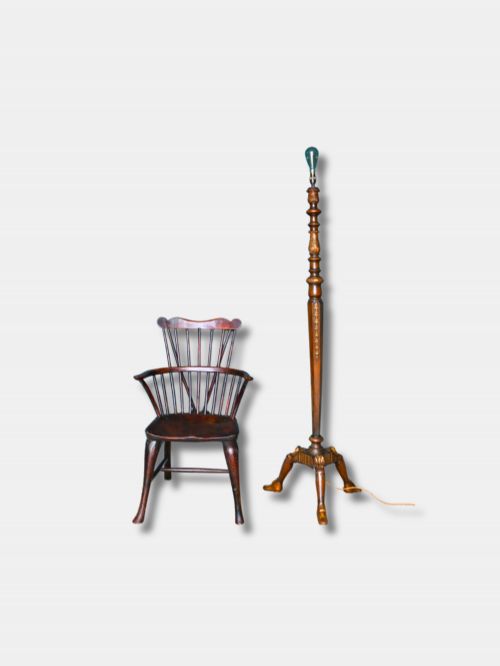
These floor lamps and standard lamps serve as major vertical elements in a room. They often double as sculptural objects when unlit, particularly when carved from wood or finished with applied giltwood.
How they were made
Craftsmen built these standards primarily using solid wood, carved wood, and brass, applying gold leaf, gilt, or gesso to achieve a reflective metallic surface. Lacquer finishes in black or red appear frequently on Chinoiserie pieces, sometimes paired with polychrome decoration.
Carving technique dictates much of the texture, from delicate neoclassical swags to elaborate figural standards depicting Venetian figures on stands. Structural elements also incorporate walnut, mahogany, and marbleised components alongside cast or gilt bronze.
The listings combine nineteen-thirties Italian giltwood work with Edwardian Chinoiserie lacquer and nineteenth-century standard lamps.
What varies in quality
Quality rests upon the depth of the carving and the application of the gilding, where hand-applied gold leaf demonstrates superior handling compared to flat paint. The integrity of the underlying wood and gesso foundation determines how well the surface retains its detail over decades.
Proportion and stability separate standard production from finer decorative pieces, especially on tripod bases and heavier figural standards. Original surface treatments and untouched polychrome details hold greater aesthetic weight than later overpainting.
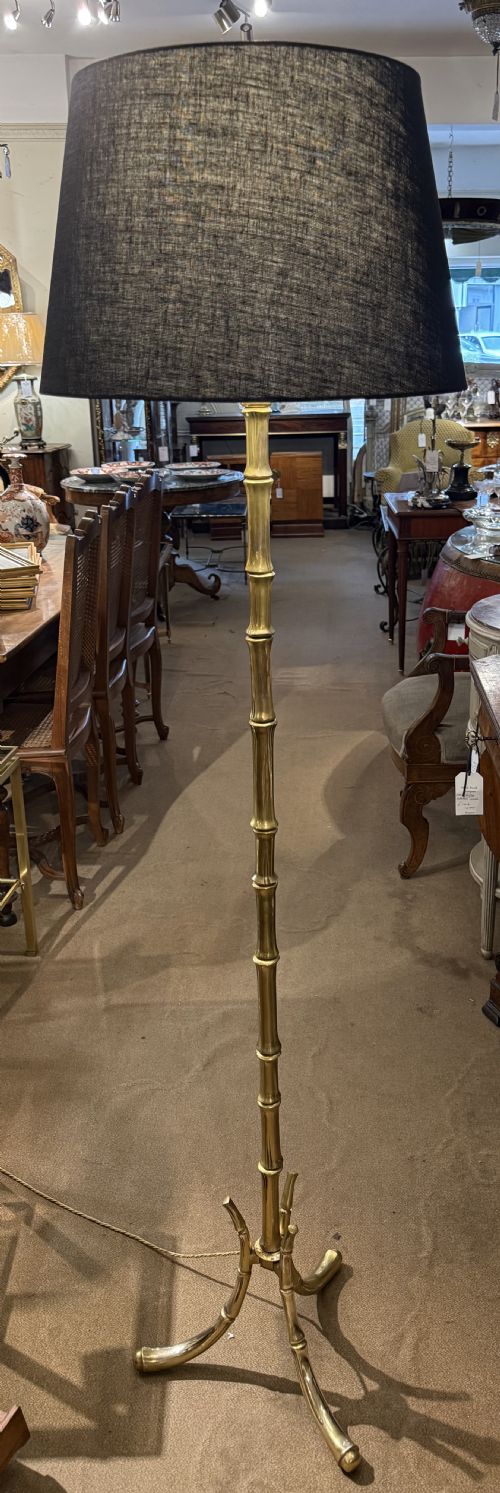
Maison Bagues
The Vintage Gilt Floor Lamp Glossary
- Giltwood
- Wood that has been coated with gold leaf or a gold-coloured metallic finish. This surface technique gives the lamp body its primary reflective quality.
- Chinoiserie
- European imitation and adaptation of Chinese and East Asian artistic traditions. It typically manifests on these lamps through lacquered backgrounds and painted motifs.
- Standard lamp
- British term for a floor lamp, often used interchangeably in older inventories. It refers to a tall vertical post designed to support an electric light or oil burner.
- Gesso
- A plaster-like mixture applied to wood surfaces to create a smooth base for gilding and carving. It allows artisans to carve fine details before applying gold leaf.
- Polychrome
- The practice of decorating surfaces in multiple colours. On Venetian figures, this technique combines painted details with gilding.
Vintage Gilt Floor Lamp: Frequently Asked Questions
How do I date a gilt floor lamp?
Dating relies upon stylistic markers such as Neoclassical fluting, Edwardian Chinoiserie lacquer, or Victorian proportions. Construction methods and wiring access points also help narrow the period.
Compare the carving style and materials against documented pieces from the same decade. The presence of original gesso and surface wear offers further clues to age.
What is the difference between a standard lamp and a floor lamp?
These terms are essentially interchangeable in British and international antique trade usage. Standard lamp is the traditional British phrasing for a tall freestanding light.
Both descriptions refer to vertical floor-standing fixtures designed to illuminate a room from height. The choice of term usually reflects the cataloguer's regional preference.
How were Chinoiserie lamps decorated?
Chinoiserie lamps feature hand-applied lacquer surfaces, most commonly in black or red tones. Artisans added gilt motifs and oriental scenes to create a decorative contrast.
This technique required multiple layers of drying and polishing before the final gilt details were applied. The resulting finish gives the standard a distinct reflective sheen.
Can I use modern bulbs in these lamps?
Most antique standards have been adapted for modern electrical standards over time. Older fixtures may require rewiring by a professional to ensure safety with current bulbs.
Check the lamp holder and cord condition before plugging the piece in. Fabric shades can then be selected to balance the scale of the tall gilt base.