






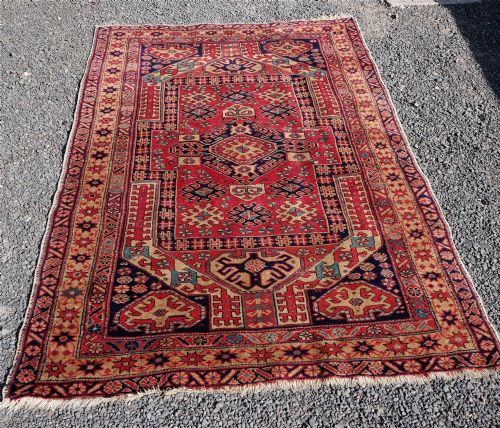
Vintage Geometric Wool Rug
When you search for a vintage geometric wool rug, you are hunting for floor textiles woven by tribal and village makers across the nineteenth and early twentieth centuries.
Vintage Geometric Wool Rug
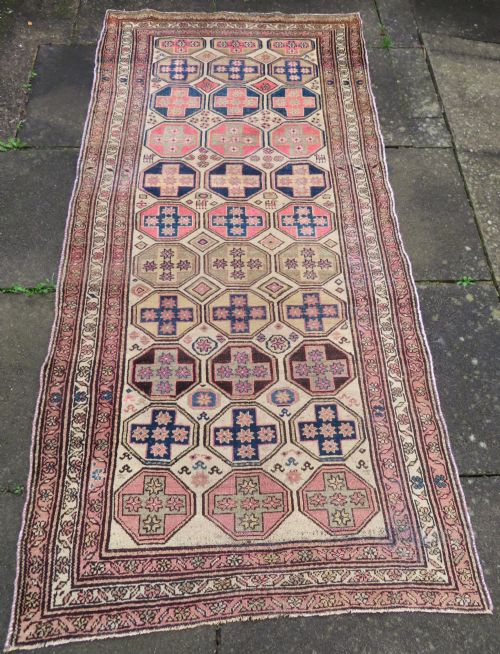
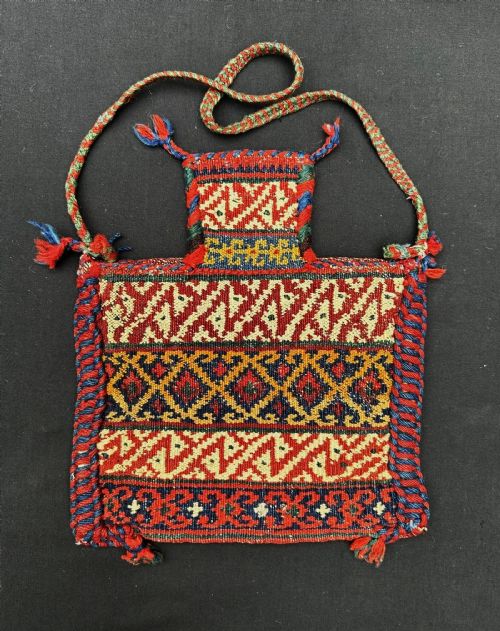
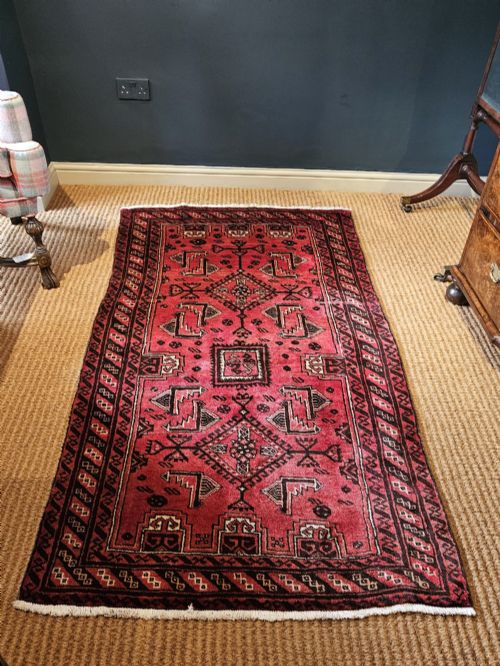
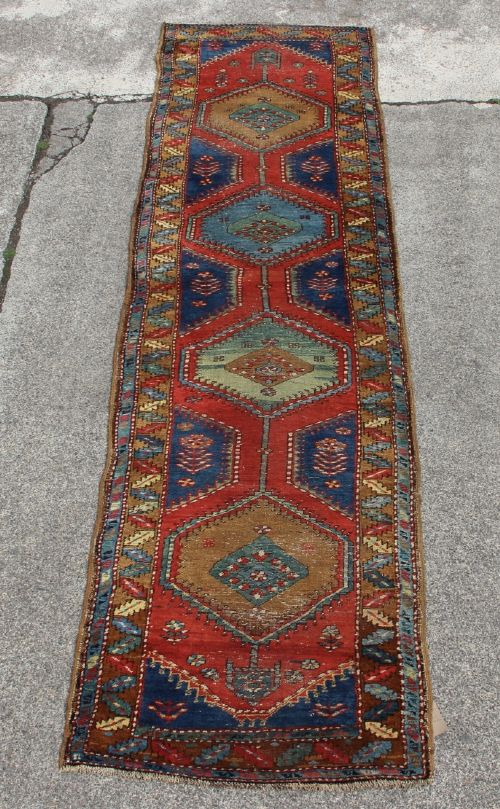
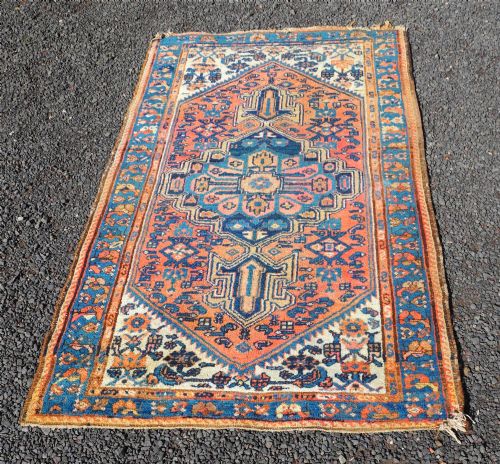
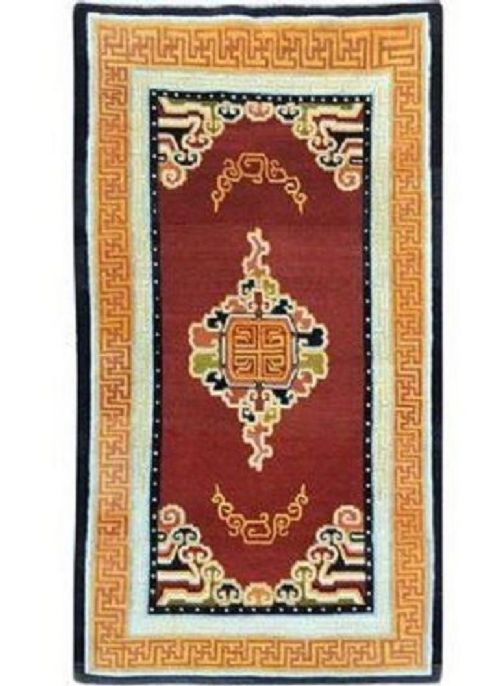
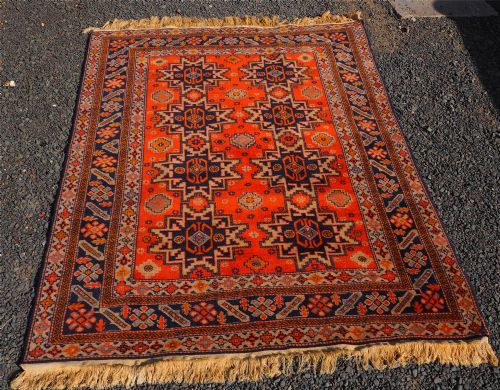
A vintage geometric wool rug comprises woven floor coverings and smaller textiles originating from Persian, Caucasian, Anatolian, and Central Asian weaving traditions. The items spanning this selection include full-size carpets, runners, hearth-sized mats, and smaller utility bags produced by nomadic and village groups.
Most examples encountered here date from the late nineteenth century through to the 1930s. Buyers will regularly find tribal formats such as Kurdish, Afshar, Turkmen, Baluch, and Kazak pieces that utilise bold patterns rooted in regional heritage.
How they were made
The construction relies heavily on wool, cotton foundations, and hand-spun fibres, often dyed with natural colourants. Artisans knotted the pile by hand onto warp and weft threads, creating durable textiles designed for daily domestic use or nomadic transport.
Materials such as pure wool, camel wool, and hand-spun yarn dictate the weight and texture of each textile. These organic components absorb natural dyes unevenly over time, producing the subtle tonal variations characteristic of older village and tribal work.
Listings feature pieces spanning from the 1870s to the 1930s, constructed predominantly from wool, cotton, and natural dyes.
What varies in quality
The standard of a weaving depends upon the tightness of the knotting and the crispness of the geometric design. Tighter foundations and well-balanced compositions indicate greater skill from the village or tribal weaver.
Depth of colour and the condition of the wool pile also separate standard examples from finer specimens. Surviving pieces with intact borders and rich, vegetable-dyed palettes represent the upper tier of regional production.
The Vintage Geometric Wool Rug Glossary
- Wool
- The primary animal fibre used for the pile of these rugs, valued for its natural resilience and lanolin content. It accepts natural dyes readily and wears down slowly under foot.
- Natural Dyes
- Colourants derived from plants, insects, and minerals rather than synthetic compounds. They yield complex, mellow tones that age gracefully.
- Runner
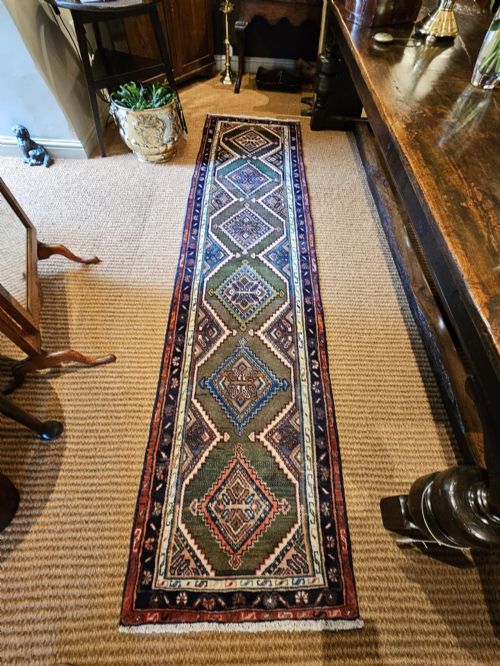
- A long, narrow carpet format designed for hallways, corridors, or alongside furniture. These pieces balance linear geometry with restricted widths.
- Warp
- The vertical threads stretched across the loom that form the structural foundation of the textile. Fringe ends typically reveal these foundational cords.
- Weft
- The horizontal threads passed through the warp to secure the knots in place. Together, warp and weft create the grid of the woven fabric.
Vintage Geometric Wool Rug: Frequently Asked Questions
How do I clean an old wool rug?
Gentle vacuuming without a beater bar removes surface dust safely. Professional specialist cleaning remains essential for deep washing to protect natural wool fibres.
Water saturation and harsh chemical detergents damage vintage dyes and foundations. Regular rotation ensures even wear across high-traffic floor areas.
How do I identify a tribal design?
Tribal designs rely on repeating geometric motifs, medallions, and angular lattice patterns rather than naturalistic florals. Makers drew upon ancestral motifs passed down through generations within specific groups.
Asymmetry and spontaneous colour shifts often indicate nomadic rather than workshop production. Each tribal confederation utilised characteristic symbols and border arrangements.
Can I use runners in modern hallways?
Narrow formats fit well in corridors, kitchens, and beside beds where floor space is limited. Their linear geometry helps direct movement through living spaces.
Placing an appropriate underlay beneath the textile prevents slipping on hard floors. This extra layer also reduces friction and cushions the wool pile against daily foot traffic.