

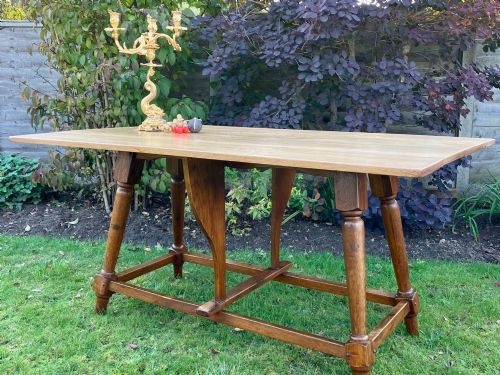
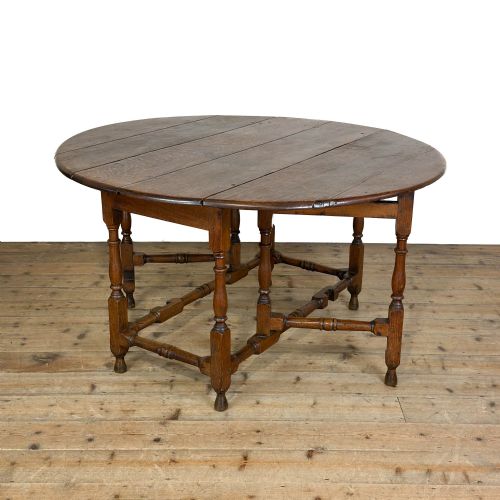
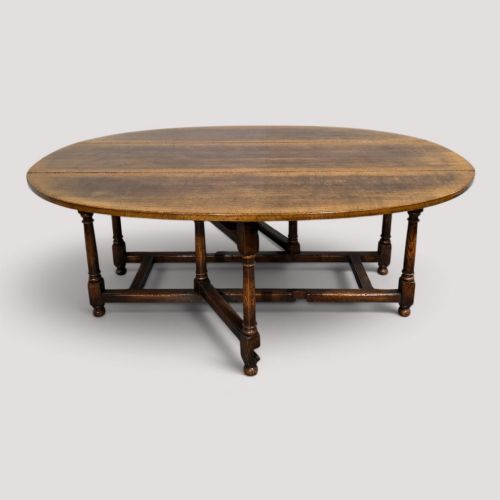
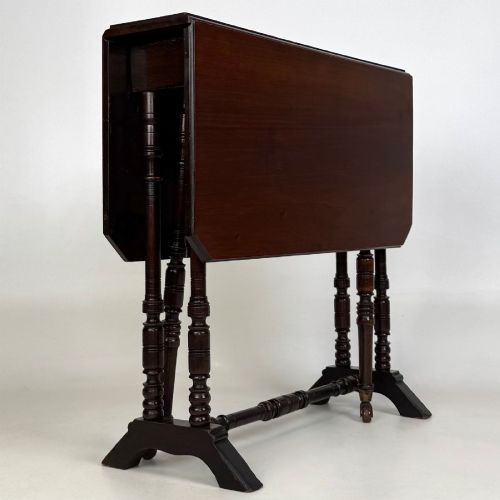
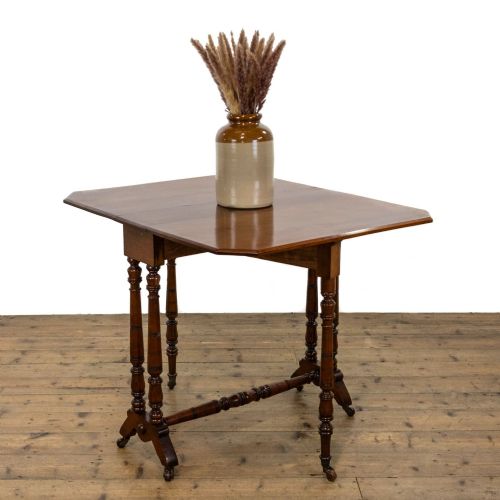
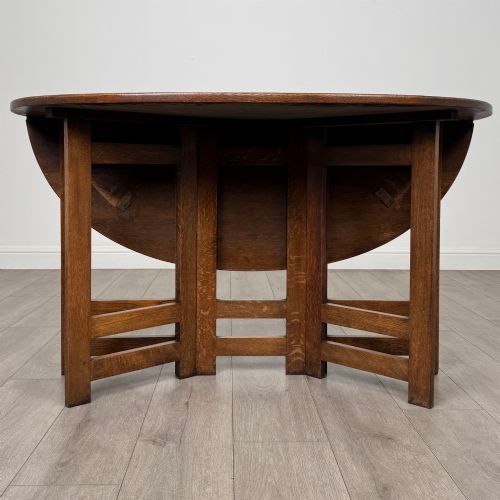
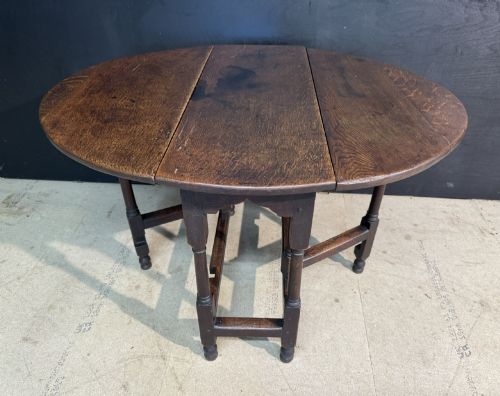
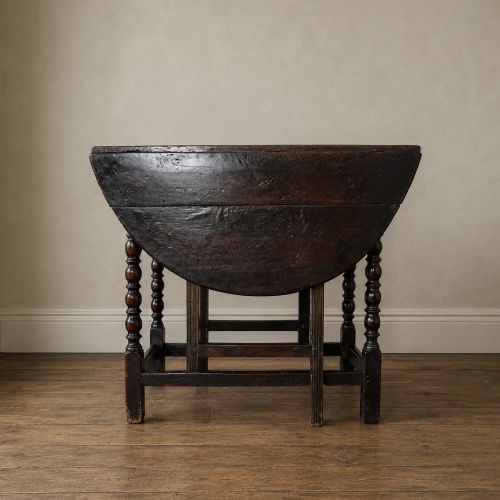
Vintage Gateleg Dining Table
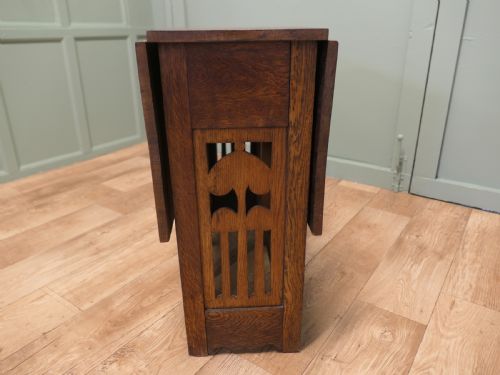
A vintage gateleg dining table opens out to seat dinner guests and folds down flat against the wall when floor space matters.
Vintage Gateleg Dining Table
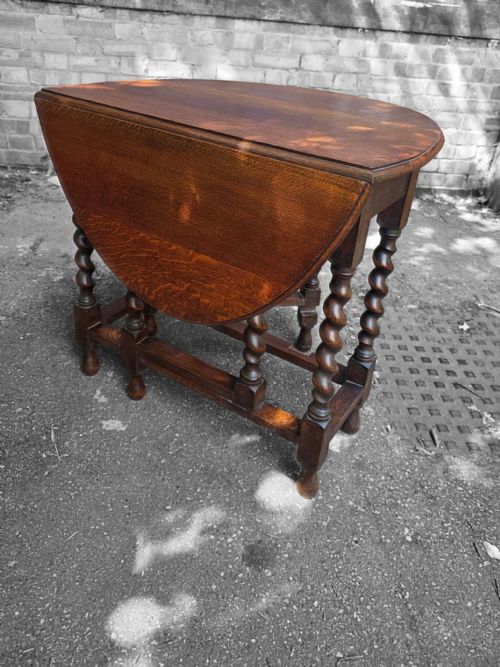
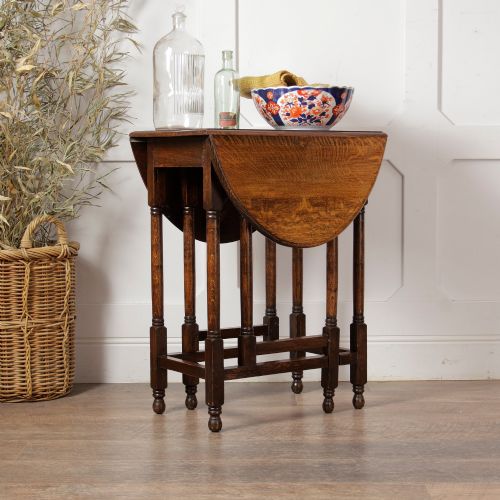
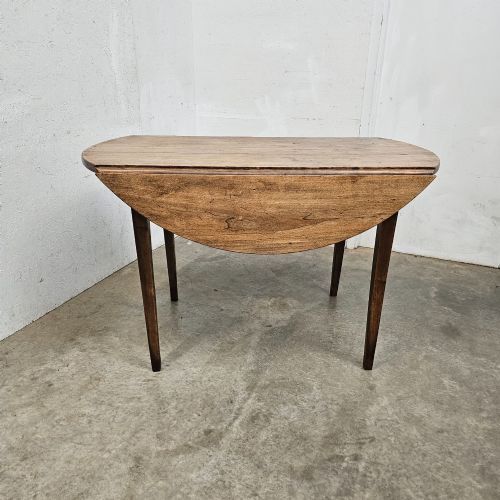
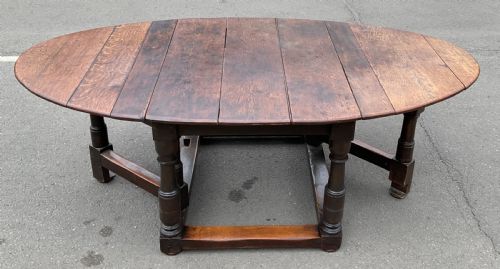
A vintage gateleg dining table combines swing-out leg frames with hinged drop leaves to provide expandable surface area for meals. The examples on this page span several centuries, reaching from the seventeenth century through the Georgian and Victorian eras into the Edwardian period and the early twentieth century.
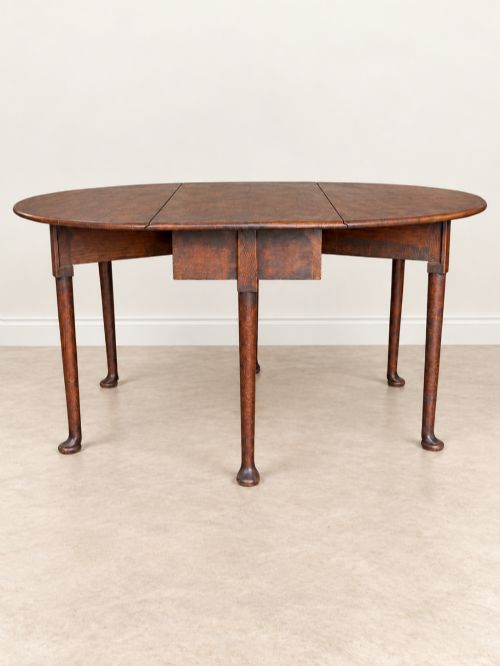
Most pieces encountered here are constructed from oak, though walnut, mahogany, pine, and elm also appear alongside painted Swedish slagbord and occasional tables. Buyers will find everything from compact side tables and bachelors furniture to large dining formats and six-leg wake tables designed for larger rooms.
Materials and Technique
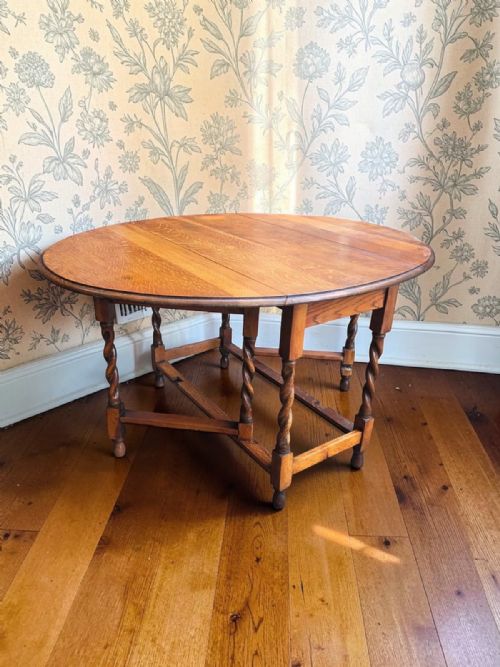
Makers relied primarily on solid timbers like oak and mahogany, joining structural elements with traditional methods to support the pivoting leaf supports. Turning lathes shaped the legs into barley twist, bobbin, and straight configurations that carry the weight of the hinged leaves.
Hardware consists of wooden pivot pins or iron hinges, while secondary metals like brass and iron appear in structural fittings and occasional drop-leaf mechanisms. Painted finishes also occur on Scandinavian pieces, sealing the pine or hardwood beneath.
Vintage Gateleg Dining Table Retail Price Guide 2026
Typical asking prices for vintage gateleg dining table among the pieces listed under this phrase on Sellingantiques today, from the lower quarter to the upper quarter. They describe what is for sale here now, not the wider market.
Listings feature timbers including oak, mahogany, walnut, pine, elm, and iron, spanning periods from the seventeenth century through the 1930s.
Assessing the Pieces
Proportion and timber selection dictate the standing of a piece, distinguishing robust early oak examples from lighter Edwardian mahogany or later revival pieces. The integrity of the pivoting leg frame and the smoothness of the drop-leaf action determine daily utility.
Surface character, such as original patination on seventeenth-century oak or preserved painted finishes on twentieth-century imports, separates standard items from those with deeper historical presence.
The Vintage Gateleg Dining Table Glossary
- Gateleg table
- A table with hinged leaves supported by one or more legs that swing out like a gate to hold the leaves up.
- Drop-leaf table
- A table with a fixed central section and hinged flaps that fold down on either side.
- Barley twist
- A type of turning resembling a spiral rope, popular in seventeenth-century furniture and later revival pieces.
- Bobbin turning
- A series of rounded wooden spheres or discs carved along the length of a furniture leg.
- Slagbord
- A traditional Scandinavian folding or drop-leaf table design.
- Patina
- The surface sheen and colour developed over decades of use, handling, and exposure to light.
Vintage Gateleg Dining Table: Frequently Asked Questions
How do I seat people comfortably?
Raise both leaves and swing the gate legs firmly into place beneath the edges to distribute weight evenly before setting chairs around the perimeter.
Ensure the swinging legs lock securely into their intended stops to prevent tipping when guests lean against the surface.
Will a vintage gateleg dining table fit a small kitchen?
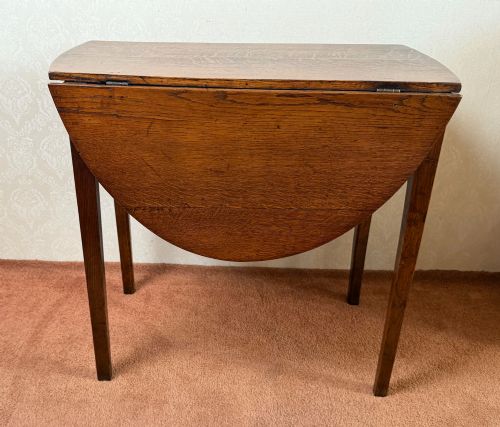
Drop-leaf formats fold down into narrow consoles that tuck against a wall when not in use, freeing up valuable floor space in compact rooms.
Check the width of the centre board against your available wall space to ensure it rests flush when fully closed.
How do I tell seventeenth-century oak from a later revival?
Early pieces display authentic hand-planed surfaces, pegged joinery, and deep natural patination acquired through centuries of use and oiling.
Revival pieces from the late nineteenth or early twentieth century often show machine-cut tool marks and standardised turnings beneath the finish.
Can I use daily polish on these timbers?
Apply a traditional beeswax sparingly with a soft cloth to nourish dry oak or mahogany and maintain the natural surface sheen.
Avoid silicone sprays that build up residue and attract dust into the carved grooves of barley twist legs.