
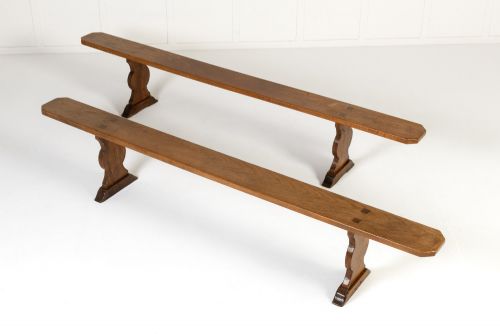
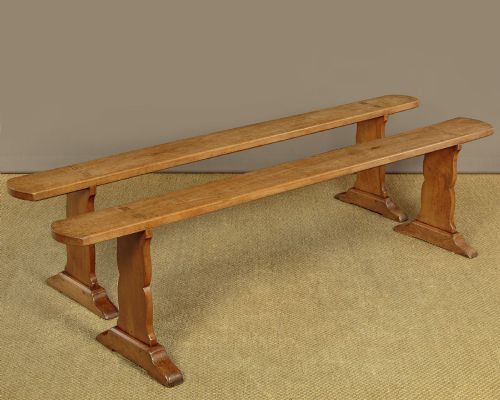

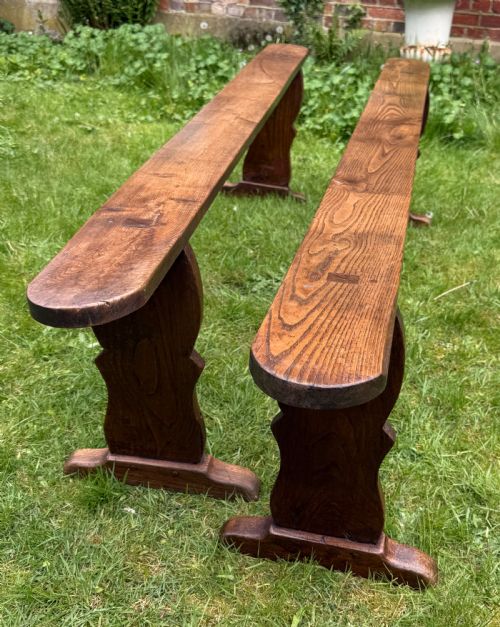
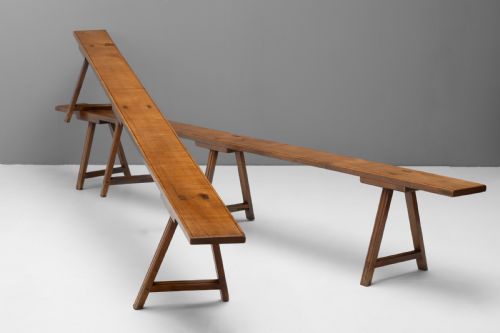


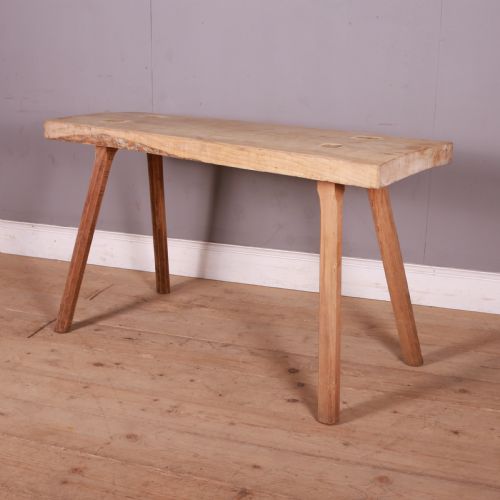


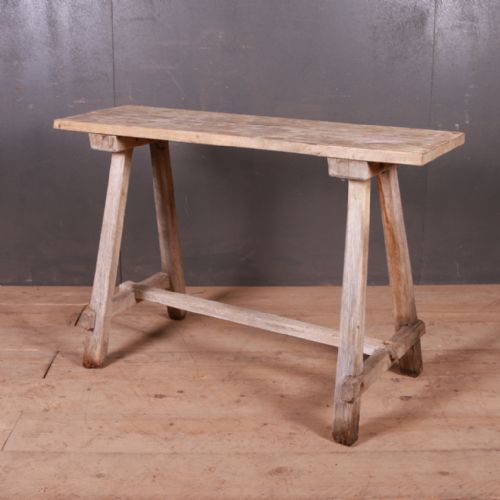
Vintage French Trestle Bench
These vintage French trestle bench examples offer honest rustic utility and warm timber patination, making them ideal for everyday seating around a farmhouse dining table.
Vintage French Trestle Bench
A vintage French trestle bench brings authentic provincial character to a room through its robust timber construction and traditional long seat form. When you search for a vintage French trestle bench, you encounter sturdy seating designed primarily for practical daily use in rural households.
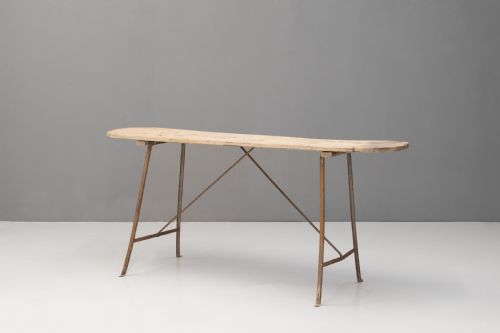
While the inventory includes related forms like trestle tables and wash tables, the benches remain the core focus for buyers seeking long, narrow seating solutions. Their origins trace directly to provincial workshops where utility dictated every proportion.
How they were made
Maker-craftsmen built these benches using solid regional hardwoods including elm, sycamore, oak, cherrywood, fruitwood, and pine. Selecting timber from local forests ensured the wood suited the structural demands of heavy daily use.
Construction methods relied on traditional joinery techniques that joined thick planks to sturdy underframes without relying on modern hardware. Surfaces were often scrubbed down to a clean timber finish, leaving the natural grain and texture exposed to the touch.
Materials documented across the catalogue include elm, sycamore, oak, cherrywood, fruitwood, pine, and hardwood.
What varies in quality
The grade of timber selected for the seat top and the integrity of the underlying structure set individual examples apart. Denser hardwoods like cherrywood and oak command attention for their superior weight and durability compared to softer pine or general timber alternatives.
Proportion and original surface patination also distinguish finer pieces from simpler utilitarian items. Scrubbed sycamore and elm surfaces that retain a smooth, honest wear show a higher degree of sympathetic historical use.
The Vintage French Trestle Bench Glossary
- Trestle
- A structural support consisting of a horizontal beam fixed to two splayed legs, providing stable weight distribution for long seating or tables.
- Patina
- The surface sheen and colour depth developed through decades of handling, cleaning, and exposure to light.
- Scrubbed
- A finish achieved by vigorous washing and scouring that leaves the bare timber grain clean and pale.
- Fruitwood
- A dense, fine-grained wood harvested from fruit-bearing trees such as cherry or pear, prized by provincial makers for its warm tone.
Vintage French Trestle Bench: Frequently Asked Questions
How do I clean a wooden bench?
Wipe surfaces gently using a slightly damp cloth to remove everyday dust without disturbing the historical timber finish. Avoid harsh chemical cleaners that can strip the natural oils and dry out the grain.
Dry the wood thoroughly afterwards with a soft cloth to preserve the surface condition. Regular light dusting is generally all that is required for daily maintenance.
Are these benches suitable for dining?
Many of these long timber forms were originally constructed to sit alongside large dining tables in country kitchens and halls. Their narrow profile allows them to tuck neatly underneath when not in use.
Check the seat height carefully against your existing table dimensions to ensure comfortable legroom. Pair options offer a uniform look for both sides of a dining setup.
What woods were commonly used?
Provincial makers utilised whatever regional hardwoods grew locally, resulting in benches fashioned from elm, sycamore, oak, cherrywood, and fruitwood. Hardwood selections ensured the seat tops withstood heavy daily wear over generations.
Lighter pines also appear among the inventory for specific functional roles. Each timber species ages differently, developing distinct surface characteristics over time.
How do I date an old bench?
Dating relies on observing construction methods, tool marks left on the timber, and the overall style associated with periods like the nineteenth century or nineteen twenty. Wear patterns and the type of wood selected also offer clues to the era of manufacture.
Comparing proportions and joinery details against known pieces helps narrow down the decade. Subtle variations in hardware and surface treatment further indicate age.