



Weathered Timber Trestle Table
A weathered timber trestle table brings structural honesty and aged grain to a room, offering sturdy utility with timeless provincial character.
Weathered Timber Trestle Table
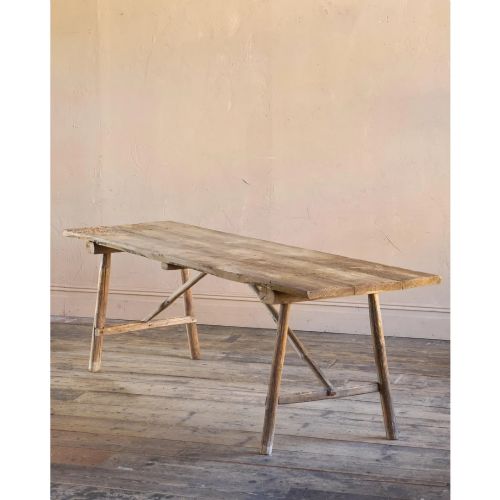
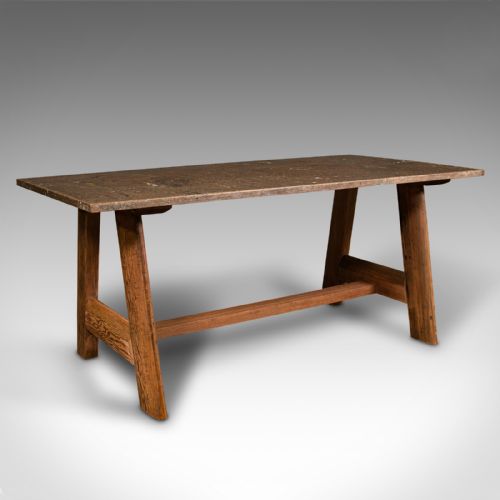
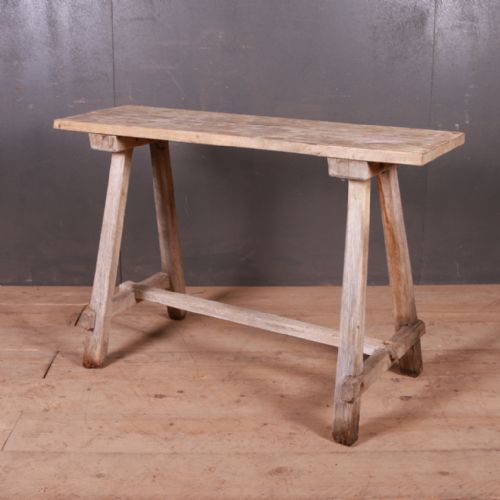
A weathered timber trestle table combines a solid surface supported by end uprights, appearing in forms such as dining tables, console tables, and work tables. When searching for a weathered timber trestle table, buyers encounter examples originating from the nineteenth century, including Edwardian pieces and specific dates like 1860, 1880, 1890, and 1920.
The aesthetic leans heavily into rustic farmhouse, French provincial, French country, and primitive country styles. These pieces range from simple primitive dining formats to French oak and poplar constructions.
Domestic settings benefit from the linear footprint of these items, which provide generous legroom compared to four-legged variants. The surfaces carry the marks of past labour and daily habitation, displaying patinas built over decades.
How they were made
Makers utilised available regional woods such as pine, oak, poplar, and softwood to build these sturdy frameworks. Carpenters relied on traditional joinery methods to secure the heavy tops to robust trestle bases, ensuring stability under heavy use.
Exposure to elements and decades of use stripped the original finishes from many pieces, leaving raw or bleached timber surfaces. This natural weathering process highlighted the grain patterns of the oak and pine without modern chemical intervention.
Current listings feature items constructed from pine, oak, poplar, and softwood across the nineteenth and early twentieth centuries.
What varies in quality
The integrity of the timber forms the primary distinction between standard utility items and finer examples. Denser hardwoods like oak hold up better against structural movement than softer pine or poplar variants.
Proportion and balance dictate the visual success of the trestle design. Tables with well-integrated stretcher bases and balanced top overhangs display superior craftsmanship compared to clumsily proportioned work tables.
The Weathered Timber Trestle Table Glossary
- Trestle table
- A table consisting of two or more supports connected by a longitudinal beam that holds a flat top. This design allows maximum legroom along the length of the furniture.
- Patina
- The deep surface sheen and discoloration developed through age, handling, and wear. It indicates genuine historical use rather than artificial distressing.
- Bleached oak
- Oak timber that has undergone a lightening process, either naturally through sun exposure or via gentle washing. This treatment softens the darker tones typical of traditional English and French oak.
- Softwood
- Timber derived from conifers such as pine, which was frequently used for everyday domestic and utility furniture. It tends to show dents and marks more readily than dense hardwoods.
Weathered Timber Trestle Table: Frequently Asked Questions
Can I use a trestle table for daily dining?
These tables handle everyday meals exceptionally well due to their sturdy timber construction and stable base supports.
The absence of corner legs also makes seating arrangements flexible for family gatherings.
How do I clean weathered wood surfaces?
Dust the timber regularly with a dry cloth to prevent dirt accumulation in the grain crevices.
Avoid harsh chemical cleaners that strip the natural patina accumulated over the nineteenth century.
Are these tables suitable for modern kitchens?
The rustic farmhouse and French provincial styles blend easily into contemporary or traditional kitchen spaces.
Their neutral bleached oak and pine tones complement minimalist interiors as well as country homes.
What is the difference between oak and pine versions?
Oak offers greater density and structural durability, making it heavier and more resistant to deep gouges.
Pine provides a softer appearance with lighter colour variations typical of primitive country furniture.