




Vintage French Style Bench
A vintage french style bench brings the gracious seating forms of 19th-century salons and chateaux into domestic rooms today.
Vintage French Style Bench
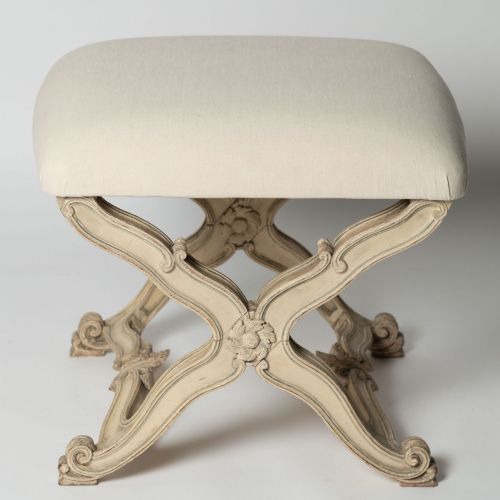
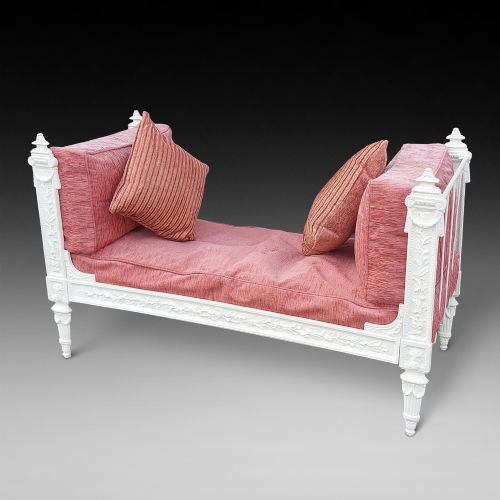
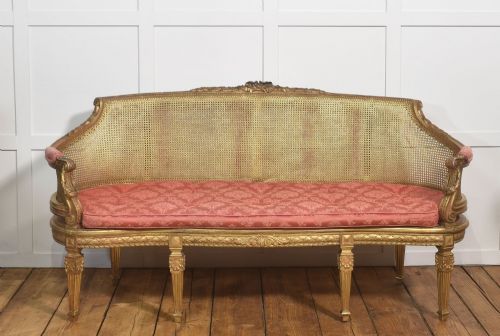
A vintage french style bench encompasses a range of seating forms, including small stools, window seats, and larger canapés designed for salons and bedrooms. These pieces reflect historical design revivals spanning the nineteenth and early twentieth centuries, drawing heavily on classical French monarchical aesthetics.
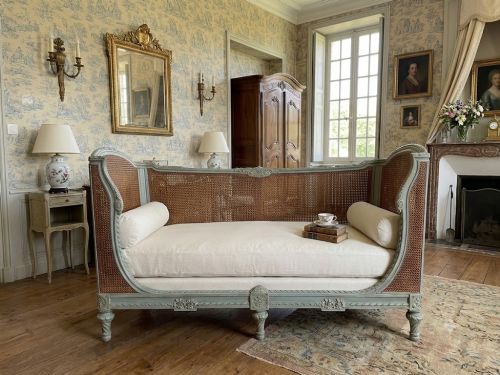
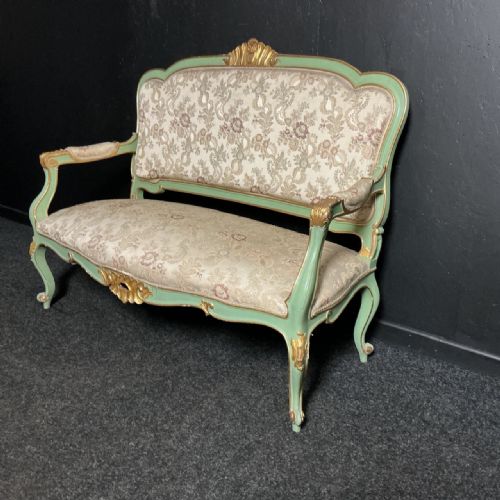
Buyers will most frequently encounter walnut and painted wooden frames displaying Louis XV and Louis XVI stylistic traits, often paired with cane panels or traditional upholstery. The selection bridges formal parlour seating and lighter decorative bedroom furniture.
Originating largely from nineteenth and early twentieth-century workshops, these items bring historic continental seating traditions into contemporary interiors. The inventory demonstrates a strong representation of carved wood and gilt finishes adapted for domestic lounging.
Materials and construction
Frames rely on sturdy timbers like walnut, beech, and giltwood, selected for their ability to hold deep hand-carved ornamentation along rails and cabriole legs. Artisans shaped these woods into flowing serpentine lines characteristic of revivalist furnituremaking.
Listings feature walnut, beech, and giltwood frames alongside traditional fabric upholstery and natural cane panels.
Assessing quality
The distinction between ordinary and exceptional pieces lies in the crispness of the hand-carving and the integrity of the wooden frame joints. Superior items display deep, purposeful relief work on walnut or giltwood rather than shallow, mechanical milling.
Original surface treatments, whether aged paint or authentic gilding, carry greater visual weight than later overpainting. Furthermore, the tightness of woven cane and the structural stability of classical leg forms dictate the overall standard of manufacture.
The Vintage French Style Bench Glossary
- Canapé
- A traditional French settee or sofa featuring an upholstered or caned back and seat. These pieces typically display decorative carved wooden frames.
- Giltwood
- Timber coated with a thin layer of gold leaf or powder over a prepared base. This finish provides a bright, reflective surface favoured in formal reception rooms.
- Cane
- Strips of rattan or peeled plant material woven into an open mesh pattern. It offers a lightweight yet durable surface for seat inserts and chair backs.
- Cabriole leg
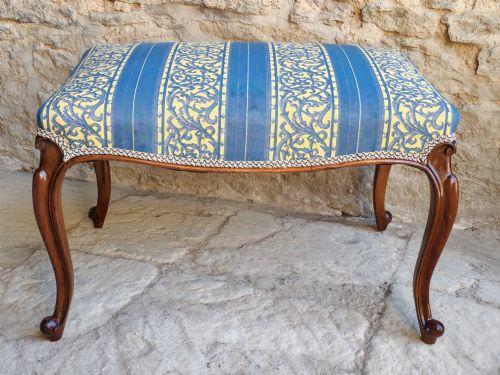
- A furniture leg that curves outward in a convex arc and then bends inward in a concave arc, ending in a pad or scroll foot. It is a defining feature of Louis XV revival design.
- Banquette
- A long upholstered bench or stool without a backrest, often designed for placement in hallways or at the foot of a bed.
Vintage French Style Bench: Frequently Asked Questions
Where should I place a French style bench?
These benches suit entrance halls, living rooms, and bedrooms where an elegant profile is desired without the visual weight of a large sofa. Their decorative frames make them effective focal points against plain walls or at the foot of a bed.
Smaller stools and window seats fit comfortably into alcoves or beneath sills, offering versatile extra seating that remains easy to move around a room.
How do I care for a caned seat?
Caned panels require gentle cleaning with a damp cloth to remove dust from the woven interstices without soaking the natural fibres. Keeping the material slightly hydrated prevents it from becoming brittle over time.
Avoid placing these pieces in direct sunlight or beside intense heat sources, which cause natural rattan to dry out and snap under normal sitting loads.
What is the difference between Louis XV and Louis XVI styles?
Louis XV furniture is characterised by asymmetrical curves, flowing natural motifs, and serpentine frames like the cabriole leg. This style emphasises softness and movement in its carved wooden details.
Louis XVI design marks a return to classical symmetry and straight lines, featuring fluted legs, rectangular backs, and geometric neoclassical ornamentation.
Are these benches comfortable for daily use?
Many examples are designed primarily for occasional sitting in formal rooms rather than lounging, though upholstered versions offer a softer seat. The inclusion of cushions or plush padding varies significantly across different daybeds and settees.
Consider whether the piece is intended for reading, resting at the end of a bed, or purely as a decorative accent in an empty corner.