
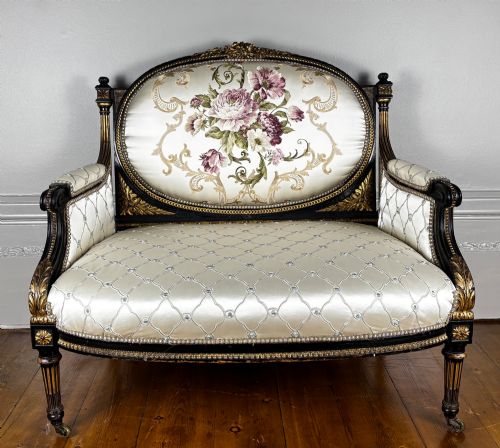
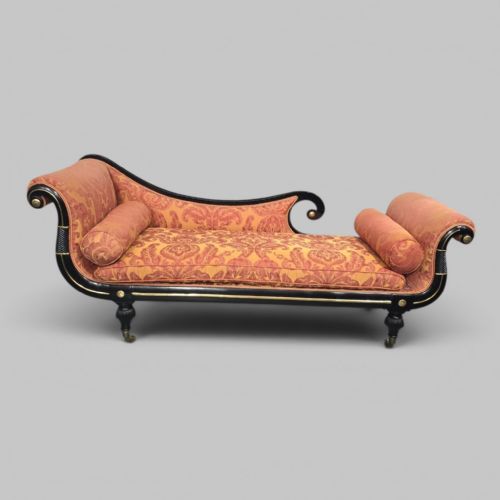


Ebonised Gilt Sofa
An ebonised gilt sofa brings dark, dramatic timber and bright gilding together for a striking focal point in any grand interior.
Ebonised Gilt Sofa
An ebonised gilt sofa combines blackened wood finishes with gilded highlights, creating a distinct visual contrast that defined several design movements. When searching for an ebonised gilt sofa, buyers encounter pieces primarily from the nineteenth century, including Regency and Victorian periods.
The selection ranges from French models and continental canapes to British aesthetic movement settees. Alongside three-seat sofas, the evidence records related seating forms such as chaise longues and window seats.
Makers utilised various upholstery choices, from patterned tapestry and silk to textile fringes. The dark timber ground allows the gold leaf details to command attention in a room.
How they were made
Craftsmen achieved the dark surface of an ebonised gilt sofa by staining or painting timber to imitate ebony. They then applied gold leaf or parcel gilt highlights to carved details, mouldings, and frames.
Upholstery techniques involved traditional stuffing and springing, finished with decorative textile fringe or velvet. Workshops combined these textile elements with brass fittings and inlay work where appropriate to the style.
Listings demonstrate materials including ebonised wood, gold leaf, brass, and silk, spanning Regency and Victorian periods.
What varies in quality
The standard of an ebonised gilt sofa rests upon the crispness of the timber carving and the purity of the gilding. Superior examples display finely executed parcel gilt work that adheres securely to the deep ebonised ground.
Construction integrity of the frame separates standard production from finer cabinetmaking. The integration of textiles, whether silk or tapestry, and the retention of original upholstery methods also influence the overall standing of the piece.
Gillows
The Ebonised Gilt Sofa Glossary
- Ebonised
- Wood treated with stain or pigment to resemble costly ebony. This finish became particularly popular during the nineteenth century for furniture mimicking exotic materials.
- Parcel Gilt
- Partial gilding applied only to specific raised carved areas or details. It creates contrast against the surrounding ebonised wood surface.
- Canapé
- A decorative settee or sofa originating in France. These pieces typically feature exposed wooden frames and upholstered backs and seats.
- Aesthetic Movement
- A late nineteenth-century design style emphasising visual beauty over narrative content. Furniture from this period often incorporates Japanese-inspired motifs and ebonised finishes.
- Textile Fringe
- A decorative border of hanging threads or cords attached to upholstery edges. This finishing touch appears frequently on nineteenth-century seating.
Ebonised Gilt Sofa: Frequently Asked Questions
What periods do these sofas date from?
The pieces span the nineteenth century, encompassing Regency and Victorian eras alongside specific decades like the eighteen-eighties and eighteen-nineties.
Stylistic influences range from French Louis designs to British aesthetic movement pieces.
How do I care for ebonised wood?
Dust regularly with a soft, dry cloth to prevent accumulation in the carved details. Avoid harsh chemical cleaners that might damage the ebonised finish or the delicate gold leaf highlights.
Keep the furniture away from direct sunlight and excessive heat sources to protect both the timber and the original textiles.
What is the difference between a sofa and a canapé?
A canapé is a specific continental form of settee, traditionally featuring an exposed wooden frame with upholstered components. The term often describes French-influenced seating from the nineteenth century.
Sofas in these collections encompass a broader range of nineteenth-century British and continental seating styles.
Are these sofas suitable for daily use?
Many of these pieces function well as primary seating when the frame and upholstery remain structurally sound. Consideration should be given to the age of the internal construction and delicate textile fringes.
Placing them in low-traffic areas helps preserve fragile silk, tapestry, and parcel gilt surfaces over time.