
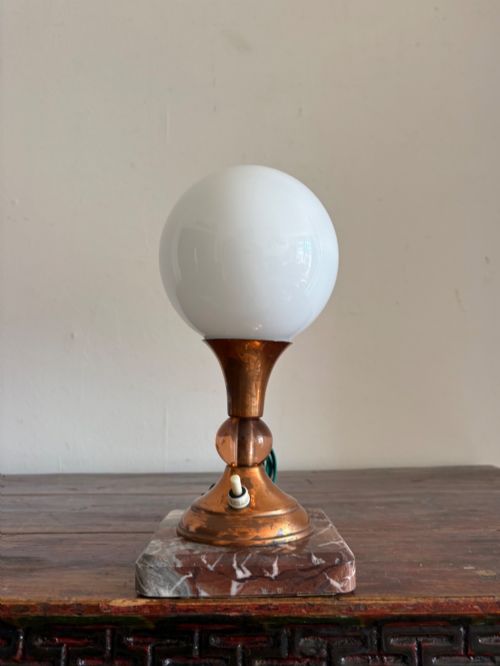


Vintage French Globe
A vintage french globe brings geography and scientific interest into a room through hand-applied paper maps, glass spheres, and solid marble bases.
Vintage French Globe
When searching for a vintage french globe, buyers encounter geographical terrestrial spheres, celestial globes, and scientific instruments originating from the nineteenth century up through the nineteen-thirties. These pieces combine educational cartography with decorative lighting or desk accessories, reflecting French manufacturing traditions of their respective eras.
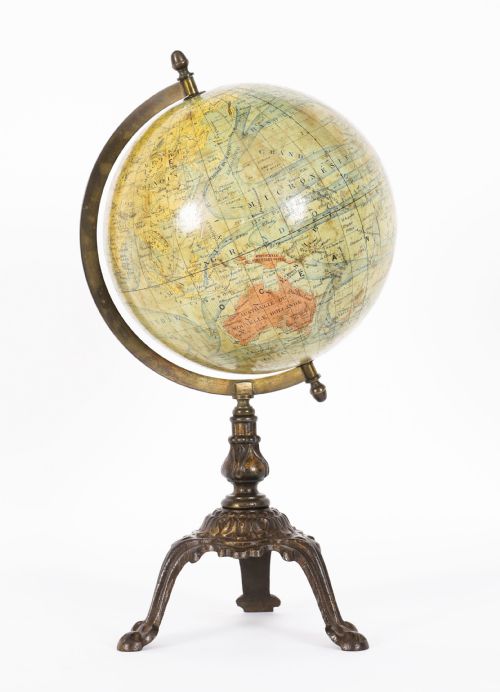
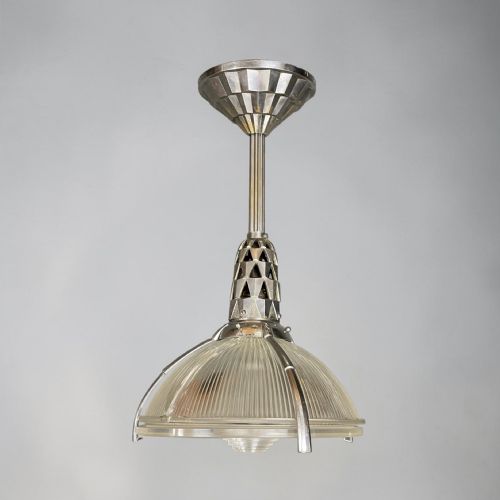
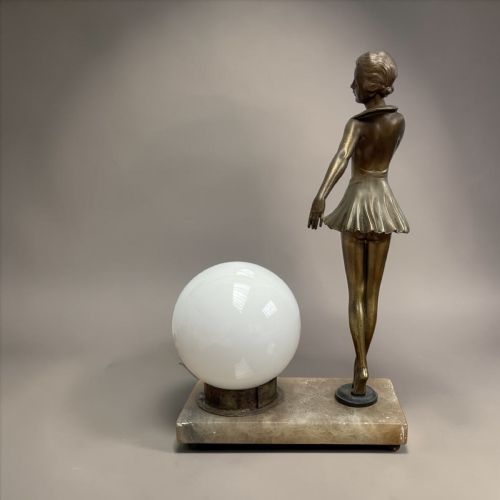
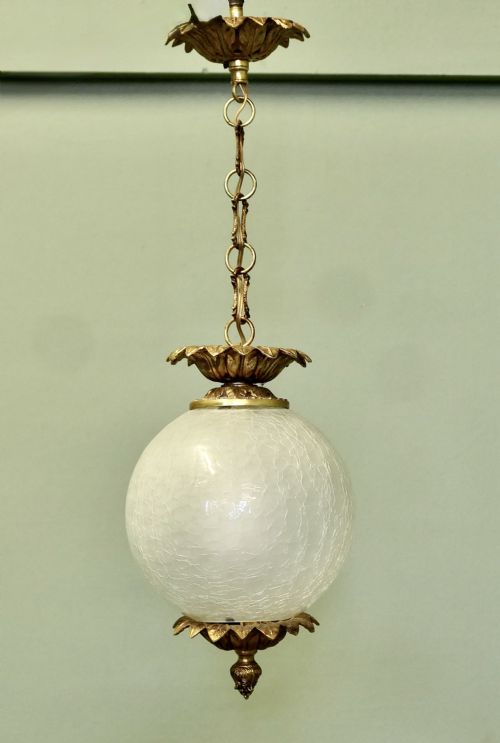
The selection on this page centres heavily on Art Deco table lamps, hanging pendant lights, and night lights incorporating glass globes alongside terrestrial and celestial globes by makers such as Lebegue and J. Forest. Forms range from compact desktop items and mystery clocks to large dome ceiling fixtures mounted in bronze, brass, spelter, and marble.
How they were made
Maker workshops constructed these globes using printed paper gores applied carefully to glass, ceramic, or papier-mâché spheres, paired with heavy bases of marble, granite, or patinated bronze. Lighting fixtures utilise pressed glass, opaline, crackle glass, and frosted crystal secured in brass or copper mounts.
Foundry cast metals like spelter and bronze form the figurative bases of night lights and lamps, often finished with detailed patination. Metal spinning and turning create the brass meridian rings and desk stands that support the terrestrial or celestial spheres.
Greyhounds, alsatians, and accordion-playing pierrots frequently guard the marble bases of French Art Deco night lights.
What varies in quality
Quality in these globes rests upon the crispness of the cartographic printing, the accuracy of the hand-applied paper gores, and the clarity of the geographical text. Finer examples maintain complete paper coverage without heavy fading or major tears across the landmasses.
The standard of the mounting hardware and the base materials determines the overall caliber of the piece. Solid marble bases, detailed bronze castings, and heavy acid-etched or opaline glass shades indicate superior production compared to lighter spelter and pressed metal alternatives.
Lebegue and Cie·J. Forest·M.Vivien·Henri de Magnac·Émile-Jacques Ruhlmann
The Vintage French Globe Glossary
- Terrestrial globe
- A spherical map representing the earth showing continents, oceans, countries, and major cities. These navigational and educational instruments date across the nineteenth and early twentieth centuries.
- Celestial globe
- A sphere mapping the stars, constellations, and astronomical coordinates rather than landmasses. These scientific instruments often accompany terrestrial globes in studies and libraries.
- Opaline glass
- A milky, translucent glass popular in French lighting design, particularly during the Art Deco period. It diffuses light softly through hanging pendant shades and table lamp globes.
- Spelter
- A zinc alloy frequently used in French decorative arts and lamp bases as a less expensive alternative to bronze. It accepts metallic patination to simulate bronze or brass finishes.
Vintage French Globe: Frequently Asked Questions
How do I date a globe?
Dating relies heavily on political boundaries, place names printed on the cartographic gores, and the style of the mounting base or surrounding light fixture. Examining the typography and manufacturing materials helps place the piece within the nineteenth century or the nineteen-twenties and thirties.
Makers often included publication dates or copyright stamps directly on the paper map gores. Comparing these geographical details to historical maps confirms the specific production era.
What is a mystery clock?
A mystery clock is a timekeeping device where the mechanism appears concealed or separated from the hands, creating a puzzling visual effect. French examples from the nineteenth century integrate these movements into decorative desk pieces.
The clockwork typically uses glass dials or transparent crystal elements to hide the gears, relying on ingenious mechanical engineering. These scientific instruments combine utility with visual curiosity.
How were celestial globes used?
Celestial globes served as navigational and educational tools for tracking astronomical bodies, star constellations, and planetary movements. Scholars and sailors utilised them to understand the night sky.
Unlike earth globes, celestial globes display the heavens from an outside perspective, requiring the user to read the constellations in reverse. They were standard fixtures in observatories and studies.
Are the light fixtures compatible with modern bulbs?
Most vintage French lamps and pendant lights accommodate standard modern bulbs, though rewiring with contemporary electrical cable is often recommended for safety. The original brass or bronze lamp holders generally accept standard screw or bayonet fittings depending on the specific piece.
Consulting a qualified electrician ensures that vintage fixtures meet current safety standards while preserving original sockets where possible.