




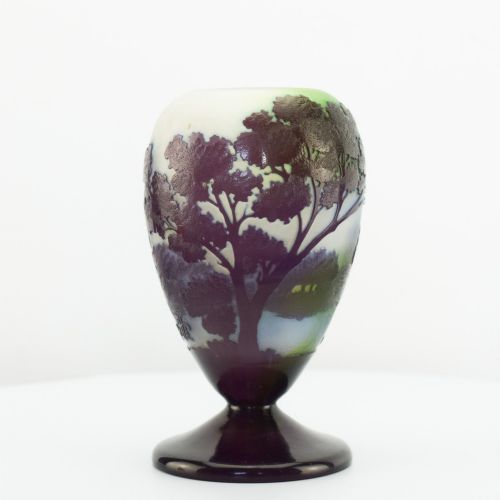
Vintage French Glass Vases
These vintage french glass vases bring sculptural form and coloured light to a room, ranging from organic Art Nouveau motifs to geometric Art Deco designs.
Vintage French Glass Vases
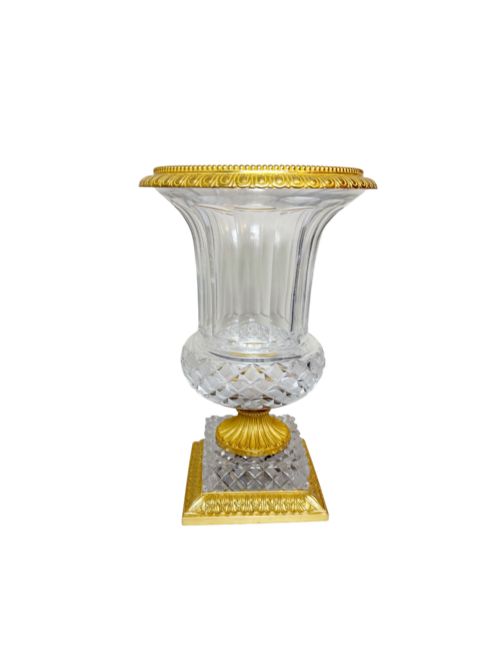
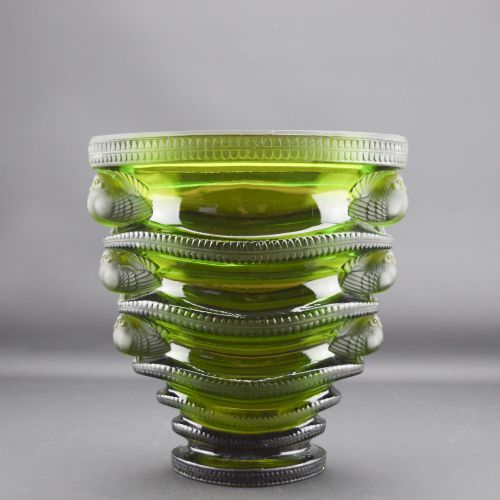
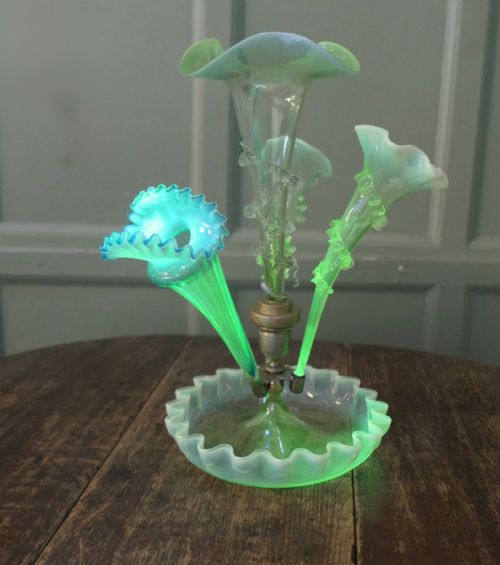
Vintage french glass vases encompass works produced across the nineteenth and twentieth centuries, capturing shifts in design from Victorian Rococo Revival and French Empire to Art Nouveau and Art Deco. When searching for vintage french glass vases, buyers encounter sculptural vessels, decorative bowls, and tall epergnes originating from prominent French makers and glassworks.
The selections span delicate nineteenth-century opaline glass through to heavy, moulded twentieth-century crystal. Pieces range from small cabinet vessels to massive decorative urns and table centrepieces.
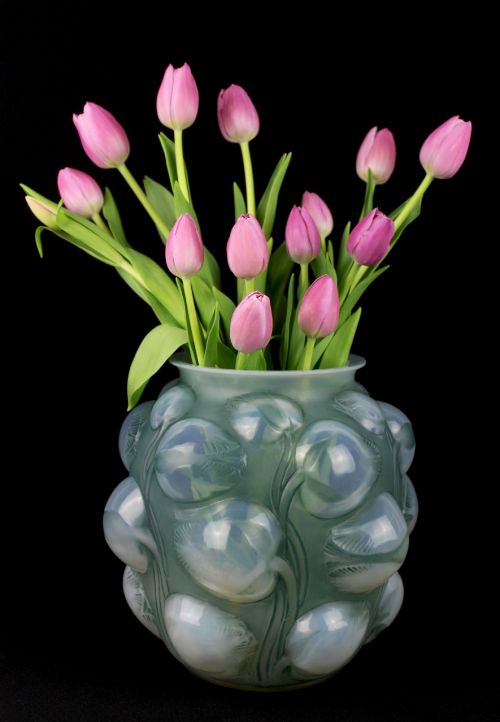
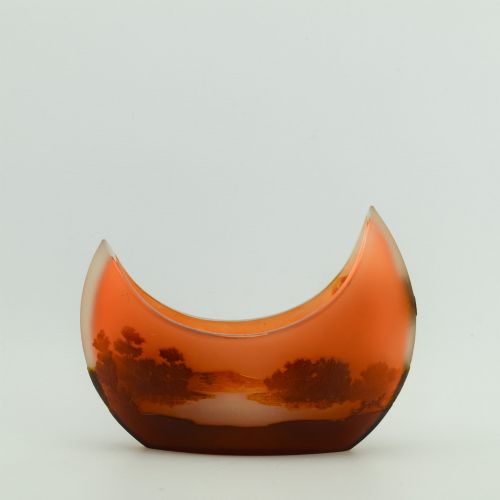
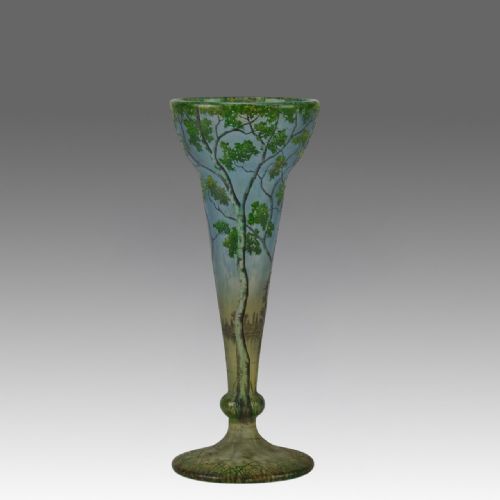
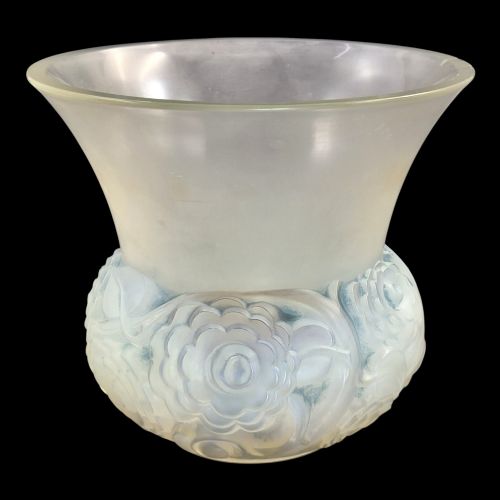
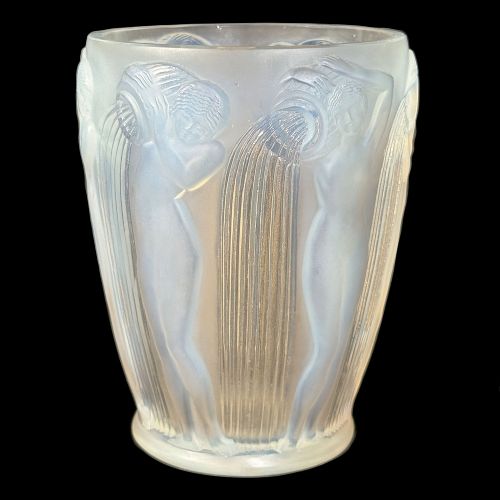
Art Deco and Art Nouveau aesthetics dominate the offerings, showcasing botanical motifs, landscapes, and animal figures moulded in frosted, opalescent, or cameo glass.
How they were made
Makers utilised techniques such as acid-etching, cameo carving, and hand-blowing to build texture and depth into the material. Layers of coloured glass were fused together and carved down to reveal contrasting landscapes or floral patterns.
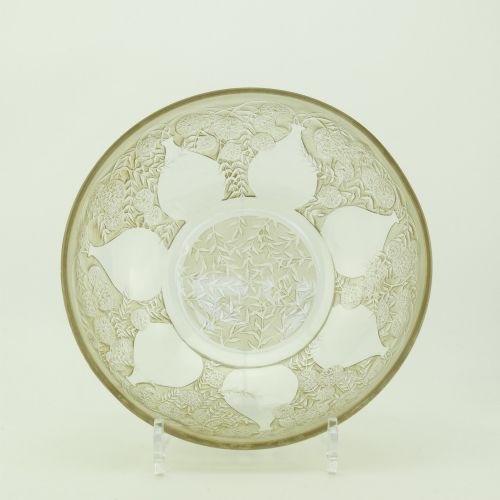
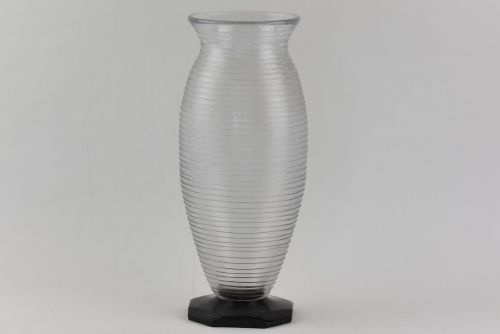
Moulded production allowed workshops to create intricate relief designs in opalescent, frosted, and clear crystal, sometimes enhanced with enamel or blue stain highlights. Wrought iron mounts and metal bases were occasionally integrated into the heavier Art Deco vessels.
Vintage French Glass Vases Retail Price Guide 2026
Typical asking prices for vintage french glass vases among the pieces listed under this phrase on Sellingantiques today, from the lower quarter to the upper quarter. They describe what is for sale here now, not the wider market.
Some heavy Art Deco vases weigh over twelve kilograms, turning simple flower arranging into an unexpected weightlifting session.
What varies in quality
Depth of carving and clarity of the glass separate standard production from master works. In cameo and acid-etched pieces, the precision of the layers dictates the sharpness of the botanical or landscape detail.
The weight and thickness of the crystal, alongside the finesse of surface staining or enamel decoration, determine the standing of individual vessels within a maker's output.
Rene Lalique·Daum·Emile Galle·Schneider·St Louis glassworks·Amalric Walter·Legras·Jean Luce·Julien
The Vintage French Glass Vases Glossary
- Cameo Glass
- Glass vessels created by fusing two or more layers of coloured glass and carving away the outer layers to form raised designs. This technique requires considerable skill to maintain consistent depth and contrast across the motif.
- Opalescent Glass
- Glass that milky-blue appearance shifts in colour when viewed against transmitted or reflected light. It imparts a luminous quality to moulded botanical and figurative reliefs.
- Acid-Etched Glass
- Glass decorated by applying acid to eat away exposed surfaces, creating textured patterns or matte finishes. The method allows for precise control over tonal gradients.
- Pate de Verre
- A kiln-casting method where crushed glass is packed into a mould and fused together, producing dense, richly coloured objects with a granular texture.
- Epergne
- A centrepiece stand featuring multiple trumpet-shaped vases or dishes branching from a central base. They were traditionally used to hold fruit or flowers on formal dining tables.
Vintage French Glass Vases: Frequently Asked Questions
How do I identify Art Nouveau glass?
Art Nouveau pieces rely on flowing, organic lines inspired by nature, frequently featuring floral, insect, or landscape subjects rendered in cameo or iridescent glass.
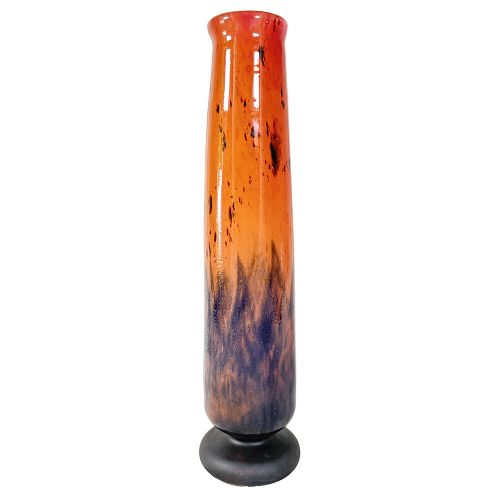
Look for undulating contours and naturalistic colour palettes of orange, green, and purple that mimic plant growth.
What defines Art Deco glass vases?
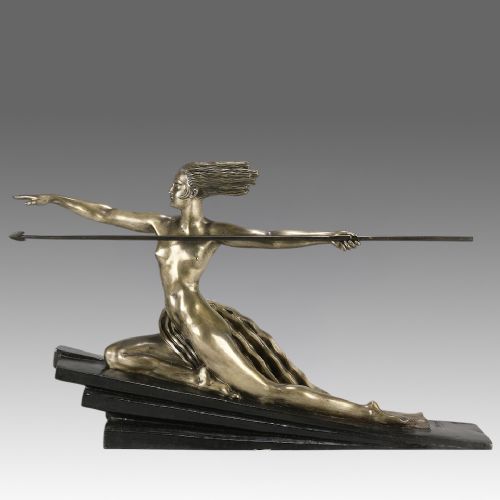
Art Deco vessels display geometric precision, stylised animal motifs, and symmetry, contrasting sharply with earlier organic styles.
They frequently utilise heavy moulded crystal, frosted surfaces, and contrasting stain work to accentuate the architectural form.
Where should I display heavy crystal vases?
Heavy crystal and cameo vessels require stable, flat surfaces away from high-traffic edges where accidental knocks might occur.
Placing them near natural light sources allows frosted and opalescent qualities to catch and diffuse illumination effectively.
How do I care for antique glass?
Wash glass pieces by hand using lukewarm water and a mild detergent, avoiding harsh scrubbing tools or abrasive cleaners that scratch soft surfaces.
Dry them immediately with a lint-free cloth to prevent water spots from forming on etched or enamelled details.