



Gilt Clear Glass Bottles
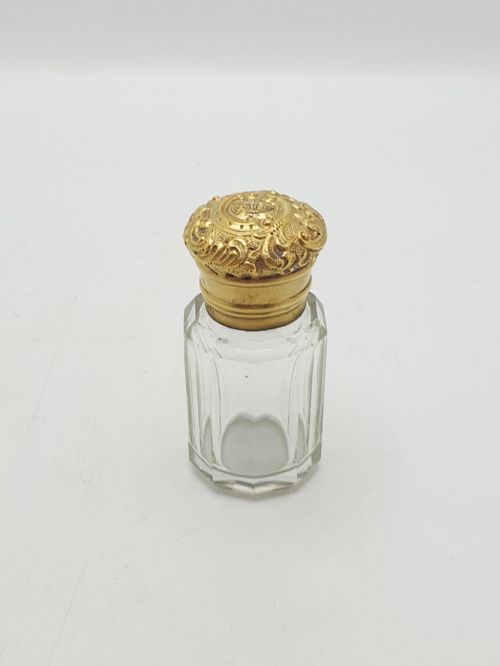
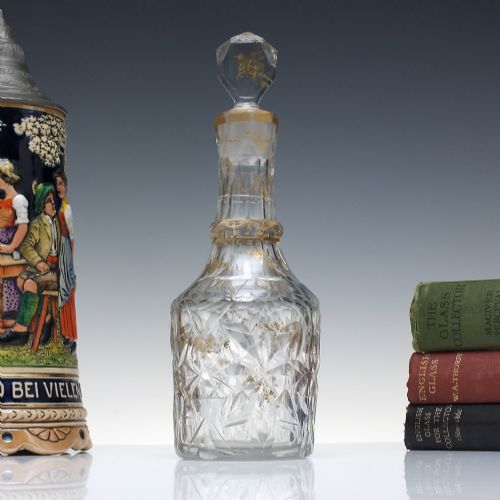
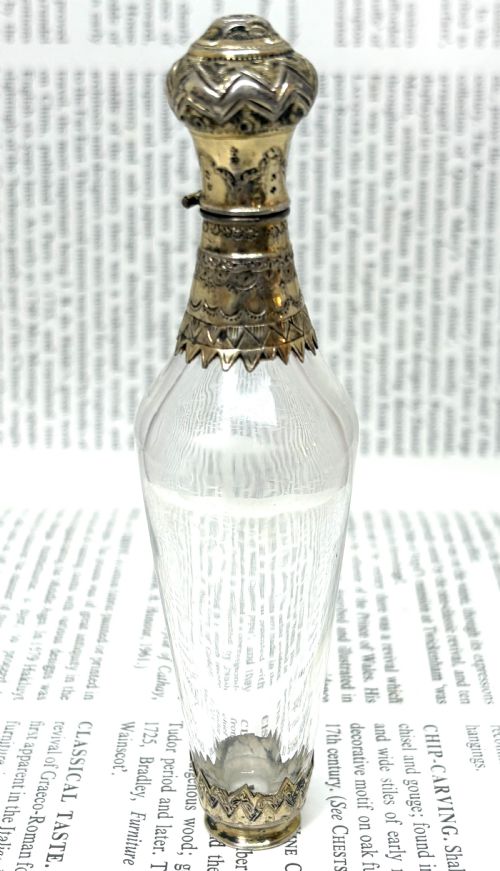
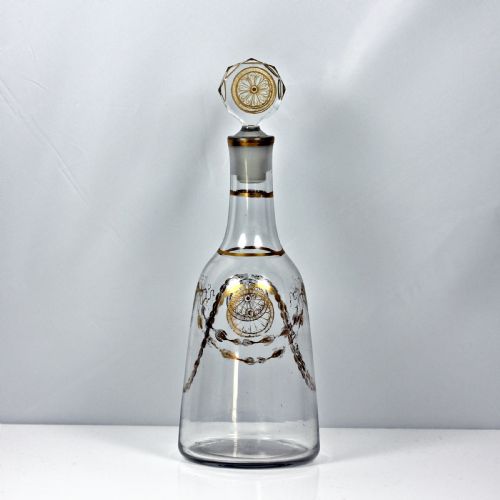
These gilt clear glass bottles range from Georgian decanters to French scent flasks, offering decorative brilliance and period utility.
Gilt Clear Glass Bottles
When you search for gilt clear glass bottles, you encounter a diverse selection of vessels spanning the Georgian, 19th Century, and mid-20th Century periods. The forms include decanters, scent bottles, apothecary jars, tincture bottles, carafes, and champagne coolers.
The most likely versions to meet on this page are 19th Century apothecary bottles and Georgian decanters, often featuring cut glass or crystal bodies. These pieces originate from English and French workshops, encompassing styles from the French Empire and Belle Epoque to Victorian design.
How they were made
The construction relies heavily on clear glass, crystal, and lead crystal glass shaped through blowing and cutting techniques. Artisans enhanced these translucent bodies with gold leaf, silver gilt, and sterling silver mounts.
Further embellishments include gilt bronze mounts and detailed gilding applied directly to the glass surface. These metallic additions are secured to flasks, decanters, and apothecary jars using period techniques appropriate to each maker.
Gilt Clear Glass Bottles Retail Price Guide 2026
Typical asking prices for gilt clear glass bottles among the pieces listed under this phrase on Sellingantiques today, from the lower quarter to the upper quarter. They describe what is for sale here now, not the wider market.
Listings feature glass, gold leaf, silver gilt, and crystal across the 18th, 19th, and 20th centuries.
What varies in quality
The distinction between the top and bottom of the range rests on the precision of the glass cutting and the refinement of the metallic mounts. Pieces attributed to documented ateliers or silversmiths display superior handling of gold leaf and silver gilt.
Overall quality also depends on the clarity of the crystal or glass and the preservation of the delicate gilt decoration. Heavier mounts in silver gilt or gilt bronze generally indicate a higher grade of production.
Atelier of James Giles·Tonnel Paris·Freeman And Son Ltd·Mappin And Webb·S Morden And Co London
The Gilt Clear Glass Bottles Glossary
- Gilt
- Covered thinly with gold leaf or gold paint. This finish enhances the decorative appeal of clear glass surfaces.
- Decanter
- A vessel used for holding and serving decanted liquids like wine or spirits. These often feature cut glass and precious metal stoppers.
- Silver Gilt
- Silver covered with a thin layer of gold. It provides the durability of silver with the rich appearance of gold.
- Apothecary Jar
- A container formerly used by chemists to hold medicines and drugs. They frequently appear in clear glass with period labeling.
- Lead Crystal Glass
- Glass containing lead oxide to increase brilliance and weight. This material allows for deep, crisp facet cutting.
Gilt Clear Glass Bottles: Frequently Asked Questions
How do I date a gilt clear glass bottle?
Dating relies on stylistic clues, glass manufacturing methods, and metal hallmarks. Georgian examples often feature deep facet cutting and specific decanter profiles.
Nineteenth-century apothecary jars and French scent bottles show distinct decorative motifs aligned with the Empire or Belle Epoque periods. Comparing the mount style helps confirm the era of production.
What were apothecary bottles used for?
Apothecary bottles and tincture jars held medicines, chemicals, and ingredients in medical shops. Their clear glass allowed contents to be easily identified.
Many retained labels or gilt lettering to denote specific medical preparations. Today, collectors value them for their historical utility and decorative presence.
Are these bottles safe for serving drinks?
Decanters and carafes were originally designed for serving wine, brandy, and spirits. Their glass construction holds liquid effectively.
However, delicate gilt decoration and antique silver mounts require careful hand washing. Owners should assess the interior condition before utilising them for beverages.
How should I display antique scent bottles?
Vanity bottles and scent flasks look best displayed on mirrored trays or dedicated dressing table surfaces. Their clear glass catches natural light beautifully.
Placing them away from direct sunlight protects any remaining gold leaf. Ensuring a stable surface prevents accidental tipping of tall carafes and decanters.