




Perfume Bottle Pair
These perfume bottle pair options bring symmetrical elegance to a dressing table, offering matching vessels designed for vanity use.
Perfume Bottle Pair
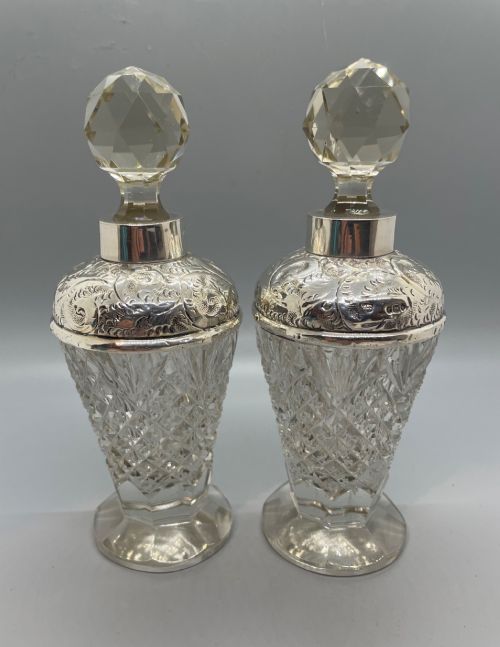
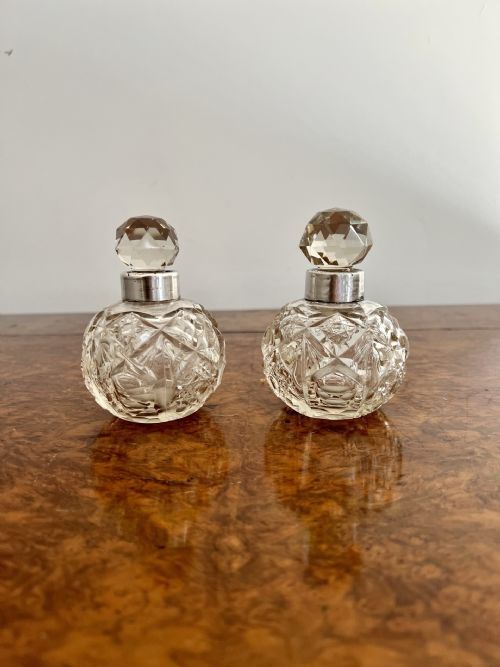
A perfume bottle pair consists of two matching vanity vessels designed to hold scent, most frequently encountered as cut glass bodies fitted with sterling silver collars and hinged lids. These sets span periods from the Victorian and Edwardian eras through to the Art Deco movement, reflecting shifting tastes in interior decoration.
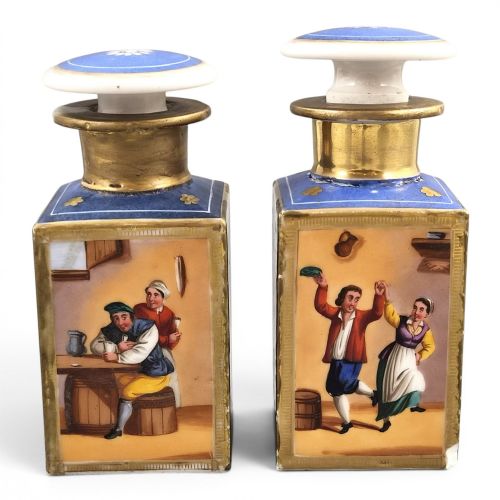
Buyers also encounter porcelain examples featuring hand-painted scenes or enamel work alongside standard glass iterations. The forms range from globular shapes to tall decanter styles meant to sit together on a mirrored plateau or dressing tray.
Originating from English, French, and Bohemian workshops, these matched sets served as functional dressing table accessories for daily toiletry use. Surviving examples demonstrate how these objects were preserved as decorative mantel or vanity ornaments long after their original contents evaporated.
Materials and construction
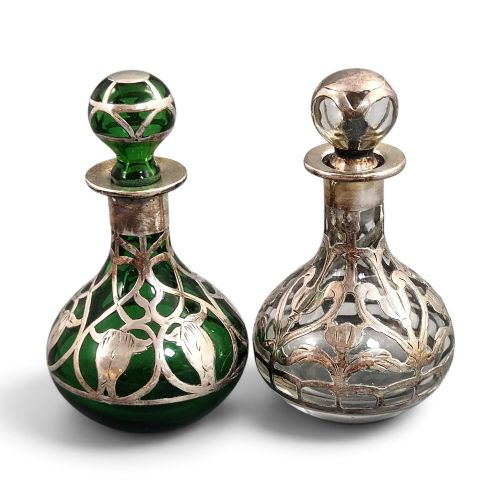
Porcelain variants utilise hard-paste bodies decorated with enamel paints, gilding, and applied floral motifs before undergoing high-temperature kiln firing. Artisans applied overlay techniques, cutting away silver or enamel layers to reveal contrasting patterns beneath.
Listings feature periods spanning the nineteenth century through the Art Deco era, utilising sterling silver, cut glass, and hard-paste porcelain.
Quality factors
The standard of execution in the glass-cutting distinguishes finer examples, where crisp geometric facets and deep hobnail patterns remain sharp to the touch. Heavier crystal bodies and substantial silver mounts with clear assay marks indicate superior original manufacturing standards.
The integrity of applied decoration, such as hand-painted enamel scenes or intricate silver overlay work, dictates the distinction of upper-tier pieces. Matched sets that retain their original stoppers and undamaged hinged caps command greater attention from collectors.
Gorham·Jacob Petit·Minton·Karl Palda·George Unite·Moser·Asprey·William Comyns
The Perfume Bottle Pair Glossary
- Sterling silver
- A silver alloy containing 92.5 percent pure silver and 7.5 percent other metals, typically copper, used extensively for bottle mounts and lids. This material frequently carries hallmark stamps indicating the year and city of assay.
- Hob cut
- A prominent geometric glass-cutting pattern featuring raised pyramidal points that create a heavily textured, sparkling surface. This technique adds considerable weight and brilliance to glass perfume bodies.
- Hard-paste porcelain
- A durable ceramic composition fired at very high temperatures, providing a smooth, dense body ideal for detailed enamel painting and gilding. It forms the base of many continental and English vanity bottles.
- Assay mark
- An official stamp struck onto precious metal items to guarantee their metallic purity and origin. These marks allow a buyer to date silver collars with precision.
- Overlay
- A decorative technique where a thin layer of metal, such as silver, encases a glass body and is pierced or cut to reveal the material underneath. This method requires skilled metalworking combined with glassware.
Perfume Bottle Pair: Frequently Asked Questions
How were perfume bottle pairs used?
These vessels sat upon dressing tables and vanity trays to hold different scents or colognes for daily toiletry routines. They allowed owners to apply fragrance using glass daubers or stoppers before social engagements.
Over time, many pairs transitioned from functional vanity items to purely decorative display pieces kept within bedrooms or drawing rooms.
How do I date a silver mounted pair?
The silver collars and hinged lids usually carry British hallmarks that indicate the specific year and assay office of manufacture. Examining these tiny stamped letters and symbols provides an exact chronological anchor.
Stylistic cues such as Edwardian garland motifs or Art Deco geometric lines also help place the vessels within a broader historical window.
Are original stoppers important?
Original stoppers ensure the set remains complete and functional, which matters significantly to collectors and traditional users. Finding matching stoppers that fit securely within the glass necks preserves the integrity of the design.
Replacement stoppers occur frequently due to breakage over decades of use, making original matching pairs noteworthy finds.
How should I clean glass and silver?
Glass bodies respond well to warm soapy water and soft bottle brushes to remove interior residue safely without scratching the surface. Silver mounts require careful polishing with a non-abrasive cloth to avoid transferring cleaner onto the glass or enamel.
Harsh chemical dips must be avoided to protect delicate vintage enamel work and thin silver plating from irreversible damage.