
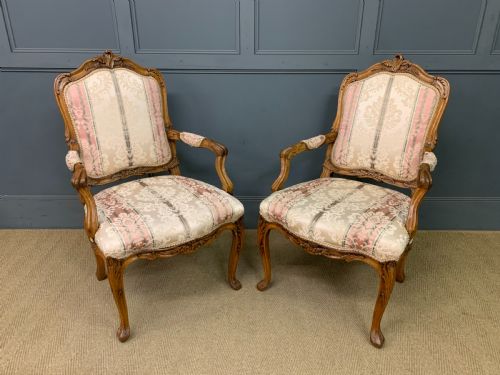
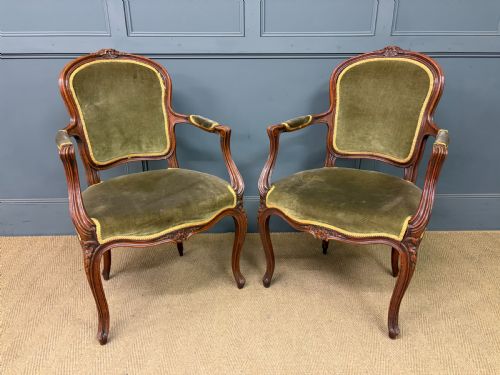
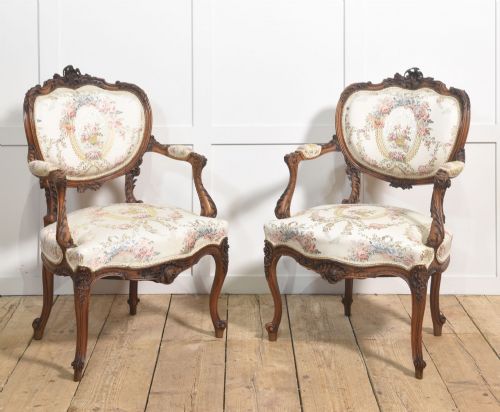
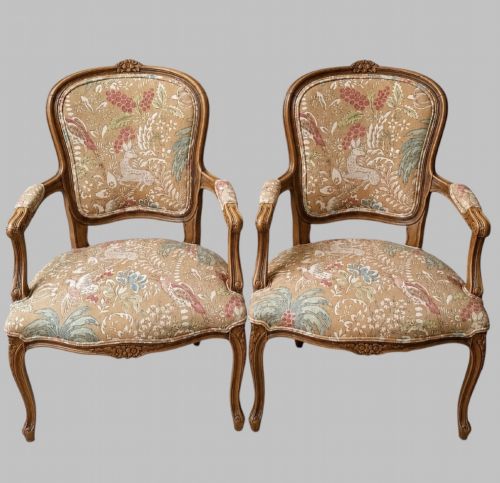



Vintage French Fauteuil Pair
These vintage french fauteuil pair selections bring open armchairs shaped by eighteenth-century revivals and nineteenth-century tastes directly into a room.
Vintage French Fauteuil Pair
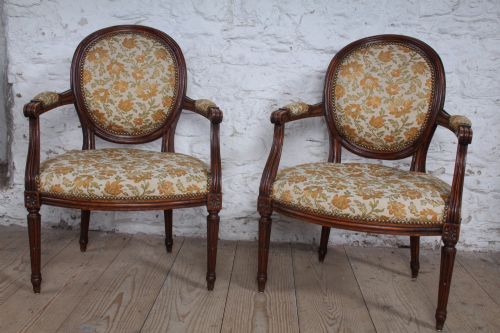
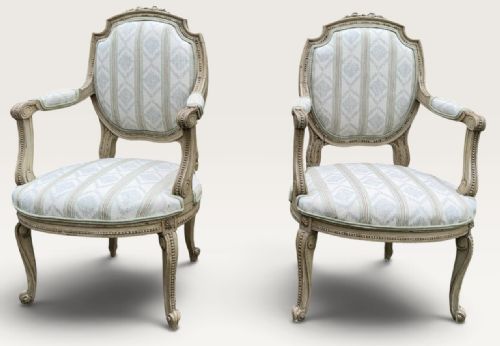
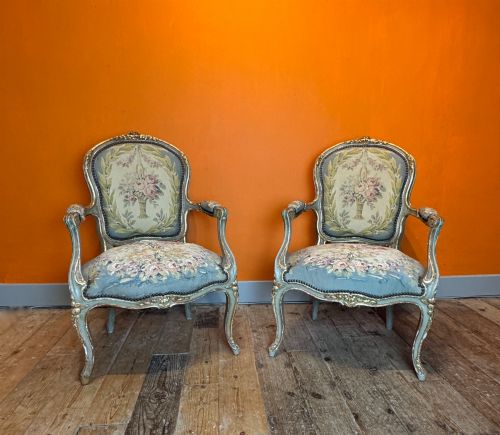
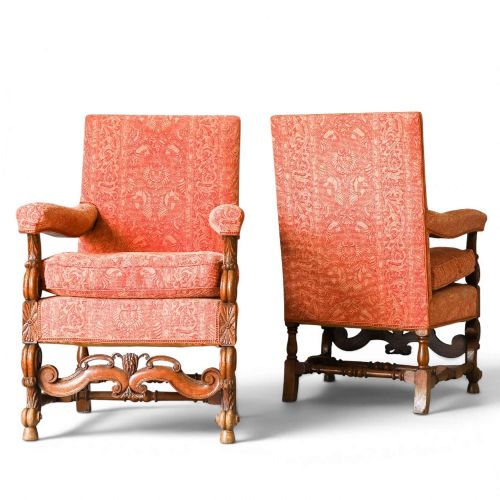
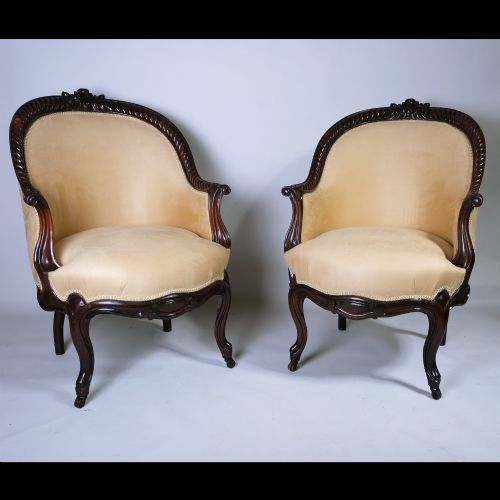
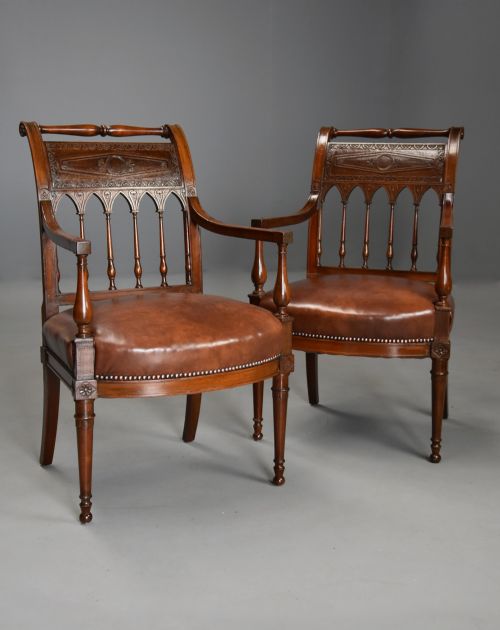
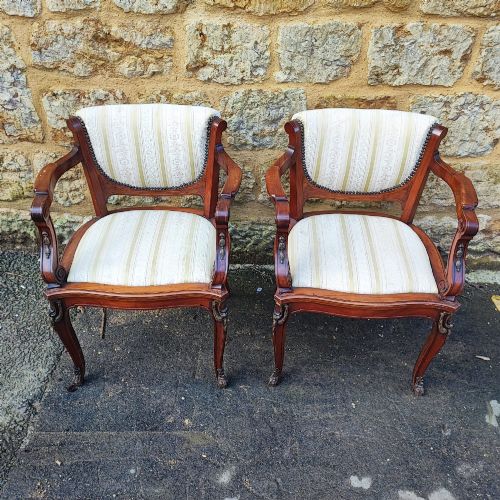
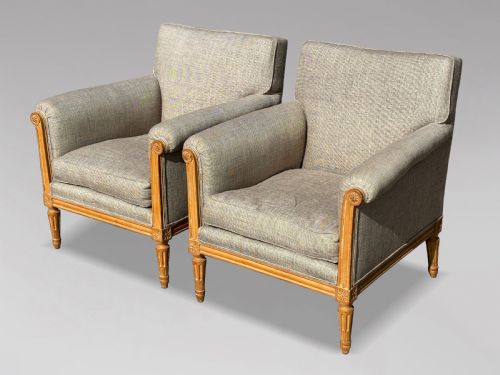
A vintage french fauteuil pair consists of matching upholstered open armchairs originating from France or built in the French manner across the nineteenth and early twentieth centuries. When searching this phrase, buyers encounter seating influenced by Louis XV, Louis XVI, and Directoire styles, ranging from rustic farmhouse walnut frames to gilded salon seats.
The selections span periods from the late eighteenth century through the nineteen-thirties, though pieces from nineteen hundred and the nineteenth century appear most frequently. Frames show carved wood details, painted finishes, cane panels, and traditional upholstery fabrics including velvet and tapestry.
Materials and construction
Frames rely on hardwoods such as beech, walnut, oak, and mahogany, shaped through traditional joinery and detailed carving. Cabinetmakers applied finishes of paint, parcel gilt, or gold leaf directly onto the timber frames.
Upholstery methods utilise fabric, velvet, needlework, and tapestry secured to open wooden arms, while cane is integrated into specific lighter chair backs.
The listings show frames shaped from walnut, beech, oak, and mahogany, spanning periods from the eighteenth century through nineteen-thirties revival pieces.
Evaluating craftsmanship and condition
Quality rests in the crispness of the hand-carved wooden ornament and the structural integrity of the frame joints. Superior examples display balanced proportions, refined curves, and original painted or gilded surfaces that have aged naturally over time.
The Vintage French Fauteuil Pair Glossary
- Fauteuil
- An open-armed upholstered armchair with exposed wooden framing, typical of French seating design. These chairs combine decorative carved woodwork with padded armrests.
- Giltwood
- Timber treated with a thin layer of gold leaf or gilt paint. This finish creates a reflective metallic surface popular in formal salon chairs.
- Caning
- Woven rattan material used for chair backs and seats. It offers a lighter texture compared to fully upholstered padding.
Vintage French Fauteuil Pair: Frequently Asked Questions
How do I distinguish Louis XV from Louis XVI styles?
Louis XV seating employs asymmetrical curves, cabriole legs, and organic rococo carving motifs across the wooden frame.
Louis XVI pieces introduce straight fluted legs, geometric symmetry, and neoclassical details such as ribbon twists or rosettes.
Were these armchairs meant for the dining room?
These open armchairs functioned primarily as salon, library, or drawing room seating rather than dining chairs.
Their open wooden arms allowed individuals to sit comfortably while wearing wide historical garments.
How should I care for painted or gilded wood frames?
Maintain finished wooden frames by dusting gently with a dry, soft cloth to protect fragile nineteenth-century surfaces.
Avoid liquid cleaners and direct sunlight, which can cause painted or gilded layers to flake over time.
Can I mix different revival styles in one room?
Pairing French Rococo revival chairs with later nineteenth-century pieces adds visual depth to an interior space.
Matching the scale and wood finish helps unify disparate periods within a single seating arrangement.