
Vintage French Club Chairs
Vintage french club chairs offer deep, comfortable seating in supple leather, combining solid construction with relaxed proportions.
Vintage French Club Chairs
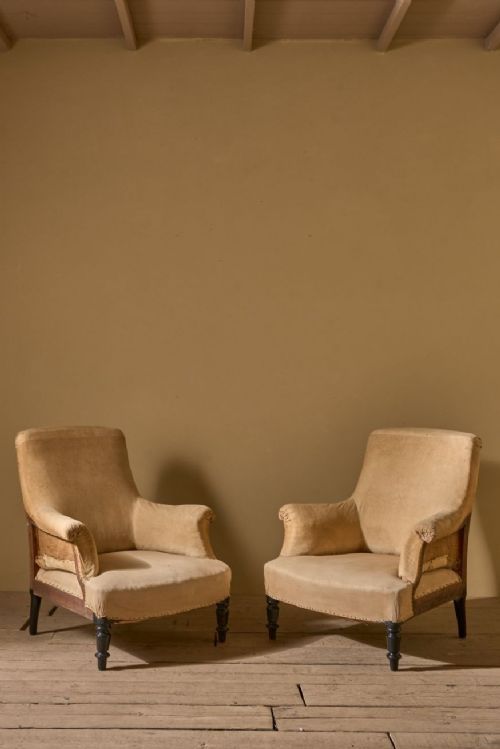
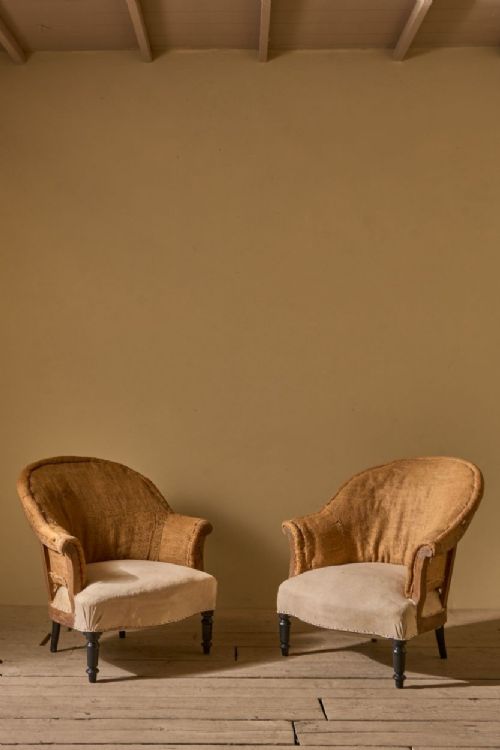
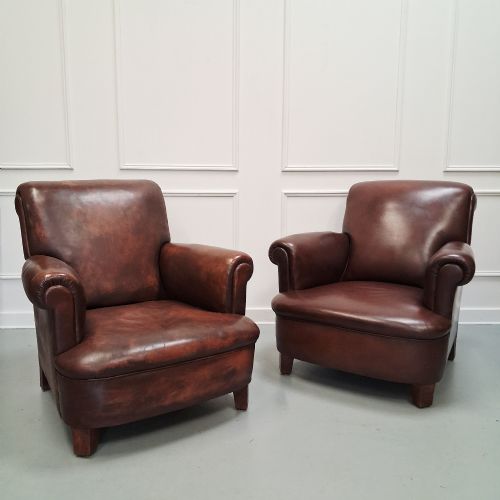
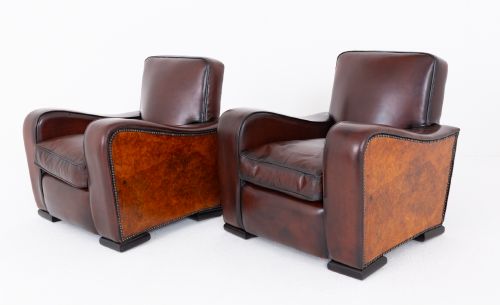
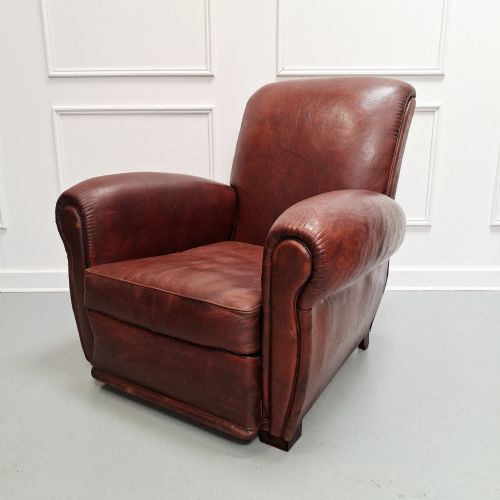
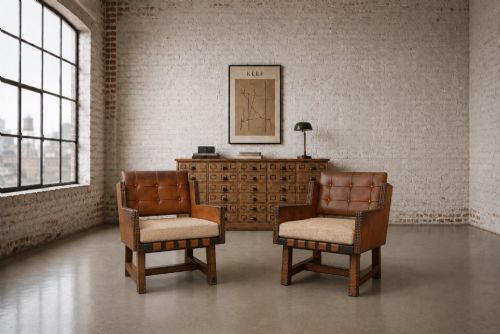
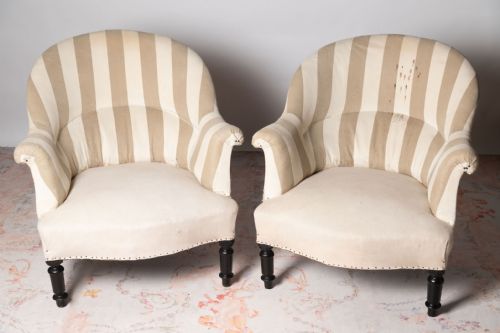
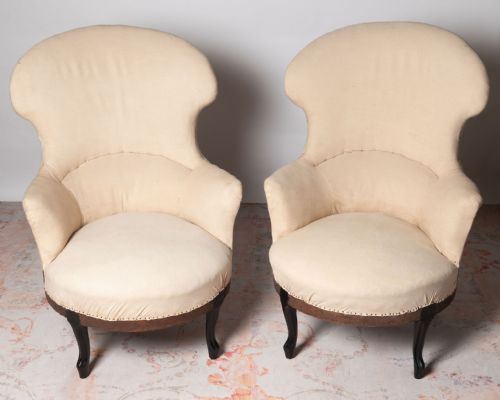
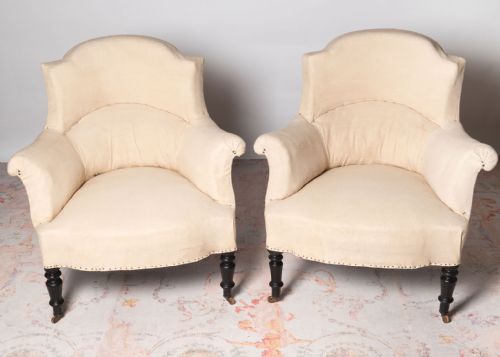
Vintage french club chairs are substantial low-slung seats designed primarily for comfort and relaxation. When searching for vintage french club chairs, buyers encounter forms ranging from heavy art deco leather loungers to earlier nineteenth century upholstered armchairs. These pieces typically function as statement seating in libraries, studies, and living spaces.
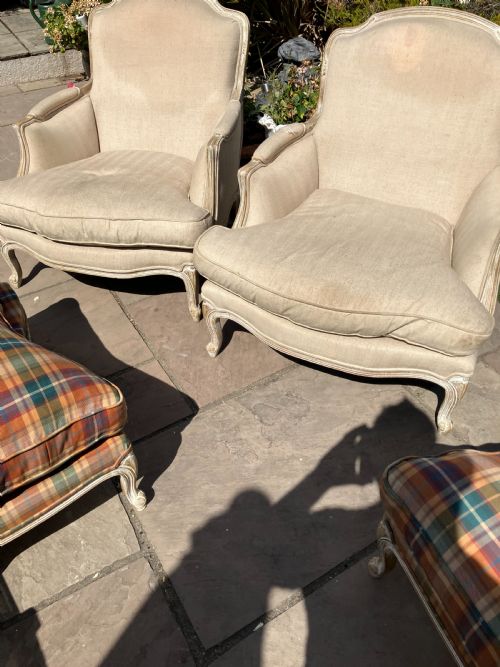
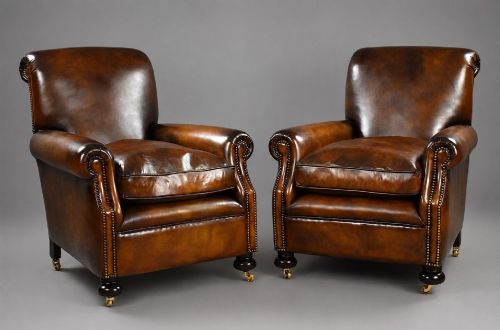
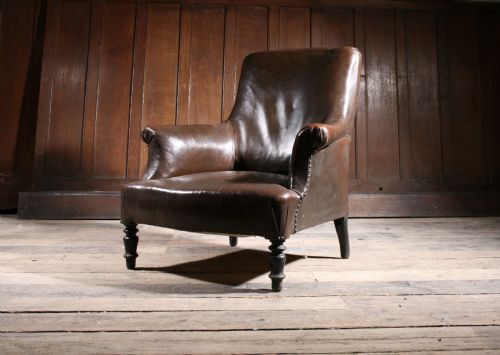
The selection on this page leans heavily toward twentieth century examples, particularly from the nineteen thirties, alongside nineteenth century pieces bearing Napoleon the Third or Louis styles. Armchairs dominate the offerings, though buyers also find matching pairs and occasional suite arrangements. Hardwood frames support deep cushions and generous armrests built for heavy daily use.
Materials and construction methods
Makers built the structural frames of these seats using robust hardwoods such as walnut and general timber, ensuring long term durability. Upholstery relies on traditional techniques involving springs, horsehair, and webbing beneath the outer layers. These internal supports create the signature resilience and depth associated with classic lounge seating.
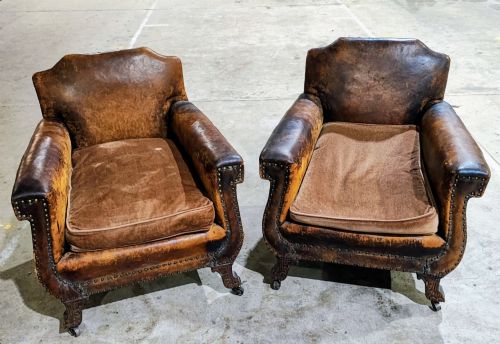
Leather serves as the defining exterior material for club chairs, often appearing alongside sheep's hide, velvet, fabric, hessian, and split cane panels. Brass detailing and exposed polished wood legs frequently finish the design. The combination of dense internal stuffing and thick hide gives each piece its substantial weight.
Materials recorded across the inventory include leather, walnut, brass, velvet, hardwood, timber, fabric, and split cane.
Distinguishing quality factors
Quality in these seats rests upon the integrity of the wooden frame and the preservation of the original materials. Pieces retaining their original leather develop a rich patina through decades of use, which separates them from heavily altered examples. The weight of the timber and the rigidity of the internal spring suspension indicate superior craftsmanship.
Stylistic execution also dictates the standing of a piece, with streamlined art deco geometry and crisp nineteenth century buttoning showing greater refinement. The balance between soft, supportive cushioning and firm structural support defines the highest grade of domestic seating. Proportion and symmetry in the arms and backrest complete the assessment of a superior build.
The Vintage French Club Chairs Glossary
- Club chair
- A deep, comfortable armchair designed for lounging, typically upholstered in thick leather. These seats originated in twentieth century clubs and smoking rooms.
- Bergere
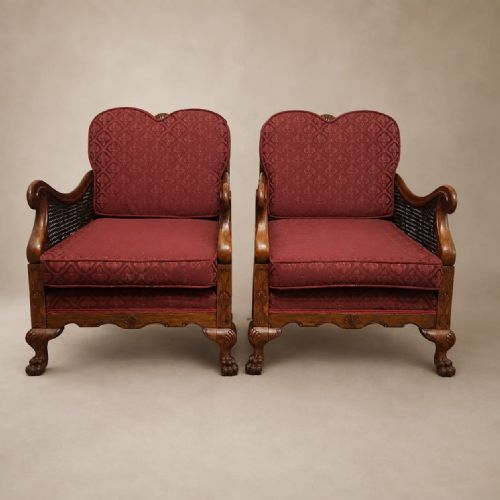
- An enclosed wooden armchair with upholstered back and sides, often featuring cane work panels. The wooden frame is frequently polished or painted.
- Napoleon III
- A nineteenth century decorative style characterised by eclectic revivals, deep buttoning, and ornate upholstery. Pieces from this period often employ curved backs and sprung seats.
- Art Deco
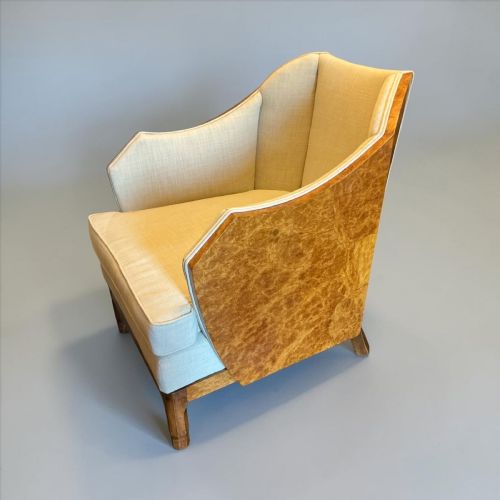
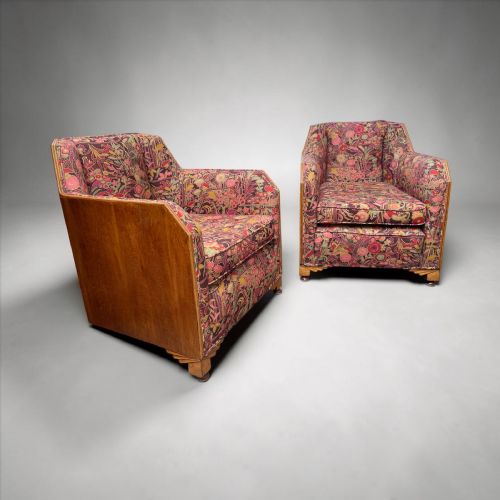
- A design movement from the early twentieth century emphasising streamlined geometric forms, smooth surfaces, and modern materials. Chairs from this era display clean architectural lines.
- Button-back
- An upholstery technique where buttons are pulled deep into the padding to create a padded diamond pattern. This method secures the internal filling while adding texture.
Vintage French Club Chairs: Frequently Asked Questions
How do I identify a nineteen thirties club chair?
Nineteen thirties pieces usually display the rounded, chunky silhouettes typical of art deco design, often paired with thick cigar brown leather.
They favour minimal exposed wood compared to earlier nineteenth century chairs, focusing instead on heavy, upholstered volumes and deep seats.
What is the difference between a club chair and a bergere?
Club chairs are fully upholstered in leather or fabric with thick, padded arms and a heavy enclosed shape.
Bergere chairs feature an exposed wooden frame, often made of walnut, with woven cane or upholstered side panels offering a lighter aesthetic.
Are these chairs suitable for daily use?
These pieces were built for heavy domestic use with robust hardwood frames and resilient internal springing systems.
Their deep proportions and supportive backs make them practical for everyday lounging in modern living spaces.
How do I care for vintage leather upholstery?
Vintage leather benefits from regular dusting and occasional conditioning to maintain suppleness and prevent the hide from drying out.
Keeping the leather away from direct heat sources and strong sunlight preserves the natural patina and colour over time.
What periods do these armchairs come from?
The listings span from the mid nineteenth century through the Edwardian era up to the mid twentieth century.
Common eras represented include the eighteen fifties, eighteen eighties, nineteen twenties, and nineteen thirties.