

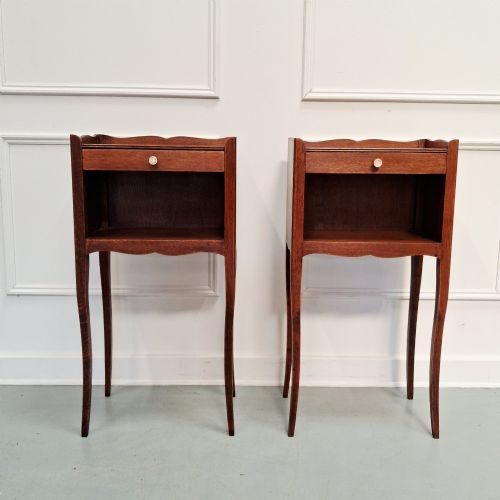
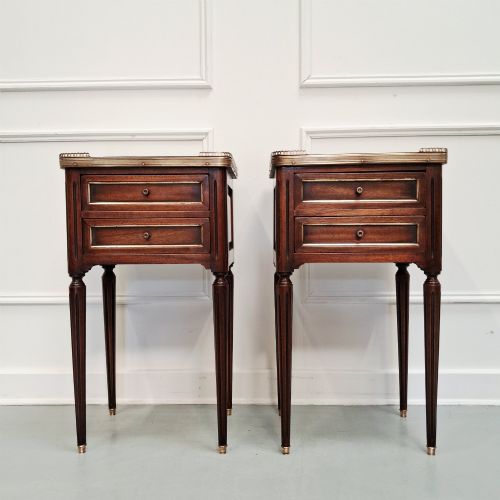
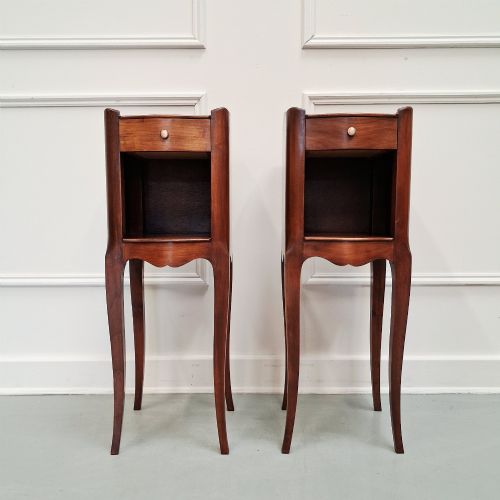
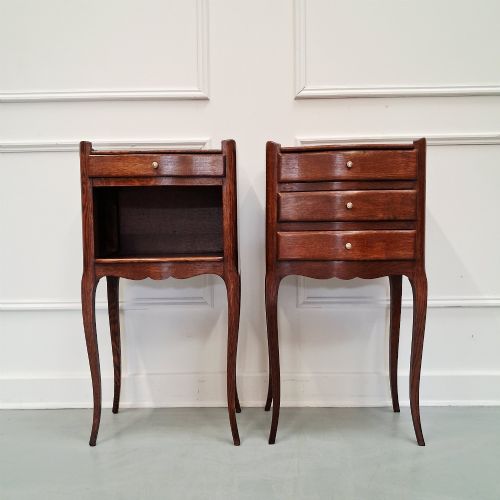
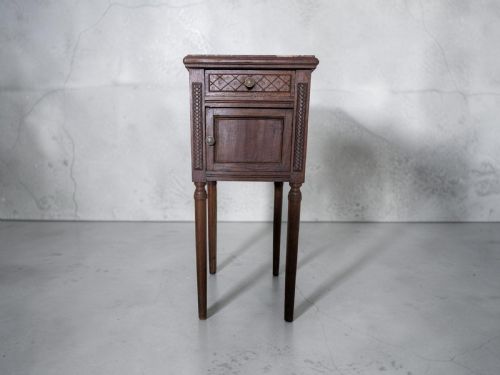

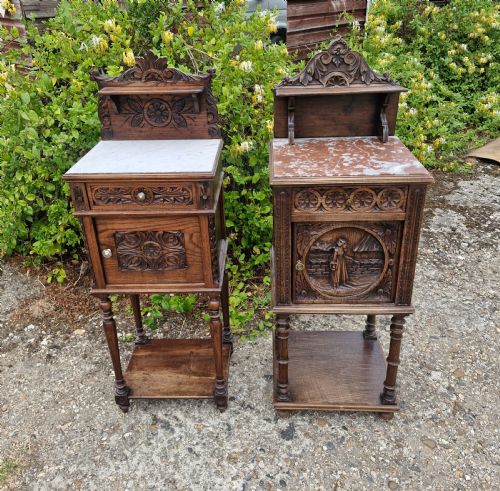
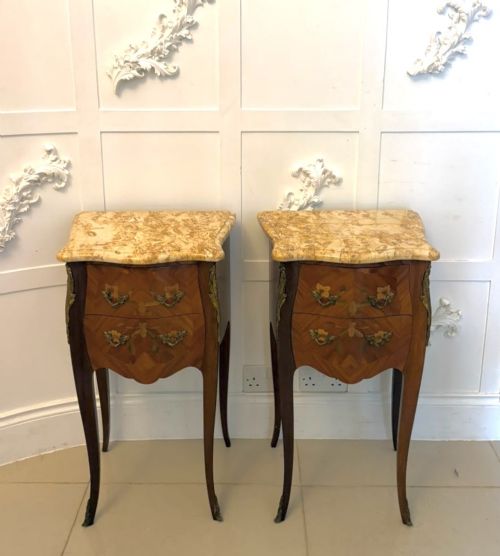
Vintage French Chevet
These vintage french chevet pieces are practical bedside cabinets and tables designed for compact continental sleeping quarters, bringing functional elegance to a bedroom.
Vintage French Chevet
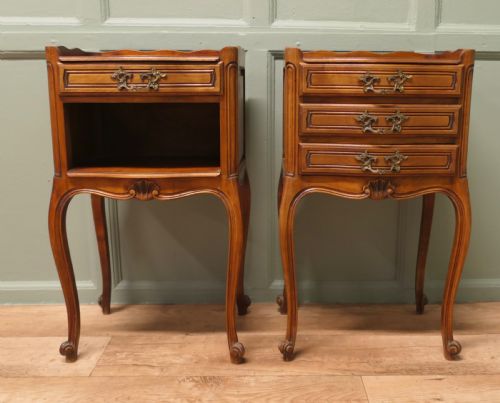
When searching for a vintage french chevet, you are looking at compact bedside furniture primarily configured as small cabinets, cupboards, or open tables. These pieces originated to sit beside the bed for nighttime storage and lighting.
The selections available here lean heavily toward early twentieth-century examples, alongside nineteenth-century productions. You will frequently encounter forms originating from the nineteen-twenties and nineteen-hundreds, alongside Victorian-era interpretations.
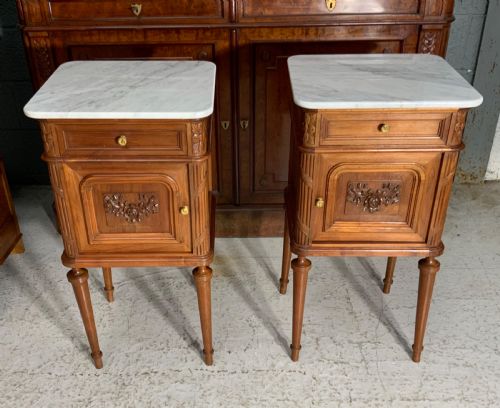
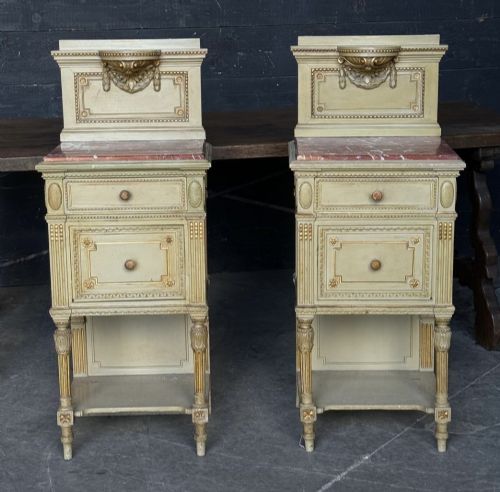
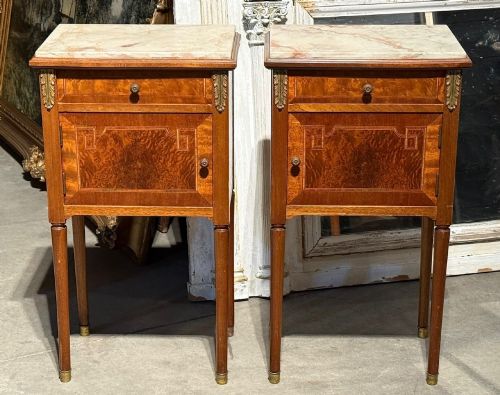
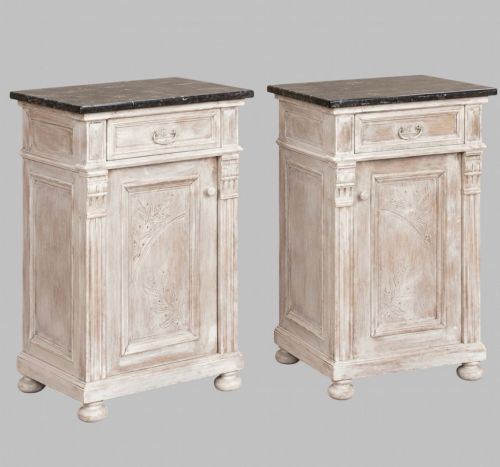
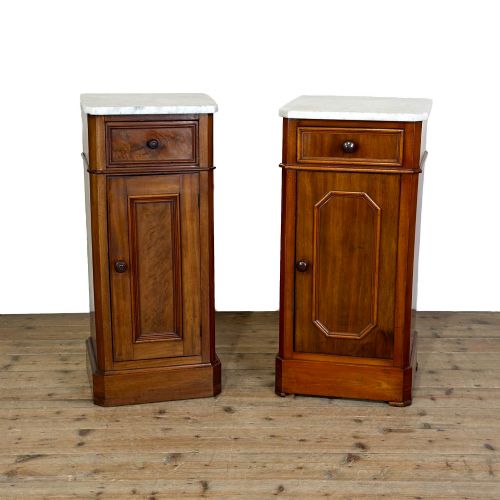
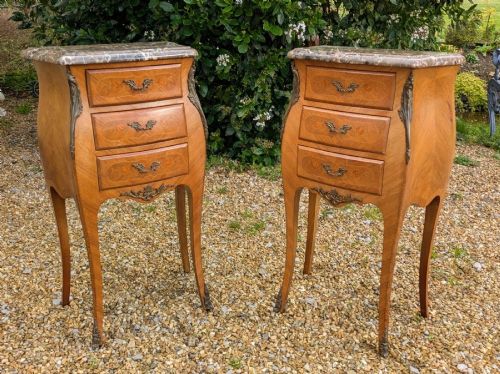
Common formats include enclosed bedside cabinets with single doors or drawers, alongside open bedside tables. Many examples appear in matched pairs, offering symmetry for twin bedside placement.
Materials and construction methods
Cabinet makers utilised a rich palette of hardwoods including walnut, mahogany, oak, cherry, kingwood, and occasionally painted finishes. These timbers formed the structural carcases and drawer boxes of the bedside units.
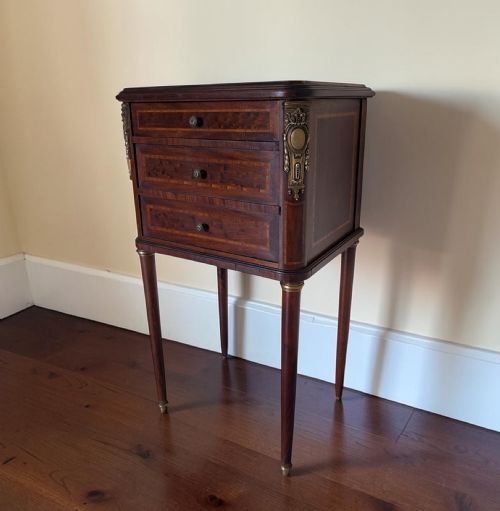
Surface decoration frequently incorporated intricate marquetry inlay patterns on top surfaces and doors. Tops were often fitted with slabs of marble, such as Belgian Sainte-Anne stone, providing a durable and decorative working surface.
Metal mounts in brass and ormolu were applied to corners, handles, and escutcheons to accent the structural lines. Tambour doors and candle shelves also appear on select functional variants.
Vintage French Chevet Retail Price Guide 2026
Typical asking prices for vintage french chevet among the pieces listed under this phrase on Sellingantiques today, from the lower quarter to the upper quarter. They describe what is for sale here now, not the wider market.
Design styles span from French provincial and chateau interpretations to Louis XV and Louis XVI revivals.
Evaluating craftsmanship and execution
The distinction between standard and superior pieces rests on the precision of the cabinet work and the selection of materials. High-end examples display meticulous marquetry details and substantial timber thicknesses.
The integration of fitted marble tops and cast ormolu mounts separates basic utility items from refined decorative pieces. Refinement shows in the fluidity of carved details on Louis XV style frames and the smooth operation of drawers.
The Vintage French Chevet Glossary
- Chevet
- A French term for a bedside table or cabinet. It typically denotes small-scale bedroom storage designed to sit adjacent to a bed.
- Marquetry
- The art of applying decorative pieces of veneer to a structure to form intricate designs. This technique frequently decorates the top and door panels of cabinets.
- Ormolu
- Gilt bronze mounts applied for decorative effect on furniture. These metallic details accent handles, feet, and corners.
- Tambour
- A sliding door made of narrow vertical strips of wood glued to a canvas backing. It allows access to enclosed compartments in tight spaces.
- Sainte-Anne
- A specific type of Belgian marble frequently utilised for decorative table tops. It provides a contrasting stony surface above wooden carcases.
Vintage French Chevet: Frequently Asked Questions
What is a french chevet used for?
These cabinets serve as bedside storage for nighttime essentials and personal items. They typically hold a bedside lamp and provide surface space within arm's reach of the mattress.
Enclosed cupboards and drawers keep smaller objects concealed, maintaining an uncluttered appearance in the bedroom.
How do I identify Louis XV style pieces?
Louis XV style furniture is characterised by curved lines, cabriole legs, and organic floral motifs. The forms avoid strict symmetry in favour of flowing, naturalistic shapes.
Carvings often echo Rococo influences with subtle asymmetry and shell or scroll details on the woodwork.
Are marble tops original to these cabinets?
Many period bedside cabinets were manufactured with fitted marble slabs to provide a durable, heat-resistant surface for water jugs and candle holders. These stone tops are generally integrated directly into the cabinet design.
Different types of marble, including dark Belgian varieties, were selected to complement the specific timber of the carcase.
How do I care for wood and marble surfaces?
Wood surfaces benefit from occasional polishing with appropriate wax to nourish the grain and protect the finish. Avoid placing damp items directly onto unsealed timber.
Marble tops require gentle cleaning with mild, non-acidic soap and water to prevent staining or etching the polished stone.