


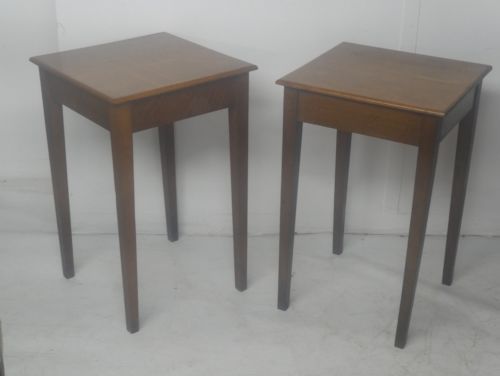


Pair of Oak Nightstands
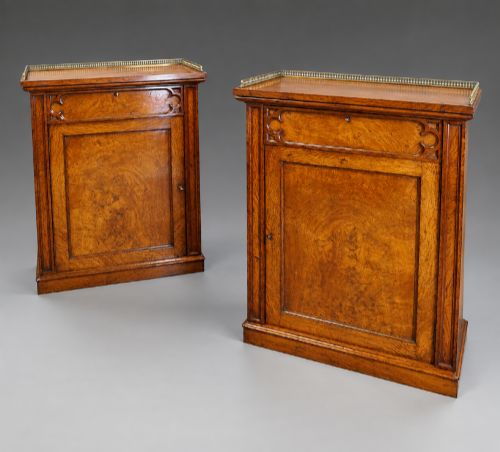
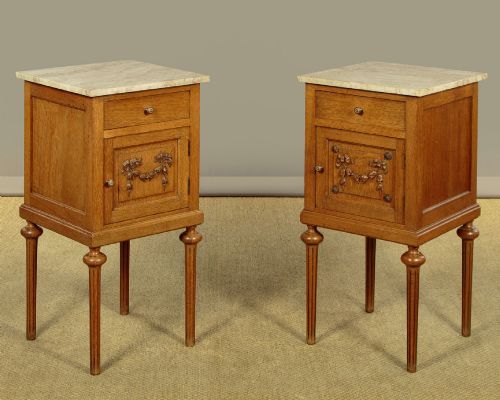
A pair of oak nightstands brings matched timber grain and bedside utility to a bedroom, ranging from French provincial cabinets to Gothic revival chests.
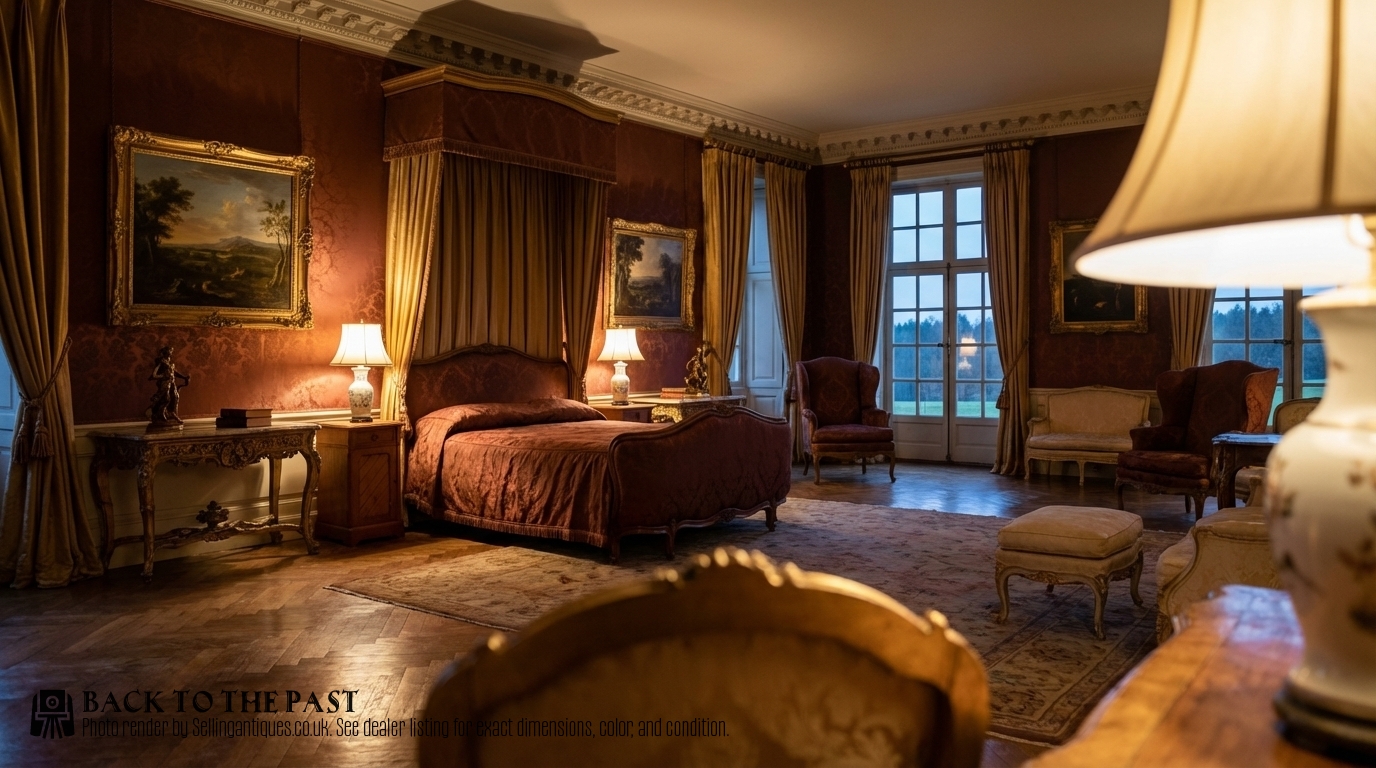
Pair of Oak Nightstands
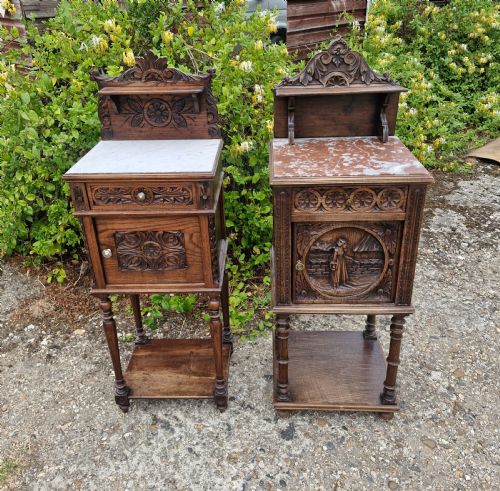
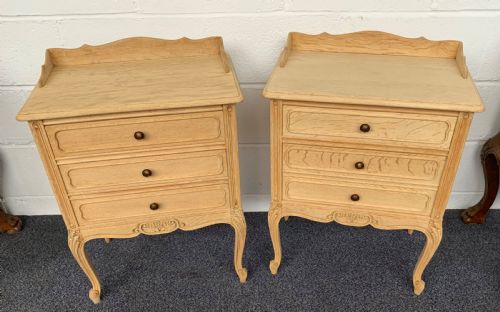
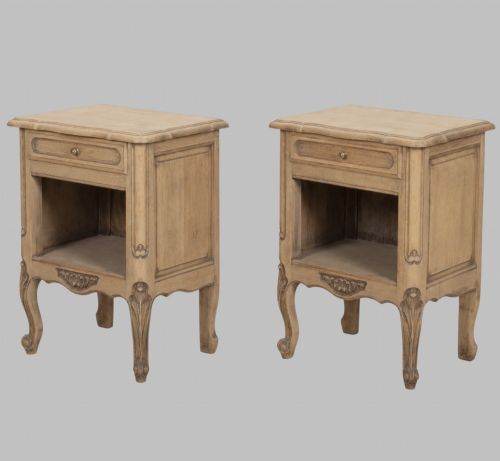
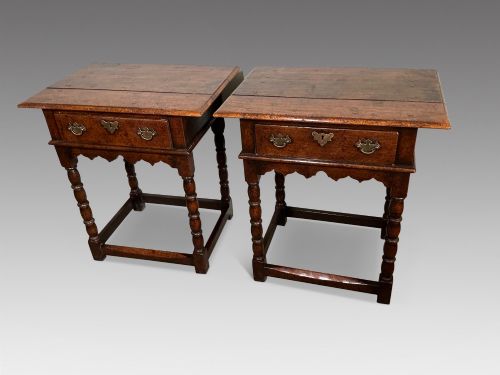
A pair of oak nightstands comprises matched bedside furniture designed to hold lamps and small items within reach of the bed. When searching for a pair of oak nightstands, buyers encounter forms spanning French provincial cabinets, Art Deco units, and Gothic revival chests from the Victorian era onwards.
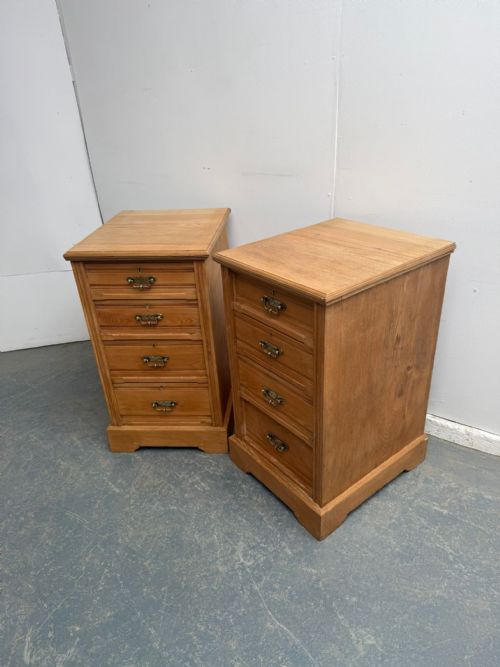
The selection on this page relies heavily on early twentieth-century examples, particularly from the 1900s through the 1930s, alongside nineteenth-century pieces. French designs emerge frequently alongside British and Scottish interpretations, often incorporating cupboards or drawers.
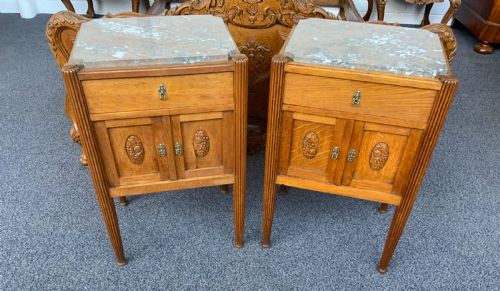
Most pieces function as bedside cabinets or tables, whilst occasional variants include marble tops or associated beds. The variety encompasses bleached finishes alongside waxed dark timber and occasional mixed media builds.
Materials and construction methods
Makers constructed these pieces primarily from solid oak and ash, frequently applying waxed or bleached surface treatments to alter the timber tone. Secondary woods like pine appear in internal or structural locations.
Details often include hand carving, brass hardware accents, and fitted marble slabs set into the top surface for durability. Joinery methods reflect the prevailing style of the period, from nineteenth-century Gothic revival joinery to streamlined Art Deco silhouettes.
Listings feature oak alongside brass, marble, walnut, ash, metal, and pine across various decades.
Distinctions in construction and design
Quality separates through the integrity of the timber selection and the crispness of any applied carving. Pieces featuring integrated marble tops or original brass fittings often indicate higher workshop standards than simpler utilitarian builds.
Proportion and matching also determine desirability, as pairs must display consistent grain patterns and uniform colour matching across both items. The execution of dovetail joints in drawers and the smooth operation of cabinet doors separate better workshops from standard production.
The Pair of Oak Nightstands Glossary
- Oak
- A durable hardwood known for its prominent grain pattern, used extensively across nineteenth and twentieth-century cabinet making.
- Bleached oak
- Timber treated with chemical agents to lighten its natural colour, a finish popular in French provincial and Art Deco pieces.
- Gothic revival
- A nineteenth-century design style drawing on medieval architectural motifs, featuring pointed arches, tracery, and heavy carved details.
- Art Deco
- A twentieth-century style characterised by geometric forms, streamlined symmetry, and minimal ornamentation.
- Marble top
- A stone slab fitted to the upper surface of a cabinet to provide a heat and liquid-resistant working area.
Pair of Oak Nightstands: Frequently Asked Questions
Are nightstands and bedside cabinets the same thing?
Nightstands generally refer to open tables or small stands, whereas bedside cabinets feature enclosed storage with doors or drawers.
Both terms apply interchangeably to these matched pairs depending on the specific regional terminology of the maker.
How do I identify French nightstands from British ones?
French nightstands frequently display characteristic provincial carving, bleached oak finishes, or inset marble tops designed for chamber utensils.
British examples tend to favour darker waxed oak, Arts and Crafts simplicity, or heavier Gothic revival detailing.
What periods do these nightstands come from?
The listings span from the late nineteenth century through the mid-twentieth century, with strong representation from the Edwardian era and the nineteen-twenties and thirties.
Victorian and Gothic revival pieces represent the earlier nineteenth-century output.
Do these pieces come as matched pairs?
Yes, all items listed under this search comprise verified pairs intended to flank a bed symmetrically.
They share identical materials, period styles, and dimensions as recorded in the individual descriptions.