
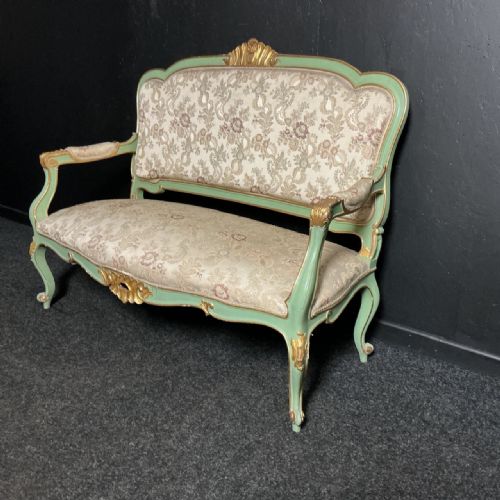


Vintage French Canape
These vintage french canape pieces bring nineteenth-century salon elegance and carved wood craftsmanship directly into a modern drawing room.
Vintage French Canape
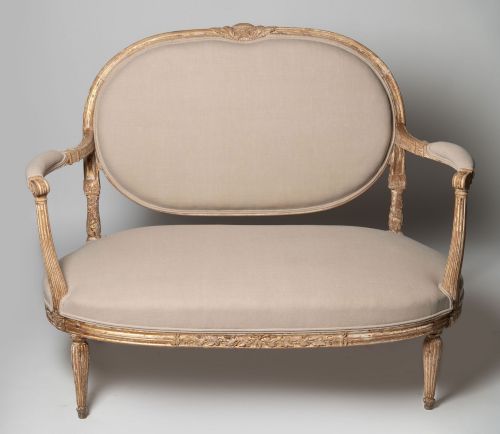
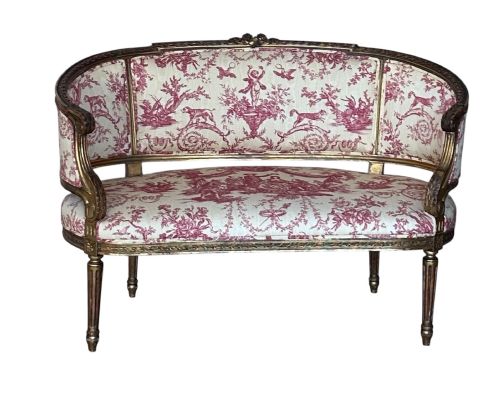
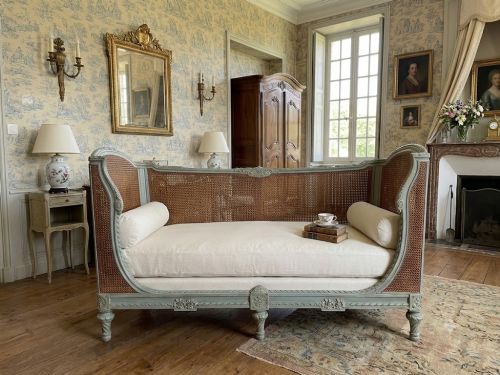
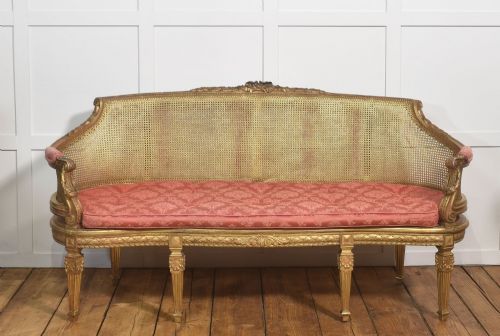
When you search for a vintage french canape, you are looking at nineteenth-century and early twentieth-century seating designed for formal salons and boudoirs. These pieces appear as two-seat or three-seat settees, often taking specific forms like the curved corbeille or the low daybed.
The versions you are most likely to meet on this page span the nineteenth century up through the nineteen-sixties, drawing heavily on Louis XV and Louis XVI revival styles. They function as both decorative furnishings and practical upholstered seating.
Makers and craftsmen built these settees to anchor a room, pairing them occasionally with matching armchairs to form complete salon suites. Their proportions range from intimate love seats to large carved couches.
Materials and construction
Frames rely primarily on solid hardwoods such as walnut, beech, fruitwood, and mahogany, carved by hand with floral and scroll motifs. Giltwood and painted finishes frequently cover these wooden structures.
Upholstery techniques involve traditional fabric, velvet, linen, and button-backed padding, while other examples utilise woven cane panels inset into the wooden frames.
Vintage French Canape Retail Price Guide 2026
Typical asking prices for vintage french canape among the pieces listed under this phrase on Sellingantiques today, from the lower quarter to the upper quarter. They describe what is for sale here now, not the wider market.
Available pieces span the nineteenth century through the nineteen-sixties in Louis XV and Louis XVI revival styles.
Quality differences
The depth and crispness of the hand-carving on the wooden frame separate standard production from finer cabinet work. Deep relief details in walnut or clean gilding on giltwood indicate superior craftsmanship.
The integrity of the structural joinery and the survival of original canework or early fabric layers determine the longevity and preservation state of each settee.
The Vintage French Canape Glossary
- Corbeille
- A basket-shaped piece of seating furniture with a rounded, enclosing back. This design wraps around the sitter for a more intimate seat.
- Giltwood
- Wood that has been coated with gold leaf or a gold-coloured finish. It creates a bright, reflective surface popular in formal nineteenth-century salons.
- Bergère
- An enclosed upholstered armchair or settee with wooden sides. It usually includes a loose seat cushion above a low rail.
- Louis XV Style
- A revival design aesthetic characterised by asymmetrical curves, cartouche motifs, and naturalistic floral carvings. It reflects the rococo taste of the mid-eighteenth century.
Vintage French Canape: Frequently Asked Questions
Where did they put a canapé?
Historically, people placed these settees in formal salons, withdrawing rooms, and grand bedrooms for social gathering and relaxation. They served as central statement pieces within a matching suite of chairs.
Today, they function equally well in contemporary living rooms, large hallways, or at the foot of a bedroom bed.
How do I clean cane panels?
Natural cane requires gentle dusting with a soft brush and occasional wiping with a damp cloth to maintain its moisture balance. Avoid harsh chemical cleaners that can dry out the plant fibres.
Keeping the room humidity stable prevents the woven cane from becoming brittle or sagging over time.
Are these settees comfortable?
Most pieces feature upholstered seats and supportive backrests designed for upright sitting during conversation. Period padding uses traditional materials rather than modern foam, offering a firmer sit.
Adding small cushions can adjust the depth to suit your personal preference for daily lounging.
How do I date a settee?
Dating relies on observing the stylistic markers, such as the sweeping curves of Louis XV revival work versus the straight, fluted legs of Louis XVI pieces. Wood patination and construction methods inside the frame also reveal the era of manufacture.
Many listings provide specific period references or approximate decade markers from the nineteenth and early twentieth centuries.