

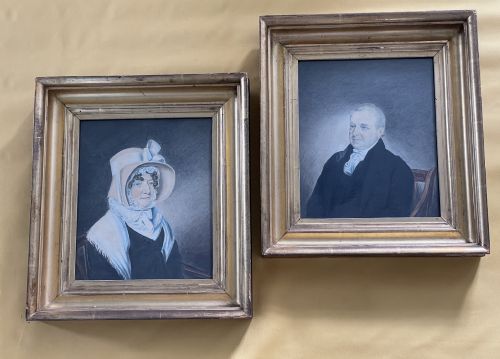
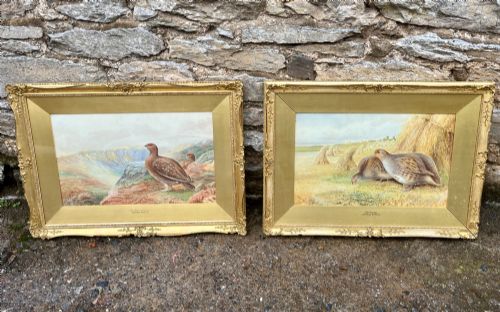


Vintage Framed Watercolour Pair
A vintage framed watercolour pair brings symmetry to a wall, offering matched views of landscapes, portraits or sporting scenes.
Vintage Framed Watercolour Pair
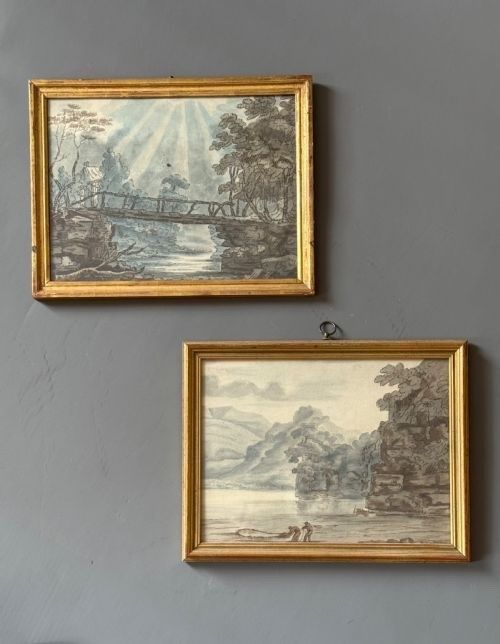
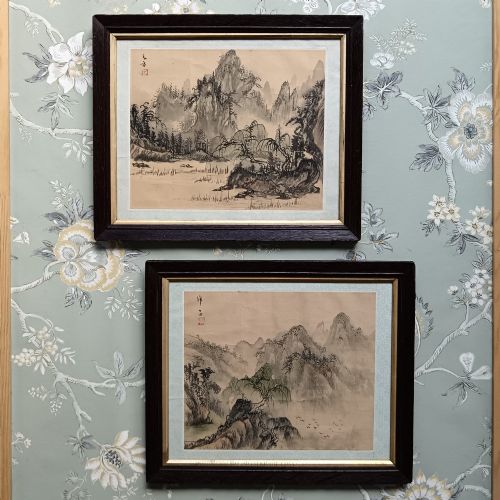
A vintage framed watercolour pair consists of two companion paintings executed on paper or silk and housed in matching surrounds. These pieces emerge from periods ranging from the Georgian era through the mid twentieth century, encompassing British, American, European and Asian origins.
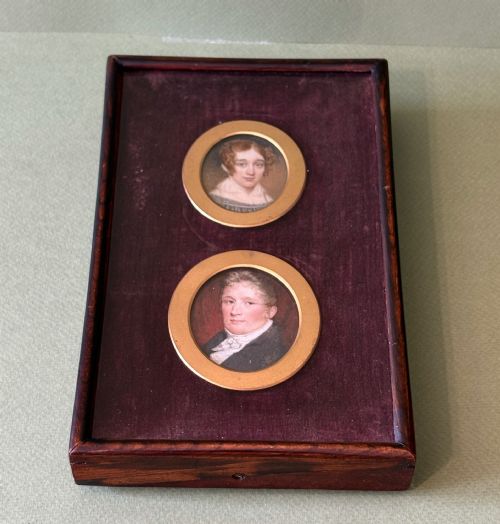
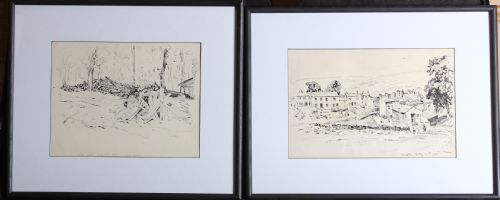
Buyers encounter landscape watercolours, portrait studies of children and animals, and coastal scenes designed to hang together as a unified display. The subjects share a common hand, palette or theme, intended to balance a room when mounted side by side or stacked vertically.
Materials and Construction
Artists painted these works using watercolour pigments, gouache or ink applied directly to paper or silk sheets. Wood frames, often finished with gilt leaf or ebonised surfaces, protect the paintings alongside glass panes that shield the delicate pigments from moisture and light.
The mounting process typically includes backing boards and paper tape to secure the work within the frame rebate. Original frames frequently display period joinery and hand-carved or moulded details that correspond to the date of the artwork.
Vintage Framed Watercolour Pair Retail Price Guide 2026
Typical asking prices for vintage framed watercolour pair among the pieces listed under this phrase on Sellingantiques today, from the lower quarter to the upper quarter. They describe what is for sale here now, not the wider market.
Materials documented across the selection include silk, watercolour pigment, gold leaf, glass, paper and gilt wood.
Distinctions in Quality
Quality rests upon the execution of the brushwork and the clarity of the composition, where confident lines and controlled washes separate skilled hands from amateur efforts. The preservation of the paper supports and the vibrancy of the watercolour pigment dictate the visual impact of the pair.
The integrity of the framing contributes significantly to the overall standard, with original matching wood and gilt surrounds holding greater historical weight than later replacements. Balanced proportion between the two images ensures that neither piece overpowers its companion on the wall.
Fred Lawson·George Rankin·F.J. Snell·Alfred George Morgan·Ernest Uden·George Whyatt·Sidney James Beer·Nora Cundell·John Sanderson Wells·AJ Thornton·Karl Feiertag·Arthur Alfred Davis·Leon Girardet·WD Scull·M.K Rhodes·Frank Dadd·Gordon Meadows·T Fairfax
The Vintage Framed Watercolour Pair Glossary
- Watercolour
- A painting method where fine pigment is suspended in a water-based solution and applied to paper. This technique allows for transparent washes and delicate colour blending.
- Diptych
- A work of art divided into two distinct panels or sections designed to be displayed together. In painting, this format creates a dialogue between the two matched images.
- Gouache
- An opaque water-based paint that includes a white pigment filler, producing a heavier and more solid finish than traditional watercolour. Artists often use it to add highlights.
- Ebonised
- Wood treated with a chemical stain or finish to imitate the dark, dense appearance of ebony. This treatment appears frequently on nineteenth and early twentieth century frames.
- Provenance
- The documented history of ownership or origin surrounding a work of art. Clear attribution to a known hand adds context to the piece.
Vintage Framed Watercolour Pair: Frequently Asked Questions
How should I hang a vintage watercolour pair?
Hang the two pieces at eye level with a consistent gap between them to maintain visual balance. Matching frames allow you to place them either side by side on a wide wall or stacked vertically in a narrower space.
Keep them away from direct sunlight to prevent the watercolour pigments and paper supports from fading over time. Stable indoor humidity protects both the wood frames and the paper inside.
Are these paintings original works?
The listings on this page comprise original hand-painted art rather than modern mass-produced prints. Each piece displays the unique brushstrokes and paper texture characteristic of individual creation.
Signatures, monograms or initial marks appear on many of the pieces, pointing to the specific artist or regional school responsible for the execution.
Do the frames belong to the paintings originally?
Many examples retain their original period frames, which show appropriate wear and construction methods matching the date of the artwork. Silk paintings and Victorian works often rely heavily on their original surrounds for structural integrity.
Minor variations in frame wear simply reflect the age of the materials used. Original glass and backing papers also offer clues to the history of the pairing.
What subjects are most common?
Landscapes and rural scenes form a large portion of the available selection, capturing moorlands, coastal views and town streets. Animal studies, sporting scenes and portraiture of children or figures also appear frequently.
Pairs often depict complementary moments, such as changing weather conditions or different views of the same geographic area.