
Traditional Country Art Pictures
Traditional country art pictures capture rural life, farming scenes and animal portraits across the nineteenth and twentieth centuries.
Traditional Country Art Pictures
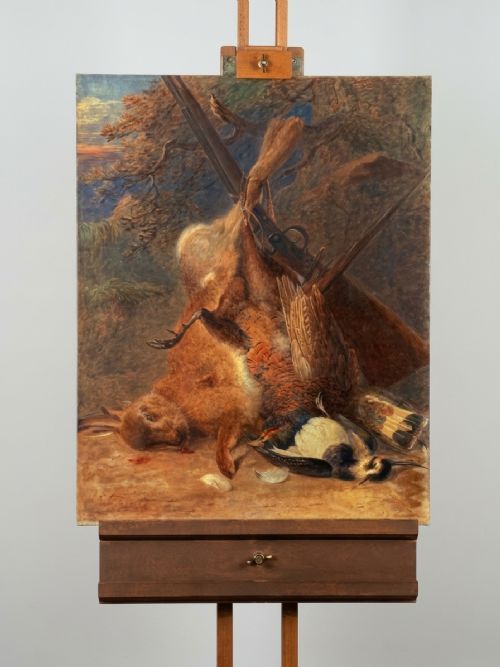
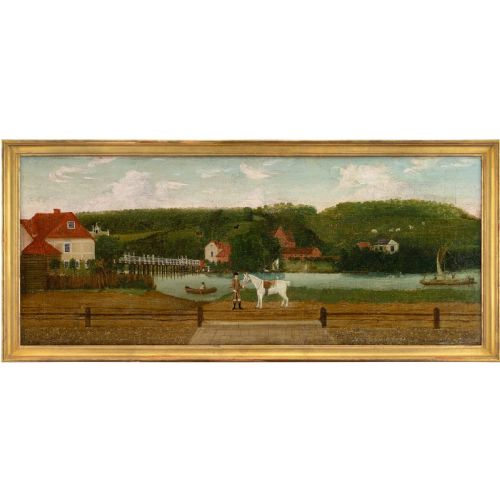
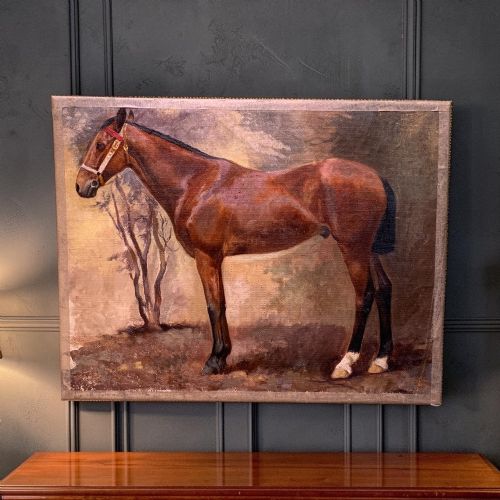
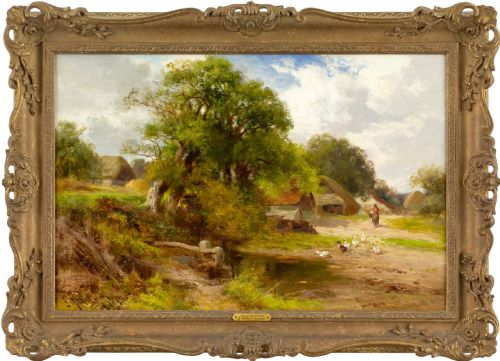
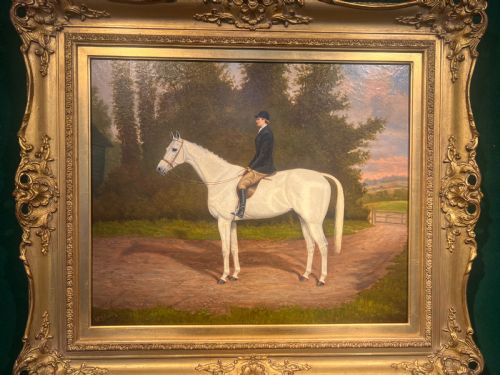
Traditional country art pictures encompass framed oil paintings, watercolours, lithographs and engravings depicting rural scenes, farm animals, horses and field sports. These works record the British countryside through various periods ranging from the Victorian era to the mid-twentieth century.
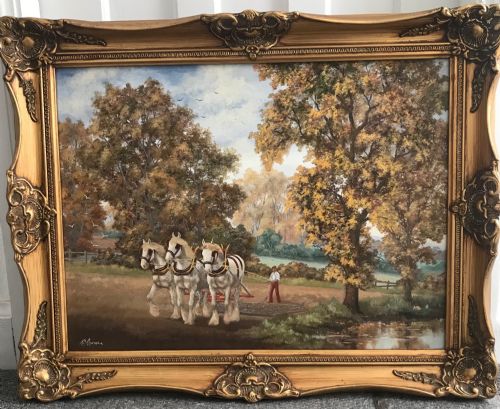
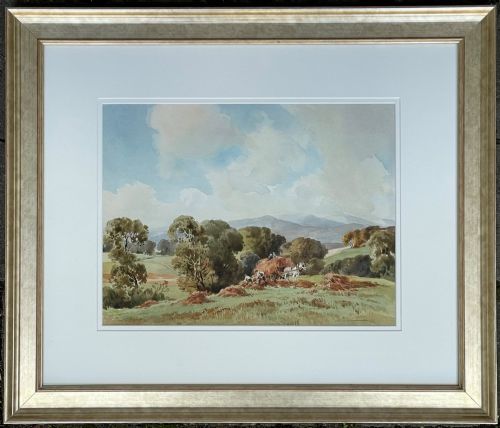
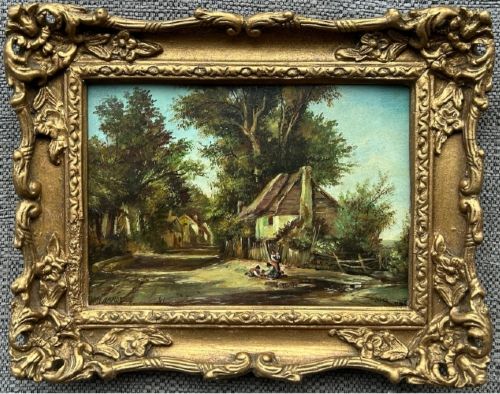
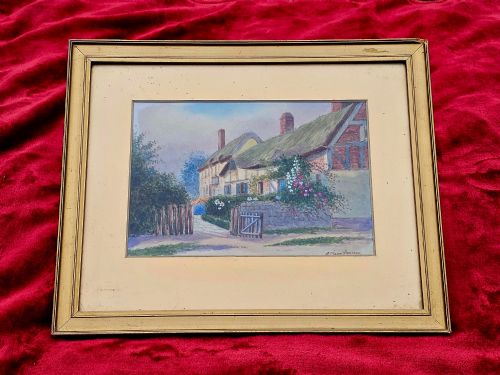
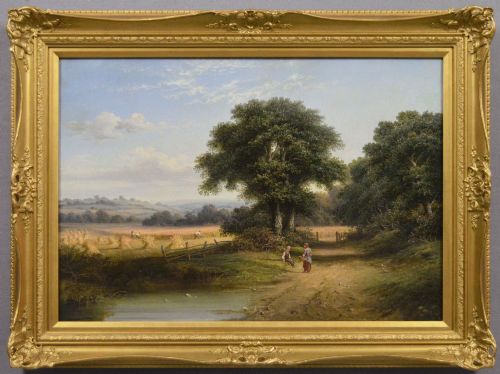
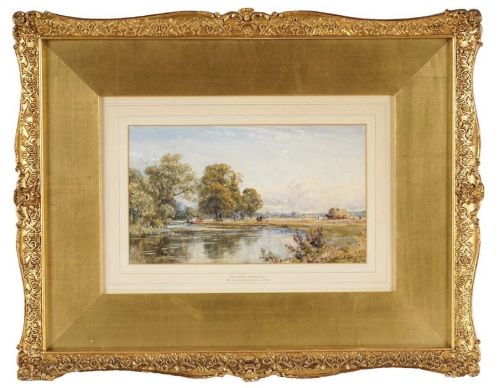
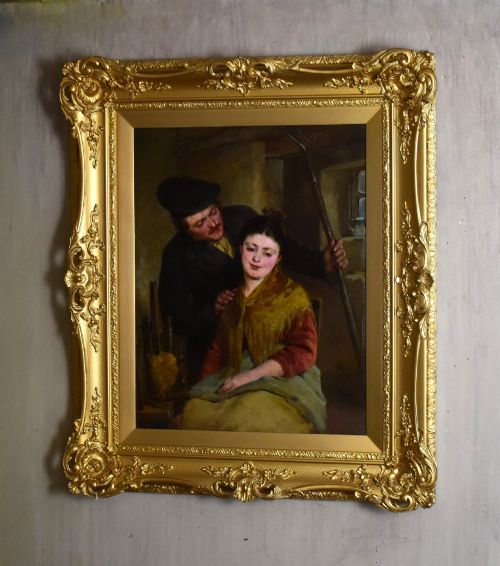
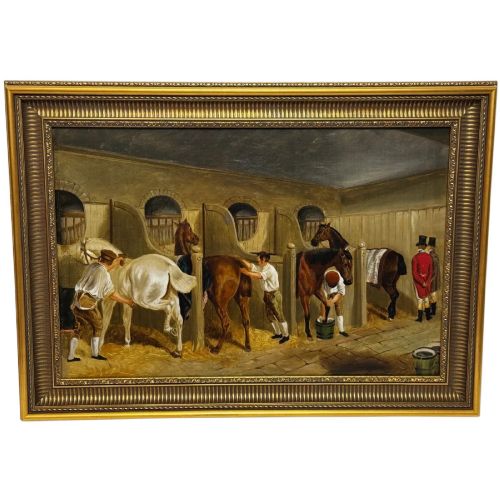
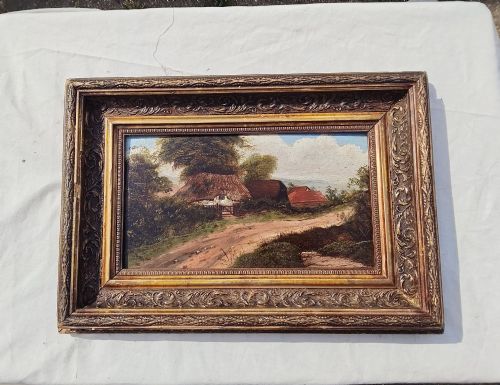
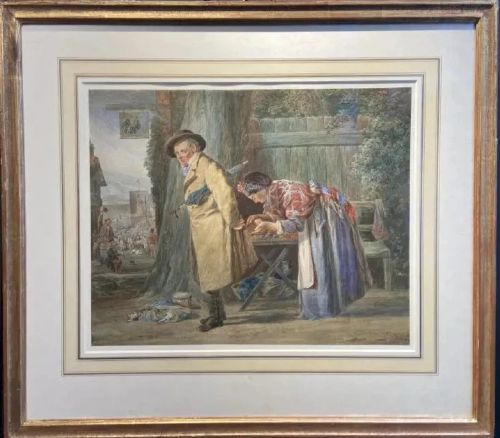
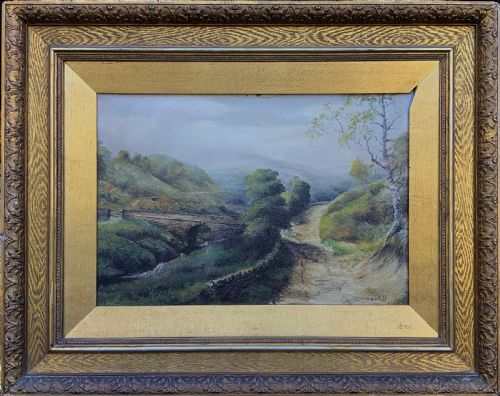
Buyers will find numerous oil on canvas and oil on panel works showing working horses, cattle, sheep and domestic dogs alongside pastoral landscapes and thatched cottages. Watercolours and hand-coloured prints offer lighter depictions of rivers, harvest fields and hunting scenes.
The selection reflects both named artists of the British and European schools and unsigned works attributed to regional painters. Subjects span agricultural livestock, equestrian portraits, genre scenes and traditional West Country views.
How they were made
Artists painted primarily with oil on canvas, wood panel, board or card, building depth through layered pigments and visible brushwork. Watercolours on paper provide a more fluid, translucent medium for pastoral landscapes.
Many works incorporate traditional framing using gilt wood, gesso and glass to protect the paper or canvas surfaces. Lithographs and engravings utilise printed lines finished with hand-applied colour.
Listings feature oil paintings, watercolours, lithographs and engravings across the Victorian, Edwardian and mid-twentieth-century periods.
What varies in quality
Quality rests upon the artist's ability to render anatomy, light and texture convincingly within the subject matter. Fine animal and landscape paintings demonstrate precise handling of hair, foliage and atmospheric weather.
The standard of the original framing, particularly moulded giltwood and gesso frames, contributes to the overall presence of the artwork. Signed works by recognised painters carry distinct artistic merit compared to anonymous school pieces.
Percy Lancaster·William Howard Hardy·A Marie Parsons·Walter Heath Williams·Robert Thorne Waite·Howard Helmick·John Horace Hooper·Joseph H Barnes·William Albert Clarke·Henry Yeen King·T C Hofland·John Frederick Herring Snr·Henry Schouten·George Morland·Claude Cardon·Sydney Yates Johnson·A M Gauci·Hubert Wellington·Charles Walter Simpson·John Arthur Lomax·Robert Little·Thomas Sidney Cooper·John Frederick Herring Jnr
The Traditional Country Art Pictures Glossary
- Oil on canvas
- Pigment mixed with drying oil applied to a stretched woven fabric support. This surface allows for rich colour blending and textured impasto application.
- Watercolour
- Paint consisting of colour suspended in a water-soluble binder applied to paper. It yields transparent washes and delicate tonal gradations.
- Lithograph
- A print made from a design drawn on limestone or a metal plate with a greasy crayon. Ink adheres to the greasy areas to produce the image.
- Gesso
- A paint mixture consisting of a neutral binder mixed with chalk, gypsum or pigment. It prepares wood or canvas surfaces and forms raised decorative details on frames.
- Genre painting
- Artwork depicting scenes from everyday life, ordinary people and domestic settings. These works often show farm workers or cottage interiors.
Traditional Country Art Pictures: Frequently Asked Questions
What subjects appear in traditional country art pictures?
These works feature farm animals, horses, hunting scenes, rivers and rural cottages. Common motifs include shire horses, cattle, sheep and domestic dogs.
Scenes range from working agricultural fields to quiet pastoral landscapes and domestic animal portraits.
Which periods do these artworks date from?
The pieces span from the late eighteenth century through the Victorian and Edwardian eras into the mid-twentieth century. Many examples date specifically from the nineteenth century and the early 1900s.
Styles reflect nineteenth-century realism, Victorian sporting art and British impressionism.
What mediums were used for these rural scenes?
Artists worked in oil on canvas, wood panel, board and card. Watercolours on paper and various print mediums like lithographs and engravings also appear frequently.
Many pieces retain their original gilt wood and gesso frames.
How can I identify different artistic schools?
Signatures, inscriptions and style provide clues to the artist and region. Works often carry labels or attributions to the British School or continental European painters.
Subject matter can also indicate regional preferences, such as West Country views or Belgian pastoral scenes.