

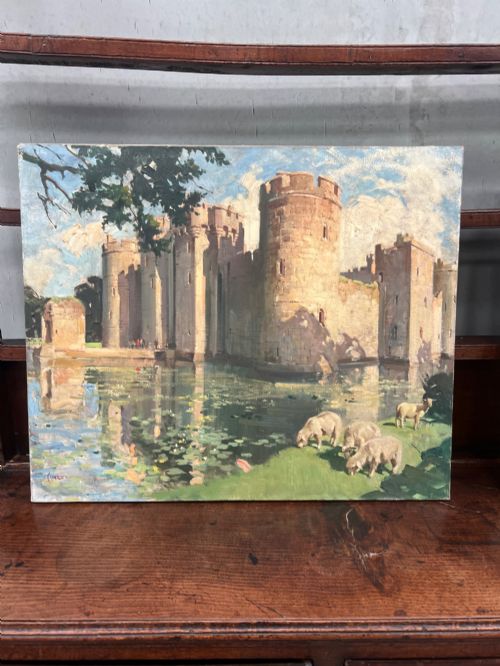
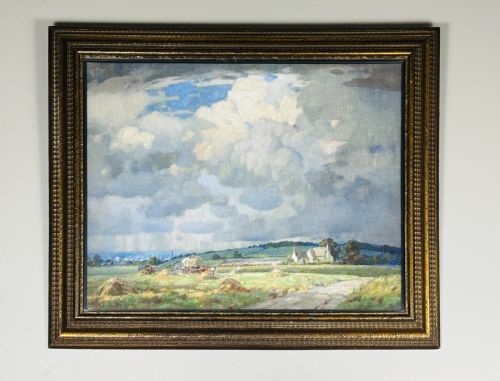
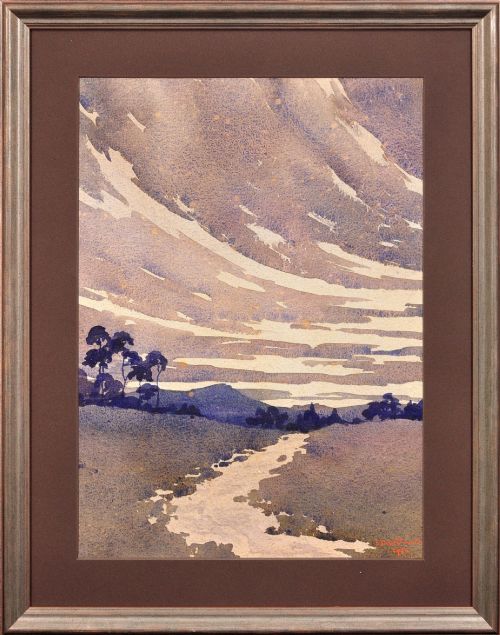
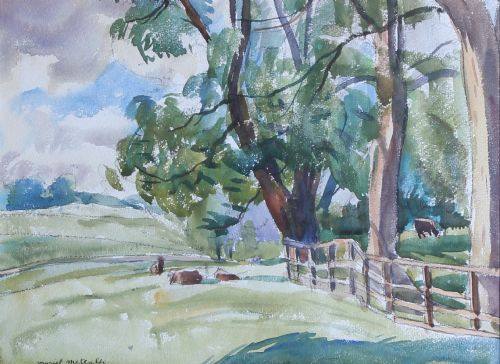
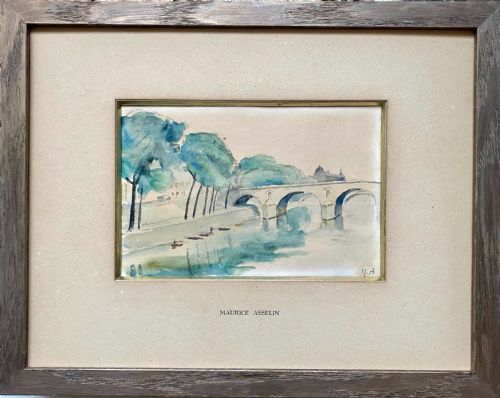
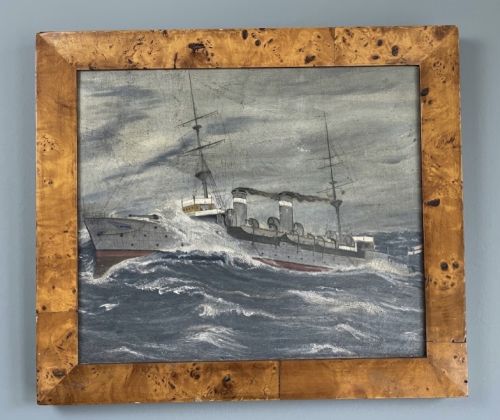
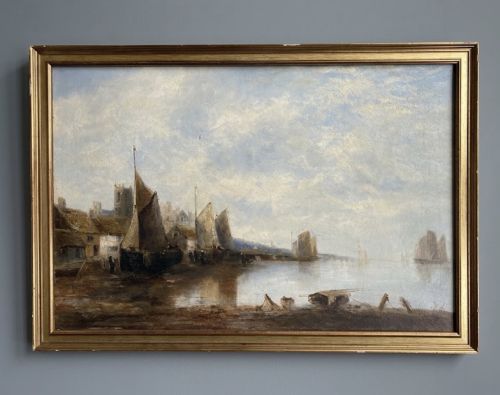
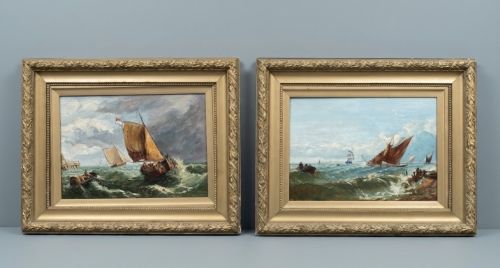
Vintage Framed Landscape Art
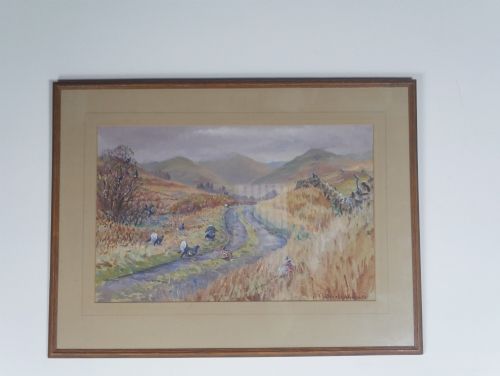
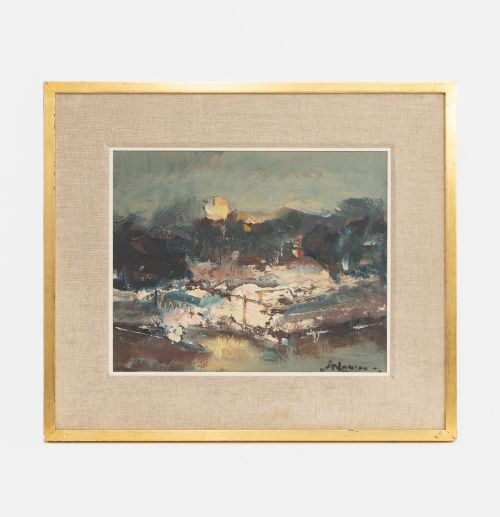
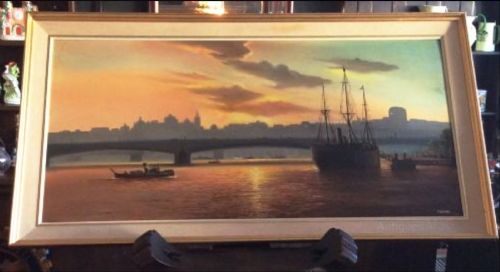
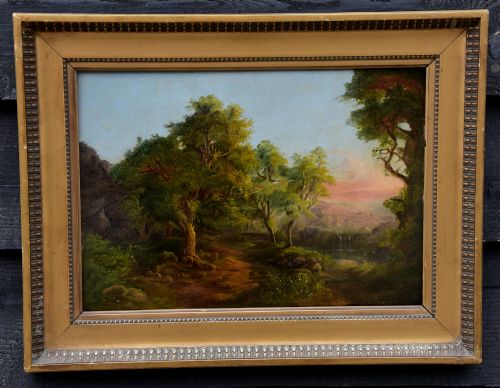
Vintage framed landscape art brings scenes of rivers, woodlands and coastlines into rooms through oil paintings, watercolours and drawings.
Vintage Framed Landscape Art
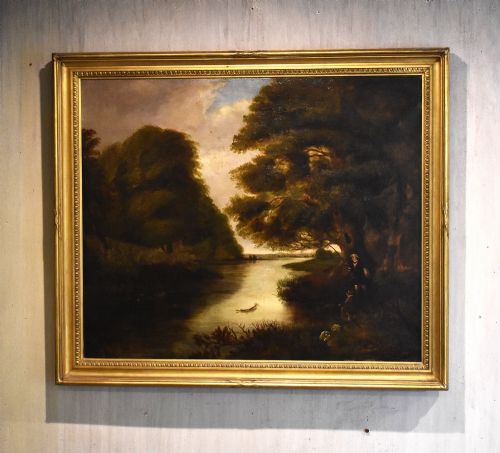
Vintage framed landscape art encompasses works created across the nineteenth and twentieth centuries, spanning periods from Victorian and Edwardian times through to mid-century modern movements. These pieces capture natural and rural views, coastal scenes and marine vistas in various media.
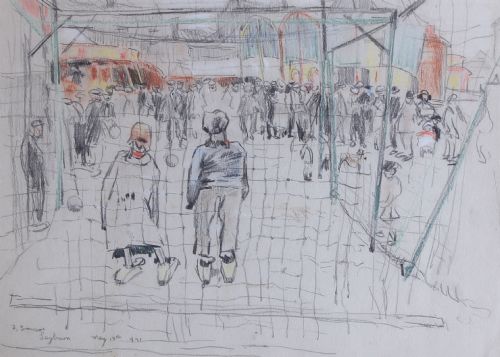
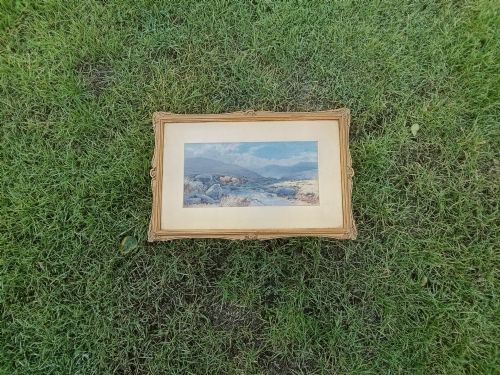
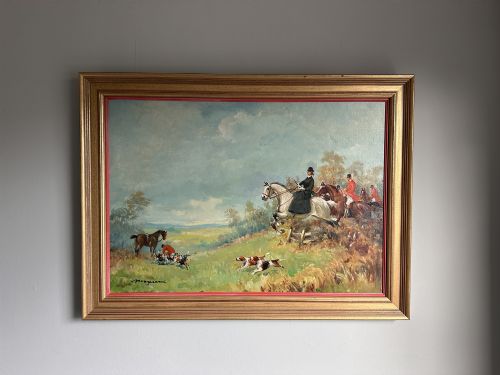
The selections available here lean heavily toward original oil paintings on canvas or board, alongside watercolours and drawings on paper. Makers work within traditional British and European landscape idioms, employing styles that range from impressionism to realism.
Framed presentation is integral to these works, utilising wooden and gilt frames that enclose the canvas or paper support. Buyers encounter everything from intimate watercolours to large-scale oil paintings depicting woodlands, pastures and harbours.
Materials and construction methods
Artists apply oil paint or watercolour to supports of canvas, wood board or paper, utilising brushes and occasionally en plein air techniques to capture light and atmosphere outdoors. Canvases are stretched over wooden frames, while watercolours and drawings are mounted behind protective glass.
Frames are constructed from wood, frequently embellished with gilt or finished in plain wood tones to complement the artwork. These housings protect the perimeter of the canvas or paper while providing structural rigidity for wall hanging.
Vintage Framed Landscape Art Retail Price Guide 2026
Typical asking prices for vintage framed landscape art among the pieces listed under this phrase on Sellingantiques today, from the lower quarter to the upper quarter. They describe what is for sale here now, not the wider market.
Listings feature works spanning the nineteenth and twentieth centuries, using oil paint, watercolour, canvas, wood and gilt.
Factors that determine quality
Quality rests upon the artist's ability to handle perspective, light and colour harmoniously across the canvas or paper surface. Stronger works demonstrate confident brushwork and a clear sense of atmosphere, whereas weaker examples lack depth in composition.
The condition of both the artwork and its original frame dictates overall merit. Intact paint layers free from heavy craquelure, combined with period-appropriate wooden and gilt frames that complement the painting, elevate the piece.
Henry Percy Huggill·William H Myers·George Graham·Donald Grant·Clifford Hanney·Frederick Marriott·Reginald Arthur Borstel·A Marie Parsons·William Joseph Shayer Senior·Alfred Fontville de Breanski Jr·Sidney A Court·EJ Letheren·B Nash·Edward Mills·Robert Leslie Howey·Kershaw Schofield·George Houston·John E Aitken·William Banks Fortescue·Thomas W Lascelles·William Joseph Boyes·James Kay·Augusto Alberici·Gabriel Mathieu·Arthur Gué
The Vintage Framed Landscape Art Glossary
- Oil on canvas
- Pigment suspended in drying oil applied to a woven fabric surface stretched over a wooden frame. This medium allows for rich texture and blending.
- Watercolour
- Paint made with water-soluble pigments applied to paper, producing luminous, transparent washes of colour. It requires a protective glass layer when framed.
- Gilt wood
- Wood coated with a thin layer of gold leaf or metallic paint. It frames many traditional paintings to catch and reflect light.
- En plein air
- The act of painting outdoors to capture direct observation of light and weather. Artists working this way finish their pieces on location.
Vintage Framed Landscape Art: Frequently Asked Questions
How do I hang a heavy oil painting safely?
Heavy oil paintings require sturdy fixings screwed directly into wall studs or solid masonry using appropriate wall plugs. Picture wire must be checked for strength before hanging.
Ensure the frame moulding is deep enough to secure any hanging hardware safely without splitting the wooden structure.
How can I date a framed landscape?
Dating relies on stylistic clues within the painting, the construction of the wooden stretcher bars, and the materials used in the frame. Victorian and Edwardian works often feature handwritten inscriptions or artist signatures on the reverse.
Frame construction methods and backing boards also provide chronological markers for when the piece was assembled.
Where should I place landscape art in my home?
Landscapes suit living rooms, hallways and studies, ideally positioned away from direct sunlight and damp areas. Good ambient lighting enhances the colours and brushwork without causing glare on the canvas.
Matching the scale of the frame to the wall space ensures the artwork commands the room properly.