


Vintage Fox Hunting Artwork
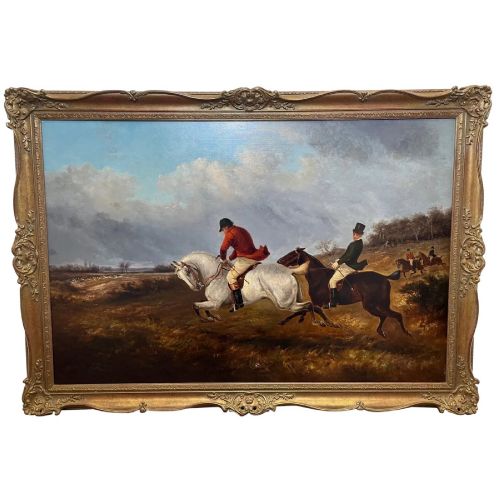
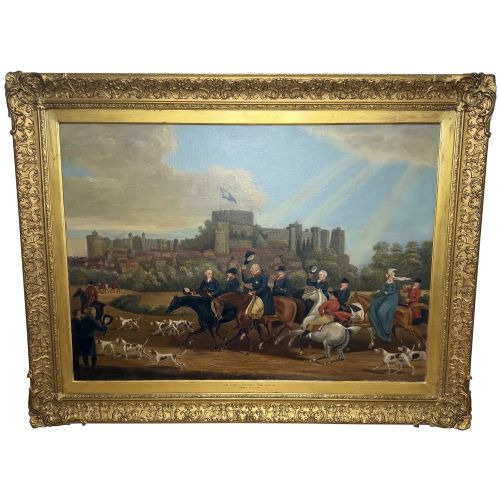
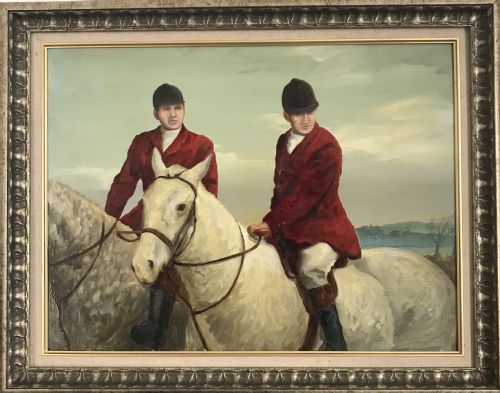
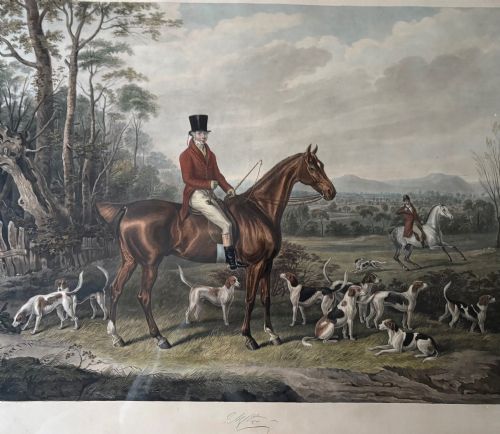
Vintage fox hunting artwork captures the movement and tradition of equestrian field sports through oil paintings, watercolours and prints.
Vintage Fox Hunting Artwork
Vintage fox hunting artwork encompasses framed oil paintings, watercolours, pencil drawings and hand-coloured engravings depicting hounds, huntsmen and horses in full pursuit. Buyers seeking these pieces encounter traditional British sporting art ranging from Victorian canvases to mid-twentieth-century prints.
The selections on this page lean heavily towards equestrian scenes, featuring specific hunts like the Quorn and Belvoir alongside individual portraits of hunters and hounds. Works appear in various formats, from solitary framed watercolours to sets of prints and sequences.
Originating predominantly from British and European hands, these depictions record the social rituals and landscape of the hunt. They serve as historical records of equestrian culture and traditional field sports.
Distinctions in quality
Quality in these works rests upon the artist's ability to render the anatomy and musculature of horses and hounds in motion. Superior pieces convey the dynamic tension of a hunt through confident brushwork or precise line work, whereas lesser examples stiffly mimic standard sporting tropes.
The preservation of the medium dictates desirability, with original watercolours and oils commanding greater attention than mass-produced reproductions. Signed pieces by established sporting artists hold distinct advantages over unsigned works.
Several hounds pictured across these historic canvases likely consumed better dinners than the artists who painted them.
Thomas Smythe·Basil Nightingale·Philip Henry Rideout·Michael Lyne·John Sanderson Wells·Charles Johnson Payne Snaffles·Guillaume Urban Régamey·William J Hodgson·Geoffrey Mortimer·Frank Algernon Stewart
The Vintage Fox Hunting Artwork Glossary
- Aquatint
- A printmaking technique that produces tonal areas resembling watercolour washes. It was frequently used in tandem with etching to create sporting prints.
- Chromolithograph
- A colour lithographic print produced from multiple stones. This method allowed publishers to replicate the vibrant hues of original watercolours.
- Full Cry
- A hunting term describing the moment hounds bay collectively upon scenting the quarry. Artists used this phase to depict maximum movement and energy.
- Signet Ring
- A finger ring bearing a carved or raised seal. Such jewellery occasionally accompanies historic sporting documents and ephemera.
- Gilt Wood
- Timber treated with gold leaf or metallic paint to create a gilded frame finish. It is common on formal Victorian and Edwardian picture frames.
Vintage Fox Hunting Artwork: Frequently Asked Questions
How do I date an old hunting painting?
Dating relies upon examining the canvas, framing materials, clothing styles of the figures, and any artist signatures or dates inscribed on the work.
Comparative study of period sporting art helps narrow the decade of creation.
What is the difference between an original painting and a print?
Original paintings feature unique brushwork and wet media applied directly to canvas, wood or paper by the artist's hand.
Prints are mechanically or manually reproduced from an original plate and exist in multiple impressions.
Where should I hang hunting artwork?
These traditional pieces suit libraries, studies, dining rooms or hallways, particularly alongside timber panelling or neutral walls.
Direct sunlight should be avoided to protect watercolours and paper from fading over time.
Who was Snaffles?
Snaffles was the professional pseudonym of Charles Johnson Payne, a celebrated twentieth-century British sporting artist known for his humorous and accurate hunting watercolours and prints.
His works frequently incorporate signatures, remarks and military or equine themes.