




Vintage Folk Trunk
These vintage folk trunk examples bring regional character and painted surfaces into a room, offering practical storage with vernacular charm.
Vintage Folk Trunk
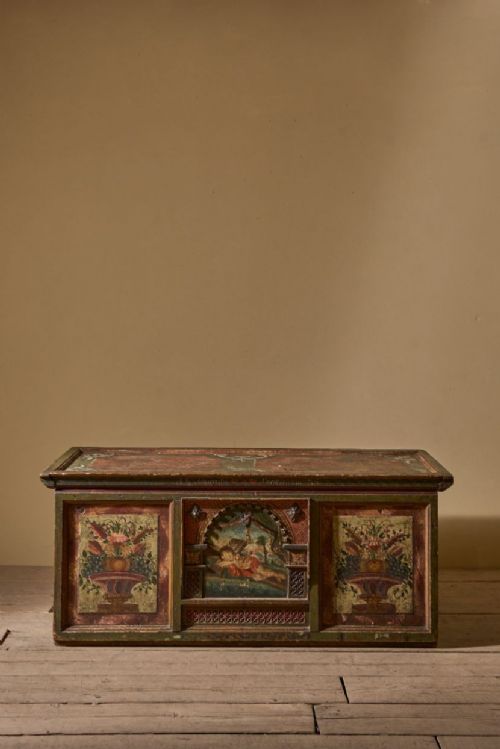
A vintage folk trunk encompasses painted pine chests, dome top coffers, and small storage boxes originating from the eighteenth, nineteenth, and early twentieth centuries. These containers were made for domestic storage, marriage dowries, and travel, spanning Scandinavian, Hungarian, Welsh, and Romanian workshops.
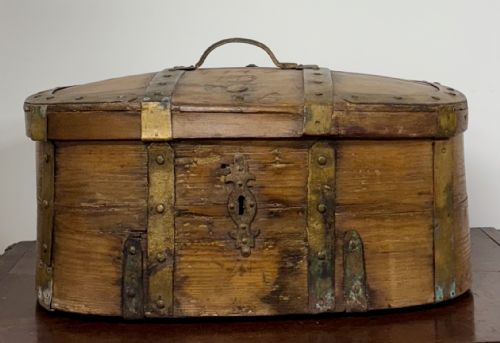
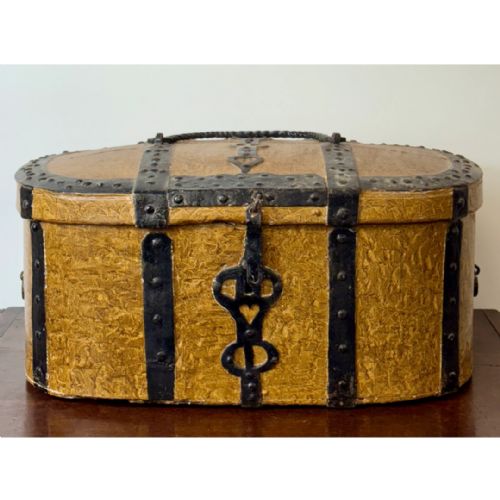
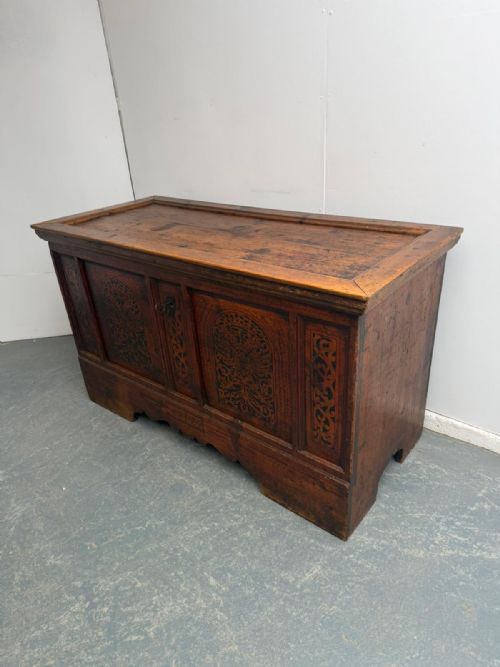
The most common examples on this page are nineteenth-century Scandinavian and Hungarian painted boxes and chests constructed from pine and oak. They appear in forms ranging from large marriage coffers to small oval strong boxes and dome top caskets.
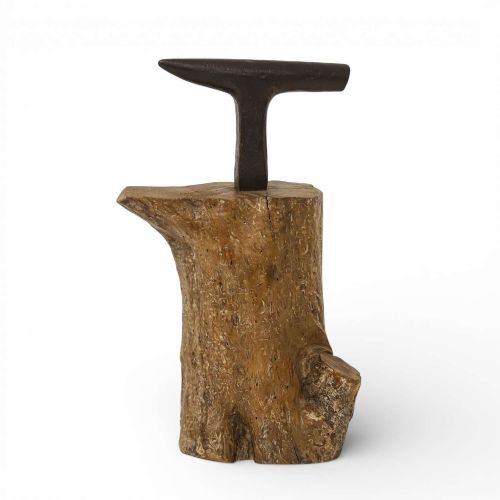
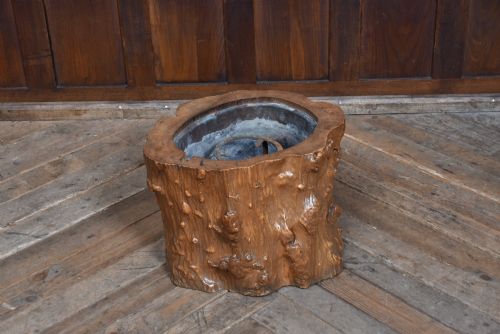
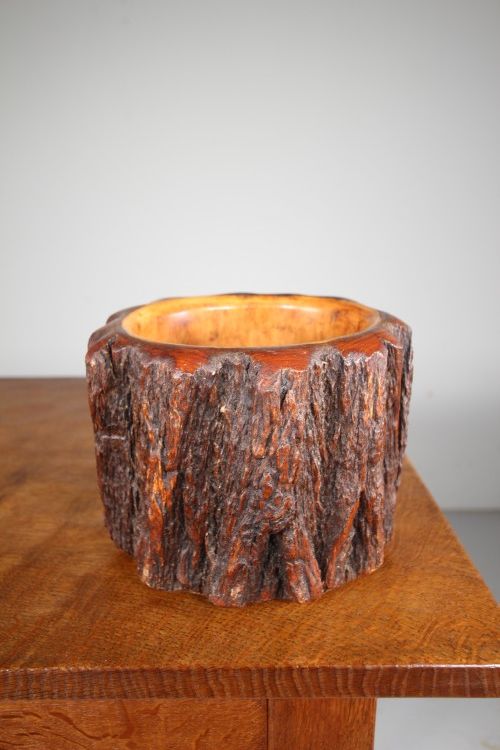
Alongside standard chests, the selection includes dug out tree trunk vessels, chopping blocks, and unusual items such as a farrier's anvil mounted on a fruitwood trunk. These pieces reflect rural vernacular traditions across Europe, utilising local woods and traditional construction methods.
How They Were Made
Makers constructed these pieces primarily from solid pine and oak, alongside fruitwood, sycamore, and woven pine for specialised baskets and boxes. Wood was joined using traditional methods and reinforced for structural strength.
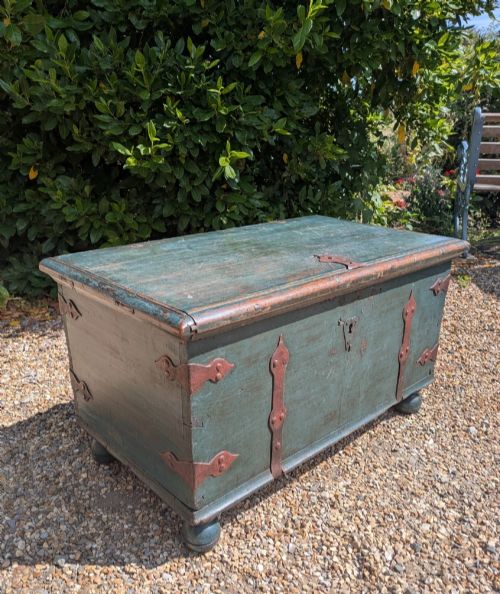
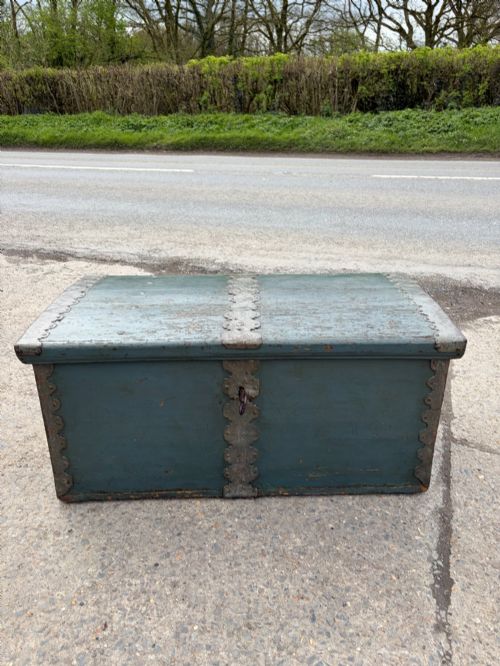
Iron provided essential support, appearing as hand-forged strapwork, brackets, and heavy hinges across lids and corners. Brass hardware also occurs on select boxes.
Surfaces frequently received layers of pigment and paint, yielding hand-painted floral motifs and regional designs. Some items display original paint finishes that survive from their period of manufacture.
Object types span coffers, strong boxes, marriage chests, woven baskets, planters, and dug out tree trunks.
What Varies in Quality
The survival of original surface paint distinguishes standard utilitarian boxes from superior decorative examples. Painted decoration executed with care retains visual depth, whereas repainted or stripped surfaces alter the historical integrity of the piece.
Construction methods and hardware contribute significantly to distinction within the range. Hand-forged iron strapwork and dovetailed or pegged joints demonstrate greater maker skill than simpler box-making techniques.
Form and proportion govern desirability, with dome top coffers, shaped strong boxes, and documented marriage chests representing more ambitious forms of vernacular carpentry.
The Vintage Folk Trunk Glossary
- Coffer
- A large wooden chest used historically for storing valuables, textiles, or documents. These sturdy receptacles often feature hinged lids and heavy iron reinforcements.
- Dome Top
- A curved lid construction designed to shed water and provide additional interior height. This profile appears frequently on eighteenth and nineteenth-century travel and storage trunks.
- Strapwork
- Decorative or reinforcing bands of metal, typically hand-forged iron, secured across the exterior of wooden chests. This technique strengthened vulnerable corners and joints.
- Dowry Chest
- A trunk prepared for a bride to hold household linens and personal possessions in anticipation of marriage. Many bear painted dates, initials, or floral motifs specific to the occasion.
Vintage Folk Trunk: Frequently Asked Questions
What is a vintage folk trunk used for today?
These pieces serve as practical living room storage for blankets, books, and household items while functioning as decorative focal points.
Their robust construction allows them to act as coffee tables or accent furniture in rustic and traditional interiors.
How do I identify original paint?
Original painted surfaces exhibit natural wear, craquelure, and patina consistent with age and domestic use. Pigments often show subtle fading rather than the uniform coverage typical of modern refinishing.
Examining corners and protected areas helps reveal the underlying layers of historic decoration.
Where were these pieces made?
The listings originate primarily from European rural workshops, with strong representation from Scandinavian countries, Hungary, Wales, and Romania. Local vernacular traditions dictated the choice of local softwoods and hardwoods.
Regional painting styles help attribute specific boxes to particular European folk art traditions.
How do I clean a painted pine chest?
Dust the surface gently with a soft, dry cloth to remove loose particles without disturbing delicate pigment layers. Avoid modern chemical solvents or excessive moisture that might lift historic paint.
Applying microcrystalline wax can help protect surviving painted finishes where appropriate.