



Vintage Folk Art Trunk
A vintage folk art trunk brings honest domestic history and vibrant regional colour into a modern room.
Vintage Folk Art Trunk
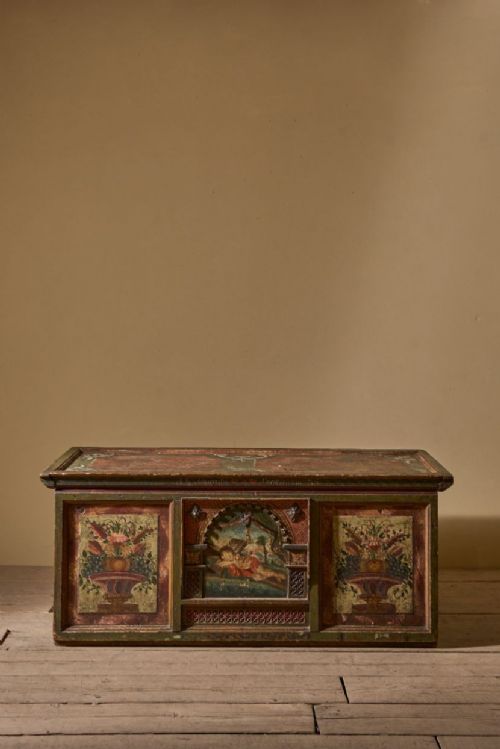
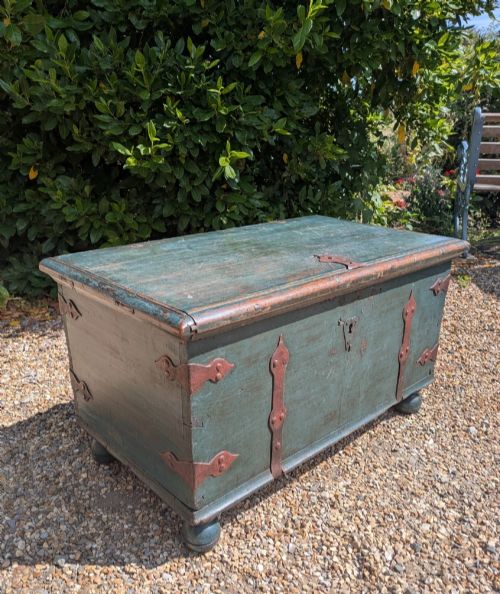
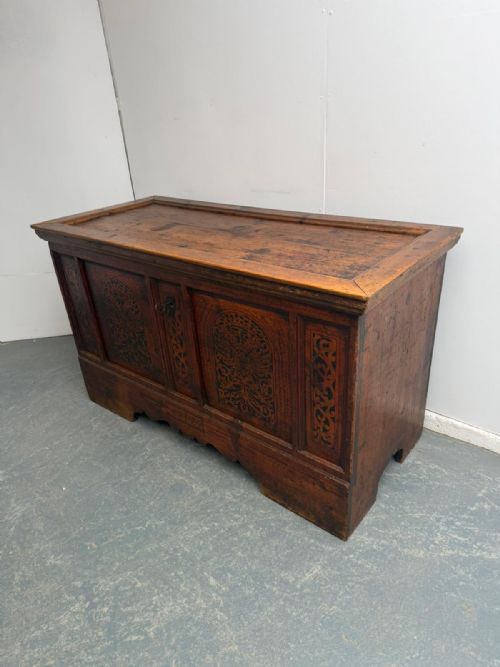
A vintage folk art trunk encompasses utilitarian wooden storage containers transformed by regional craftsmanship, often spanning the eighteenth and nineteenth centuries. Buyers searching for a vintage folk art trunk frequently encounter painted Scandinavian marriage chests, Hungarian coffer boxes, and dome-top storage pieces decorated with traditional motifs. These items served practical domestic purposes in rural homes before finding a place as decorative statement furniture.
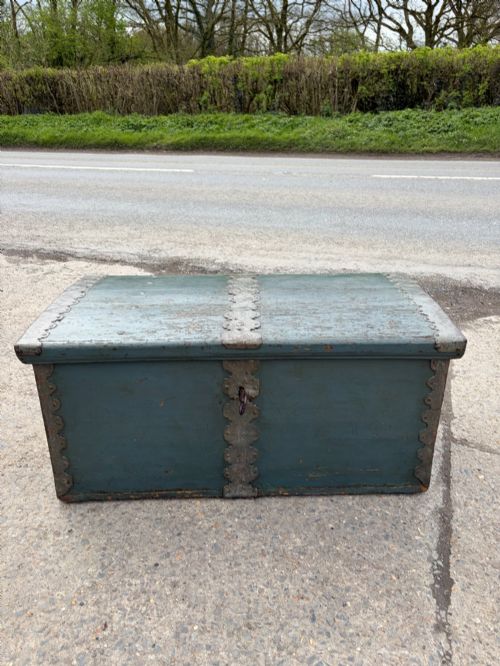
The selection ranges from massive marriage coffers and dome-top chests to small painted boxes and strong boxes originating from British, Swedish, Hungarian, and Romanian workshops. Pine and oak provide the primary structural timber, shaped into sturdy chests designed to secure household valuables, linens, and dowries. Many surviving examples retain their original surface pigment, displaying the distinct artistic traditions of their local makers.
Materials and Technique
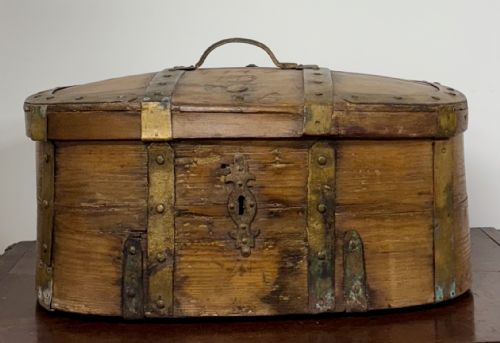
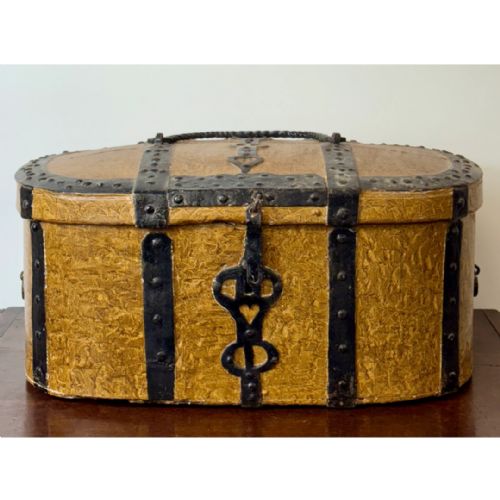
Makers constructed these pieces using locally sourced solid woods such as pine, oak, and fruitwood, joined with dovetail corners, pegged joints, or dug-out construction. Hand-forged iron strapwork, hinges, and corner brackets reinforce the timber carcasses, providing both structural strength and visual contrast against the wooden surfaces. Blacksmiths hammered out these functional metal elements by hand, ensuring durability for heavy daily use.
Surfaces were frequently prepared with a layer of ground pigment or paint, upon which artisans applied floral patterns, dates, and regional scenes using oil-based paints. The application of original paint remained a vital part of the vernacular tradition, preserving the wood underneath while expressing cultural identity through colour and design.
Listings feature pine and oak construction, complemented by hand-forged iron strapwork and original nineteenth-century paint.
Assessing Quality
The survival of original surface pigment largely dictates the visual impact and desirability of a piece, with unpainted or heavily stripped timber offering a different aesthetic from untouched historic paint. The crispness and complexity of hand-painted floral motifs or inscribed dates demonstrate the skill of the original decorator.
Structural integrity depends upon the preservation of the original hand-forged ironwork, hinges, and timber boards without excessive modern intervention or timber loss. Pieces that retain their inner till compartments, original locks, and untouched hardware represent higher levels of historical completeness.
The Vintage Folk Art Trunk Glossary
- Coffer
- A heavy wooden box or chest traditionally used for storing valuables, money, or documents. These sturdy containers often featured reinforced iron strapwork for added security.
- Dome top
- A rounded lid construction on a trunk or chest designed to shed water and increase internal storage capacity. This profile is frequently seen on eighteenth and nineteenth-century travel and marriage chests.
- Marriage chest
- A specially commissioned storage piece created to hold a bride's dowry, often inscribed with initials, dates, and celebratory floral motifs. They served as important central furnishings in rural households.
- Strong box
- A heavily reinforced small chest or box fitted with complex iron locks and strapwork designed to protect currency and precious documents. They were essential secure items in domestic and commercial settings.
- Treen
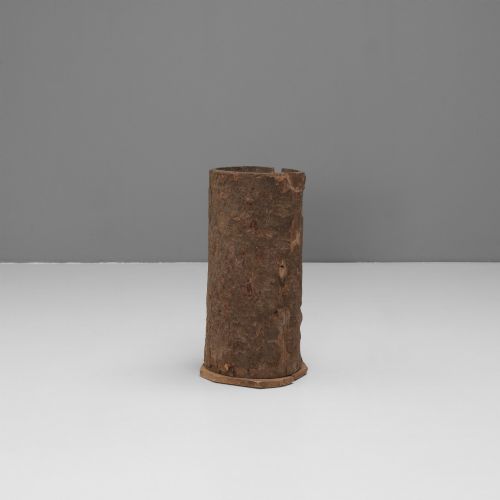
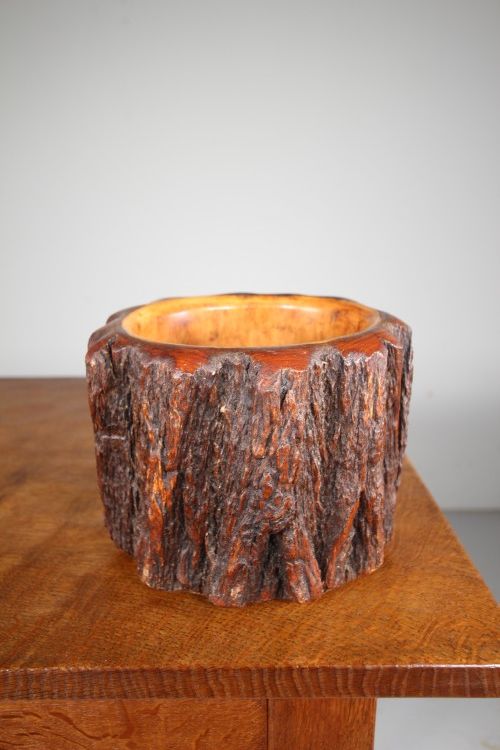
- Small handmade wooden household objects created through turning or carving, ranging from bowls to small containers. These vernacular items highlight the everyday utility of wood in historical domestic life.
Vintage Folk Art Trunk: Frequently Asked Questions
What were folk art trunks used for?
These trunks served as robust storage containers for household linens, winter clothing, valuables, and bridal dowries in rural homes. Families relied on them to keep possessions safe from pests, dampness, and theft.
Over time, many of these chests became central pieces of furniture within the home, marking important life events such as marriages through painted inscriptions and dates.
How do I identify original paint?
Original paint surfaces typically exhibit natural craquelure, soft edge wear from handling, and multiple underlying layers visible in areas of loss. The pigment should sit harmoniously within the grain and texture of the underlying pine or oak.
Avoid pieces with modern chemical stripping followed by unsympathetic repainting, which obscures the authentic historical character of the wood and pigment.
Where did these painted chests originate?
The pieces available on this page originate predominantly from European rural communities, with a strong representation from Swedish, Scandinavian, Hungarian, and Welsh workshops. Each region developed distinct decorative vocabularies, colour palettes, and construction methods.
Local artisans adapted available timber such as pine and oak to create functional storage that reflected their specific cultural traditions and aesthetic preferences.
How do I style a trunk at home?
A vintage folk art trunk functions effectively as a coffee table in a living room, providing both a stable surface and hidden internal storage for blankets or books. Placing a smaller painted box on a side table or console introduces texture and historic colour to a corner.
The strong visual presence of hand-forged ironwork and floral pigment allows these pieces to anchor modern minimalist interiors or complement rustic country schemes.