

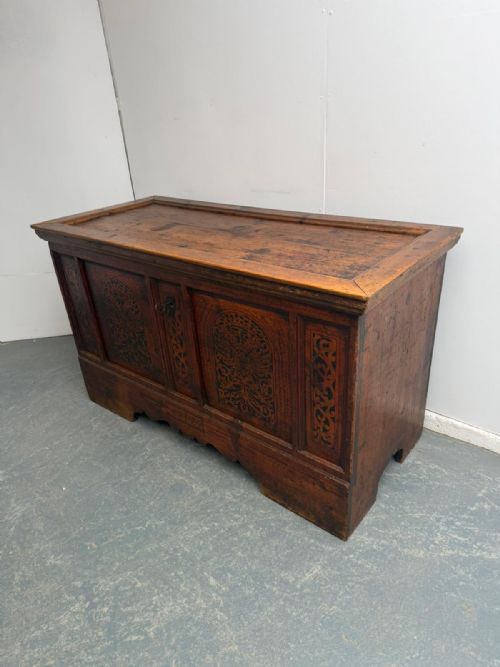


Traditional Folk Painted Chest
A traditional folk painted chest brings centuries of regional craft and vivid pigment into a room.
Traditional Folk Painted Chest
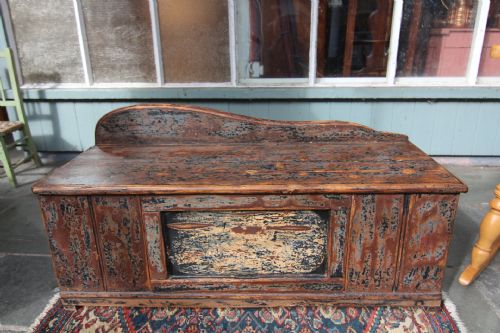
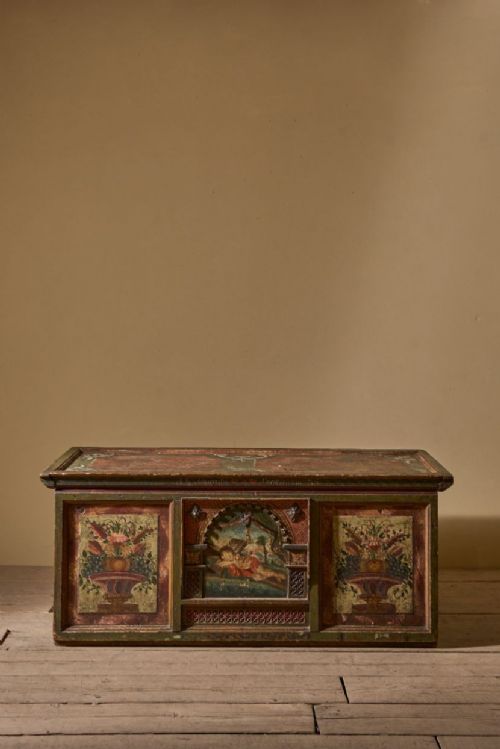
A traditional folk painted chest spans utilitarian storage and decorative regional art across the nineteenth century and earlier decades. Buyers examine pieces ranging from compact Hungarian boxes and Scandinavian shaped blanket chests to large Italian marriage coffers.
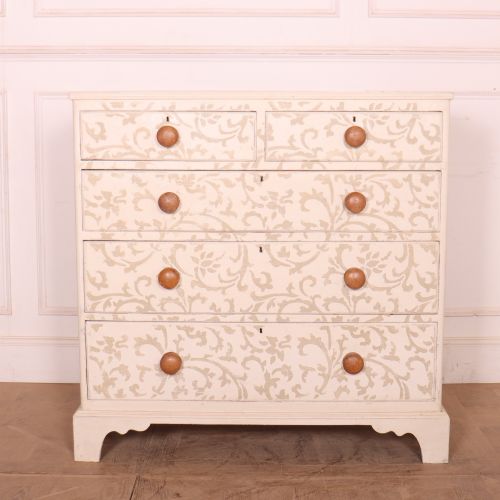
The inventory on this page relies heavily on pine timber decorated with hand-painted motifs, floral details, and original polychrome finishes. Smaller boxes, mule chests, and coffers form the bulk of the selection alongside occasional chests of drawers.
Geographic origins define the visual vocabulary, moving from Alpine and Scandinavian country pieces to Central European and Hungarian folk art traditions. Each piece serves as a functional container while displaying the distinct aesthetic of its local rural workshop.
Materials and construction methods
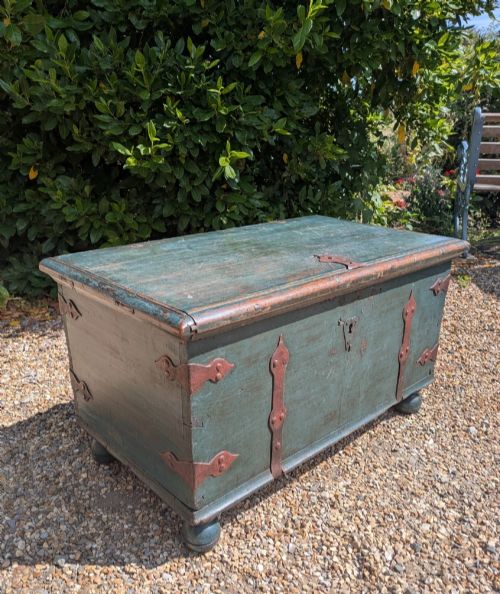
Makers built these storage pieces using pine timber, shaping boards into boxes, chests, and mule chests with straightforward carpentry joints. Iron hardware such as hand-forged strapwork, hinges, and brass fittings reinforced the structural corners and lids.
Surface decoration involved applying pigment and paint directly to the wood, often creating scumble finishes, floral patterns, or polychrome scenes. These coatings protected the timber while expressing regional folk art styles from Sweden, Hungary, Italy, and the wider Alpine region.
Swedish and Hungarian workshops dominate the regional inventory, presenting marriage chests, coffer boxes, and small storage trunks.
Distinctions in craftsmanship and preservation
The survival of original paint determines much of the distinction between pieces, as untouched surfaces carry significantly more character than later overpainting. The clarity of regional folk art motifs and the complexity of floral or figurative details indicate the skill of the original hand.
Structural integrity rests on the preservation of the pine body and the authenticity of the iron strapwork or brass mountings. Pieces retaining their early hinges, locks, and original feet stand apart from those altered or repaired over successive generations.
The Traditional Folk Painted Chest Glossary
- Cofer
- A large chest used for storing valuables, linens, or clothing, often fitted with a hinged lid and iron carrying handles.
- Mule chest
- A storage chest featuring one or more drawers beneath the main compartment, combining the function of a box and a chest of drawers.
- Polychrome
- Decorated in multiple colours, a technique central to the painted surfaces found on regional folk art boxes and marriage trunks.
- Scumble
- A painting technique involving a thin, translucent layer of darker colour dragged over a lighter base to create a mottled, textured wood grain effect.
- Strapwork
- Ornamental bands of iron or metal fixed across the exterior of a chest to reinforce the corners and strengthen the timber joints.
Traditional Folk Painted Chest: Frequently Asked Questions
What is a traditional folk painted chest?
These pieces are utilitarian wooden storage containers finished with hand-applied pigments and regional decorative motifs. They include marriage chests, blanket boxes, and small coffers made across European rural communities.
Craftsmen built them primarily from pine, adorning the surfaces with floral patterns, scumble effects, and polychrome scenes that reflected local customs.
How were these chests used historically?
Rural households utilised these chests to store precious textiles, dowries, clothing, and household provisions. Large marriage trunks held the bride's linen and worldly goods as she moved to a new home.
Smaller boxes and coffers kept documents, valuables, or everyday items secure within farmhouses, shepherds' huts, and village dwellings.
How do I clean and care for the paint?
Maintaining these surfaces requires keeping them away from direct sunlight and excessive moisture to protect the historic pigment and pine timber. Dust the exterior gently with a dry, soft cloth without applying modern chemical polishes or cleaners.
Preserving the original finish means respecting the dry, aged patina rather than attempting to restore or seal the decorative paintwork.
How do I identify different regional styles?
Regional variations appear through distinct colour palettes, brushwork techniques, and specific box shapes typical of areas like Hungary, Scandinavia, and the Alpine region. Swedish boxes often feature shaped stands or specific floral arrangements, while Hungarian coffers display bold teal or green grounds with intricate painted details.
Comparing the structural form alongside the pigment style helps trace a piece back to its European folk art tradition.